


Your cat's round bald patch finally filled in. The skin looked calm, so you stopped the medicine a little early, and about a month later the same spot is bare again. That is one of the most common moments when owners ask why ringworm keeps coming back.
The patch you can see is only part of the problem. Fungus can still sit in hairs, on a brush, or on another pet that never looked sick. Sorting those pieces is calmer than assuming the medicine failed.
Table of Contents
- Why Ringworm Seems to Come Back After Treatment
- Telling a True Relapse From a Misdiagnosis
- Why Stopping Treatment Early Often Causes Relapse
- How to Decontaminate Your Home Step by Step
- Coordinating Care Across Multi-Pet Households
- Immune Health, Coat Type and Other Risk Factors
- When to Call Your Veterinarian About Recurring Ringworm
Why Ringworm Seems to Come Back After Treatment
A cat's bald patch starts to fill in, and the skin looks normal again. Then another patch appears. The change does not always mean the treatment failed: recurrence can involve unfinished treatment, a new exposure, or a skin condition that only resembles ringworm.
Ringworm, or dermatophytosis, is a fungal infection, not a worm. In dogs and cats, it can spread through direct contact or through broken hairs carrying fungal spores. Shed hair on bedding, furniture, or grooming tools can expose a pet again after its coat begins to look better.
The visible patch is like the tip of a weed. Hair can look as though it is growing back while fungus remains in affected hairs, and shed hairs can leave contamination around the home. That is why appearance alone cannot confirm that the infection has cleared.
For infection to take hold, spores must reach skin where conditions allow them to grow. Repeated exposure does not always cause disease. Spores can remain on shed hair and debris, so remove that material by vacuuming or wiping, then wash surfaces with detergent. Applying disinfectant over dirt is less effective.
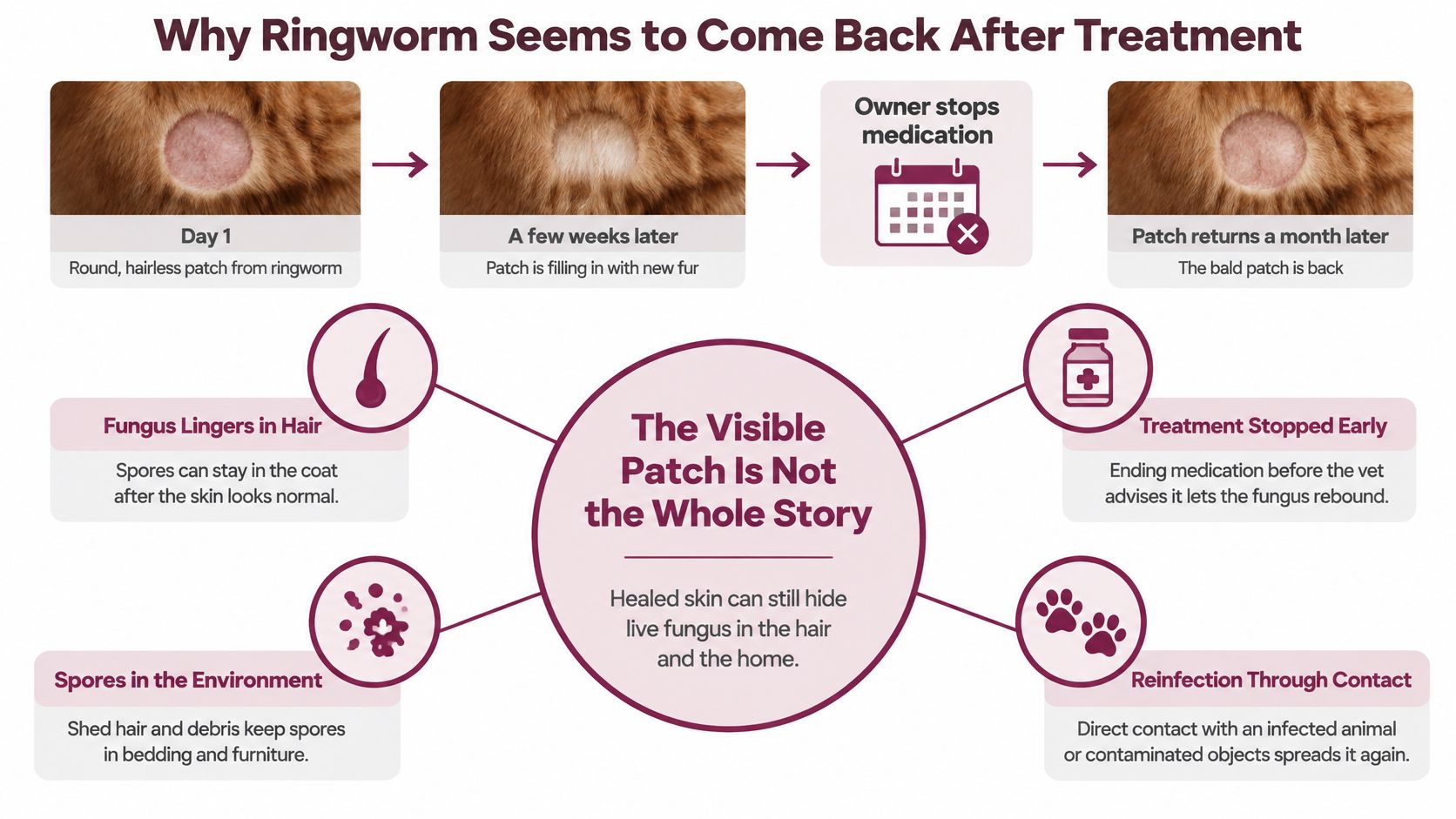
Some animals may develop partial, variable resistance after an infection, but it does not reliably prevent reinfection. A past case is not proof of protection. In homes with several pets, shelters, or breeding setups, a veterinarian can assess which animals may be involved and coordinate their care alongside repeat cleaning. That helps distinguish an infection that was never fully cleared from one acquired again.
| Cause | What Usually Happens | Typical Clue |
|---|---|---|
| Misdiagnosis | The lesion is another itchy or scaly skin condition | Patches do not respond as expected or keep changing shape |
| Incomplete treatment | Treatment stopped once the skin looked better | Hair regrows, then bald spots return |
| Environmental reservoir | Spores remain on bedding, grooming tools, and shed hair | Returns after the pet looked cured, especially with shared items |
| Multi-pet household | A companion carries infection without visible lesions | New patches appear on different pets at similar times |
| Immune weakness | Underlying illness or immune-suppressing medication slows clearance | Lesions heal slowly or recur despite careful care |
Several causes can overlap. A long-haired cat without visible patches may carry infection while shared brushes also retain shed hair. The clues point to different checks: whether the diagnosis is right, treatment was continued as directed, contaminated items were cleaned, other pets were assessed, and the animal's general health was considered.
Practical rule: A normal-looking coat does not confirm that the infection has cleared.
Telling a True Relapse From a Misdiagnosis
A round, scaly, or itchy patch is not a label. Allergies, bacterial skin infection, and other coat problems can draw a similar circle. If the spot returns, that does not automatically mean ringworm is back. It means the skin needs another look.
Many cats, especially long-haired cats and animals in multi-pet homes, can carry dermatophytes with no visible lesions and keep reseeding pets and rooms. Treating only the animal with the obvious patch can leave that quiet source in place.
Wood's lamp screening alone is not enough, because its sensitivity is relatively low. A dark lamp does not rule infection out. Fungal culture remains the reference method. PCR can help when the signs suggest ringworm but an early screen is negative. A positive PCR or culture still needs a veterinarian to interpret it, because finding fungal material does not always prove active disease.
| Test | What It Shows | Main Limitation |
|---|---|---|
| Veterinary skin examination | Pattern, scaling, hair loss, and where lesions sit | Looks similar to other skin conditions, so it cannot confirm ringworm alone |
| Wood's lamp screening | Some dermatophyte species fluoresce under ultraviolet light | Relatively low sensitivity; a negative result does not rule out infection |
| Fungal culture | Grows dermatophytes from hair or skin samples | Takes time to grow; used as the reference method for confirming infection and cure |
| PCR testing | Detects fungal DNA when signs are suggestive | A positive result does not always prove active disease and needs veterinary interpretation |
What to bring to the visit
Photograph the first patches: Note the dates, so the pattern is not rebuilt from memory.
List every pet and shared tool: Brushes, clippers, beds, and carriers belong on that list.
Ask who gets tested: Symptomatic animals and exposed animals both matter, not only the one with a bald spot.
Also ask whether the last course reached a mycological cure, meaning the fungus was shown to be gone, not only that the skin looked better. Hair can regrow and redness can fade while infection is still there. Stopping when the coat looks tidy can leave the problem unfinished.
A circular rash that keeps changing shape may not be ringworm at all. Some crusty bacterial coat problems, including the pattern described in rain rot in dogs, can confuse the picture until a veterinarian sorts the samples. Clean-looking skin is not a confirmed cure.
Why Stopping Treatment Early Often Causes Relapse
A cat's coat may look almost normal by the third week of treatment. New hair appears, the redness fades, and stopping the medicine can seem reasonable. Then a bald patch returns, making it feel as though the treatment failed.
Looks alone cannot confirm that ringworm has cleared. Hair can improve before a veterinarian has confirmed mycological cure, which means testing shows the fungus is gone. Follow the prescribed course and ask when your veterinarian recommends checking for cure.
The cases below illustrate why treatment length and follow-up depend on the animal and the infection. They are not dosing instructions. Your veterinarian chooses the medicine and schedule for your pet.
| Study | Treatment | Duration | Outcome |
|---|---|---|---|
| Two cats with dermatophyte mycetoma, as described in the case report | Oral terbinafine | 12 to 14 weeks | Clinical and mycological cure |
| One Persian cat described in that case report | Systemic treatment, then stopped before signs stayed gone; the report does not specify the course length | Not reported | Clinical signs recurred after treatment stopped |
| Nine cats in the itraconazole study | Itraconazole | 56 days | Eight were cured by day 56 after two negative cultures; one was positive on day 28 and negative on days 42 and 56 |
What those timelines mean at home
The two cats with deeper fungal nodules, called dermatophyte mycetoma, received oral terbinafine for 12 to 14 weeks before both clinical signs and fungal infection were cleared. This shows that treatment may continue well beyond the point when a patch first looks better.
In a separate study of nine cats treated with itraconazole, eight met the study's cure criteria by 56 days, including two negative fungal cultures. One cat still had a positive culture on day 28, then tested negative on days 42 and 56. The result is a reminder that an improving coat does not tell you on its own whether treatment can safely stop.
In the case report above, signs returned in one Persian cat after systemic treatment was stopped. That is a finding about one individual, not evidence that Persian cats as a breed are prone to lingering disease. A return of patches can have several explanations: treatment may have stopped before cure was confirmed, or another pet or contaminated grooming tool may be part of the household problem. Your veterinarian can help assess whether the original diagnosis and treatment plan still fit.
Terbinafine and itraconazole are prescription medicines. Do not start, stop, or change their schedule without your veterinarian's direction. If a dose is missed or your pet seems unwell, call the clinic before adjusting the plan.
Before the medicine runs out, ask:
- How long should the course last? Confirm the planned end date rather than judging by the coat.
- When should follow-up testing happen? Ask what result would support stopping treatment.
- What could extend treatment? Find out how your veterinarian will respond to persistent signs or a positive result.
- What if a dose is missed or my pet seems unwell? Get instructions before skipping or substituting a dose.
Some owners consider non-prescription products while waiting for guidance. Ask your veterinarian whether an over-the-counter antifungal is appropriate for your pet. A topical product may not replace the prescribed course needed to clear infection from the hair.
How to Decontaminate Your Home Step by Step
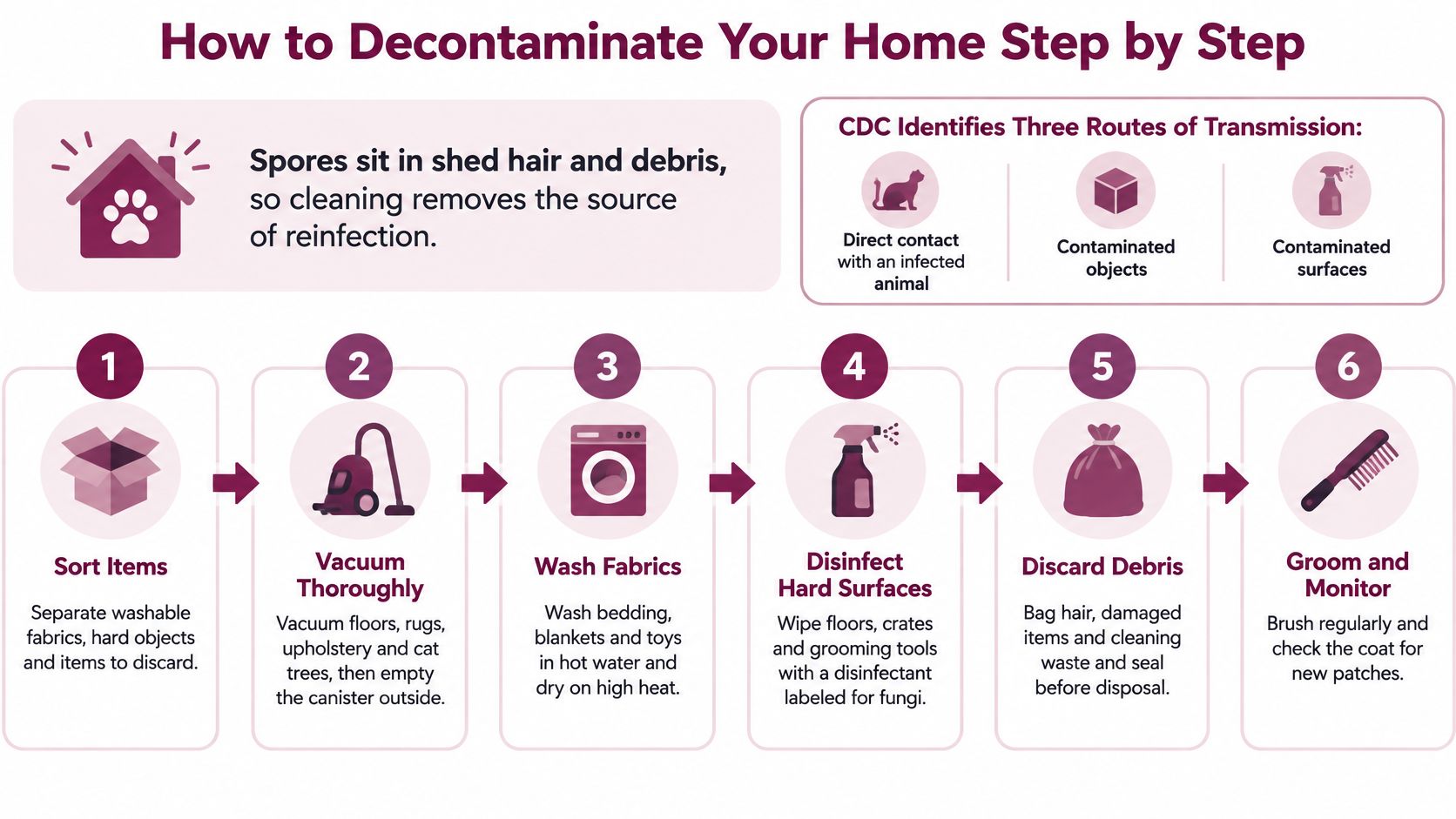
Spores ride along with shed hair and ordinary debris. You do not need an obviously sick animal in the room for spread to happen. The CDC describes ringworm spread through direct contact with an infected animal, through contaminated objects, and through contaminated surfaces. Towels and bedsheets are examples of shared items, and the CDC specifically advises vacuuming the places a pet commonly visits.
An animal that looks healthy can still carry or pick up fungus. Cleaning the rooms and the objects, and having every exposed pet checked, is more reliable than treating only the one with bald spots. A dog-focused cleaning and care overview is in this guide to ringworm treatment for dogs.
A routine you can repeat
- Wash the fabrics. Bedding, towels, blankets, and pet covers go through detergent and then dry fully, so damp cloth does not stay in the cycle.
- Vacuum the soft places. Carpets, rugs, upholstery, pet beds, crates, and the corners your pet prefers come first. Empty the canister or bag outside so you are not shaking hair back into the hall.
- Clear hard surfaces before you disinfect. Wipe away visible hair and debris, then wash with detergent until the area looks clean. Dirt left underneath makes the later step weaker.
- Clean the grooming tools. Soap and water on brushes, combs, and clippers, with a separate set for each pet while treatment is going on. A shared brush is an easy way back onto a coat that just improved.
- Disinfect only after the debris is gone. Follow the product label and your veterinarian's advice on what suits your floors, crates, and animals. A stronger smell is not a better plan.
- Keep the same schedule. Repeat through treatment and the follow-up period. Stop when your veterinarian confirms cure and tells you the follow-up is finished, not when the patch looks gone.
People in the same rooms
Wash your hands after you handle pets and after you clean. If someone in the home gets a rash, that person should contact their own doctor. Pet medicine is not a human treatment, and a family rash is a separate medical question.
Keep one written cleaning day on the fridge until your veterinarian, not the calendar on the bottle, says the follow-up period is over.
Coordinating Care Across Multi-Pet Households
Treat the home as one system. If only the cat with bald spots gets medicine while a dog shares the bed, the fungus can move unnoticed and make the first cat look like a relapse.
A companion without lesions can carry infection or pick it up. You cannot see that from across the room. Guessing which animal "seems fine" is how the cycle stays confusing, especially when pets trade blankets and brushes.
A checklist for this week
- Name every animal. Include every cat and dog, plus anyone who shares tools, bedding, or rooms, even a pet who lives mostly outdoors.
- Mark the higher-worry coats. Long hair and any history of patches belong on the list you hand the clinic.
- Ask who should be examined or tested. Exposed animals need a veterinary decision, not a shared bottle started at home.
- Ask about one timeline. A coordinated plan beats staggered, improvised courses that never overlap.
- Keep a single cleaning schedule. The rooms are shared, so the housework should be shared too.
Shelters, rescues, and breeding homes raise the same problem with more animals in the same air and the same tools. An untreated carrier can make new patches look mysterious. Coordinated testing and repeated cleaning are the practical answer, not another round for only the sickest-looking cat.
Household plans often run for several weeks. Do not start medicine for a second pet because the first pet's tablets are in the cabinet. Choice and dose depend on species, size, other illnesses, and what the veterinarian finds. Cat-specific expectations are outlined in ringworm treatment for cats, and they still start with that clinic plan.
Immune Health, Coat Type and Other Risk Factors
A patch can return even when the room is clean and treatment was followed. Sometimes the animal's coat, skin, or health affects how easily the infection is noticed or clears.
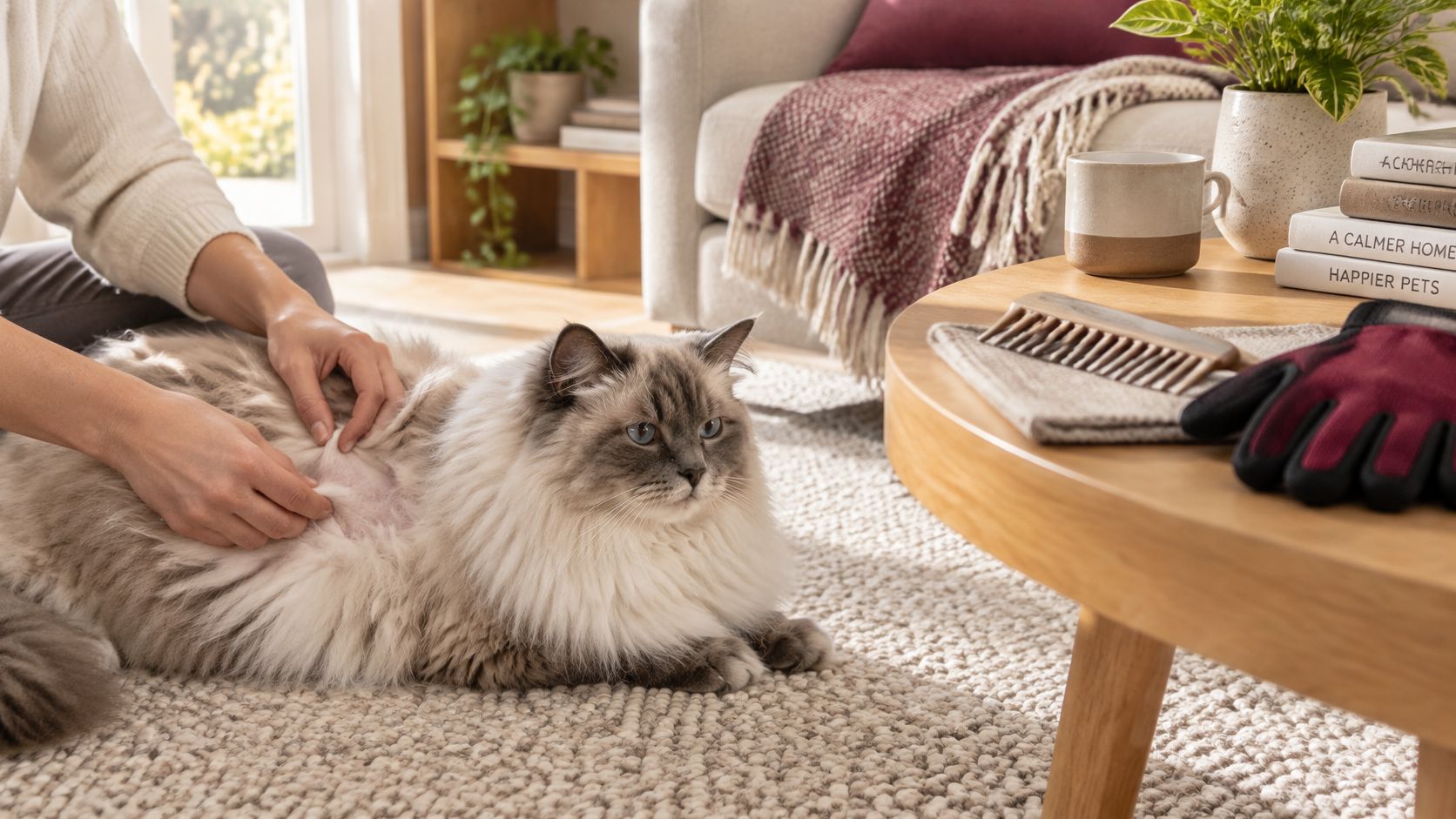
Long fur can hide early spots and make grooming harder. One Persian cat in the cited case report had recurrent signs. That is an observation about a single cat, not evidence that Persians as a breed are predisposed. A thick coat is not a diagnosis, but parting the fur helps owners spot changes sooner.
Moisture and minor skin irritation can give spores an opportunity to take hold. For example, a dog that swims and then rests on a damp bed stays wet longer than one that is dried with a towel. Check the skin if irritation or patches appear, and tell the veterinarian about changes.
Illness or medicines that reduce immune function may slow clearance. A cat taking medication for a chronic condition, for instance, may need the veterinarian to review both the skin problem and its current prescriptions. This is a reason for closer follow-up, not for extending treatment without guidance.
Share every health condition and medication with the clinic. Regularly part and check the coat, and follow the prescribed plan unless the veterinarian advises a change.
When to Call Your Veterinarian About Recurring Ringworm
Call if lesions return after a course ends, if patches spread or show up on other pets, if your pet is itchy or uncomfortable, or if the skin is not improving the way the clinic expected. Call if a person at home develops a rash. Also call promptly if your pet has another illness, takes medicine that affects immune function, or if you are unsure about a prescription.
- Keep a simple log. Treatment dates, cleaning days, and what the skin did that week are enough.
- Bring proof to the visit. Photographs, the log, and a list of every pet and every medication save time.
- Ask how cure will be confirmed. Put the recheck date on the same page.
- Stay with the prescribed plan. Questions go to the clinic. Do not stretch, skip, or swap doses because the coat looks better.
Prescription antifungals are dispensed after a veterinarian authorizes them. Once that plan is set, you can review options in this overview of antifungal care for ringworm. Check with your veterinarian before you buy any over-the-counter product for the same spots.
Bandana Rx is a licensed U.S. veterinary pharmacy that fills prescription antifungals after your veterinarian authorizes them, and it also lists preventive and topical pet-care products for dogs and cats. If ringworm keeps cycling through your home, the useful next step is the clinic's diagnosis and a full course, not a guess from a photo. When that plan is in place, you can explore the matching options at Bandana Rx.