

You've treated your dog, washed the bedding, and then spotted another flea moving through the fur. If you also have a cat at home, you may be wondering whether the treatment worked and whether your pets can safely share their usual sleeping spot. Those are different questions, and both deserve clear answers.
Advantix flea control is a dog treatment, not an instant whole-house solution. Understanding the package directions, the household exposure precautions, and the flea life cycle can help you respond calmly without applying extra product or putting another pet at risk.
Table of Contents
- What Advantix Flea Control Means for Your Dog
- How the Three Active Ingredients Stop Fleas
- Weight Bands Age Rules and Monthly Timing
- Why Advantix Flea Control Is Unsafe for Cats
- What to Do When Fleas Keep Showing Up
- Choosing Dog Preventives Through Bandana Rx
- A Safer Next Step for Your Household
What Advantix Flea Control Means for Your Dog
In a home with dogs and cats, a flea spotted after treatment can easily prompt the wrong conclusion: the product must have failed. But treating adult fleas on a dog and clearing an established household infestation aren't the same task. A topical product works on the treated animal, while immature fleas may already be developing elsewhere.
K9 Advantix II is a monthly topical parasite-control product authorized in the United States for dogs and puppies at least 7 weeks old. Its EPA label states that it kills existing fleas within 12 hours of the initial application, kills reinfesting fleas within 2 hours, and protects against further flea infestation for at least 4 weeks. The same label includes ticks, mosquitoes, biting flies, and lice, and warns that pre-existing flea pupae may continue emerging for 6 weeks or longer, depending on climatic conditions (EPA product labeling and flea-control claims).
Separate the dog's treatment from the home's infestation
Those label claims describe what the product does, not a deadline for the entire house to become flea-free. A newly emerged adult can reach a treated dog after application. Seeing that flea doesn't, by itself, tell you whether the treatment was applied incorrectly or whether environmental stages are still emerging.
For example, consider a household where the dog rests on a carpet beside the sofa. Applying the correct product to the dog doesn't physically remove immature fleas already present around that resting area. The household needs a coordinated plan rather than a stronger interpretation of the tube's claims.
Practical expectation: Judge flea control by correct use and the overall household response, not by a single flea sighting.
Useful questions include:
- Was the dog covered correctly? Check the package, application directions, and treatment record.
- Are other animals contributing? Every pet needs species-appropriate parasite control, and every dog needs individual dosing.
- Has the environment been addressed? Bedding and frequently used resting areas deserve attention alongside the pet.
A broader overview of fleas and ticks in pets can help you organize those questions. The important distinction is between the product's labeled performance on your dog and the additional work needed to manage an established infestation.
How the Three Active Ingredients Stop Fleas
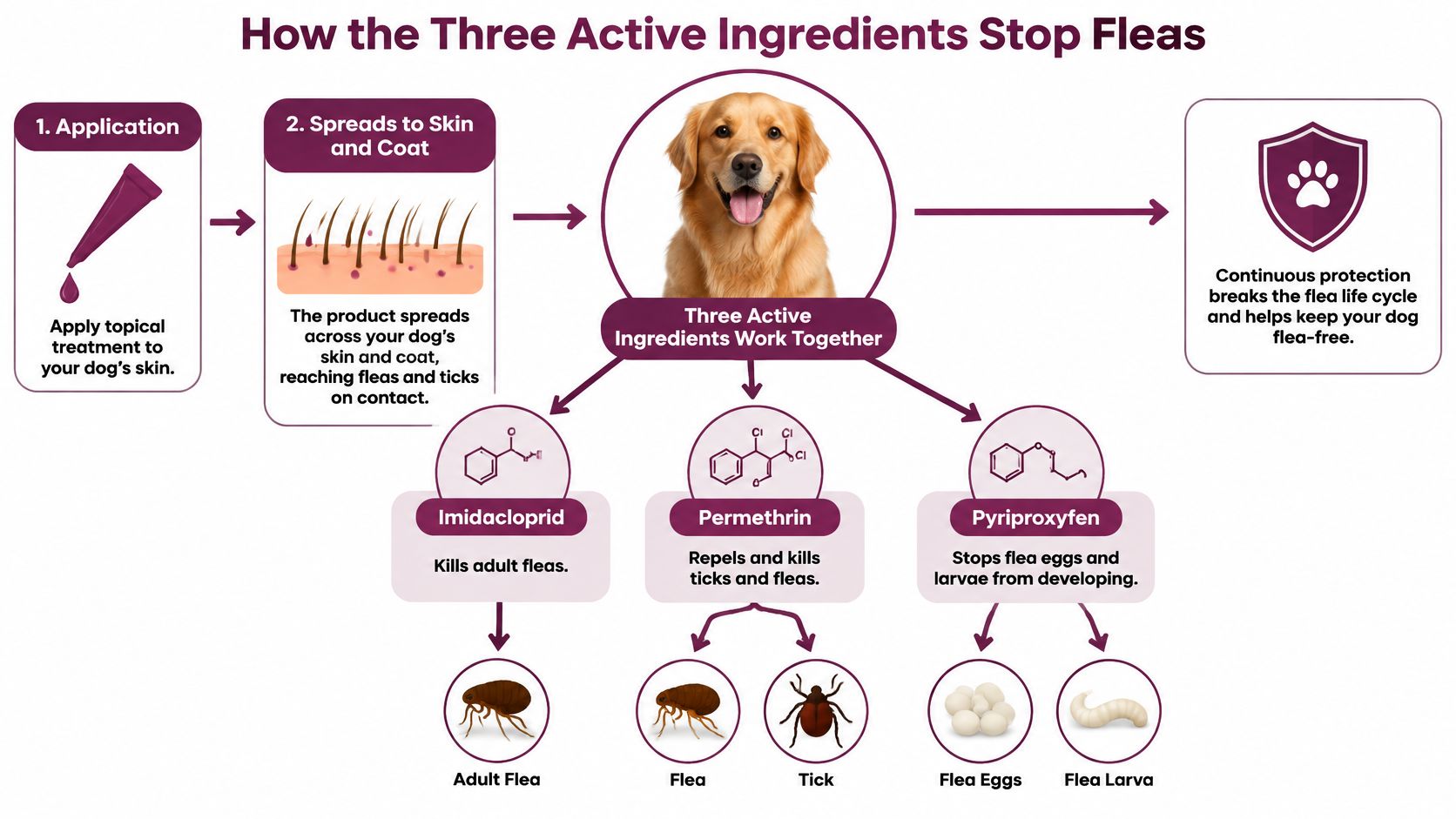
K9 Advantix II combines ingredients with different jobs. Think of them as a relay team rather than interchangeable versions of the same chemical: some activity targets adult parasites, while another ingredient interferes with immature flea development.
The EPA-registered formulation contains 8.8% imidacloprid, 44.0% permethrin, and 0.44% pyriproxyfen by weight. The combination provides adult-flea activity alongside an insect-growth regulator, rather than relying on adult-flea killing alone (EPA formulation and ingredient labeling).
Adult-flea activity and growth regulation
Imidacloprid acts on flea nicotinic acetylcholine receptors. In plain language, it disrupts signaling in the flea's nervous system, producing rapid toxic effects in the parasite. This is part of the product's adult-flea control.
Permethrin acts on voltage-gated sodium channels, another component of nerve signaling. It contributes contact killing and repellent activity. Although both ingredients affect parasite nerve function, they don't act through the same target.
Pyriproxyfen has a different role. It's an insect-growth regulator, meaning it interferes with immature flea development rather than serving only as another adult-flea killer. This helps explain why the formulation addresses more than the moving fleas you can see on your dog.
| Ingredient | Main role in the formulation |
|---|---|
| Imidacloprid | Disrupts flea nerve signaling and kills adult fleas |
| Permethrin | Contributes contact killing and repellent activity |
| Pyriproxyfen | Interferes with immature flea development |
The distinction matters when you're deciding what a successful treatment should look like. Adult fleas on the dog and immature stages that contact the treated animal are part of the approach, but the product isn't a carpet treatment. Applying it to your dog doesn't mean every protected environmental stage has been reached.
What the ingredient combination doesn't promise
The labeled killing times describe activity against existing and reinfesting fleas. They shouldn't be translated into a promise that no flea can ever land on the dog or that the household environment becomes clear immediately.
Likewise, growth regulation doesn't remove the need to clean pet resting areas or maintain the labeled treatment schedule. The useful interpretation is complementary activity, not unlimited coverage.
The ingredient list also explains why species suitability matters so much. Permethrin's role in a canine product does not make that product appropriate for a cat, even when both animals live in the same home.
Weight Bands Age Rules and Monthly Timing
Choosing a tube starts with your dog's current weight, not breed, appearance, or the package you bought previously. A growing puppy may no longer belong in the same weight band when it's time to reorder.
K9 Advantix II is labeled for dogs and puppies at least 7 weeks old, with the product-specific weight bands and monthly interval shown below (EPA age, weight, and use requirements).
K9 Advantix II Weight Bands
| Formulation | Dog weight | Minimum age | Use interval |
|---|---|---|---|
| Small dog | 4–10 lb | 7 weeks | Monthly |
| Medium dog | 11–20 lb | 7 weeks | Monthly |
| Large dog | 21–55 lb | 7 weeks | Monthly |
| Extra-large dog | Over 55 lb | 7 weeks | Monthly |
These are label requirements, not flexible dosing suggestions. A puppy below the labeled minimum age, or a dog outside the weight range printed on a particular package, shouldn't receive that formulation.
Selecting a smaller presentation to make the supply last can underdose the dog and weaken control. Selecting a larger presentation without veterinary direction can expose the dog to more product than the appropriate presentation is intended to deliver. Don't improvise a dosing calculation from the ingredient percentages.
Make the schedule part of the treatment
Monthly use requires more than keeping a box in the cupboard. Record the application date, identify which dog received which presentation, and make sure the next application isn't overlooked.
- Check weight before reordering. This is especially important while a puppy is growing or a dog's weight is changing.
- Read the current package. Confirm the formulation, species, age requirement, application directions, and warnings.
- Plan for every dog. Dogs sharing an infestation need their own individually selected treatment, not a shared tube.
- Ask before making changes. Uncertainty about illness, pregnancy, age, weight, or product selection belongs with your veterinarian.
A missed or delayed application can leave a gap in the prevention plan. Applying extra product early isn't a do-it-yourself correction for that gap or for continued flea sightings.
The guide to reading pet medication labels, dosage instructions, warnings, and storage information can help you separate package requirements from assumptions. If the dog's circumstances don't clearly fit the label, pause before applying and ask for veterinary guidance.
Why Advantix Flea Control Is Unsafe for Cats
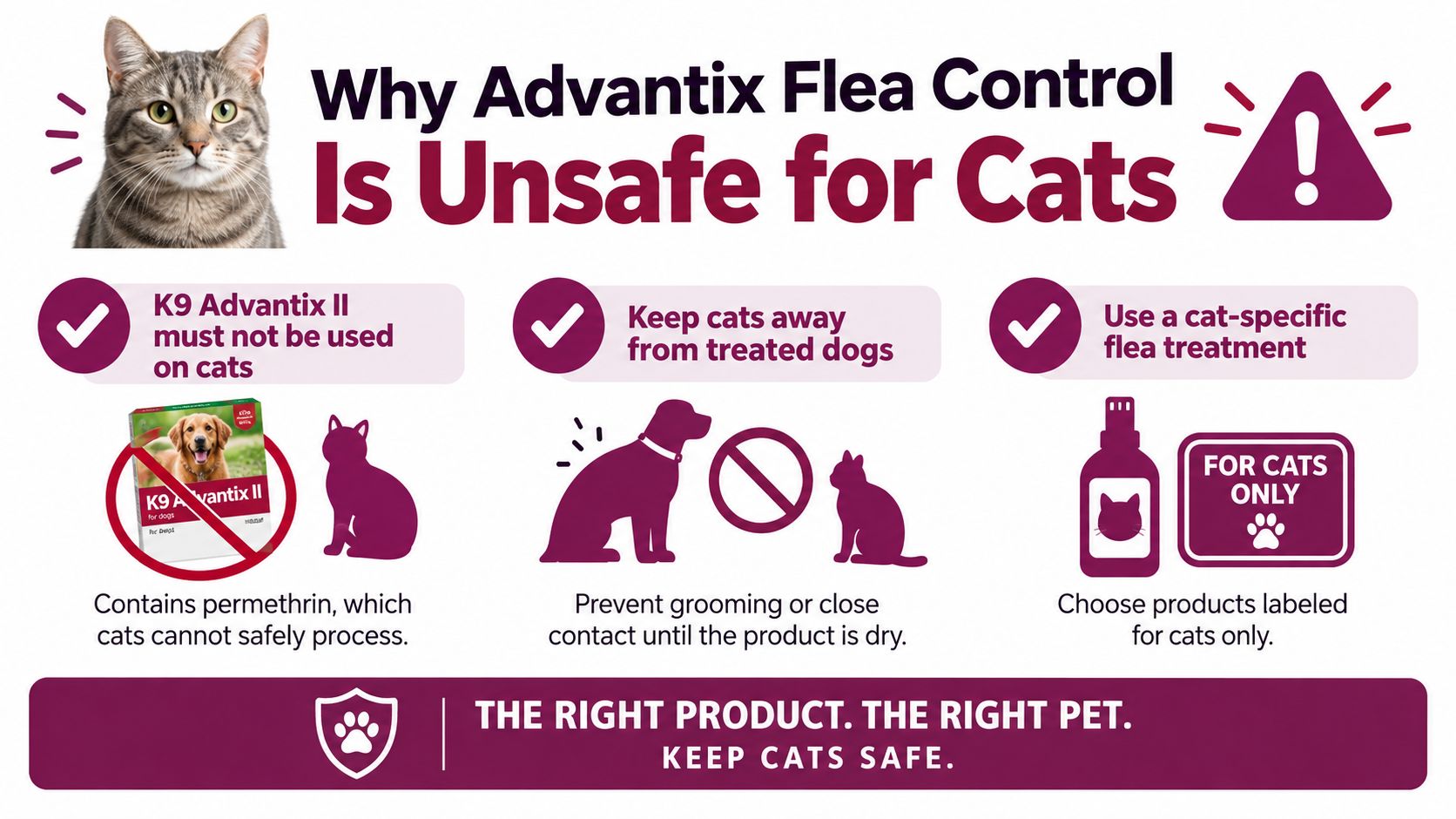
K9 Advantix II must not be used on cats and may be fatal to them. The EPA warning applies to this permethrin-containing formulation and instructs owners to keep cats away from treated dogs for 24 hours; accidental feline application or ingestion requires immediate veterinary contact (EPA cat warning and household separation directions).
The mistaken assumption is often that a smaller amount of a dog product should suit a smaller animal. Species suitability doesn't work that way. A dog tube isn't a substitute for a feline preventive, and splitting it between a dog and cat doesn't make it appropriate.
Plan separation before opening the tube
A cat doesn't have to receive a deliberate application for exposure to become a concern. A cat may groom a freshly treated dog, rub against the application area, or share a sleeping spot where close contact is difficult to prevent.
Arrange separate spaces before treating the dog. Don't rely on watching the pets closely while they remain together, particularly if your cat routinely grooms your dog.
Follow the labeled separation period. A coat that looks dry isn't a reason to shorten it.
Veterinary review is especially helpful when pets groom each other, share bedding, or have a history of neurologic reactions. If reliable separation isn't practical, discuss the household setup with your veterinarian before choosing the preventive.
If exposure has already happened
Contact a veterinarian immediately after accidental application to a cat or ingestion. Don't wait for symptoms, and don't substitute an online home remedy for professional instructions. Have the product package available so the veterinarian can identify the formulation.
Concerning signs after exposure include:
- Tremors or incoordination. Shaking or difficulty moving normally warrants prompt help.
- Hypersalivation or vomiting. Excessive drooling and vomiting should be reported.
- Unusual agitation. A marked behavioral change is also a reason to contact a veterinarian or poison-control service.
These aren't a complete list of possible reactions. The exposure itself is enough to justify a call.
Cats need a cat-labeled product selected for their own age, weight, and health. For a young cat, guidance about flea treatment considerations for kittens can help you prepare questions, but it doesn't make a canine product suitable.
What to Do When Fleas Keep Showing Up
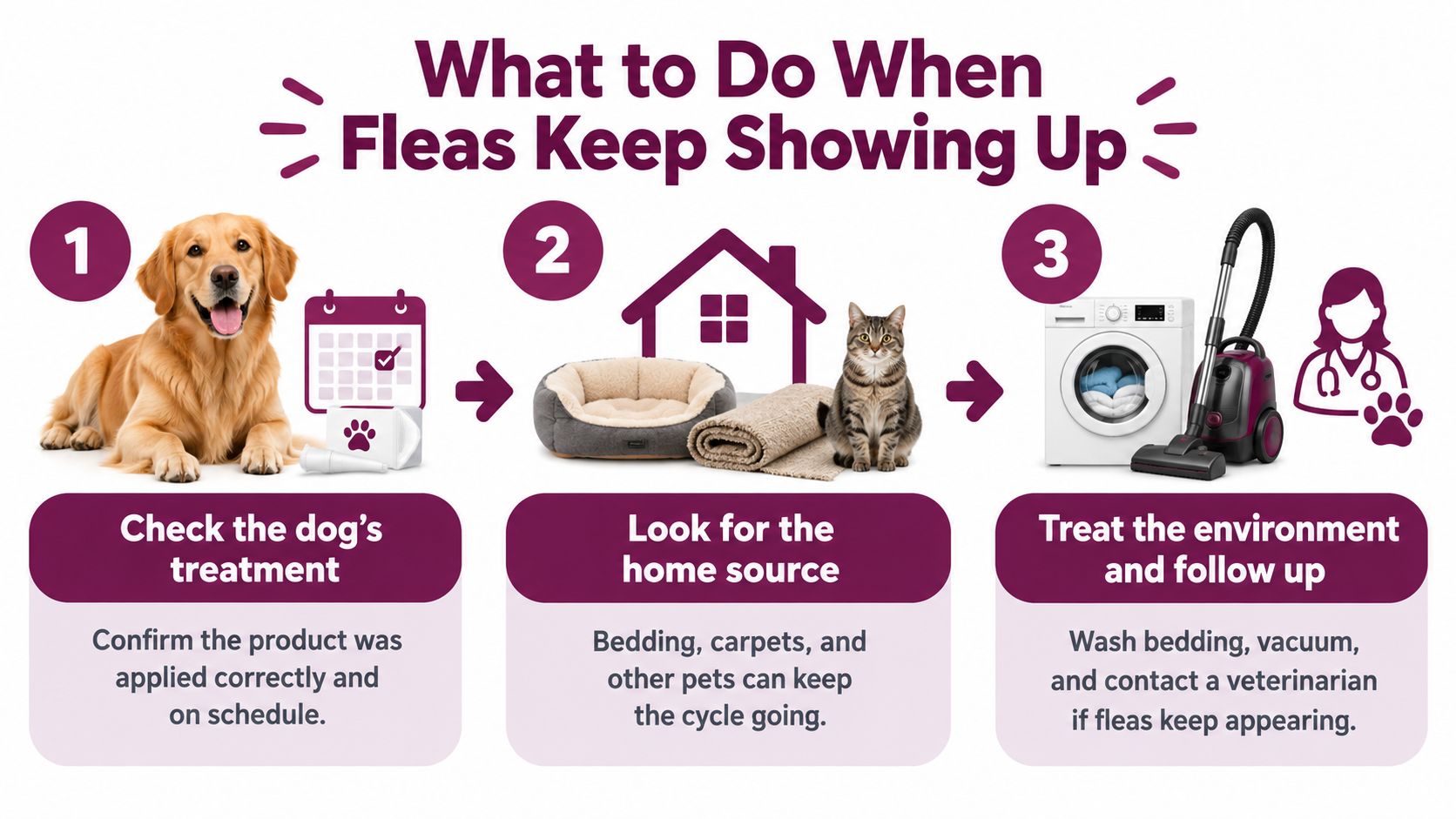
Continued fleas call for a review, not an automatic extra application. Start by separating a coverage problem from a new source of fleas and from immature stages already present in the home.
Those situations can look similar when you're checking your dog's coat. They don't necessarily require the same response.
Check coverage before questioning the formulation
Look at the actual package and treatment record. Was the presentation appropriate for your dog's weight? Was the application missed or delayed? Were the directions followed?
If you aren't sure how much reached the intended application area, don't guess at a replacement amount. Give your veterinarian the product name, application date, and description of what happened.
A correct schedule for one dog also doesn't resolve an untreated dog elsewhere in the household. Check the prevention plan for all pets, keeping species restrictions firmly in place.
Look beyond the dog's coat
An established infestation can involve carpets, upholstery, cracks, bedding, and outdoor areas. The EPA environmental-emergence warning discussed earlier explains why visible adults can appear despite treatment.
Organize the investigation around these possibilities:
- Inadequate coverage. A missed, late, or wrong-size application needs a label and veterinary review.
- Reinfestation. Untreated pets or repeated indoor and outdoor exposure may keep introducing fleas.
- Environmental emergence. Immature stages already present can produce new adults without proving immediate product failure.
Wash pet bedding and vacuum or clean the places where pets rest. For an upholstery-focused household resource, Aquastar's guide to fleas on furniture from Aquastar Cleaning Services, LLC can help frame the furniture question, but it shouldn't replace medication-label instructions or veterinary advice.
Professional pest control may be reasonable when the environment is heavily infested or household efforts aren't resolving the problem. Tell the professional which pets live there and which parasite products they receive before any environmental treatment is selected.
Avoid treatment stacking: Adding another insecticide or shortening the interval without veterinary guidance isn't a validated solution and can increase adverse-event risk.
If your dog remains uncomfortable, review dog skin irritation associated with fleas and contact your veterinarian rather than assuming more flea product is the answer. Bring the treatment history and your environmental-cleaning efforts to that conversation so the next decision addresses the likely cause.
Choosing Dog Preventives Through Bandana Rx
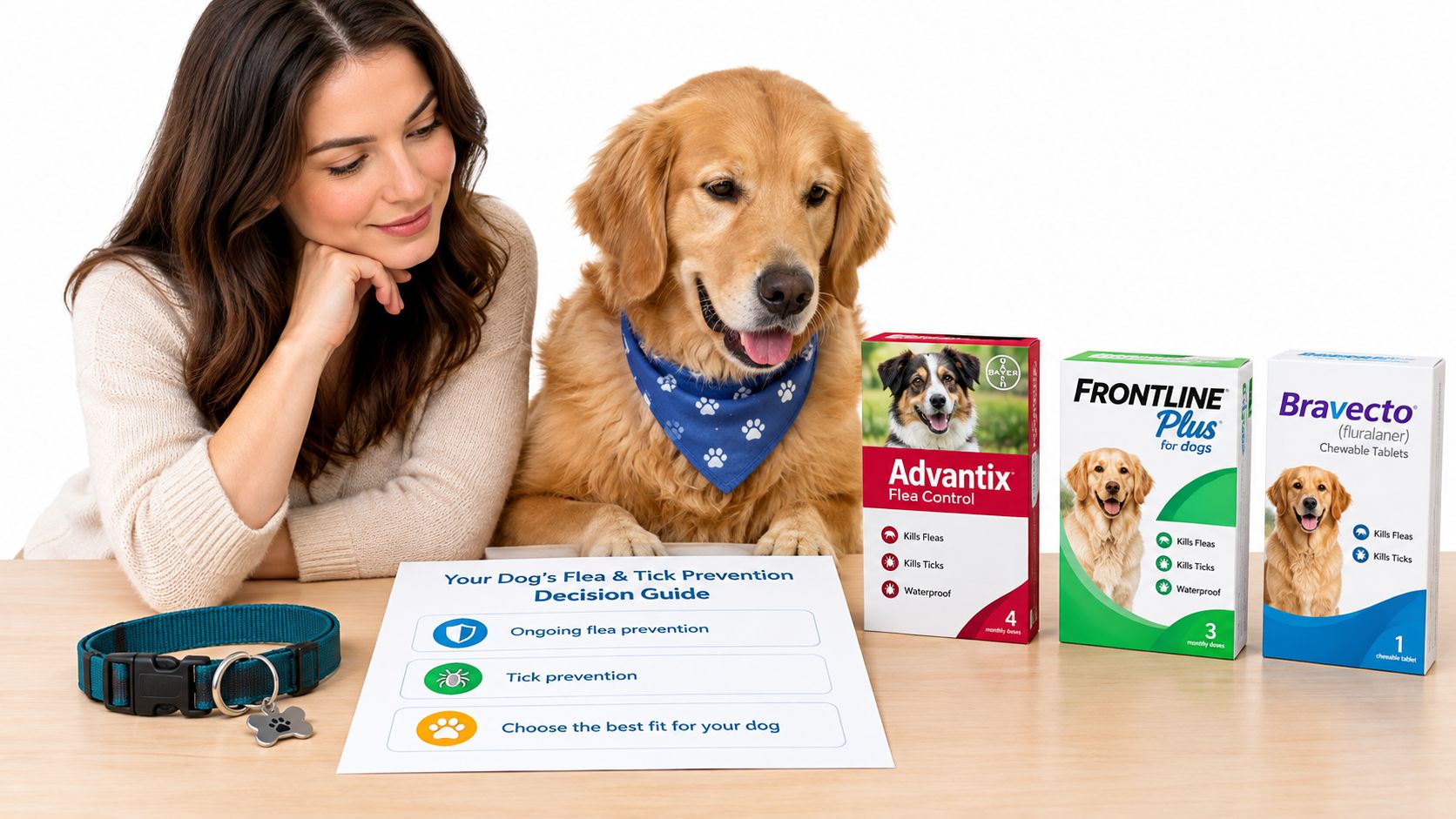
Choosing a preventive is a household decision as well as a product decision. Your veterinarian needs to know which parasites require coverage, whether cats have close contact with your dog, and whether you can consistently follow the application instructions.
A monthly canine topical may remain suitable when the dog meets the label requirements and the household can manage separation. In another household, a veterinarian may recommend a different flea and tick preventive or a combined plan when heartworm protection is also needed.
Compare the purpose before the format
| Preventive category | Question to discuss with your veterinarian |
|---|---|
| Dog-only topical flea and tick control | Can the household follow application and species-separation directions? |
| Another canine flea and tick preventive | Would a different administration method better fit the dog's needs? |
| Combined flea, tick, and heartworm prevention | Does the dog also need heartworm protection within a coordinated plan? |
| Cat-labeled parasite control | What is appropriate for each cat's age, weight, and health? |
These categories aren't interchangeable prescriptions. Don't stop, start, combine, or substitute a prescription preventive without veterinary guidance, and don't assume every product within a category covers the same parasites.
For another format-focused discussion, the guide to whether flea and tick collars work can help you prepare questions. A convenient format still needs the correct labeled species and an appropriate health review.
Keep ordering decisions separate from treatment decisions
An online pharmacy can help fulfill an appropriate plan, but it can't replace the veterinary assessment behind prescription selection. Prescription orders require veterinary authorization and must meet the pharmacy's state eligibility requirements.
For products needing regular reordering, check whether Buy Once, AutoShip, or scheduled-delivery options are offered on the specific product page. Don't assume a subscription is available for every item, or that a delivery schedule automatically matches the prescribed administration schedule.
Before checkout, compare the product page with the veterinarian's recommendation and the package you intend to use. Confirm the name, formulation, species, weight presentation, and any prescription requirement. Check current shipping terms separately, especially for products requiring special handling.
A Safer Next Step for Your Household
A useful flea-control plan is specific enough that another household member could follow it without guessing. Write down which pet receives which product, where the package is stored, and when the next application is due.
Keep the dog plan and cat plan separate. The canine eligibility and weight rules described above belong alongside the labeled cat-separation precaution, not in separate reminders that someone might overlook.
Put the household plan in writing
- Confirm the patient. Verify that the product is labeled for your dog's species, age, and current weight.
- Record treatment. Note the presentation and application date for each dog.
- Arrange separation. Follow the cat-contact restriction every time the dog is treated.
- Address resting areas. Include bedding, carpets, and upholstery in the household response.
- Know when to call. Accidental cat exposure or concerning symptoms requires prompt veterinary or poison-control help.
For general housekeeping considerations, a cleaning guide for DFW pet owners from Gmaids offers a separate cleaning-focused resource. Don't interpret a cleaning product's positioning as permission to apply it to your pet or combine it with an insecticide.
If your dog also needs heartworm protection, has allergies, or would benefit from a different preventive style, ask your veterinarian to review the overall plan. Extra topical product at home isn't a substitute for that decision.
The goal is consistent, appropriate protection while the household infestation is addressed. A flea sighting deserves attention, but it doesn't automatically justify changing the dose.
Bandana Rx offers dog and cat parasite-prevention options, with veterinary authorization required for prescription products. Visit Bandana Rx to review flea and tick preventives, check each product's labeled species and strength, and use prescription verification when your veterinarian's chosen preventive requires it.