
Your dog woke you at 2 a.m. again, thumping a hind leg and chewing at the base of the tail. You've combed, you've parted the fur, and you've found little or nothing. That mismatch, intense itching with few visible fleas, is exactly where dog skin irritation from fleas confuses many owners, and it's a solvable puzzle once you understand what's happening under the skin.
Table of Contents
- When Fleas Meet Your Dog's Skin
- How Flea Saliva Triggers the Reaction
- Clinical Signs You Can Check at Home
- Secondary Infections and Why the Dog Is Still Itchy
- How a Veterinarian Reaches the Diagnosis
- Treating the Skin, the Parasite, and the Environment
- Safe Preventive Options and What to Discuss With Your Vet
- Putting It All Together for Your Dog
When Fleas Meet Your Dog's Skin
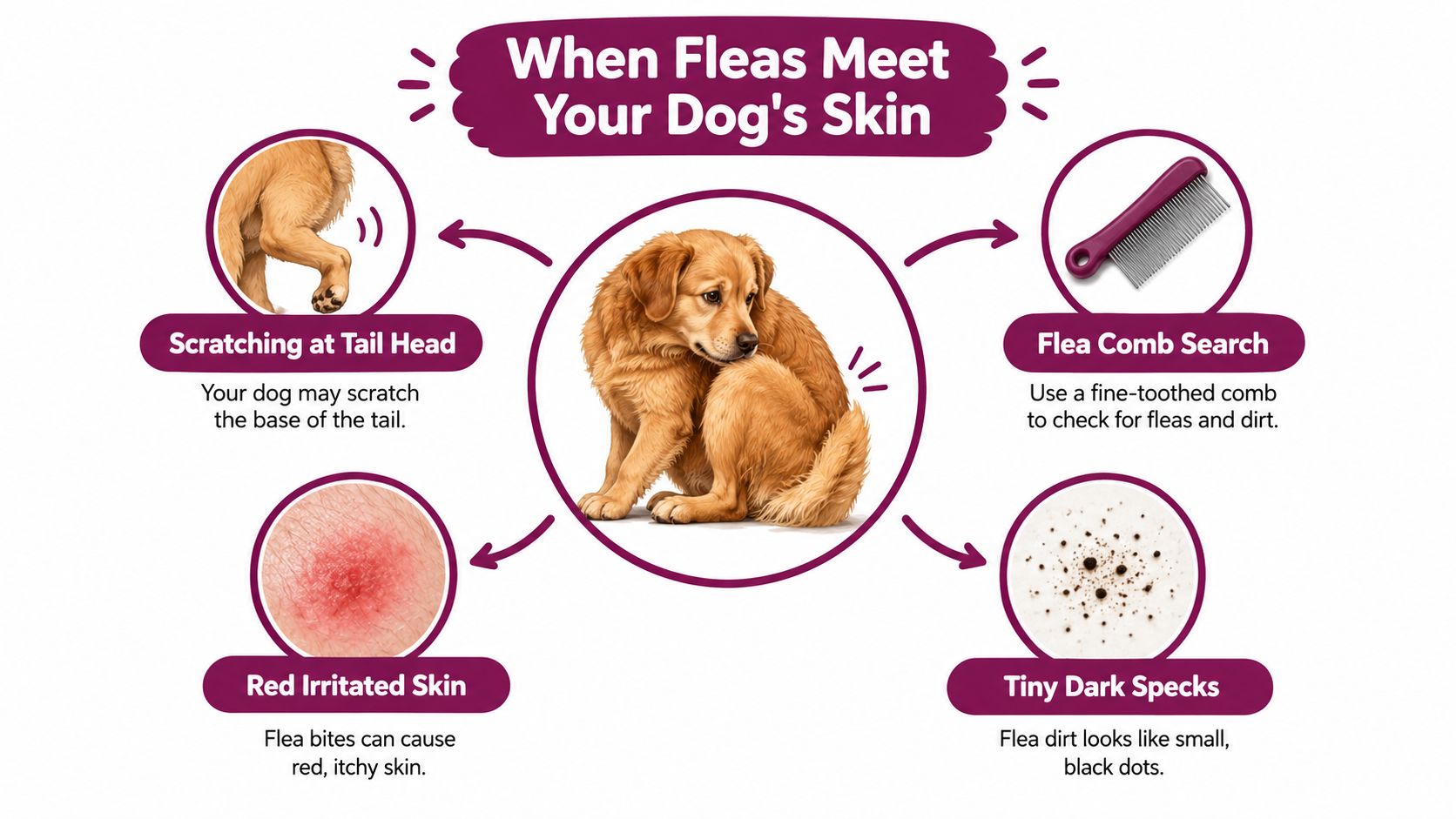
Picture a typical evening check. Your dog scoots, twists around, and nibbles the rump just above the tail. You run a fine flea comb over the lower back and find a few dark specks, maybe one fast-moving flea, maybe none at all. The skin underneath still looks red and feels warm, and the scratching starts again minutes later.
That scene makes sense once you know the main culprit. In many dogs, the problem isn't the bite wound itself. It's flea allergy dermatitis, often shortened to FAD, an immune reaction to proteins in flea saliva. A sensitized dog can react strongly to a small number of bites, so the itch you see isn't always in proportion to the fleas you can find.
Why a Small Problem Looks Big
Scratching and biting damage the surface your dog is trying to soothe. Hair breaks, crusts form, and the irritated area becomes easier for bacteria and yeast to colonize. Soon you're not looking at one problem, but at flea exposure plus inflamed, self-traumatized skin.
A few bites can drive a big reaction in a sensitized dog, so finding no fleas during one combing doesn't rule fleas out.
Veterinary care usually ties three steps together. You control parasites on every in-contact pet, you manage flea life stages in the home when infestation is heavy, and you treat itching and skin lesions separately. Skipping any one step often explains why improvement stalls. Our overview of fleas and ticks on pets gives useful background on how these parasites differ before you choose a control plan with your veterinarian.
How Flea Saliva Triggers the Reaction
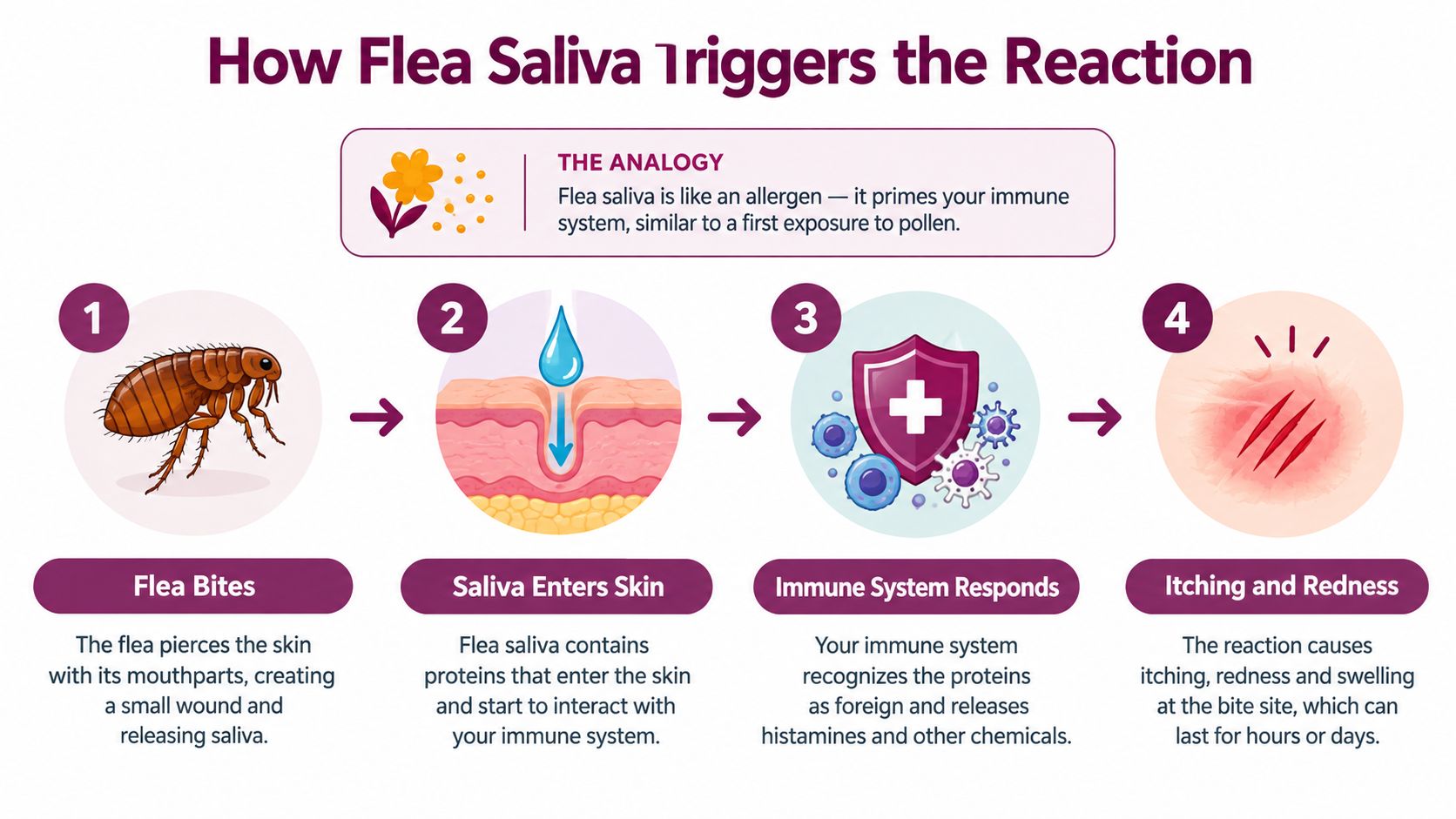
Think of flea saliva like pollen for a person with hay fever. The first exposures may prime the immune system without dramatic signs. Later, the system recognizes those saliva proteins quickly and overreacts, turning a tiny bite into days of itching.
From Bite to Itch in Four Steps
- The flea feeds. As it takes a blood meal, saliva enters your dog's skin to help feeding.
- The immune system recognizes saliva proteins. In a sensitized dog, immune cells treat those proteins as a threat worth a large response.
- Inflammatory signals are released. Mast cells and other immune cells release histamine and related mediators, blood vessels widen, and fluid and inflammatory cells move into the area.
- Your dog feels intense pruritus. That's the medical word for itch. Redness, small bumps called papules, crusts, and scratching follow.
The Merck Veterinary Manual description of flea allergy dermatitis notes that inflammation can produce intense pruritus, papules, pustules, excoriations, and seborrhea, with secondary bacterial or yeast complications. Lesions often concentrate over the caudal dorsum, tail base, rump, and proximal hind limbs, which in plain language means the rear half of the back and the tops of the back legs.
How common is this pattern? In a 2025 study of 983 dogs in mainland Portugal, 6.6% of all dogs examined had FAD, including 65 affected animals, according to the 2025 Portugal epidemiological study of flea allergy dermatitis. Among flea-infested dogs, 16.1% had FAD compared with 1.8% of dogs without detected fleas in that same study. Most infested dogs didn't have recorded FAD, which reminds us that infestation and allergy aren't identical.
Why Testing and Visual Checks Have Limits
A highly allergic dog may groom away fleas and flea dirt before you look. Blood or skin tests for flea allergy also have limits, so veterinarians don't rely on them alone. The pattern of itch, where lesions sit, exposure history, and response to rigorous flea elimination usually carry more weight.
Clinical Signs You Can Check at Home
You don't need special equipment to gather helpful information. A calm belly rub, good light, and a flea comb over white paper can reveal a pattern. Describe location, timing, and what the skin looks like, because those details help your veterinarian separate flea allergy from other itchy diseases.
Start With the Classic Rear-End Pattern
- Tail base and lower back. Look for redness, crusts, broken hairs, and small raised bumps where your dog chews most.
- Rump and outer thighs. Hair thinning here, especially on both sides, fits the classic distribution.
- Belly and inner thighs. Some dogs show red, irritated skin and papules in thinner-haired areas, and generalized disease can occur.
- Flea dirt. Dark specks that smear reddish brown on a damp white paper towel suggest digested blood from flea feces, not ordinary dirt.
Hair loss deserves its own note because owners often assume the hair fell out. Often your dog has chewed or scratched it away. If you're weighing that possibility, whether fleas can cause hair loss in dogs walks through how self-trauma changes the coat.
Signs That Suggest More Than Simple Irritation
Pustules look like small pimples and can point toward bacterial involvement. Crusts and scabs show the surface has been damaged and is trying to heal. A greasy or flaky coat, sometimes called seborrhea, tells you normal skin turnover and oil production are disrupted.
Behavior counts too. Restlessness at night, sudden spinning to bite the rump, rubbing along furniture, and a wet, rapidly worsening patch often called a hot spot all signal discomfort that's escalating. Scooting can happen with rear-end itch, although anal gland and other causes also need consideration, so don't assume fleas explain it every time.
Call sooner rather than later if you notice odor, spreading redness, open wounds, marked hair loss, or itching that interrupts sleep and eating.
Take dated photos in the same light every few days. You'll spot whether lesions are expanding, and your veterinarian gets a timeline instead of a single snapshot.
Secondary Infections and Why the Dog Is Still Itchy
Your dog is still scratching two weeks after you started flea control. Does that mean the product failed? Not necessarily. Four different problems can overlap, and they don't resolve on the same schedule.
Telling Overlapping Problems Apart
| Problem | Typical signs | Odor present | Lesion pattern | When it is likely |
|---|---|---|---|---|
| Ongoing flea exposure | New bites, flea dirt returns, itch flares after outdoor or pet contact | Usually no | Tail base, rump, hind limbs | A pet in the home is untreated, doses were missed, or immature fleas keep emerging |
| Post-bite inflammation | Redness and itch gradually fade, no new pustules | No | Original bite areas | Fleas are controlled but saliva-triggered inflammation hasn't settled yet |
| Secondary bacterial infection | Pustules, crusts, moist sores, pain when touched | Often yes | Scattered or spreading patches, hot spots | Scratching has broken the skin barrier |
| Secondary yeast overgrowth | Greasy skin, scaling, thickened or darkened patches, persistent licking | Often a musty odor | Skin folds, belly, paws, areas kept moist by licking | Inflamed, moist skin lets yeast such as Malassezia multiply |
Self-trauma sets this cascade in motion. Claws and teeth create tiny breaks, licking adds moisture, and the damaged barrier lets organisms that normally live in small numbers multiply. That's why a dog can stay intensely itchy after adult fleas disappear. You're now treating inflamed, possibly infected skin, not just parasites.
Historical clinic data show how often these layers coexist. In one clinic group summarized in veterinary literature, 40 dogs presented with dermatitis complaints, 12 dogs or 30% had flea infestation, and 4 dogs or 10% had both flea infestation and Malassezia infection, figures reported in the FDA guidance on safe use of flea and tick products context for recognizing flea-related irritation and secondary infection risk. Treat that as a clinic snapshot, not a prediction for your dog.
One caution matters here. Increasing anti-itch treatment without confirming parasite control and checking for infection can mask another diagnosis, such as mange, environmental allergy, or food allergy. Persistent or changing signs are a reason to reassess, not to add another product.
How a Veterinarian Reaches the Diagnosis
There's no single test that stamps a case as flea allergy. Your veterinarian builds the answer from history, lesion pattern, parasite evidence, and how your dog responds once fleas are rigorously eliminated.
What Happens During the Workup
- History first. When did itching start, where is it worst, which preventives have you used, and are all pets treated? Missed doses and untreated housemates matter.
- Skin and coat exam. Your veterinarian maps lesions, combs for fleas and flea dirt, and checks ears, paws, and skin folds for a broader allergy pattern.
- Simple skin tests. Tape impressions or swabs examined under a microscope, called cytology, can identify bacteria and yeast. Skin scrapings or other tests may be used when mites or fungal infection are possible.
- Ruling out look-alikes. Sarcoptic mange, atopy, food allergy, and dermatophytosis, commonly called ringworm, can mimic or coexist with flea allergy.
Intradermal and serum IgE tests for flea antigens have limited sensitivity and specificity and aren't recommended as stand-alone diagnostic tests. A negative result doesn't clear fleas, and a positive result doesn't prove fleas explain every sign.
If you want broader background before the visit, this guide for pet owners with itchy dogs from Pure Paw Labs can help you organize your observations. Pair it with practical preparation, clear photos, a note of when itching peaks, and packaging or records for every preventive and shampoo you've used.
You can also review how veterinarians approach dog skin allergy treatment to understand why diagnosis comes before product selection. None of this replaces an exam. It makes the visit faster and more focused, and it helps you avoid guessing at a diagnosis your dog can't confirm for you.
Treating the Skin, the Parasite, and the Environment
Effective care works on three fronts at once. If you only soothe skin, new bites restart inflammation. If you only kill adult fleas today, emerging fleas and infected skin can keep your dog miserable.
Three Linked Parts of Treatment
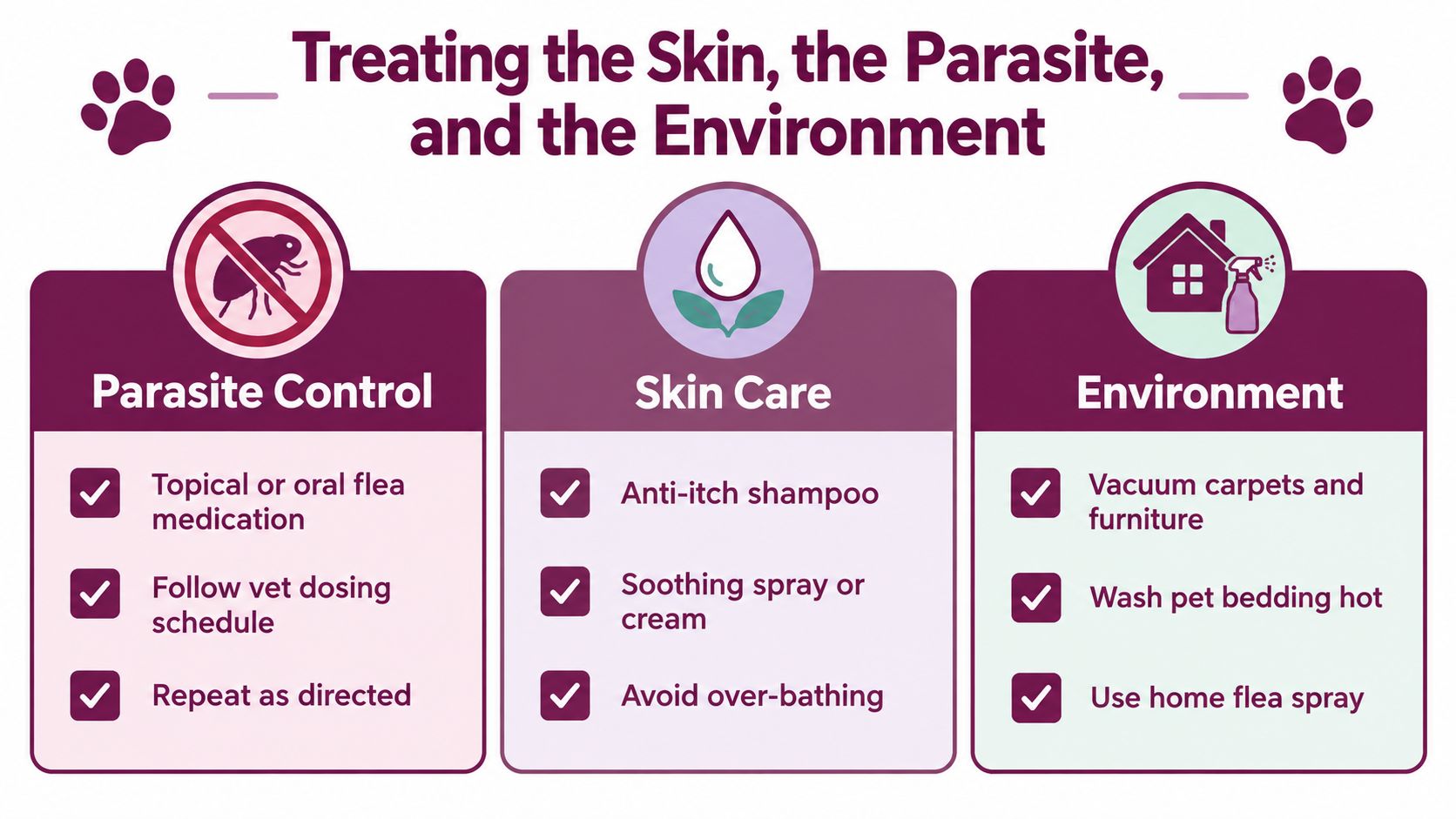
1. Parasite control on every in-contact animal. Your veterinarian may recommend an adulticide, a product that kills adult fleas, for every dog and cat in the household. Leaving one untreated pet gives fleas a safe host and restarts the cycle. Follow label species, age, and weight directions exactly, and don't split or substitute products without veterinary guidance.
2. Environmental control during heavier infestations. Wash bedding in hot water, vacuum carpets, furniture, and baseboards thoroughly, and repeat often while fleas are emerging. Vacuuming also removes eggs and larvae from fibers and encourages pupae to emerge where control measures can reach new adults.
3. Separate treatment for itch and lesions. Your veterinarian may prescribe antipruritic medication to control itching, antimicrobial therapy when cytology confirms bacterial or yeast involvement, or a medicated shampoo as supportive care. Prescription selection and dosing belong with your veterinarian, especially when skin is broken or your dog takes other medicines. Background on topical medication for itchy skin in pets can help you ask informed questions about supportive options.
Why One Dose Doesn't Always End It
The flea life cycle explains delayed relief. The Merck Veterinary Manual guide to fleas of dogs notes that cat fleas begin reproducing about 1 to 2 days after a female's first blood meal, eggs hatch in approximately 1 to 6 days, and larvae usually develop for 5 to 11 days. Pupae can remain protected in cocoons for several weeks and, in some conditions, up to a year. A typical cycle takes 3 to 8 weeks, so consistent prevention must outlast emerging stages.
Treat the parasite, the home, and the skin together. Missing one leg of that stool is a common reason cases drag on.
Safe Preventive Options and What to Discuss With Your Vet
Preventives generally fall into topical products applied to skin, oral products given by mouth, and collars worn continuously. Some are over the counter and some are prescription. The right category depends on your dog's health history, other pets at home, bathing and swimming habits, and whether you also need tick or heartworm coverage.
Specific prescription preventives your veterinarian may discuss include products such as NexGard, Bravecto, and Simparica Trio, and prescription anti-itch therapy such as Apoquel may be considered for itching and inflammation when your veterinarian judges it appropriate. These aren't interchangeable, and one shouldn't be positioned as a direct replacement for another without veterinary advice. Bandana Rx lists prescription flea preventives and allergy support products that require valid veterinary authorization before dispensing.
A Safety Conversation Worth Having
Systemic products in the isoxazoline class need individualized review. The FDA fact sheet on isoxazoline flea and tick products states that the FDA considers these products safe and effective overall, but they have been associated with neurologic adverse reactions including muscle tremors, ataxia, and seizures in some dogs and cats. That's not a blanket reason to avoid the class. It means your veterinarian should review seizure history and other medical issues before choosing a product.
Ask these questions at the appointment:
- Is this labeled for my dog's species, age, and weight? Never use a dog product on a cat unless the label explicitly allows it.
- What should I watch for after the first dose? Know which signs warrant a same-day call.
- How does this fit with current medicines and conditions? Bring a full medication list.
- What happens if I miss a dose? Get instructions before it happens.
If cost or convenience tempts you toward store shelves first, reading about the effectiveness of over the counter flea products can frame a better conversation. For preventives that must be reordered regularly, AutoShip can be a convenient way to avoid gaps, alongside Buy Once ordering, when that option is available for the product your veterinarian selects. Preventing bites year round remains the long-term foundation for a flea-allergic dog.
Putting It All Together for Your Dog
For a flea-allergic dog, success looks less like a single dramatic treatment and more like a steady routine. You prevent new bites, you watch the rear-end skin where trouble starts, and you respond early when odor, crusting, or renewed chewing suggests a second problem has joined the first.
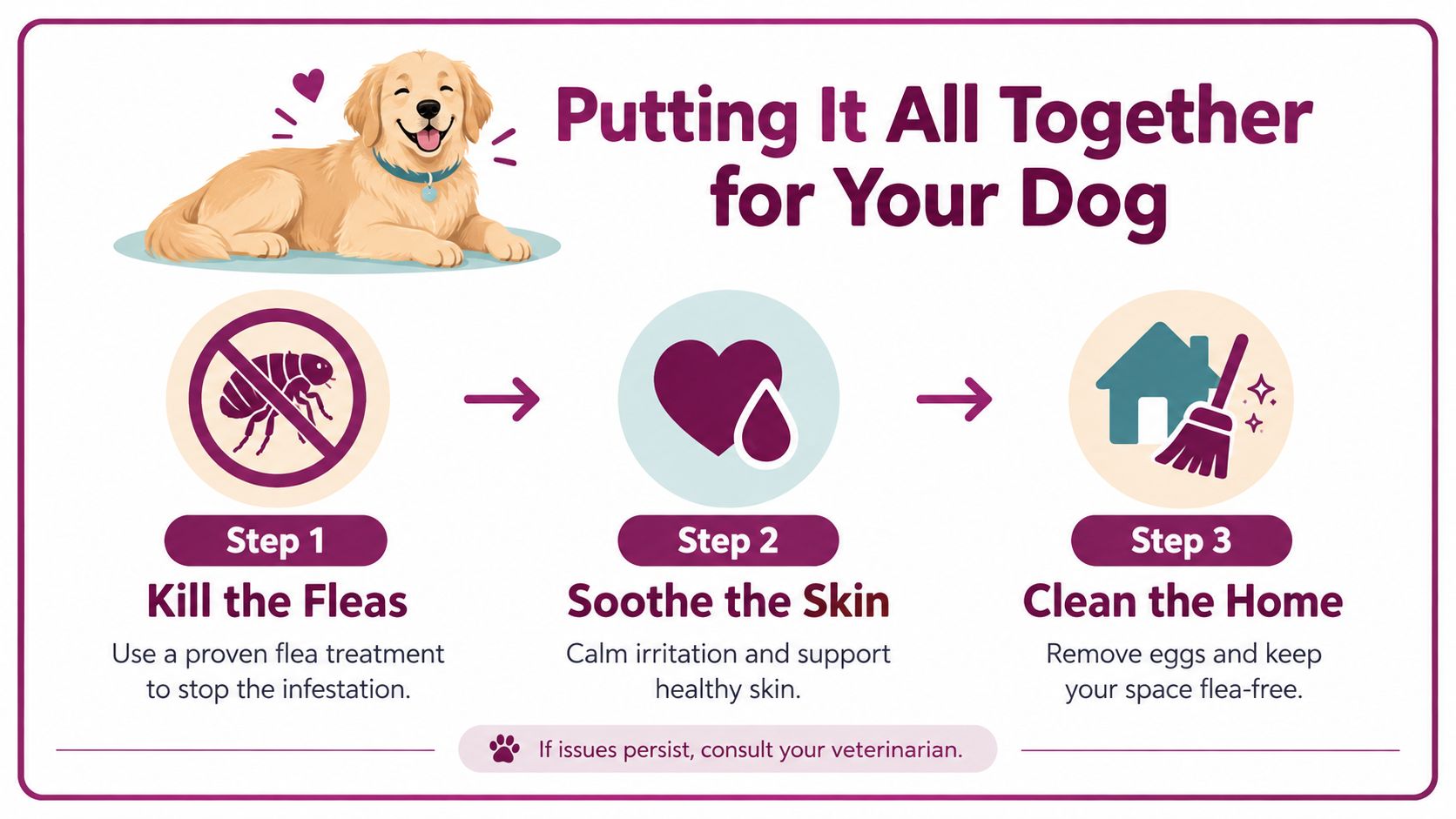
A Prevention Checklist You Can Keep
- Keep every in-contact dog and cat on prevention. Follow your veterinarian's schedule year round without gaps.
- Comb the tail base weekly during recovery. Note flea dirt, new bumps, or returning hair loss.
- Wash bedding and vacuum resting areas often. Continue through several flea life cycles after a heavy infestation.
- Photograph problem areas. Compare images weekly so slow improvement or subtle worsening isn't missed.
- Recheck when signs change. New odor or pustules can mean infection needs separate treatment.
Red Flags That Warrant a Vet Visit
Don't keep cycling through home products if you see open wounds, widespread redness, yellow discharge, rapidly spreading hair loss, strong odor, pain when touched, or itching that persists despite correctly given prevention. Lethargy, loss of appetite, tremors, unsteady walking, or seizures after any flea product also deserve prompt veterinary advice.
Steady prevention gives inflamed skin time to quiet down. Gaps give fleas time to restart the whole cycle.
You're not expected to sort parasite exposure, allergy, and infection apart on your own. Bring your notes, keep prevention consistent, and let your veterinarian adjust skin treatment as the picture changes. That partnership is how an intensely itchy dog gets comfortable again and stays that way.
When your veterinarian has chosen a flea preventive or prescription itch therapy for your dog, Bandana Rx can help you fill that plan with prescription and over-the-counter pet medications delivered to your home, including regularly reordered preventives. Browse the options your veterinarian recommends, keep your dog's prevention on schedule, and reach out to your veterinary team promptly if itching, odor, or skin lesions return.