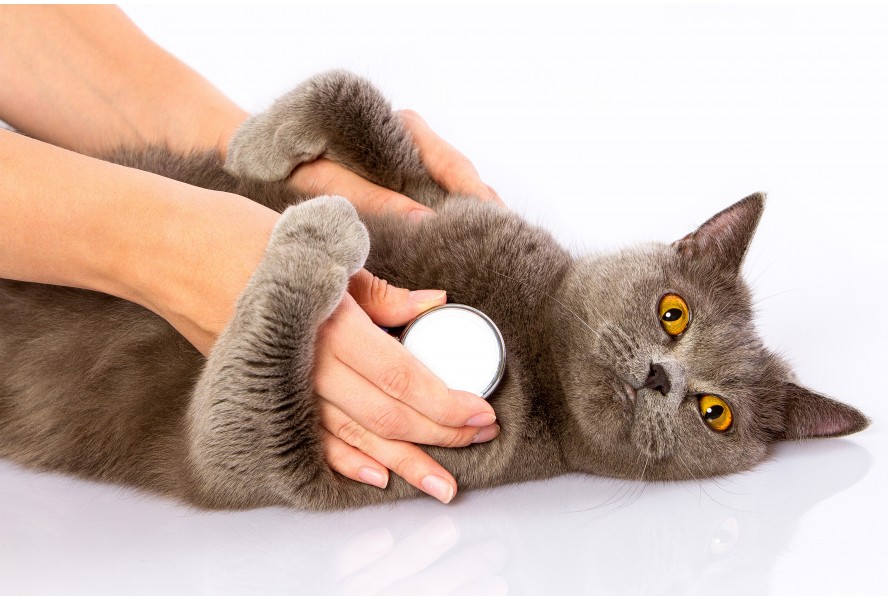

A cat who suddenly squints, rubs at one eye, or develops discharge may look as if they need a little moisture. Artificial tears can help protect and comfort the eye's surface, but they don't reveal why the eye is irritated or fix every cause of dryness. If you're deciding whether to try a lubricant or call your veterinarian first, the difference matters.
Table of Contents
- What Artificial Tears Do for a Cat's Eye
- Artificial Tear Types and Ingredients Compared
- When Lubrication Helps and When It Is Not Enough
- How to Apply Artificial Tears Safely
- Preservatives, Storage and Discarding Artificial Tears
- Choose the Right Eye Product With Your Veterinarian
What Artificial Tears Do for a Cat's Eye
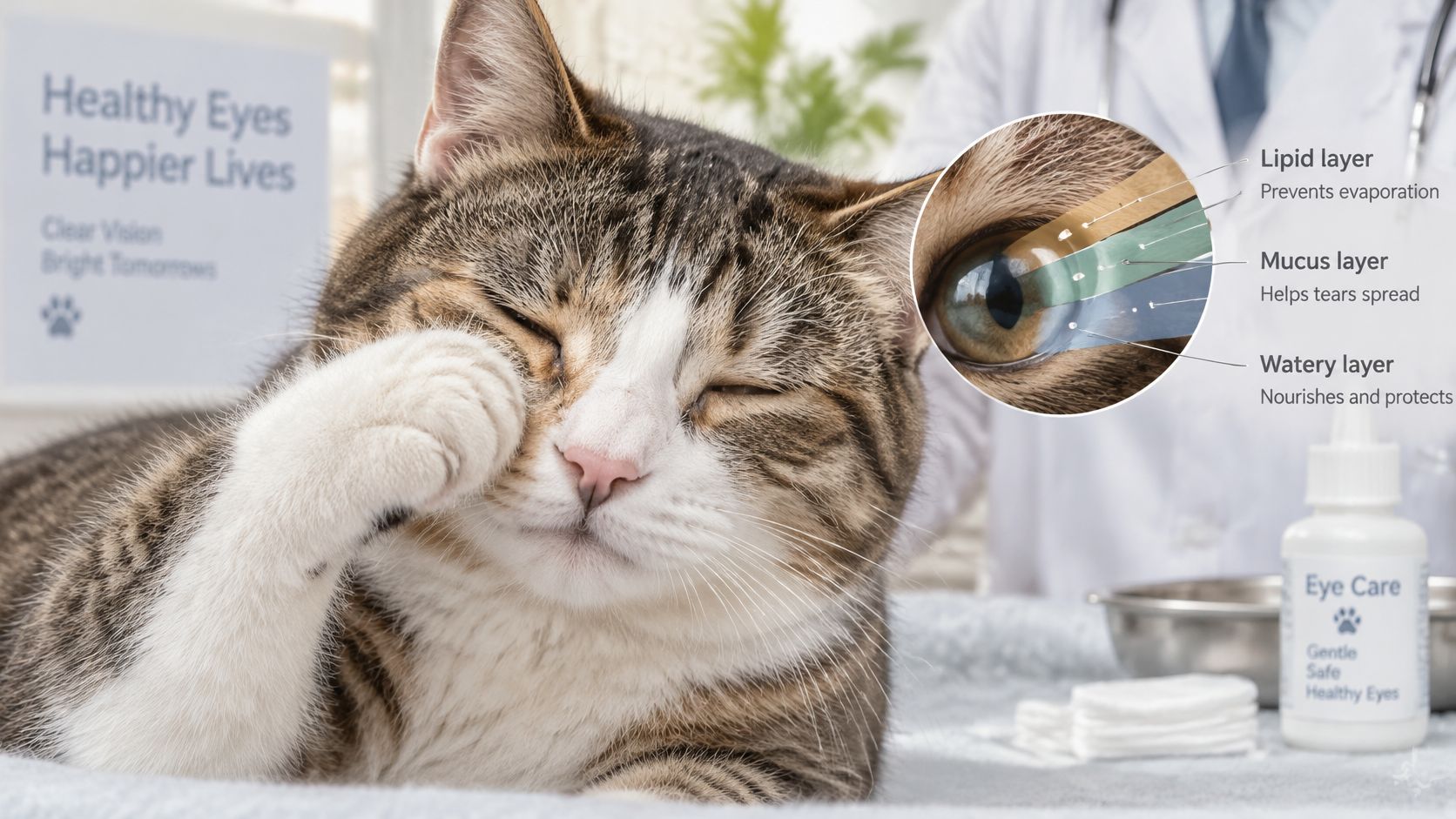
If your cat is squinting or rubbing an eye, it's natural to wonder what keeps a healthy eye comfortable. The answer isn't just water. A cat's tear film has watery, mucus, and oily components, each with a different job. The lacrimal gland and gland in the third eyelid contribute the watery component, conjunctival goblet cells make mucus, and meibomian glands in the eyelids produce oil. Together, these components help protect the eye's surface and slow evaporation, as described in the Merck Veterinary Manual's guide to eye structure and function in cats.
The mucus helps tears adhere to the cornea, the clear front surface of the eye. The oily layer helps keep the watery part from evaporating too quickly. Think of the tear film as a protective coat on car paint: it smooths the surface and helps slow drying, but it can't repair damage underneath.
Artificial tears imitate parts of this natural protection. Demulcents, sold as solutions or gels, add moisture and may increase thickness. Emollients, typically ointments with oily ingredients, form a barrier that can slow drying. A veterinarian may recommend one of these types to support comfort and surface protection, but the right choice depends on what's happening in the eye.
A lubricant supports the eye's surface while the cause is treated. It doesn't treat a virus, infection, or ulcer, and it can't correct the reason tear production has dropped.
The sections below compare product types and explain when an examination should come first. That distinction helps you avoid treating a change in your cat's eye as simple dryness when it may need a different kind of care.
Artificial Tear Types and Ingredients Compared
| Type | Ingredients named in veterinary references | How long it stays | Effect on vision | Typically considered for |
|---|---|---|---|---|
| Solutions or drops (demulcent) | Varies by product; references name carboxymethylcellulose, hydroxypropylmethylcellulose, polyvinyl alcohol, povidone, glycerin | Shorter, needs more frequent use | Little or none | Routine lubrication and mild intermittent irritation, as directed by a veterinarian |
| Gels (demulcent) | Varies by product; references name hyaluronic acid, sodium hyaluronate, dextran 70, carbomer | Longer than drops | Possible brief blurring | Dryness needing longer surface contact, including protection around sedation or anesthesia under veterinary direction |
| Ointments (emollient) | Oily bases such as mineral oil, paraffin, petrolatum, wax | Longest | Noticeable blurring | Reduced blinking and situations needing prolonged barrier protection, as directed by a veterinarian |
The main trade-off is viscosity, or how thick a product is. Thin drops are easier to spread across the eye, but don't usually stay as long as gels or ointments. Thicker products tend to remain on the surface longer, and they can blur vision temporarily. Veterinary references describe tear replacements as solutions, gels, or ointments, with ingredient families including cellulose derivatives, hyaluronic acid, carbomer, mineral oil, and petrolatum; the Merck Veterinary Manual's guide to tear replacements explains why the label's formulation matters.
For a cat with mild, occasional irritation, a veterinarian may consider a lower-viscosity drop. A gel or ointment may make more sense when longer contact is needed, including when blinking is reduced, but it can be less convenient if the product temporarily blurs vision. The best fit depends on your cat's examination and care plan, not just on which product seems easiest to apply.
Ingredient lists also differ between brands, and products aren't automatically interchangeable. A product labeled for people isn't automatically appropriate for a cat, particularly if it contains added ingredients or medication. Some lubricants are sold over the counter, while others are dispensed only with a veterinary prescription. Check the label and ask your veterinarian which category applies to the specific product being considered. Use the ingredient list and product type to match your veterinarian's written instructions, rather than relying on the general label “artificial tears.” For information about a different kind of eye medication, see this explanation of a prescription ophthalmic suspension, but don't treat a medicated product as a substitute for a lubricant or use it without veterinary direction.
When Lubrication Helps and When It Is Not Enough
| Situation | Why the tear film is affected | Role of artificial tears | Veterinary step still needed |
|---|---|---|---|
| Keratoconjunctivitis sicca (KCS) | Reduced tear production or altered tear film, often linked to chronic feline herpesvirus-1 | Lubricates and stabilizes the surface; does not restore tear production | Diagnosis, including tear testing, and a product and schedule chosen by the veterinarian |
| Herpesvirus-associated conjunctivitis | Feline herpesvirus-1 can disrupt tear-film stability | Supports ocular comfort and surface protection | Examination and any other treatment the veterinarian decides on |
| Superficial corneal ulcer | Damaged corneal surface | Supportive maintenance alongside veterinary treatment; never a substitute | Prompt examination, staining and prescribed treatment |
| Sedation with medetomidine or xylazine | Significantly reduced tear flow, which can dry the cornea | Protective lubrication during sedation | Monitoring of the eye during and after sedation as directed |
| General anesthesia | Tear production stayed significantly reduced for at least four hours after the procedure in one study of 42 cats undergoing non-ophthalmic procedures | Lubrication given by the anesthesia team during the procedure | Monitoring by the anesthesia team |
| Facial paralysis | Decreased tear production, which raises the risk of drying | Helps when tear production decreases | Corneal monitoring and prompt treatment of any ulceration |
| Feline dysautonomia | Decreased lacrimation is among the reported eye signs | One part of supportive nursing care | Management of the underlying condition by the veterinarian |
Lubrication can be part of care for keratoconjunctivitis sicca (KCS), a condition involving insufficient tears or an altered tear film. KCS is uncommon in cats compared with dogs, but feline cases have been associated with chronic feline herpesvirus-1 infection that can scar the conjunctiva and tear-duct openings. Inadequate tears may lead to persistent conjunctivitis, discharge, blood-vessel growth on the cornea, pigmentation, or ulceration. The Merck Veterinary Manual's overview of feline and animal lacrimal disorders describes these possible changes and the role of tear replacements.
Similar outward signs can also come from an infection, corneal ulcer, uveitis, or glaucoma. A veterinarian may use a Schirmer tear test to assess tear production and fluorescein staining to look for corneal damage. Lubrication can support the surface while the underlying problem is assessed, but it can't tell you what that problem is.
Arrange a veterinary examination if your cat has any of these signs:
- Squinting or apparent pain, including holding an eye closed.
- Persistent redness that doesn't settle.
- Discharge, especially if it keeps returning.
- Cloudiness or a change in the clear surface of the eye.
- Rubbing at the eye or repeatedly pawing at the face.
A suspected corneal ulcer needs prompt examination. Don't use over-the-counter drops to wait it out: a lubricant can't diagnose or treat an ulcer, infection, or another eye disorder. A clinical review of feline corneal injury and peri-anesthetic eye care describes reduced tear flow with certain sedatives and after anesthesia, which is why veterinary teams may protect and monitor the eye during these situations. For related information about a prescription eye medication, read this guide to ofloxacin eye drops for cats; a prescription medication should be used only when the veterinarian has prescribed it for your cat.
Some cats may need lubricating drops every 2–6 hours, and severe or persistent cases may require long-term supplementation, as noted in veterinary guidance on feline dry eye. Your veterinarian should decide the product and schedule, particularly if signs are ongoing or worsening. If the cause is unknown, have the eye examined first, then lubricate as directed.
How to Apply Artificial Tears Safely
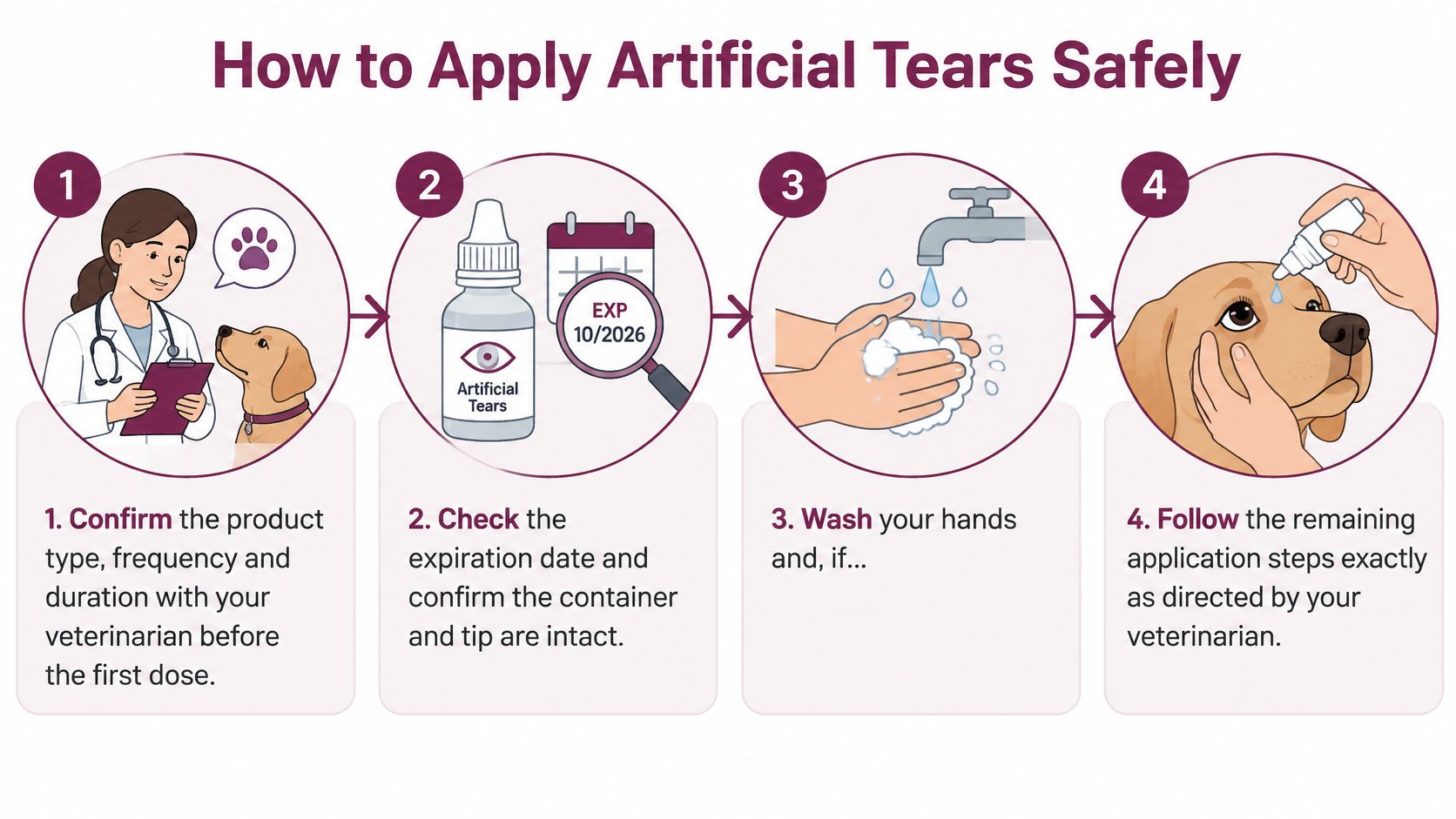
Confirm the product type, frequency, and duration with your veterinarian before the first dose. Lubrication supports the tear film, but it does not correct the reason tears are low or unstable. Use the schedule you were given.
Check the product. Read the label and expiration date, and make sure the container and applicator tip are intact. Do not use a product with a damaged container or tip.
Wash your hands. If possible, ask someone to hold your cat calmly and steadily. A quiet hold reduces sudden movement and rushing.
Position your cat and applicator. Support the head gently and hold the tip above the eye without touching the cornea, eyelid, lashes, or surrounding hair. Contact can contaminate the tip.
Make a small pocket. Gently pull down the lower eyelid to create space for the product. Keep movements calm and do not force the eye open.
Apply the product. Release one drop, or a small ribbon of gel or ointment, into the pocket. Use only the amount your veterinarian instructed.
Let the product spread. Allow your cat to blink, then gently close the eyelid so the lubricant spreads across the surface. Avoid pressing on the eye.
Space other eye medications as directed. Follow the interval your veterinarian specified between the lubricant and any prescribed product. Products given too close together may dilute or wash out the prescribed medication.
Keep a simple dose record. Note the time of each application and any squinting, redness, discharge, or pawing. The record helps describe patterns accurately at follow-up.
If buildup around the eye makes application difficult, ask your veterinarian what cleaning approach fits your cat. A wash product is not a lubricant and does not treat eye disease. You can review this information about ophthalmic wash when discussing eye care with your veterinarian.
The two most common technique slips are touching the tip to the eye and giving products too close together. If either happens, pause and follow your veterinarian's instructions for continuing safely rather than changing the plan on your own.
Preservatives, Storage and Discarding Artificial Tears
Packaging affects how you handle a lubricant. Discard a single-use vial after one application, even if some liquid remains, and follow the package instructions for a multidose bottle. For a multidose product, write the opening date on the container and discard it according to the label's post-opening period. That period can differ by product, so don't assume one bottle's instructions apply to another.
When frequent administration is needed, veterinary ophthalmology guidance considers preservative-free, single-use products preferable from a technical standpoint. Preservatives may irritate the ocular surface, particularly with prolonged use. If your cat needs regular or extended treatment, ask whether a preservative-free option is appropriate rather than changing products on your own. The veterinary ophthalmology guidance on dry eye disease discusses product viscosity and preservative considerations.
A study in healthy cats provides a caution about repeated exposure to an ophthalmic preservative, not a finding about artificial tears. Over 15 days, topical ketorolac, an NSAID rather than a tear lubricant, caused greater discomfort, meibomian-gland loss, and oxidative changes in the benzalkonium-chloride-preserved formulation than in the preservative-free formulation, according to the 2026 Veterinary World study. This doesn't establish that all preserved lubricants cause the same effects. It does make preservative exposure worth discussing when a cat needs frequent ophthalmic treatment.
If your cat develops stinging, new redness, more squinting, or more rubbing after a dose, stop using that product and contact your veterinarian for advice. Daily use may be appropriate for some cats, but the answer depends on the diagnosis, product, and treatment plan. Don't reduce or increase a prescribed frequency, or switch preservative status, without veterinary guidance.
Storage checks to make each time
- Follow the label's storage instructions. Keep the container at the temperature specified and close the cap securely after use.
- Check before applying. Read the expiration date and don't use a product that changes color, smells unusual, or contains particles.
- Prevent cross-contamination. Keep products away from children and other pets, and never share an eye product between animals.
- Identify each container. If more than one cat is being treated, label each product with the cat's name and the opening date.
- Confirm the post-opening limit. If you can't find it on the label, ask the pharmacist or veterinarian. Shelf-life guidance differs by product.
For more on interpreting instructions and storage details, see Bandana Rx's guide to reading pet medication labels. Good storage can help you handle a product correctly, but it can't make an unsuitable product safe for your cat.
Choose the Right Eye Product With Your Veterinarian
The product type, frequency, and duration should follow your veterinarian's examination, not the label alone. Bring a clear account of when the signs started, whether your cat recently had sedation or anesthesia, what other eye medications they're using, and what you've already tried. Those details can help your veterinarian decide whether lubrication is appropriate and whether the eye needs testing or other care first.
At the appointment, ask practical questions:
- Which type fits this diagnosis? Find out whether your cat needs a solution, gel, or ointment, and whether a preservative-free or single-use option makes sense.
- What schedule should I follow? Confirm how often to apply the product and how long to continue, without substituting a schedule from another cat or product.
- Which changes need follow-up? Ask which signs mean you should contact the clinic or return for an examination.
- How is the product obtained? Some lubricants are available over the counter, while other eye products require a prescription. Ask which category applies to the specific product your veterinarian recommends.
If your veterinarian prescribes an eye medication, don't start, stop, combine, or substitute it without their guidance. For a general discussion of a prescription eye product, see this article on diclofenac sodium ophthalmic solution. It isn't a recommendation to use that medication for your cat; the veterinarian must determine which treatment is appropriate.
Bandana Rx is a licensed pet pharmacy. We dispense prescription medications only after receiving authorization from your pet's veterinarian, and we'll make every effort to work with the veterinarian to obtain timely authorization and keep you informed during the process. Once your veterinarian has confirmed the plan, compare the product name, strength, and package size with their instructions before ordering.
Bandana Rx offers prescription and over-the-counter pet health products, including eye-care options, while prescription medications require authorization from your veterinarian. For products that match your cat's veterinary care plan, visit Bandana Rx.