

In a 2013 northern Italy trap, neuter and release study, cytological evidence of otitis externa was found in 103 of 187 stray cats, or 55.1%, according to a veterinary imaging review published by the National Library of Medicine. That number doesn't mean more than half of pet cats have infected ears. It shows how much the answer changes with the population, outdoor exposure and the test used. Your cat's scratching ear needs the same careful approach. The right cat ear infection drops depend on what's in that canal and whether the eardrum is intact, not on odor or discharge alone.
Table of Contents
- Ear Drops by Cause and Why Symptoms Cannot Pick One
- Check the Eardrum Before Any Drop Goes In
- Why Ear Drop Labels Differ by Product
- How to Apply Cat Ear Drops Safely
- Warning Signs That Need a Vet Visit Now
- Confirm the Prescription Before You Order Refills
Ear Drops by Cause and Why Symptoms Cannot Pick One
| Likely cause | Drop type a vet may consider | Prescription status | Who confirms it |
|---|---|---|---|
| Bacterial infection | Antibacterial drop, often combined with an antifungal and a corticosteroid | Usually prescription | Veterinarian, using cytology and sometimes culture |
| Yeast (Malassezia) | Antifungal drop, often in a combination product | Usually prescription | Veterinarian, using ear cytology |
| Ear mites (Otodectes cynotis) | Veterinarian directed antiparasitic drop | Prescription | Veterinarian, using otoscopy and cytology |
| Inflammation with pain or swelling | Combination product with a corticosteroid, if suitable | Prescription | Veterinarian decides whether a steroid is appropriate |
| Foreign material, polyp or unclear cause | No drop first; examination and possibly cleaning, sometimes under sedation or anesthesia | Veterinary procedure | Veterinarian, using otoscopy |
What the table is really telling you
Otitis externa means inflammation or infection of the external ear canal. That's a location, not a single cause. Bacteria, yeast, mites, allergy related inflammation, trapped material and growths can all produce a canal that looks red, dirty and sore.
A prescription product often combines jobs because problems overlap. An antibacterial targets bacteria, an antifungal targets yeast, and a glucocorticoid can reduce swelling, pain and discharge from inflamed tissue. A combination isn't automatically better. If mites are driving the irritation, an antibacterial and antifungal mix won't necessarily remove the parasites. If a polyp blocks the canal, drops may not reach the tissue that needs treatment. If the canal is packed with debris, medication may sit on top of wax instead of coating the skin.
That's why leftover drops are a poor shortcut. The bottle in your cabinet was chosen for a previous diagnosis, possibly for a different ear, a different species or a canal in a different condition. Using it because the discharge looks familiar can quiet redness while the underlying organism remains.
Why studies disagree about the likely cause
Population changes the pattern. In one group of 341 cats examined with otoscopy and cytology, Malassezia species were found in 129 cats, or 37.8%, bacteria in 9 cats, or 2.6%, and Otodectes cynotis mites in 3 cats, or 0.9%, as reported in a review of chronic feline otitis published by the National Library of Medicine. Other populations, especially outdoor cats with close contact, can show far more mites and mixed findings.
Those results aren't contradictory. Geography, age, lifestyle, crowding and diagnostic method all shift what a veterinarian finds. A kitten adopted from a group setting, an indoor adult with allergies and a free roaming cat may arrive with the same head shaking for different reasons. General prevalence figures also vary widely because visible signs, an otoscope exam and ear cytology don't detect the same things.
Treat symptoms as clues for the veterinarian, not as a product selector.
Signs that look alike across causes
Owners commonly notice scratching, head shaking, odor, discharge, redness and sensitivity. None of those signs names the organism. Dark debris is often associated with mites, but wax, yeast and dried discharge can also look dark. A sweet or musty smell may make you think of yeast, yet odor can't confirm yeast or rule out bacteria. One ear can look worse than the other even when both need examination.
Pain adds another complication. A cat that pulls away, hisses or stops eating comfortably may have marked canal swelling, an ulcer, a foreign object or deeper disease. Forcing that ear open at home can injure tissue and make later handling much harder. A calm cat isn't necessarily a mild case either, because cats often hide discomfort until handling begins.
Notes worth bringing to the appointment
Write down what you can observe without probing the canal.
- Frequency: Note how often your cat scratches, shakes its head or rubs the ear on furniture.
- Discharge: Describe the color, amount and whether it's dry, waxy or moist, without digging for a sample.
- Sides involved: Record whether one ear or both ears seem affected and whether signs started suddenly.
- Exposure: Mention outdoor time, a new pet, boarding, grooming or contact with an itchy animal.
- Recent products: List every cleaner, drop or home remedy already used, including products made for dogs or people.
- Other changes: Note appetite, balance, hearing responses, facial symmetry and sensitivity when the head is touched.
These details help your veterinarian choose tests and ask better questions. They don't replace otoscopy, which looks into the canal, or ear cytology, which examines discharge under a microscope. Cytology can distinguish yeast, bacteria and mites, while the otoscope helps reveal obstruction and eardrum problems.
The practical sequence is simple. Your veterinarian identifies the cause, checks the canal and eardrum, decides whether cleaning must happen first, then selects cat ear infection drops that fit those findings. The bottle follows the diagnosis.
Check the Eardrum Before Any Drop Goes In
The tympanic membrane, or eardrum, separates the external canal from the middle ear. If it's perforated, liquid placed in the canal can reach structures it shouldn't reach. Some ingredients, including polymyxin B, may be ototoxic if the tympanic membrane is perforated, so product choice changes when the membrane can't be confirmed intact.
Your veterinarian uses an otoscope to look for swelling, foreign bodies, polyps, blocking debris and eardrum abnormalities. A swab for cytology shows bacteria, yeast, mites and inflammatory cells under the microscope. Together, those steps answer two separate questions. What's causing the problem, and is this canal safe for the product being considered?
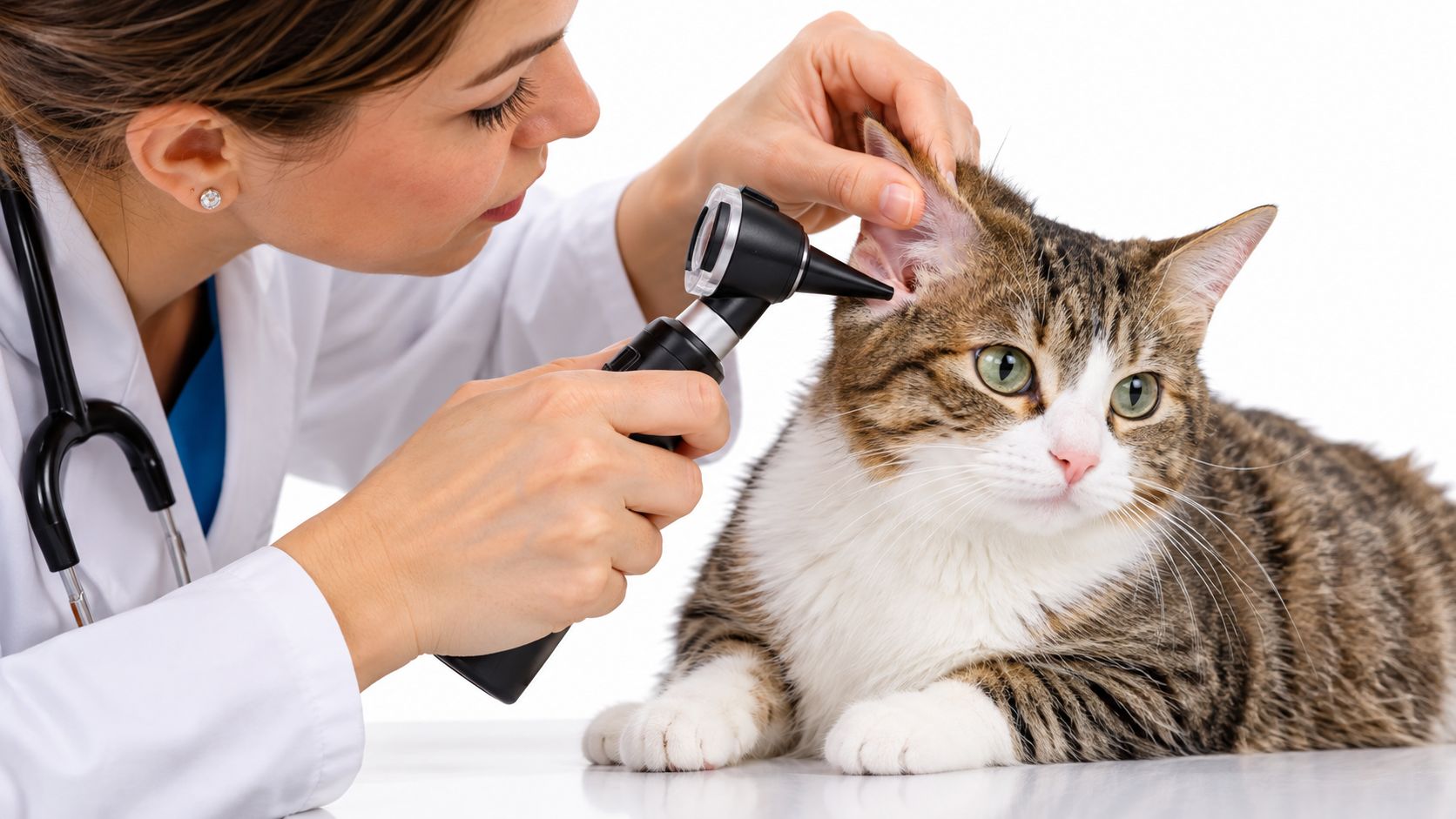
A painful or obstructed ear may not allow a complete awake exam. Sedation or anesthesia can make examination and cleaning safer and less stressful when debris blocks the view or your cat can't tolerate handling. Don't force a painful ear open at home to check it yourself. You can't reliably see the eardrum, and struggling can worsen trauma.
Products to keep out of the ear
Don't use hydrogen peroxide, vinegar or human ear drops unless your veterinarian specifically directs a product for your cat. Irritants can worsen inflamed tissue and increase secretions, creating conditions that support bacterial or yeast overgrowth. A homemade rinse also can't tell you whether the eardrum is damaged.
Many prescription combinations contain an antibacterial, antifungal and corticosteroid in one bottle. That mix may be appropriate for one confirmed case and wrong for another, especially when the eardrum status is unknown. The same caution applies when you read general guidance about how to treat a dog ear infection, because species and label directions differ.
Before you take drops home, ask your veterinarian to confirm that the eardrum was checked and record what was seen. If debris prevented a clear view, ask what that means for product selection and when the ear will be rechecked.
Why Ear Drop Labels Differ by Product
Ear drops with similar purposes can have different species labels, ingredients, warnings and directions. The diagnosis and eardrum check guide the choice; a familiar product name or a similar symptom does not.
| Product | Labeled species | Directions stated on the label | Key warning |
|---|---|---|---|
| Gentavet Otic Solution | Dogs and cats | Follow the bottle label and veterinarian's instructions | Directions apply to that product only; do not infer a dose for another product |
| Simplera | Dogs only; not labeled for cats | Not labeled for cats; no feline directions | Do not use in cats; confirm the tympanic membrane is intact before use |
The FDA labeling record for Simplera and related product information states that Simplera is for dogs only, should not be used in cats, and requires confirmation that the tympanic membrane is intact. The record also reports adverse events after extra-label use in cats, including ataxia, vestibular signs, nystagmus, tympanic rupture and deafness.
A dosing schedule belongs to the specific product and prescription. Before giving a dose, read the bottle and confirm the amount, frequency and treatment length with your veterinarian. Even drops used for the same type of ear condition may differ in concentration, active ingredients, thickness and restrictions.
A label check to do with your veterinarian or pharmacist
- Species: Confirm the label or prescription covers cats.
- Product identity: Match the full product name and strength to the prescription record.
- Amount and schedule: Confirm how much to give in each affected ear and how often.
- Duration: Confirm the stop date and recheck date. They may differ.
- Restrictions: Ask whether use depends on an intact eardrum or veterinary cleaning first.
Use this guide to read pet medication labels, dosage warnings and storage instructions. Keep the original label with the prescription record until treatment and recheck are complete. If the label becomes unreadable, call the prescribing veterinarian or pharmacist rather than trying to reconstruct the directions from memory.
How to Apply Cat Ear Drops Safely
Good technique helps medication reach the canal wall and reduces stress for your cat. Ask your veterinary team to demonstrate with your cat's actual bottle before you leave the clinic. A short practice run often prevents the most common errors at home.
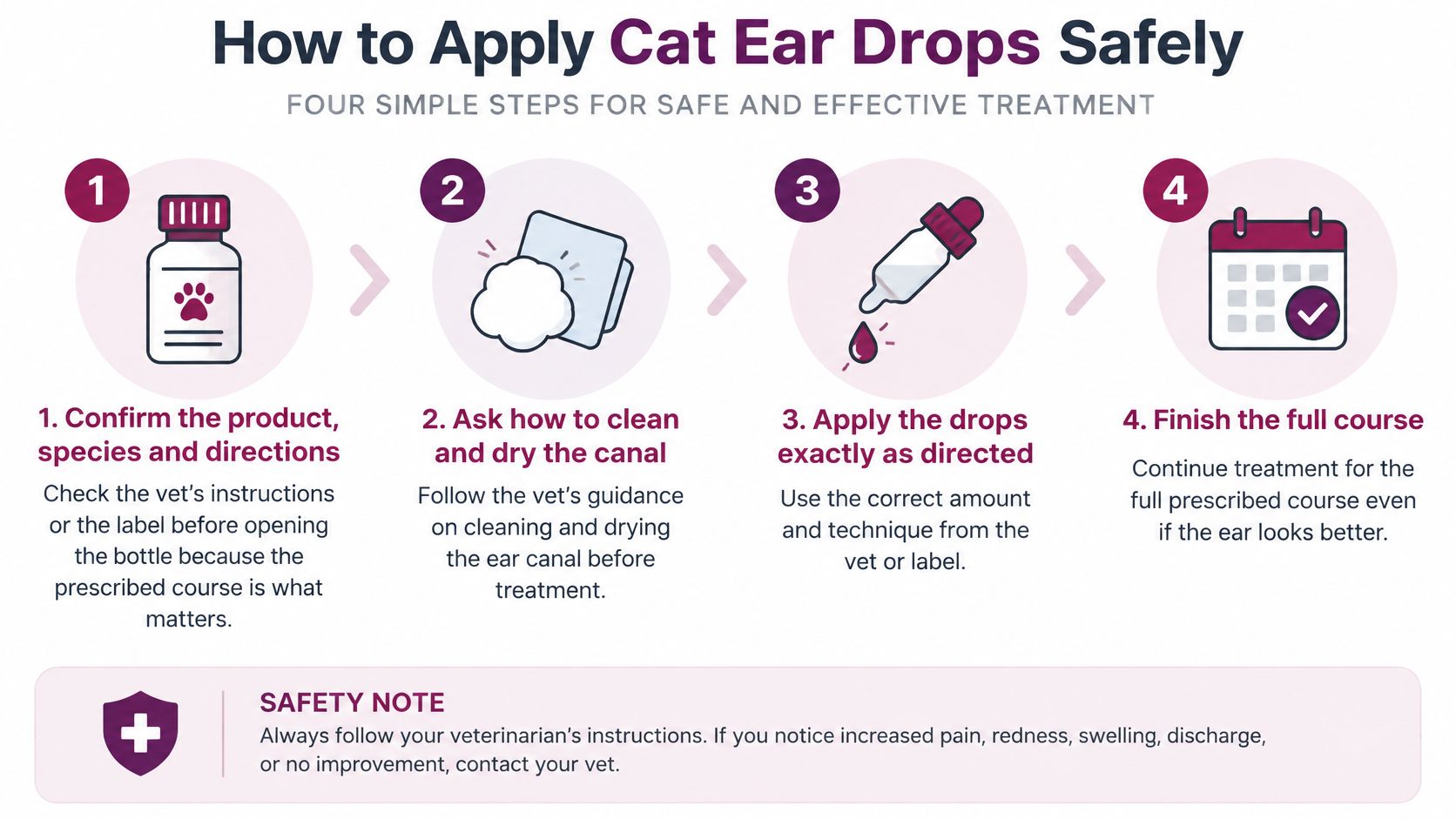
Confirm the product, species and directions before opening the bottle. Read the label every time, especially in a multi pet home. The common slip is grabbing a dog product or an old prescription because the bottles look alike.
Ask how the canal should be cleaned and dried first. Wax and discharge can prevent drops from coating the canal, but cleaning must be gentle and suited to your cat's ear. You can review veterinarian directed options among ear cleansers, but don't add a cleaner that your veterinarian hasn't approved for the current condition.
Warm the bottle only if the label or veterinarian directs it. Cold liquid can startle a cat and make the next dose harder. Don't microwave medication or run it under hot water unless you've been given specific instructions.
Settle your cat before you lift the ear flap. Work on a stable surface, support the head and use a towel wrap if your veterinary team recommends one. Chasing a cat with an open bottle teaches avoidance and increases the chance of a missed dose.
Place the prescribed number of drops into the canal opening. Keep the applicator tip from touching the ear, which helps avoid contaminating the bottle and scraping inflamed tissue. Don't push the tip deep into the canal to make the drops go farther.
Massage the base of the ear gently for several seconds. You may hear a soft squishing sound as liquid spreads. Stop if your cat shows sharp pain, panic or aggression and call the clinic for handling help.
Let your cat shake its head, then wipe only the outer ear. Shaking after massage is expected. Use a soft cloth on visible surfaces and don't insert cotton swabs into the canal.
Record each dose and finish the prescribed course. Note the ear treated, time and any reaction. The frequent mistake is stopping when odor and redness fade, before recheck cytology confirms resolution.
Pause and call if treatment isn't going as expected. Worsening pain, new discharge, balance changes, facial weakness, hearing changes or no early improvement need veterinary advice. Don't increase the number of drops, extend the course or substitute another product on your own.
Handling principle: A calm, slightly slower dose that lands correctly is better than a rushed dose during a struggle.
If your cat becomes impossible to medicate safely, that's useful clinical information, not a failure on your part. Your veterinarian may demonstrate a different hold, treat pain or inflammation first, clean the ear in the clinic or choose another plan. For mite cases, ask whether contact animals also need examination or treatment, because treating only the itchiest cat may leave the source in the home.
Store the bottle as labeled, keep the cap clean and don't share medication between pets. Bring the bottle to the recheck so the team can confirm what was used and how much remains.
Warning Signs That Need a Vet Visit Now
Many external ear problems are routine once the cause is confirmed. Some signs suggest deeper involvement or a treatment mismatch and shouldn't wait for the course to finish.
| Sign | What it may signal | What to do |
|---|---|---|
| Pain or sensitivity when the ear is touched | Inflammation or a deeper ear problem | Book a vet visit; do not force drops in |
| Head tilt, loss of balance or circling | Possible middle or inner ear involvement | Seek urgent veterinary care |
| Side to side eye flicking (nystagmus) | Possible balance or inner ear involvement | Seek urgent veterinary care |
| One sided facial weakness or drooping | Possible nerve involvement | Seek urgent veterinary care |
| Change in hearing | Possible deeper ear damage | Book a prompt vet visit |
| No improvement after about three days of treatment | Wrong cause, or product not suited to the cause | Contact the vet for reassessment |
| Discharge or odor returns after the course ends | Cause may still be present | Recheck with the vet before stopping |
Balance signs deserve priority because the inner ear helps control equilibrium and eye movement. A new head tilt, circling, falling or rapid eye flicking can also appear after medication reaches a damaged eardrum. Don't give another dose to see whether it passes. Call urgently and report the product name, dose time and when the sign began.
The three day check is a practical checkpoint during treatment. If scratching, odor, discharge or pain shows no improvement after about three days, contact your veterinarian for reassessment rather than switching bottles. The cause may have been mixed, debris may block contact, or the organism may need different therapy.
Returning discharge after a course ends also needs a recheck. The original problem may still be present, or an underlying trigger may be restarting inflammation. Background reading about dog ear infection pus doesn't replace feline cytology, because discharge appearance can't identify the cause in your cat. Bring the bottle, label and your dose record to the appointment.
Confirm the Prescription Before You Order Refills
Ear symptoms can return for a different reason, so a previous prescription does not automatically suit a new episode. Before ordering a first course or refill, ask your veterinarian to confirm the cause, check the eardrum, and specify the product, dose, schedule, and treatment length.
Bandana Rx processes prescription orders after veterinary authorization. At checkout, each prescription order requires the shipping address, your pet's details, and your veterinarian's details. The pharmacy also asks for your pet's medical conditions, weight, breed, and age to help check the order against your pet's needs.
What to verify before checkout
- Exact product: Match the name, strength, and form to the veterinarian's authorization.
- Correct pet: Confirm the medication is intended for the cat who was examined.
- Current directions: Check the number of drops, dosing frequency, and course length.
- Recheck plan: Know whether your cat needs reassessment before using more medication.
- Other medicines: Tell your veterinarian about other ear products and systemic medications your cat receives.
Bandana Rx lists ear products in its Ear category, alongside Eye, Flea & Tick, Joints, Medications, Skin & Coat, Vitamins, Treats, and Vaccines. Browse after your veterinarian has confirmed the product, rather than choosing a treatment based on symptoms alone. Bandana Rx also offers subscriptions with scheduled deliveries, which can suit regular refills only when your veterinarian has confirmed an ongoing product and schedule.
Read about the importance of routine vet visits when using online pharmacies. Keep to the prescribed dose, frequency, and treatment length. Ask your veterinarian before stopping, combining, or substituting a prescription.
Once your veterinarian has confirmed the cause, checked the eardrum, and authorized a specific product, you can order with the label details in hand and keep refills aligned with the recheck plan. Visit Bandana Rx to explore available ear care options and prescription ordering for your cat.