
You're petting your dog after a grooming session when you notice a sharp odor from one ear. A closer look reveals thick yellow or green material around the opening. Your dog may shake their head, pull away when you touch the ear, or scratch at it repeatedly. It's understandable to wonder whether this is ordinary wax or something that needs urgent care.
Dog ear infection pus isn't normal ear debris. Ear problems are common in dogs, but pus-like discharge changes the situation from routine maintenance to a medical concern. This guide explains what purulent discharge can mean, which accompanying signs raise the urgency, what a veterinarian may test, and where safe home care begins and ends. You can also find related educational information in Bandana Rx's dog ear infection resources.
Table of Contents
- Recognizing the Warning Signs of Ear Discharge
- What Purulent Discharge Reveals About Ear Health
- Identifying Urgent Symptoms and Infection Severity
- Veterinary Diagnostics and Prescription Treatments
- Safe At-Home Care and Cleaning Limitations
- Managing Long-Term Ear Health and Prevention
Recognizing the Warning Signs of Ear Discharge
Healthy ears can contain a small amount of wax and may have a mild, ordinary scent. Wax is usually thin or somewhat flaky and doesn't typically appear with marked swelling, intense redness, or obvious pain. Pus is different. It may look thick, creamy, yellow, green, or gray, and it often comes with a strong odor, wet debris, and inflammation.
A change in appearance matters
Suppose your dog has a little brown wax at the edge of the ear but is eating, playing, and allowing gentle handling. That finding alone doesn't prove an infection. By contrast, a dog that has thick discharge, redness, swelling, odor, and repeated scratching needs veterinary attention, even if they still seem cheerful.
Common signs of canine ear disease include:
- Redness: The ear flap or canal looks more inflamed than usual.
- Swelling: The opening may become narrowed or difficult to see.
- Odor: A new, strong smell can accompany microbial overgrowth.
- Pain: Your dog may flinch, whine, pull away, or resist having the ear touched.
- Head shaking: Repeated shaking suggests irritation or discomfort.
- Debris: Wax, crust, discharge, or pus may collect in the canal.
Veterinary guidance identifies redness, odor, swelling, discharge, pain, and debris as typical signs of otitis externa, the medical term for inflammation of the external ear canal. The condition is one of the most common ear problems in dogs, and one veterinary reference reports that ear infections affect 7.3% of dogs yearly (VCA Animal Hospitals).
Practical rule: If the discharge looks like pus, don't treat the ear as a simple cleaning project.
Pus also doesn't tell you the entire story by itself. It can occur with bacterial overgrowth, a mixture of bacteria and yeast, severe inflammation, or disease that has moved beyond the outer canal. A foreign object, allergy-related inflammation, or another underlying trigger may also keep the ear irritated.
Your next step should depend on the whole picture. Mild wax without pain may be appropriate to discuss during a routine appointment. Pus, significant discomfort, or a sudden change deserves a prompt veterinary assessment, while balance problems, a head tilt, or severe pain require faster action.
What Purulent Discharge Reveals About Ear Health
Otitis externa means inflammation of the external ear canal. Veterinary literature describes it as a painful or itchy condition that may be acute or chronic and may affect one or both ears. The inflammation can involve any portion of the canal between the eardrum and the outer opening (published veterinary review).
The ear canal is lined with skin. When that skin becomes inflamed, it can swell and produce more fluid, wax, and cellular debris. Think of the canal as a narrow passage that is becoming crowded. Discharge, shed cells, wax, and inflammatory material can collect together until medication and air have difficulty reaching the deeper surface.
Why pus forms
Pus is an inflammatory exudate. It contains fluid, damaged cells, immune cells, and microorganisms or microbial debris. When neutrophils, a type of infection-fighting white blood cell, encounter bacteria, they can surround and ingest them. A cytology sample showing neutrophils with bacteria inside them supports active infection, rather than simple irritation.
Moisture and trapped material can make the problem worse. A blocked, damp canal has less airflow and gives microorganisms a favorable environment for continued growth. The discharge can also obstruct the canal, which matters because some topical medications work poorly when they can't contact the inflamed tissue.
Yeast overgrowth may produce greasy or dark debris, while bacterial disease or mixed infection can produce thick, purulent material. Appearance alone, however, can't reliably identify the organism. A microscope examination of a swab is more useful because it can show whether bacteria, yeast, inflammatory cells, or a combination are present. Cornell's veterinary guidance discusses these cytology findings and describes suppurative otitis as abundant purulent discharge with numerous bacteria inside and outside neutrophils (Cornell Riney Canine Health Center).
The underlying cause still matters
Allergies are an important reason ear infections return. One veterinary reference says allergic disease is involved in as many as 43% of ear-infection cases, and ear infections occur in 65% to 80% of dogs with food allergies (VCA Animal Hospitals). These figures don't mean every dog with pus has an allergy. They show why treating the visible infection may not be enough if the original trigger remains active.
The important distinction is simple: pus confirms that the ear needs closer evaluation, but it doesn't identify the complete cause. Your veterinarian may need to assess allergies, parasites, foreign material, canal changes, and possible middle-ear involvement before choosing treatment.
Identifying Urgent Symptoms and Infection Severity
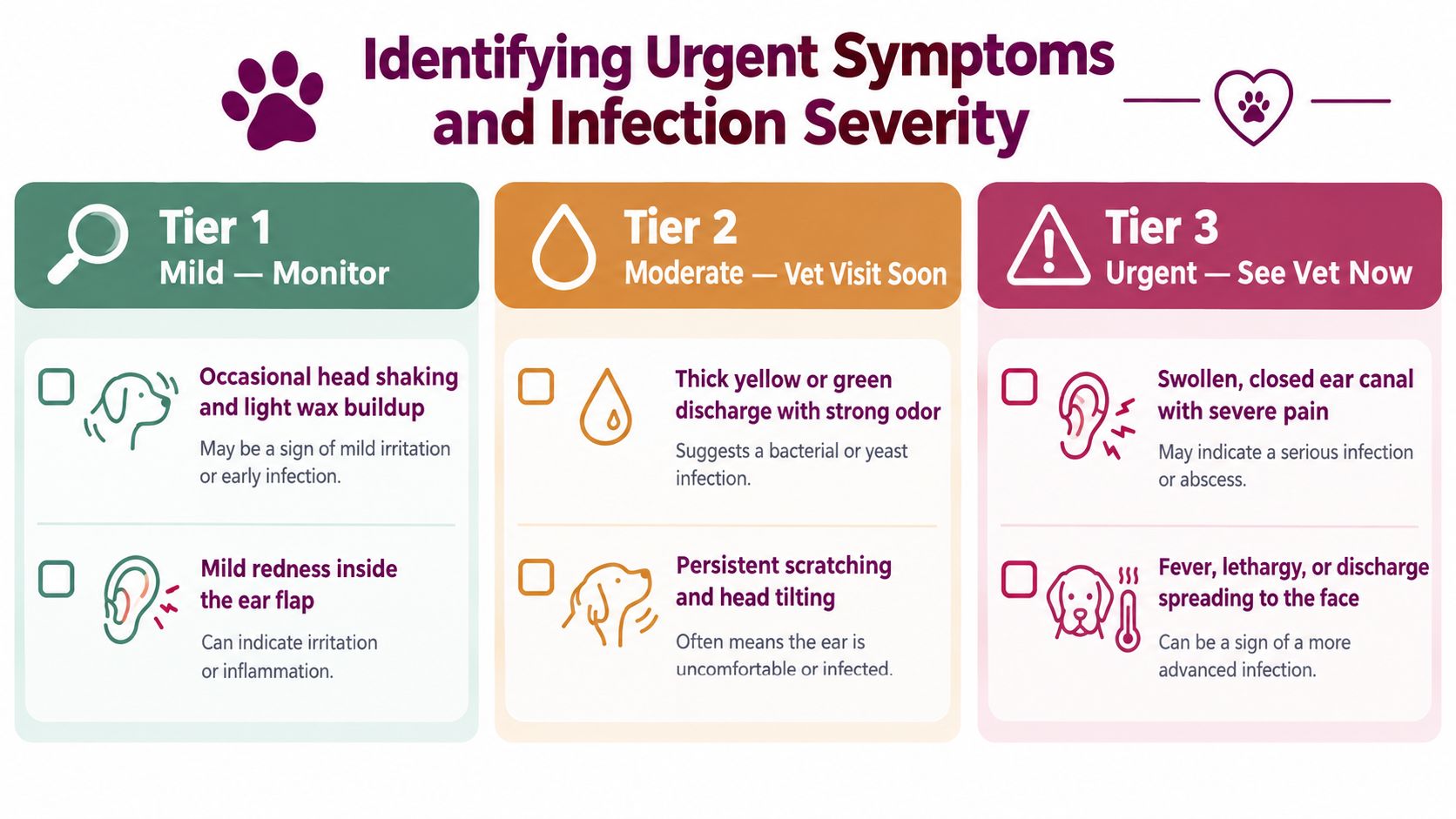
Start with the discharge, then assess your dog's comfort and coordination. A dog with mild redness and occasional head shaking may need a timely appointment. A dog with pus plus severe pain or neurological signs needs more immediate care.
Signs that call for prompt veterinary attention
Arrange a veterinary visit promptly when you notice:
- Thick or pus-like discharge: This is more concerning than a small amount of ordinary wax.
- Strong odor: A foul smell combined with moisture and discharge supports active ear disease.
- Persistent scratching: Repeated scratching can worsen inflammation and injure the ear flap.
- Marked redness or swelling: Narrowing of the canal can trap more discharge and make examination difficult.
- Pain during handling: Pulling away, crying, or becoming defensive suggests that the ear is painful.
- Symptoms that keep returning: Repeated episodes may point to an unresolved cause rather than an isolated irritation.
The American Kennel Club's veterinary guidance on dog ear infections notes that uncomplicated cases often resolve within 1 to 2 weeks after appropriate treatment begins. The same reference says more severe disease involving the middle ear may require 4 to 6 weeks of treatment, and that otitis media is found in over half of dogs with recurrent external ear inflammation. Those timelines aren't a reason to wait. They show why the treatment plan depends on disease depth and follow-up.
Know the same-day warning signs
Contact a veterinarian the same day if your dog has a head tilt, loss of balance, trouble walking, severe pain, or an ear canal that appears swollen shut. These signs can indicate middle- or inner-ear involvement rather than an issue confined to the outer canal. Guidance from PDSA on ear infections in dogs specifically identifies middle- or inner-ear signs as requiring same-day veterinary care.
Seek urgent help as well if your dog seems unusually weak, lethargic, feverish, or unable to settle because of pain. Discharge spreading onto nearby skin, facial changes, or substantial self-trauma also deserves immediate discussion with a veterinary professional.
A practical decision check
Before calling, note when the discharge first appeared, whether it affects one or both ears, and whether your dog has been shaking their head or scratching. A photograph can help document changes, but it shouldn't replace an examination.
Don't force the ear open to inspect it. Don't delay because your dog is still eating, and don't assume that a temporary reduction in odor means the infection has cleared. Pain and swelling can fluctuate while the underlying disease continues.
For more guidance on deciding when professional evaluation is needed, see Bandana Rx's information about when to call a veterinarian.
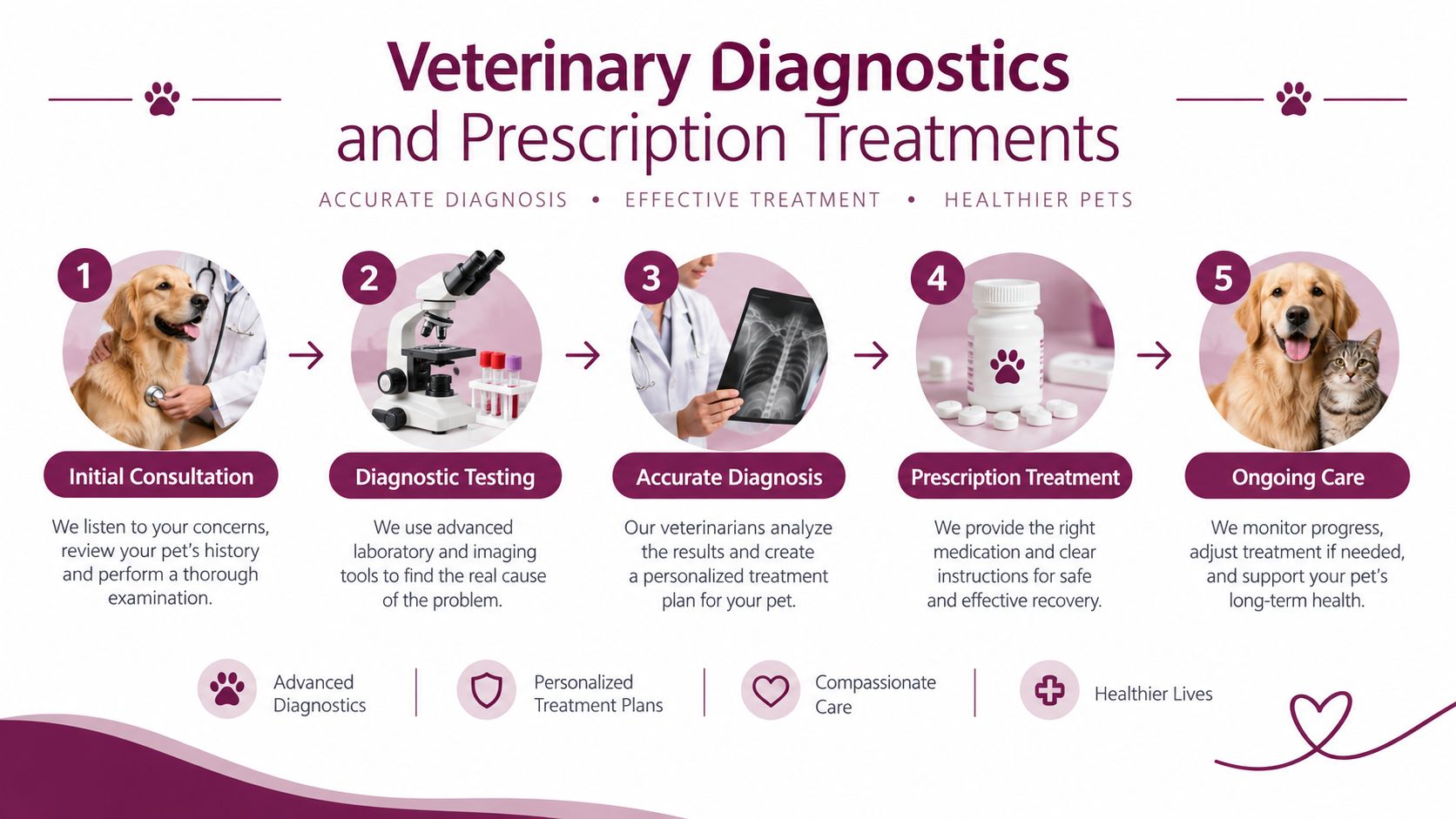
Veterinary Diagnostics and Prescription Treatments
A pus-producing ear infection needs more than a guess based on color. The veterinarian's job is to determine what is present, where the disease is located, and which treatment can safely reach it.
Examination comes before medication
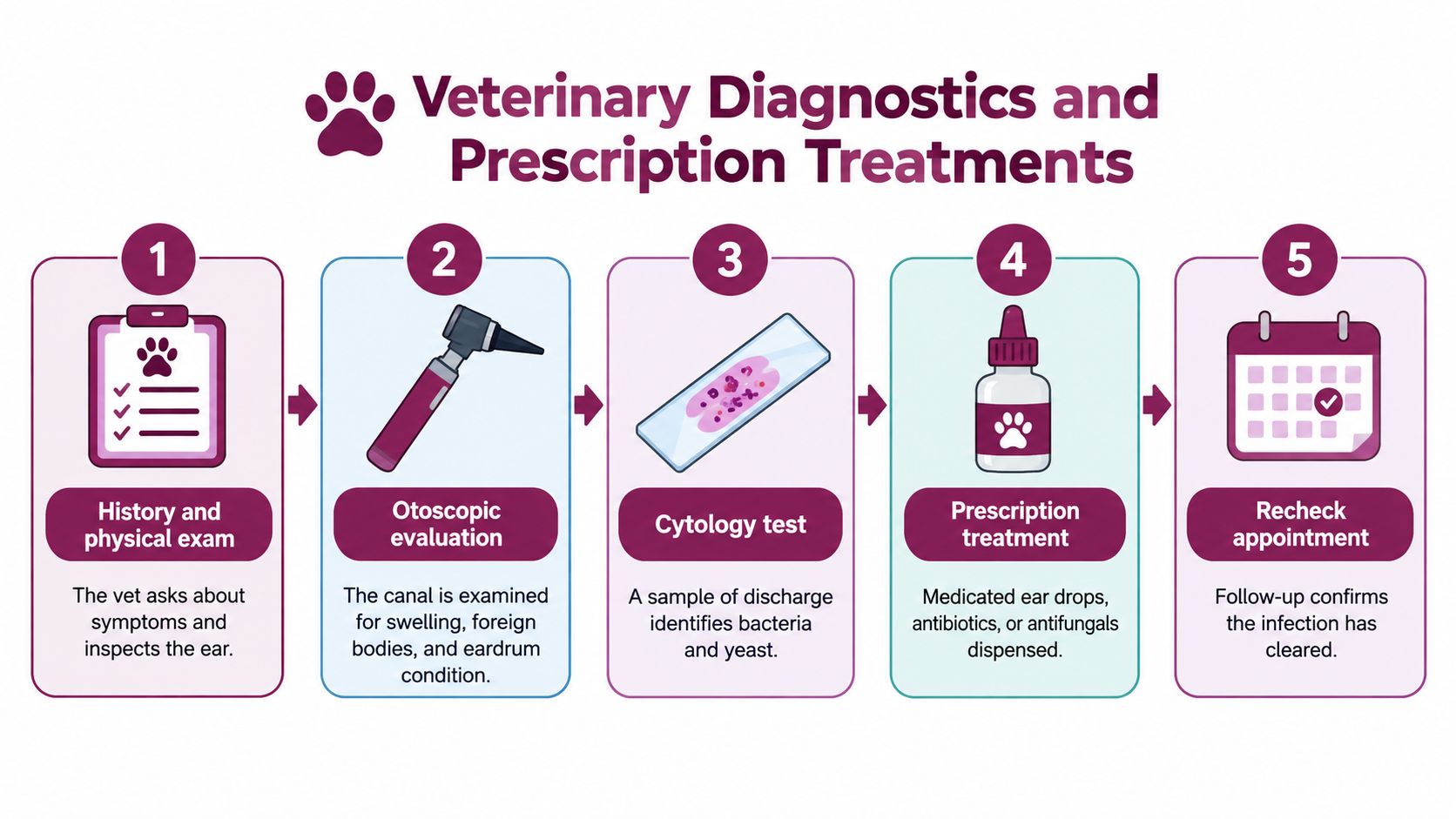
The appointment generally begins with a history and physical examination. Tell the veterinarian about the timing of the discharge, previous ear infections, allergies, swimming, grooming, pain, head shaking, and any products already used. This information helps the clinician decide how gently to proceed and which tests are appropriate.
An otoscope allows the veterinarian to assess the canal, look for foreign material, evaluate swelling, and examine the eardrum when possible. The eardrum matters because medication that is safe for the external canal may not be suitable if deeper structures are exposed.
Cytology adds a microscopic view. A sample of the discharge can reveal bacteria, yeast, inflammatory cells, or mixed overgrowth. If the infection is persistent, severe, or not responding as expected, the veterinarian may consider culture and susceptibility testing to guide antimicrobial selection.
Cleaning makes treatment possible
Thick exudate can physically block medication from contacting the canal lining. It can also interfere with the activity of some medications. For that reason, professional cleaning or irrigation may be necessary before the prescribed treatment can work properly.
Cornell's ear-cleaning guidance explains that treatment cleaning may be needed daily or every other day and that ear medication is commonly administered once or twice daily for 7 to 10 days, depending on the veterinary plan (Cornell Riney Canine Health Center). These are practical veterinary benchmarks, not instructions to apply to every dog. Your veterinarian may adjust the plan based on pain, canal swelling, eardrum status, cytology, and response.
If the ear is very painful or packed with debris, a thorough flush may require sedation or anesthesia. A veterinary review states that when owners can't clean the ear at home, hospital flushing with sterile saline or an ear cleaner may be warranted, and that flushing should be performed under general anesthesia (veterinary review of canine otitis).
Prescription therapy is individualized
Treatment may include topical antimicrobial medication, an antifungal, an anti-inflammatory component, oral medication, or a combination, depending on the findings. A prescription product isn't automatically appropriate just because the symptoms resemble a previous infection. The veterinarian must select the active ingredients, formulation, dose, and duration.
The U.S. Food and Drug Administration's information on approved canine ear-infection treatments explains that FDA-approved products for canine ear infections are prescription-only. The FDA also describes one approved product with a single dose and a 30-day duration of effect for otitis externa associated with susceptible yeast and bacteria, while another requires one dose per affected ear repeated in 7 days. Those product-specific schedules must not be applied to a different medication or used without veterinary authorization.
Recovery can take longer when the middle ear is involved, the canal is severely inflamed, or the primary trigger remains unresolved. Complete the prescribed course and attend the recommended recheck, even if the odor and discharge improve quickly. A follow-up examination and cytology may be needed to confirm that the infection, not just its most visible symptom, has resolved.
For information about one ear-related prescription option, visit the Synotic otic solution page, but use any prescription product only after your veterinarian has authorized it for your dog.
Safe At-Home Care and Cleaning Limitations
Home care has a useful role, but it has a boundary. Routine maintenance is not the same as treating a painful ear filled with pus.
If your dog has an active purulent discharge, don't pour in household liquids, use leftover medication, or begin an over-the-counter drop without veterinary direction. You may not know whether the eardrum is intact, whether a foreign object is lodged in the canal, or whether the product matches the organisms causing the infection.
What not to do
Avoid these common mistakes:
- Don't force a flush: Pressure can be painful and may move debris deeper.
- Don't probe with cotton swabs: They can push material farther into the canal and make visualization harder.
- Don't use human ear medication: A human product may not be appropriate for a dog's ear or the suspected cause.
- Don't use alcohol or hydrogen peroxide: Irritating liquids can worsen inflamed tissue.
- Don't reuse old prescriptions: A medication selected for a previous episode may be unsuitable now.
- Don't stop because the ear looks better: Improvement in odor or discharge doesn't prove that infection has cleared.
A pus-filled canal may need professional cleaning before medication can reach the affected tissue. If the ear is painful, swollen, or difficult to examine, home flushing can turn a fearful dog into an injured dog. Let the veterinarian decide whether cleaning can safely happen while your dog is awake.
Once your veterinarian approves home care
After examination and initial treatment, your veterinarian may show you how to clean the ear and apply medication. Use only the recommended cleanser and follow the prescribed amount and frequency. Gently support the ear, place the product as directed, massage only if your veterinarian has demonstrated that it's appropriate, and allow your dog to shake when instructed. Wipe away loosened material from the visible outer ear with soft cotton or gauze, without inserting anything into the canal.
You can review suitable maintenance options in the Bandana Rx ear cleanser collection. Product selection still matters, especially for dogs with a history of pain, recurrent infections, or possible eardrum damage.
Safety boundary: If cleaning causes marked pain, bleeding, worsening discharge, balance changes, or unusual behavior, stop and contact your veterinary clinic.
Managing Long-Term Ear Health and Prevention
Treating the current infection is only part of protecting your dog's ears. Recurrence often means that an underlying driver, such as allergic skin disease, moisture exposure, parasites, or canal changes, still needs attention. Dogs with more than 2 to 3 ear infections in their lifetime are specifically flagged by veterinarians as needing careful follow-up (American Kennel Club).
Build a practical monitoring routine
Check the visible part of your dog's ears regularly for changes in color, odor, moisture, or discharge. Watch behavior, too. New head shaking, scratching, reluctance to have the head handled, or a change in sleep and play can appear before pus becomes obvious.
After bathing or swimming, keep the outer ear dry and ask your veterinarian whether a preventive cleanser is suitable. Don't clean more frequently than recommended. Excessive cleaning can irritate the canal, while too little care may allow wax and moisture to accumulate in a dog that is prone to recurrence.
Allergies deserve a structured conversation with your veterinarian rather than trial-and-error ear drops. For additional owner-friendly background on allergy triggers and seasonal comfort measures, Denver Dog tips for winter allergies may help you prepare questions for that appointment.
Coordinate care and refills
Prescription ear medication should remain part of a veterinary-directed plan. Keep the medication name, instructions, and recheck recommendations in one place, and contact the clinic before the supply runs out if continued treatment is advised. A licensed online pharmacy can help coordinate authorized prescriptions and routine ear-care supplies, but it can't replace diagnosis, cytology, otoscopy, or follow-up.
The safest long-term approach combines early observation, appropriate cleaning, allergy management when indicated, and a veterinary relationship that continues beyond the first improvement. If pus returns, treat it as new information, not as a signal to repeat an old product automatically.
Bandana Rx offers prescription coordination and pet ear-care products for U.S. pet owners, with prescription orders processed after veterinary authorization. Visit Bandana Rx to review available ear-care options and arrange supplies that fit your veterinarian's plan.