


Your dog has started shaking their head, scratching one ear, and pulling away whenever you touch it. There may be a noticeable odor or dark discharge, and the natural question is, “How can I treat this quickly at home?” The safest answer begins with identifying what is causing the ear problem, because yeast, bacteria, inflammation, parasites, moisture, allergies, and foreign material can create similar symptoms but require different care.
Otitis externa, inflammation of the outer ear canal, is common rather than unusual. A UK VetCompass analysis found a one-year prevalence of 7.30%, or about 1 in 14 dogs, among the sampled primary-care population (veterinary information on canine ear infection prevalence and treatment). Learning how to treat dog ear infection safely means avoiding quick fixes, preparing the ear correctly, using veterinarian-selected medication, and completing the follow-up process.
Table of Contents
- Recognizing the Signs and Knowing When to See a Vet
- Safe Home Care and Ear Cleaning Techniques
- Understanding Prescription and OTC Treatment Options
- Applying Ear Medications Correctly at Home
- Managing Chronic Infections and Resistant Bacteria
- Follow-Up Care and Long-Term Prevention Strategies
Recognizing the Signs and Knowing When to See a Vet
Milo's owner first noticed the head shaking. At breakfast, he scratched his left ear against the floor, then shook his head hard enough to make his collar jingle. Later, the ear had a sour, yeasty smell, and the skin near the opening looked red. None of these signs identifies the cause by itself, but together they signal that the ear needs veterinary attention.
Common warning signs include:
- Head shaking: Repeated shaking often reflects pain, itching, or pressure in the canal.
- Scratching or rubbing: Dogs may scratch the ear or rub it against furniture and carpeting.
- Odor: A strong yeasty, sour, or foul smell isn't typical of a healthy ear.
- Discharge: Brown, waxy material may accompany yeast overgrowth, while yellow or green material can occur with bacterial disease. Bloody discharge deserves prompt attention.
- Redness and swelling: Inflamed tissue may make the opening look narrowed or swollen.
- Pain: A dog that flinches, cries, growls, or withdraws when you touch the ear may need a gentler examination and professional cleaning.
- Head tilt or balance changes: These signs can indicate involvement deeper in the ear and warrant urgent veterinary assessment.
A useful overview of additional dog ear infection warning signs from Glo More Grooming can help you organize what you're seeing before the appointment. Don't use a symptom list to choose medication, though. Similar outward signs can come from different organisms, and an inflamed canal may also hide a foreign object or deeper disease.
Why diagnosis comes first
A veterinarian can use an otoscope to inspect the canal, look for debris or a mass, and assess the eardrum when possible. Ear cytology, a microscope examination of material collected from the ear, helps identify wax, yeast, cocci, or rod-shaped bacteria. The Merck Veterinary Manual guidance on otitis externa describes this stepwise approach, including examination, cleaning, targeted topical treatment, and repeat checks.
Practical rule: A clean-looking outer ear doesn't prove the infection is gone, and a familiar smell doesn't prove that the same medicine will work again.
Arrange prompt care if your dog has severe pain, marked swelling, a persistent head tilt, stumbling, circling, dizziness, or an abrupt change in hearing. Routine wellness care also matters, and this resource on the importance of routine veterinary visits explains why regular examinations can identify problems before they become harder to manage.
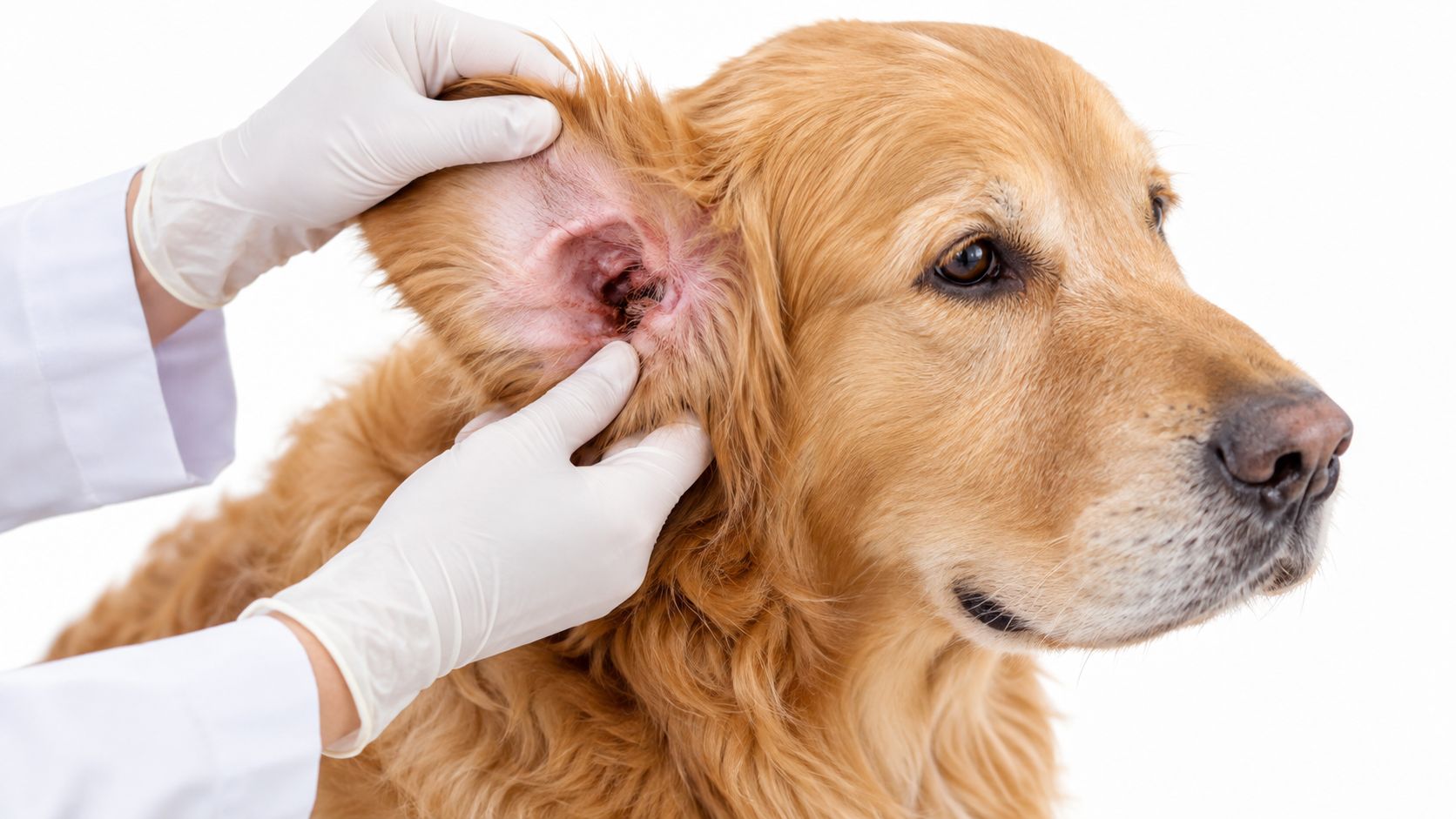
Safe Home Care and Ear Cleaning Techniques
Cleaning can help medication reach the canal, but it isn't a substitute for diagnosis. Wax, pus, and other debris can interfere with topical treatment, so your veterinarian may recommend cleaning before each medication application or at another schedule suited to your dog's condition. Dogs with very painful ears or heavy buildup may need professional cleaning rather than a forceful attempt at home.
Use only a veterinarian-approved ear cleanser. Avoid vinegar, alcohol, and hydrogen peroxide. These substances can irritate already damaged tissue, increase inflammation, and delay recovery. Don't put cotton swabs deep into the canal, either. They can push material farther inward and may injure sensitive structures.
A gentler cleaning process
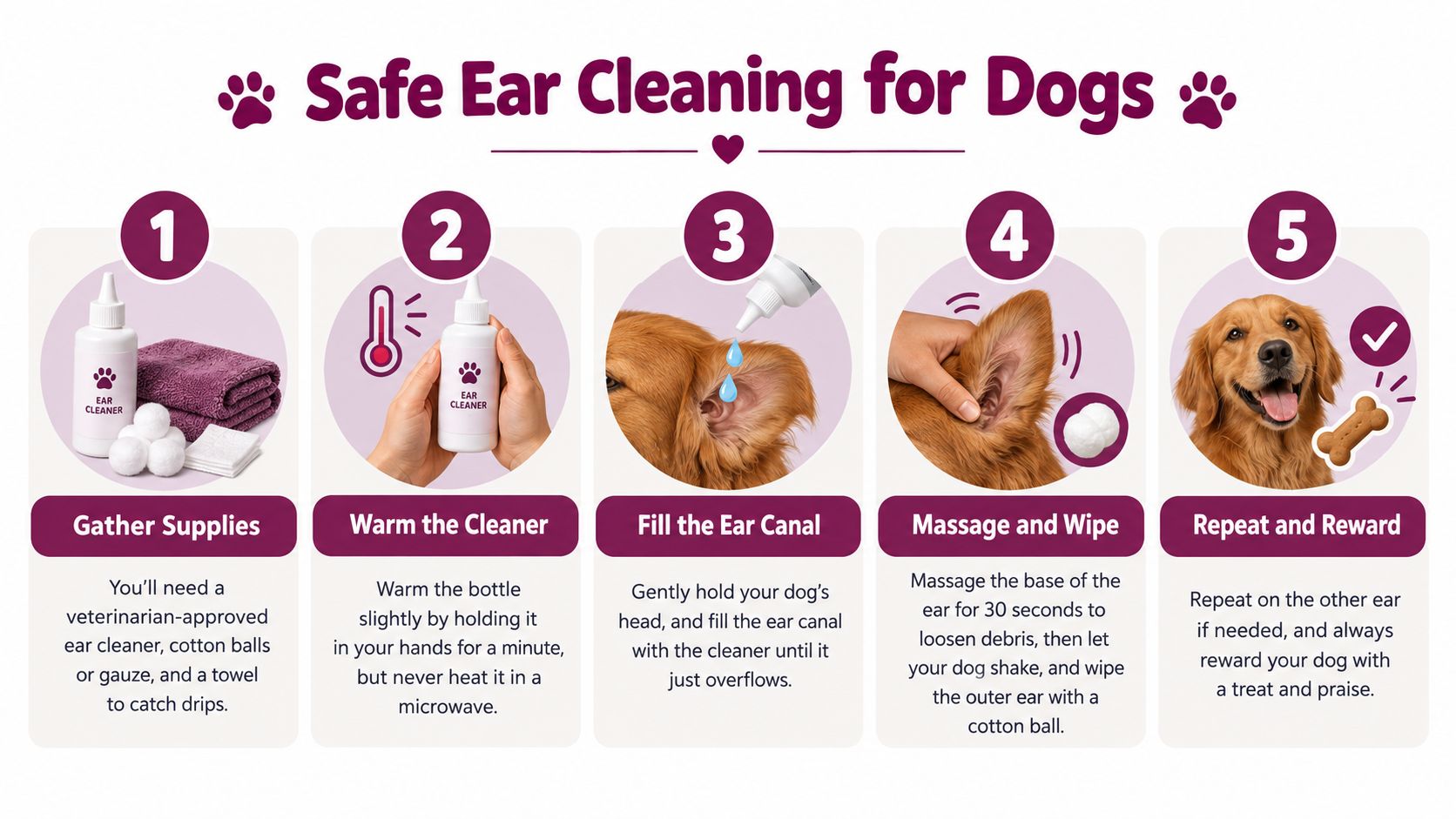
Prepare the supplies. Set out the prescribed or veterinarian-approved cleanser, cotton balls or gauze, a towel, and treats. Choose a quiet area where your dog won't feel trapped.
Bring the cleanser to a comfortable temperature. Hold the bottle in your hands briefly. Don't microwave it or heat it directly.
Position the ear flap. Lift the flap gently so you can see the opening. If your dog reacts sharply, stop and contact the veterinary team rather than forcing the procedure.
Apply enough cleanser to fill the canal. Place the bottle at the opening without pushing the tip inside. Follow the product label and your veterinarian's directions. The cleanser may fill the canal and reach the opening.
Massage the base. With the ear flap still lifted, massage the base of the ear gently so the solution can loosen material. A soft squishing sound can be normal, but pain, panic, or sudden resistance means you should pause.
Let your dog shake. Head shaking helps bring loosened debris toward the outer ear. Protect nearby surfaces with a towel.
Wipe only what you can see. Use cotton or gauze to clean the flap and outer opening. Never dig into the canal.
Reward cooperation. Praise and a treat can make the next session less stressful. If both ears need care, work slowly and give your dog a break when needed.
Dogs often need the ear cleaned and dried before topical medicine is applied, because discharge and wax may reduce contact between the medication and infected tissue (Merck Veterinary Manual information for dog owners). For a product option to discuss with your veterinarian, see 10 Epi-Otic Advanced Ear Cleanser.
Understanding Prescription and OTC Treatment Options
The right ear treatment depends on the organism, the location of the disease, the condition of the canal, and whether the eardrum is intact. That's why using leftover drops from a previous episode is risky. A medicine that helped a yeast infection may not address bacteria, and a product selected without an eardrum assessment may be inappropriate for a deeper or complicated problem.
One clinical study of 180 otitis cases found that 49.4% involved Malassezia yeast, while bacterial and mixed infections accounted for the remainder (clinical study of canine otitis microbiology and treatment). The same data reported topical antimicrobial solutions as the primary treatment in 48.3% of yeast cases, 60.71% of cocci infections, and 62.5% of mixed infections. Those figures illustrate the central point, treatment should match the cytology result rather than follow a universal recipe.
What veterinarians may select
| Finding or concern | Treatment direction a veterinarian may consider |
|---|---|
| Yeast identified on cytology | A topical antifungal, sometimes combined with an anti-inflammatory component when swelling is present |
| Cocci bacteria | A targeted topical antibacterial, selected according to the examination and cytology |
| Rod-shaped bacteria | More cautious assessment, especially when disease is chronic, painful, or unresponsive |
| Mixed yeast and bacteria | A product or combination plan addressing the organisms and inflammation identified |
| Possible middle-ear involvement | Longer, more careful treatment that may include systemic medication and additional evaluation |
Topical treatment is generally the mainstay for outer-ear disease. Systemic antibiotics are reserved for selected chronic or middle-ear cases and should be guided by culture and susceptibility testing when appropriate. Middle-ear infections may require oral or injectable antibiotics for 3 to 6 weeks, while small eardrum perforations may heal in 2 to 3 weeks, according to the clinical source cited above. Those durations are not dosing instructions for home use. Your veterinarian must determine the medication, amount, frequency, and duration for your dog.
The FDA approved DuOtic in 2024 as the first FDA-approved animal drug intended for yeast-only otitis externa in dogs, labeled for disease associated with susceptible Malassezia pachydermatis. The FDA also approved Simplera Otic Solution in 2022 as a single-dose treatment with a 30-day duration of effect for canine otitis externa caused by susceptible yeast and bacteria (FDA information on DuOtic and Simplera). These approvals don't mean either product is appropriate for every dog. A veterinarian still needs to confirm the diagnosis and prescribe or authorize treatment when required.
For plain-language background on yeast-related ear disease, you can review Pure Paw Labs ear infection insights. Once your veterinarian provides authorization, an online pharmacy may be able to coordinate fulfillment. Bandana Rx offers prescription and over-the-counter pet health products, including ear-care options, through its Synotic Otic Solution information page.
Applying Ear Medications Correctly at Home
A prescription can be appropriate and still fail if the medicine never reaches the affected tissue. Dogs may resist because the ear hurts, the bottle feels unfamiliar, or previous handling was uncomfortable. Slow movements, accurate application, and a calm routine protect both the ear and your relationship with your pet.
Read the label and follow the veterinarian's instructions exactly. Don't add extra drops, apply the medicine more often, or stop early because the odor has improved. If you miss an application or your dog spits, shakes, or removes some of the medication, ask the veterinary team what to do rather than doubling the next amount.
A practical application method
Set up first. Have the medication, a towel, cotton, treats, and a helper nearby if your dog is wiggly. A small dog may sit on your lap, while a larger dog can stand with their body gently supported against your legs.
Keep the approach predictable. Let your dog sniff the closed bottle, offer a reward, and touch the ear briefly before beginning. Don't chase or pin your dog down unless a veterinary professional has shown you a safe restraint technique.
Lift the ear flap. Hold the flap upright to help straighten the visible portion of the canal. Keep your hand steady and avoid pulling sharply.
Place the prescribed number of drops. Hold the applicator just above the opening. Don't let the tip touch the ear, discharge, skin, or hair, because contamination can affect the bottle and touching painful tissue can make your dog jerk.
Massage the base. Gently massage the lower part of the ear after application if your veterinarian has instructed you to do so. This helps distribute the medicine through the canal. Stop if your dog shows significant pain.
Wipe the outside only. Clean excess medication from the flap and surrounding fur with cotton or gauze. Don't insert anything into the canal.
Reward and record. Give praise or a treat, then note the time and ear treated. A simple record helps prevent missed or repeated applications.
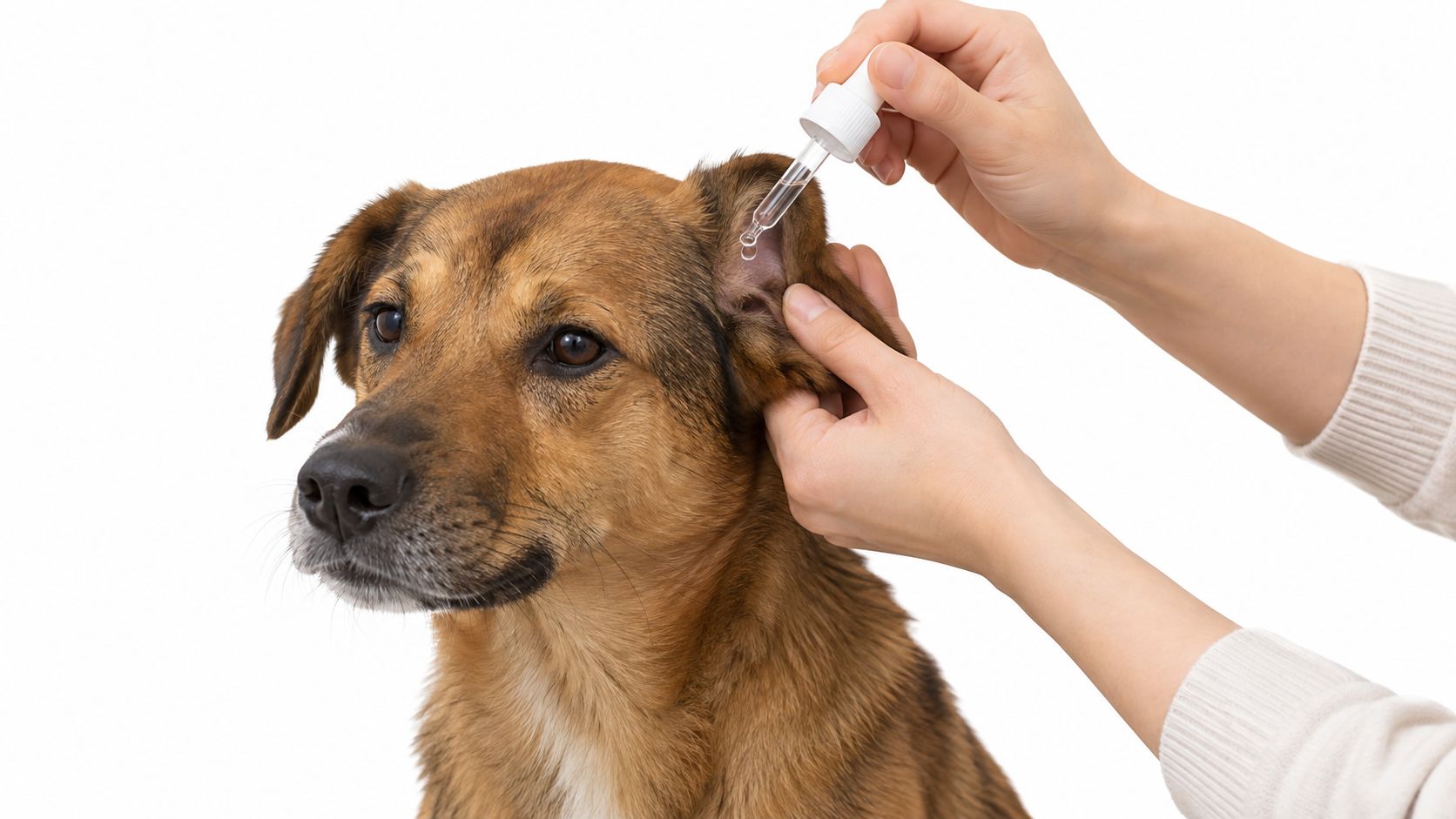
If your dog cries, becomes aggressive from pain, or cannot tolerate handling, don't turn the process into a struggle. Contact the veterinary practice for help, an alternative application plan, or an in-clinic treatment. The Bandana Rx guide to ear drops for dogs can also help you understand the general mechanics, but your prescription label remains the controlling source for your dog's treatment.
Managing Chronic Infections and Resistant Bacteria
A dog whose ear infection returns after treatment isn't necessarily experiencing the same simple problem again. Recurrent otitis is often multifactorial, meaning inflammation, allergy, moisture, anatomy, debris, yeast, bacteria, or middle-ear disease may interact. Treating only the visible discharge can provide temporary relief while the primary cause continues.
Resistance makes guessing even less reliable. Recent literature reports fluoroquinolone resistance in canine Pseudomonas otitis externa ranging from 27% to 68% for enrofloxacin, 55% to 82% for orbifloxacin, and 33% to 35% for marbofloxacin, with multidrug resistance recorded in 13% to 35% of isolates (review of antimicrobial resistance in canine otitis). These figures don't tell you which medicine your dog needs. They explain why repeated use of the same or similar antibiotic without reassessment can delay effective care.
What changes in a recurring case
The veterinarian may repeat otoscopy and cytology, clean the canal, evaluate the possibility of otitis media, and investigate an underlying allergy or anatomical problem. Culture and susceptibility testing become especially relevant when the infection is chronic, recurrent, or failing to respond as expected. Culture alone isn't a substitute for cytology, because the organisms seen in the canal and the clinical response both matter (2026 randomized clinical trial and discussion of otitis diagnosis).
A veterinary protocol may call for repeat cytology every week to every other week until the canal is clear, with treatment continuing until both clinical signs and cytology normalize. Clinical trials of topical products show rapid improvement without universal cure, with reported day 42 clinical success rates of 71% and 74% for two products in the cited study. Follow-up isn't a formality. It tells the veterinarian whether the infection is clearing or whether the plan needs adjustment.
For antibiotic decisions, a prescription product such as Zeniquin should only be used when a veterinarian determines it is appropriate, including the correct dose and duration. Never substitute it for ear drops or combine it with another treatment without veterinary direction.
Follow-Up Care and Long-Term Prevention Strategies
When the discharge disappears, the canal may still contain yeast or bacteria. The visible ear is only one part of the picture, much like a damp room that looks dry while moisture remains behind the walls. Stopping medication because odor or scratching has improved can leave organisms behind and encourage another flare. Your veterinarian may repeat otoscopy and cytology to confirm that treatment is complete.
Long-term prevention starts with the factors that keep the canal inflamed or moist. Allergies may require an ongoing management plan. Frequent swimmers may need careful drying and a veterinarian-approved cleanser. Floppy or hairy ears deserve closer observation, yet cleaning frequency should be individualized because too much cleaning can irritate the canal and worsen its defenses.
A maintenance routine that stays practical
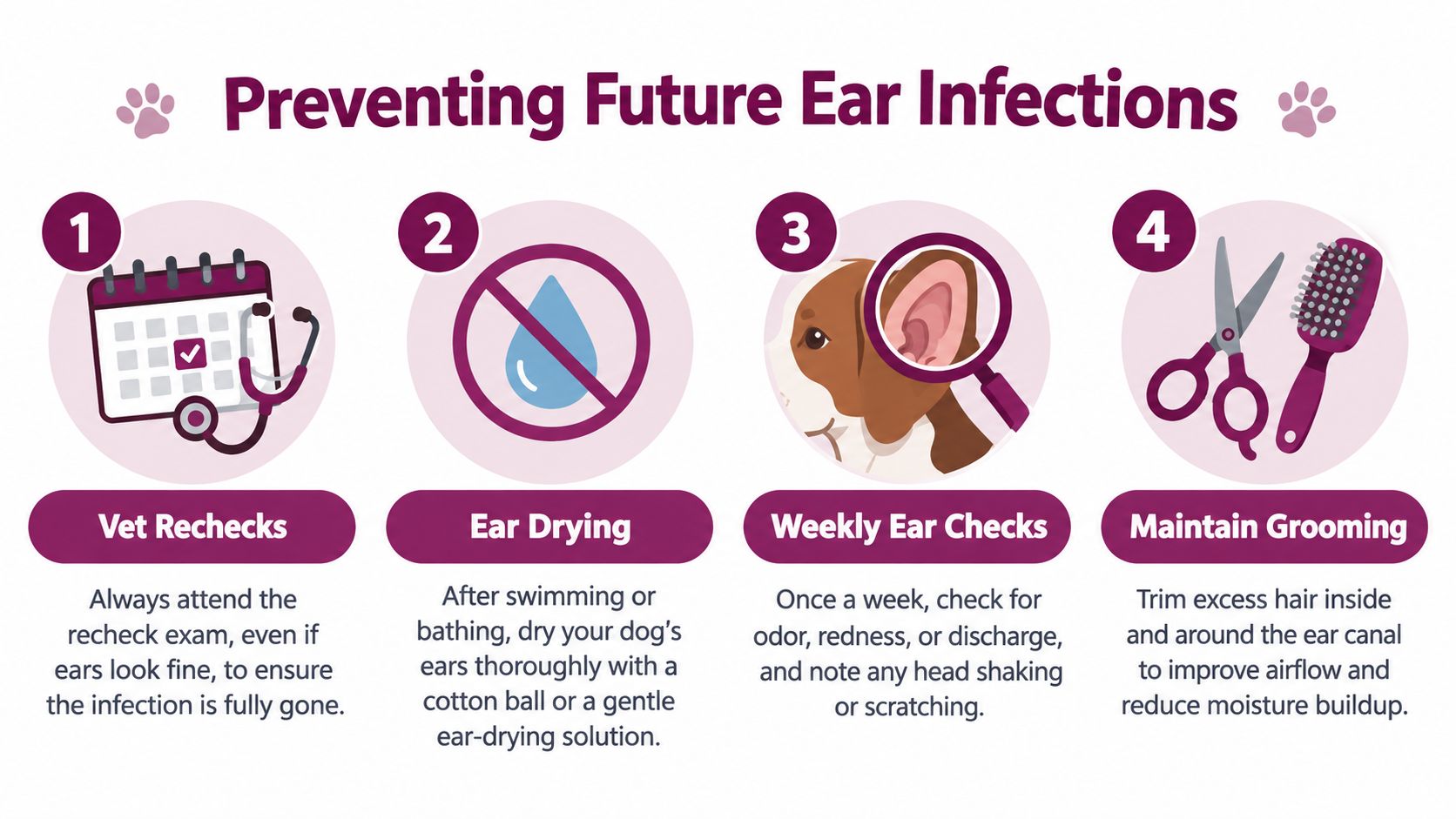
- Attend every recheck: Keep the appointment even when your dog seems comfortable. Ask whether the canal looks clear and whether cytology supports ending treatment.
- Dry after water exposure: Gently dry the outer ear after bathing or swimming. Ask whether a drying solution suits your dog.
- Check weekly: Watch for odor, redness, discharge, swelling, head shaking, or scratching. Early changes are easier to address than a painful flare-up.
- Groom thoughtfully: If hair traps moisture or prevents inspection, ask a professional about safe trimming. Do not pull hair or place tools in a painful canal.
- Treat the primary cause: Follow the veterinary plan for allergies, parasites, skin disease, or other contributors. Repeatedly treating infection alone will not correct the condition that keeps triggering it.
A medication calendar, an initial treatment photo, and a brief symptom log give your veterinarian clearer information at each recheck. If you need an authorized prescription or more cleanser, Bandana Rx provides prescription fulfillment and over-the-counter pet-care products after veterinary authorization. Scheduled delivery may help prevent interruptions for eligible recurring products, and Bandana Bucks can be used toward future purchases.
Bandana Rx lets you review dog ear-care products and coordinate prescription fulfillment after your veterinarian approves the plan. Keep the diagnosis, label instructions, and recheck schedule together so every cleaning and medication application supports complete recovery.