


A large English primary-care study found diagnosed urinary incontinence in 0.94% of 109,428 male dogs. Female dogs, especially spayed females, are generally considered to be affected more often. These figures describe how often incontinence was diagnosed, not what is causing an individual pet's leakage. A practical plan pairs veterinary evaluation with home care that protects skin, comfort, mobility, and the household routine.
Table of Contents
- Find the Leakage Pattern Your Pet Shows
- Veterinary Tests That Sort Out the Cause
- Medication Options Your Veterinarian May Discuss
- Absorbents, Wraps and Skin Protection at Home
- Daily Routine Changes That Reduce Accidents
- Tracking Progress With a Simple Accident Log
- When to Seek Care Now and Your Next Step
Find the Leakage Pattern Your Pet Shows
| Observed pattern | Possible areas to evaluate | Detail to record |
|---|---|---|
| Leaks while asleep or lying down | Urethral sphincter weakness is a common consideration in female dogs | Time of day and wetness of bedding |
| Dribbles right after urinating | Incomplete emptying, infection, or outflow problems | Whether the bladder seems to empty fully |
| Frequent small urinations with discomfort | Urinary infection or other bladder irritation | Number of trips outside per day |
| Drinking and urinating much more than usual | Excess urine production or systemic causes | Water intake measured over one day |
| Sudden leakage in a previously dry pet | Any cause, including infection, neurologic, or anatomic issues | Exact date of the change and any new medicines |
| Leakage in a cat | Feline causes differ from dog causes | Litter box habits and any straining |
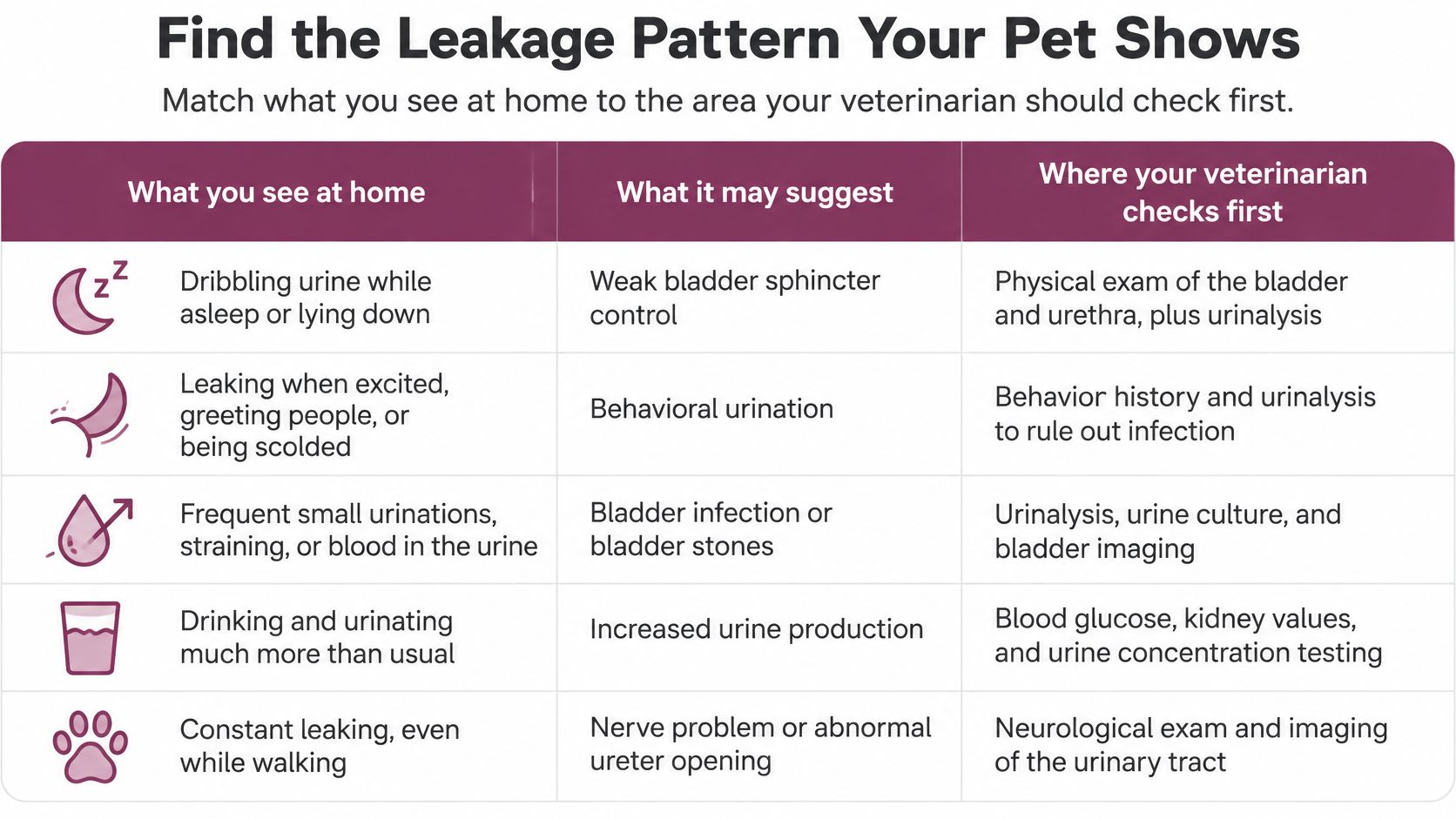
Use the table to organize observations, not to diagnose your pet at home. Leakage during sleep can lead a veterinarian to consider weak sphincter control, while dribbling after urination may point toward incomplete emptying or an outflow issue. Frequent, uncomfortable urination raises different questions, including whether infection or bladder irritation is present. Testing is needed to tell these possibilities apart.
In the English study, researchers identified an estimated 1,027 diagnosed cases among male dogs, with a prevalence of 0.94% and a 95% confidence interval of 0.88% to 1.00%. The study reviewed records from 119 veterinary clinics between September 2009 and July 2013. Female dogs, particularly spayed females, are more frequently affected than male dogs, but leakage can have many causes in any pet.
Cats need their own evaluation rather than a dog-focused assumption. If you notice repeated litter-box visits, discomfort, or straining, record what you see and review signs of urinary tract infection in cats as you prepare to speak with your veterinarian.
Before the appointment, write down when the leaking happens, roughly how much urine you see, and what else has changed. These details help the veterinarian decide what to check first.
Veterinary Tests That Sort Out the Cause
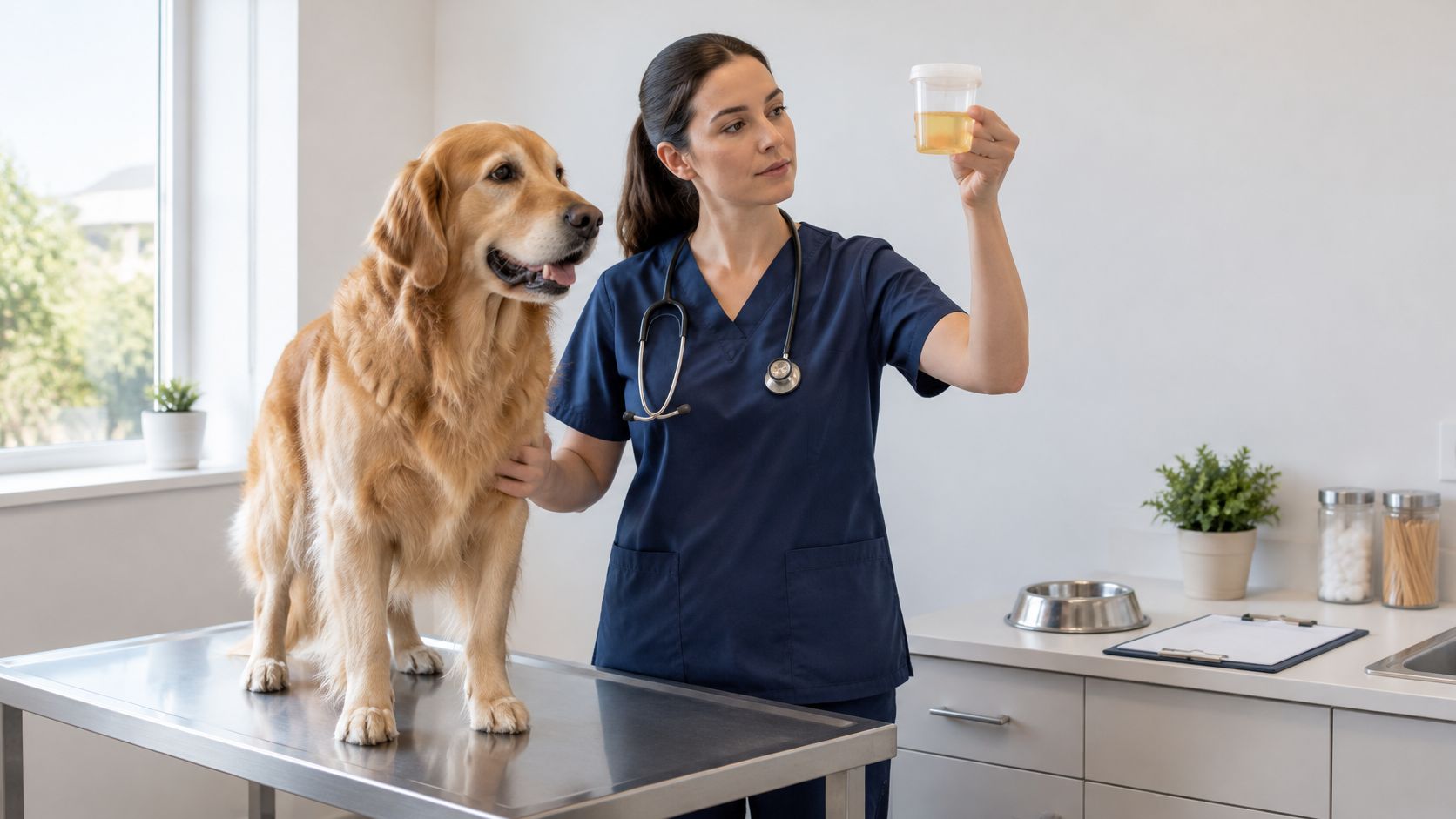
A veterinary visit starts by clarifying what “leaking” means for your pet. The veterinarian will ask when it happens, how much urine is lost, and whether your pet seems to urinate normally otherwise. That history helps separate involuntary leakage from increased urine production, frequent small urinations, behavioral urination, or difficulty emptying the bladder.
| Test or exam | What it checks | Why it matters |
|---|---|---|
| History and physical exam | Pattern, timing, and volume of leakage; bladder size | Separates leakage from increased urine output or behavior |
| Neurological exam | Reflexes and coordination in the back legs | Flags spinal or nerve causes of leakage |
| Urinalysis | Urine concentration, blood, crystals, and glucose | Signals infection, excess urine production, or stones |
| Urine culture | Bacterial growth in the urine | Confirms or rules out infection before medication decisions |
| Blood pressure measurement | Current blood pressure | Provides a baseline if a medication that can raise pressure is considered |
| Bloodwork | Kidney function, glucose, and other systemic markers | Screens for systemic causes of extra urine or leakage |
| X-ray or ultrasound | Bladder, urethra, ureters, and stones | Looks for anatomic defects and structural causes |
The physical exam may include checking bladder size and feeling for discomfort. A neurological exam can assess reflexes and coordination in the back legs, since spinal or nerve problems can affect bladder control. Urinalysis looks at urine concentration and can reveal blood, crystals, or glucose that help guide the next step.
A culture is especially useful when infection is plausible. Because infection can change the treatment plan, the veterinarian may want a urine sample tested before deciding on medication. Bloodwork or imaging may be appropriate if the history and initial tests suggest a systemic or structural problem. Some pets need evaluation by a veterinary specialist.
Before you go: Bring your accident notes and a list of medicines and supplements. Ask the clinic how it wants a urine sample collected, and ask what each result means for the next step.
No individual test result should be interpreted in isolation. For background on urinary infections, you can also review this guide to kidney and urinary tract infections, then discuss your pet's specific findings with the veterinarian.
Medication Options Your Veterinarian May Discuss
Every medication choice is a veterinary decision. Prescription options aren't suitable for every pet, and a drug that helps with one cause of leakage may not address another. For suspected urethral sphincter weakness, veterinarians may consider medicines that increase urethral tone, but they first need to decide whether that mechanism fits the case.
| Option | Established or approved use | Prescription status | Key monitoring |
|---|---|---|---|
| Phenylpropanolamine (PPA) | Commonly used for sphincter-related leakage in dogs; listed as a treatment option for urethral sphincter mechanism incompetence in the Merck Veterinary Manual | Prescription | Blood pressure and cardiovascular response |
| Estriol | Approved in the United States for estrogen-responsive urinary incontinence in spayed female dogs | Prescription | Response and reproductive status reviewed by the veterinarian |
| PPA with an estrogen compound | Used selectively in some dogs under veterinary direction | Prescription | Close veterinary supervision of both drugs |
| Diethylstilbestrol | Available only through compounding | Prescription (compounded) | Veterinary-directed use only |
PPA is an alpha-adrenergic medication that acts on smooth muscle to increase urethral tone. Its effect is relatively short, so it's commonly administered every 8 to 12 hours, according to the Merck Veterinary Manual's pharmacology guidance. Because PPA can affect blood pressure, a veterinarian may check blood pressure before treatment and during follow-up. Don't change the timing or amount without veterinary instructions.
Estrogen-based medicines work differently. Estriol can increase resting urethral tone in female dogs and is approved in the United States for estrogen-responsive urinary incontinence in spayed female dogs. Diethylstilbestrol is available only as a compounded medication. Whether either is appropriate depends on the diagnosis and the individual dog's health and reproductive status.
Prescribing also differs among dogs. In a study of 163 neutered dogs with urethral sphincter mechanism incompetence, PPA was prescribed alone in 75.5%, diethylstilbestrol alone in 21.5%, and both in 3.1%, according to the study published in Frontiers in Veterinary Science. Those figures describe prescribing in that group. They aren't a treatment ranking or a guide for choosing medicine.
Ask the veterinarian why a particular medication fits your pet, what monitoring is needed, which changes to report, and what to do if leakage continues. Don't start, stop, combine, or substitute prescription medicines without veterinary guidance. If you're coordinating a veterinarian-authorized refill, Bandana Rx's urinary care options include prescription products when appropriate authorization is in place.
Absorbents, Wraps and Skin Protection at Home
Absorbent products help manage urine and protect your home, but they don't treat the cause of leakage. Choose products that fit your pet and make cleaning straightforward.
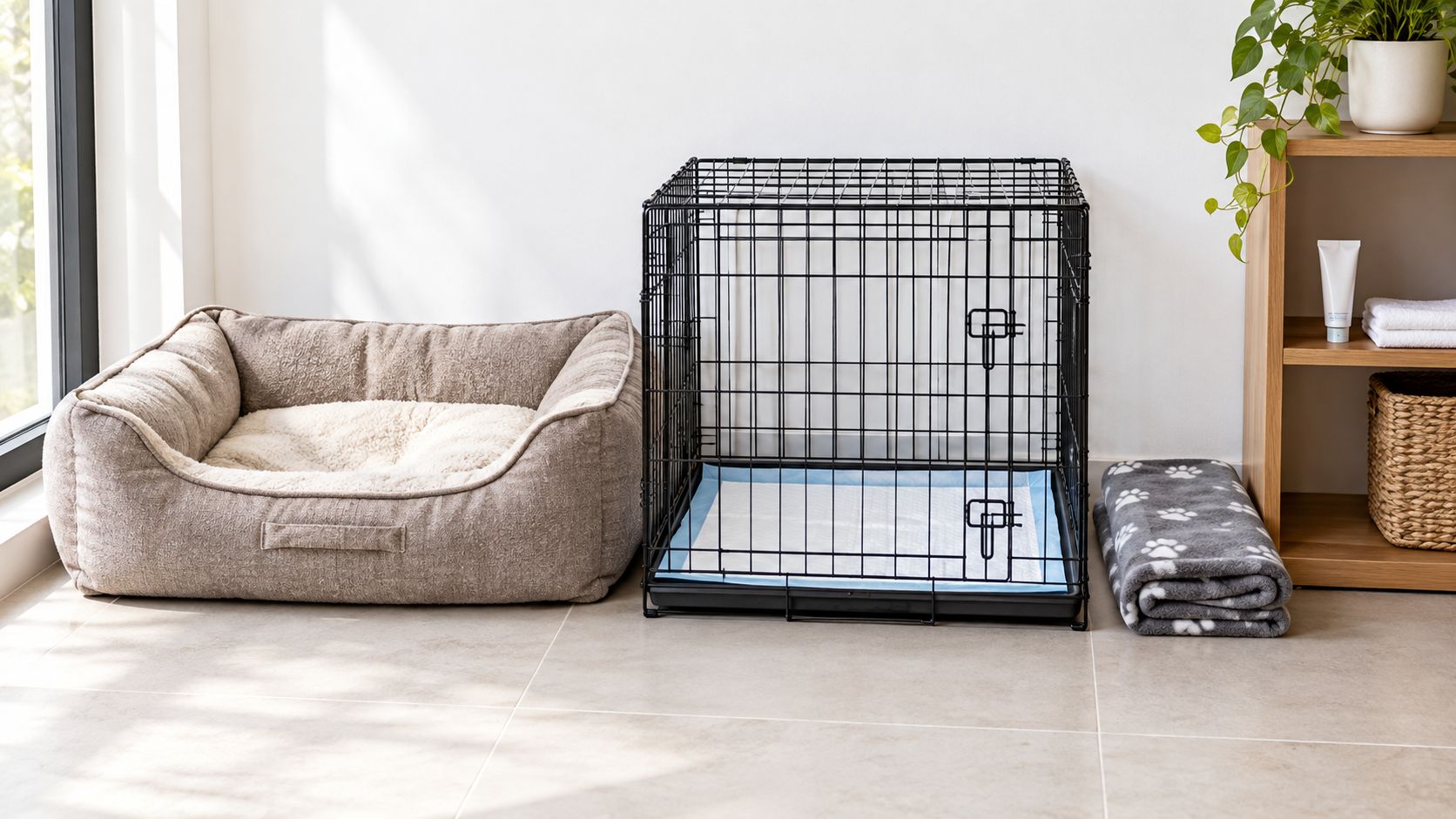
- Disposable pads: Place them on a bed, crate floor, or another spot where your dog rests. Keep spares nearby so you can replace a wet pad promptly.
- Washable pads: Choose a version with a waterproof backing, and put a waterproof mattress protector beneath the washable cover to shield bedding.
- Belly bands or wraps: These can help catch urine for some dogs. Check the fit regularly; it should be snug but loose enough to slide two fingers underneath without forcing them.
Breathable materials and a good fit matter. Damp fabric left against the skin can cause irritation, so change wet pads, wraps, and bedding promptly. Plastic-lined products shouldn't be left in place for long periods, and wraps need regular checks even when they appear dry.
Check your pet's belly, inner thighs, and genital area daily for moisture, redness, odor, or irritation. Clean gently and dry the area thoroughly. Before applying a barrier cream or any other product, ask your veterinarian, especially if the skin is broken or already irritated.
Keep spare washable sets and cleaning supplies within easy reach. Persistent redness, odor, or skin changes are reasons to contact your veterinarian, since they may need to reassess the care plan. For pharmacy support related to a veterinarian's treatment plan, explore the urinary care category on Bandana Rx.
Daily Routine Changes That Reduce Accidents
A predictable routine can make accidents easier to manage while supporting comfort and mobility. Adjust the schedule to your pet's needs and the veterinarian's advice.
Offer regular toilet breaks. Take your dog out every few hours, and add opportunities before bed, after waking, after meals, and after play. More chances to urinate can reduce the time your pet has to hold urine.
Keep fresh water available. Encourage regular access throughout the day, but don't restrict water unless your veterinarian tells you to. If your pet seems to be drinking more, record it and mention the change at the appointment.
Make nighttime trips manageable. Plan the last walk close to bedtime, and keep a towel or spare pad ready for outings. For an older dog, a clear, well-lit route can make getting outdoors easier.
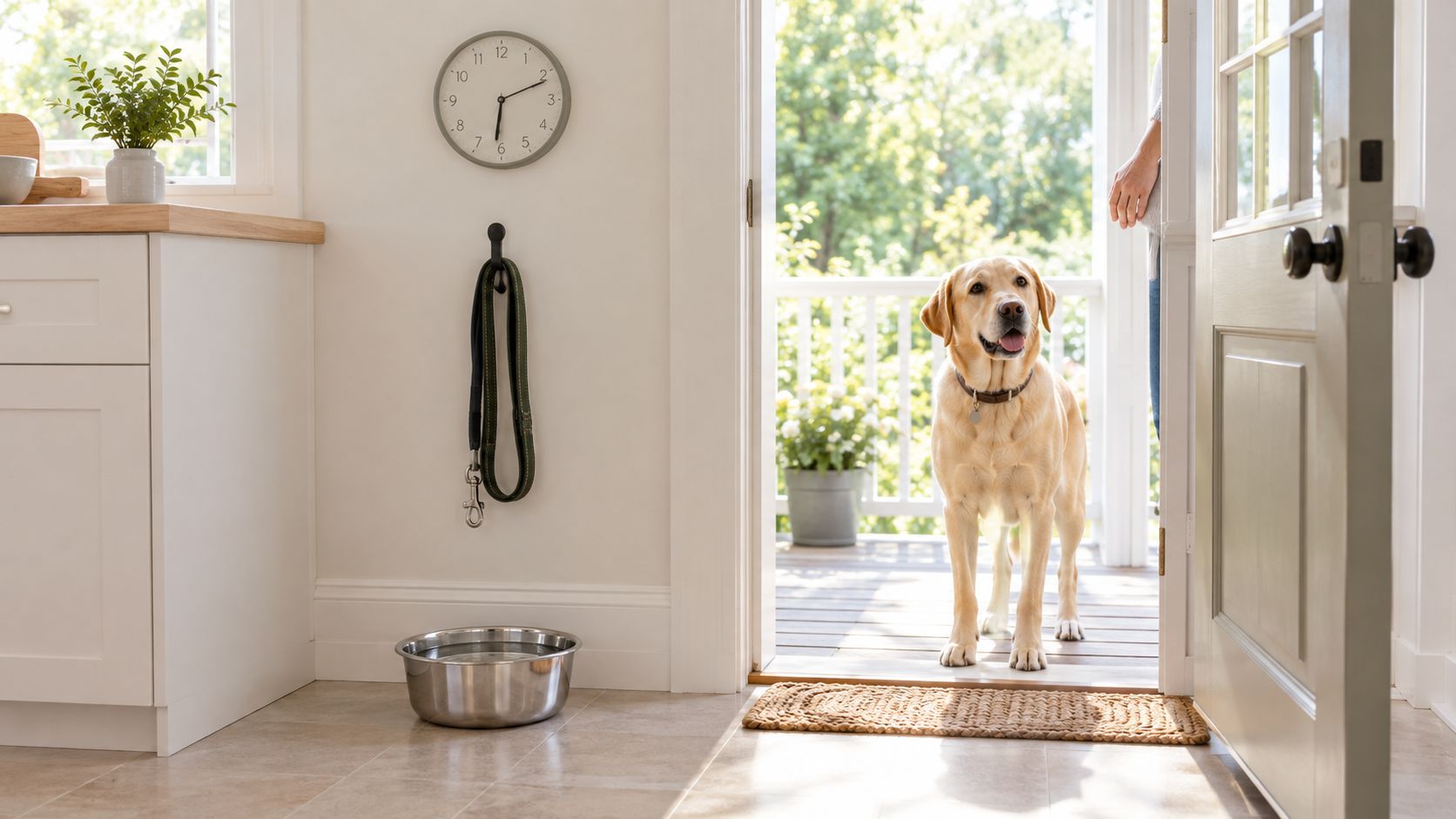
Support safe movement. Use non-slip rugs on slick floors, consider a ramp or step for stairs, and choose a bed with an easy entry. These adjustments may help a pet that struggles to reach the door.
Set up a practical sleeping area. Use a washable bed cover over a waterproof layer, and keep cleaning supplies nearby. Clean and dry your pet promptly after an accident to reduce lingering moisture and odor.
Make the home accessible for cats, too. Place litter boxes where your cat can reach them without stairs, and choose boxes with low sides that are easy to enter.
Household routines work best when the work is shared. Research involving owners of dogs with chronic paresis or paralysis found greater caregiver burden and lower quality of life than among owners of healthy dogs; burden was closely linked to household cleanliness, physical strain, and the dog's perceived quality of life, as described in this Frontiers in Veterinary Science article.
Rotate cleaning and nighttime duties, keep supplies near the sleeping area, and check in on your own energy each week. For household cleanup, this guide to enzyme cleaners for pet carpet accidents offers practical background on cleaning pet messes. For urinary-health questions, you can also read about cranberry tablets for dogs, then ask your veterinarian whether any supplement is appropriate for your pet.
Tracking Progress With a Simple Accident Log
Progress is easier to assess when you record what happens rather than relying on memory. Start with a baseline for about a week before a planned change, then continue logging after veterinary visits, medication changes, or routine adjustments.
| What to record | Why it helps |
|---|---|
| Accidents or wet spots per week | Shows whether the overall pattern is changing |
| Timing relative to sleep, rest, and exercise | Helps characterize when leakage occurs |
| Bedding wetness or leakage amount | Gives context beyond the number of accidents |
| Daily water intake | Helps flag a change in thirst or urine production |
| Medication timing and missed doses | Helps the veterinarian review how treatment is being given |
| Skin condition checked weekly | Tracks whether the home-care routine is protecting the skin |
| Energy, appetite, or unusual sleepiness | Captures changes to discuss during follow-up |
A U.S. 28-day placebo-controlled PHENYLPRO study enrolled 184 dogs, with 127 evaluated for effectiveness; the measure was reduction in weekly accidents. In the same product's 180-day study, 98.1% of owners reported satisfaction, and dogs averaged about one accident per week, according to the DailyMed product information. These results came from selected dogs and included owner-reported outcomes, so they shouldn't be treated as a forecast for every pet or cause of leakage.
If your pet's response is incomplete, the veterinarian can check how the medication is being given, whether doses were missed, and whether repeat urine testing is needed. The veterinarian may also reconsider other causes before changing or combining treatments. Never adjust a dose on your own.
When to Seek Care Now and Your Next Step
Use the timing below as a guide for contacting your veterinary team. If you're uncertain how urgently your pet needs care, call the clinic and describe the signs.
| Warning sign | Suggested timing | Reason |
|---|---|---|
| Straining or unable to urinate, with little or no urine | Emergency, same day | Possible urinary obstruction needing urgent care |
| Blood in the urine, fever, vomiting, or lethargy | Same day | Possible infection or systemic illness |
| Weakness, dragging hind legs, or leakage with pain | Same day | Possible neurologic cause |
| Sudden worsening or new leakage in a previously dry pet | Within one to two days | Needs re-evaluation of the cause |
| New sedation, weakness, appetite change, or blood-pressure concern after a medication | Call the veterinarian promptly | Possible side effect; don't change the dose yourself |
A new or worsening pattern deserves veterinary review rather than an automatic refill or medication substitution. Routine veterinary visits also provide a chance to review changes before they become harder to manage; this article on the importance of routine vet visits explains why ongoing veterinary oversight matters.
This week, book an appointment, bring your accident log and a list of your pet's current medicines, and ask for a written plan with monitoring dates. A clear plan can make urinary incontinence support more manageable for both you and your pet.
Bandana Rx is a licensed online veterinary pharmacy that coordinates prescription orders after veterinary authorization. Visit Bandana Rx to explore pet medications and health products, and ask your veterinarian which options fit your pet's diagnosis.