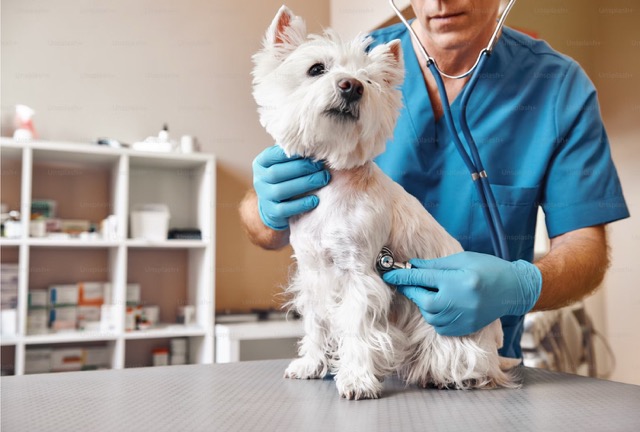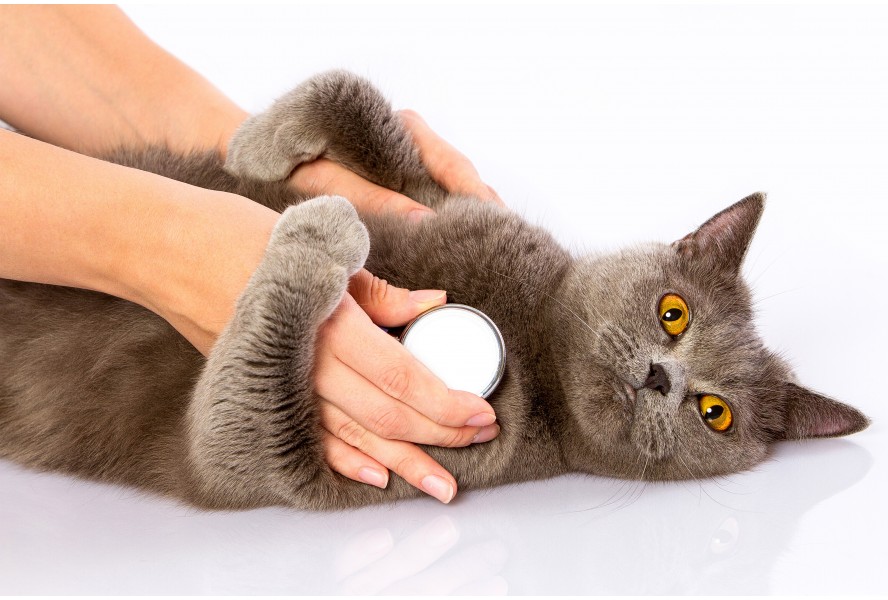





You notice it in the small details. Your dog asks to go outside again only an hour after the last walk, or your cat returns to the litter box repeatedly and produces just a few drops. Then you see straining, an accident indoors, or urine with a pink or red tinge, and a routine behavior change suddenly feels frightening.
Urinary signs don't point to one diagnosis. They can come from bladder irritation, stones, inflammation, obstruction, or infection. In some pets, bacteria travel beyond the bladder and reach the kidneys, causing pyelonephritis, the medical term for a kidney urinary tract infection. This guide explains the difference between lower urinary disease and kidney involvement, what veterinarians look for, how treatment decisions differ, and which signs mean your pet needs prompt or emergency care.
Table of Contents
- When Your Pet's Bathroom Habits Suddenly Change
- What a Kidney Urinary Tract Infection Actually Means
- Recognizing the Signs in Dogs and Cats
- How Veterinarians Diagnose a Kidney Urinary Tract Infection
- How Treatment Differs From a Routine Bladder Infection
- Common Misconceptions Owners Should Question
- Preventing Recurrence and Supporting Urinary Wellness
- When to Seek Veterinary Care Right Away
When Your Pet's Bathroom Habits Suddenly Change
The first useful step is to observe, not guess. Note how often your pet attempts to urinate, whether urine passes, whether the stream looks normal, and whether your pet seems painful. Also watch appetite, energy, thirst, vomiting, posture, and behavior between bathroom trips.
A dog with bladder-level disease may squat often, pass small amounts, lick around the urinary opening, or have accidents despite previously reliable house training. A cat may visit the litter box repeatedly, vocalize, hide, or urinate on a cool floor or another unusual surface. These signs deserve veterinary attention because urinary discomfort can look similar across several conditions.
Practical rule: Straining tells you that urination is difficult or painful. It doesn't tell you whether the problem is infection, inflammation, stones, or obstruction.
The distinction matters because a bladder infection and a kidney infection don't carry the same clinical implications. Pyelonephritis affects the upper urinary tract, including the renal pelvis and kidney tissue. The kidneys filter blood, help regulate body fluids, and concentrate urine, so infection there can produce illness beyond the urinary tract.
Don't wait for a perfect symptom pattern before calling your veterinarian. A sudden change in urination, litter-box behavior, appetite, or energy is enough to justify professional advice. Your observations can help the clinic decide how quickly your pet should be examined and which tests are appropriate.
Urinary tract infections are common in people, affecting about 150 million people worldwide each year, and they create substantial healthcare use in the United States. The broader burden helps explain why owners recognize the term “UTI,” but pets still need species-specific evaluation because urinary signs don't identify the affected location by themselves. (review of UTI epidemiology)
What a Kidney Urinary Tract Infection Actually Means
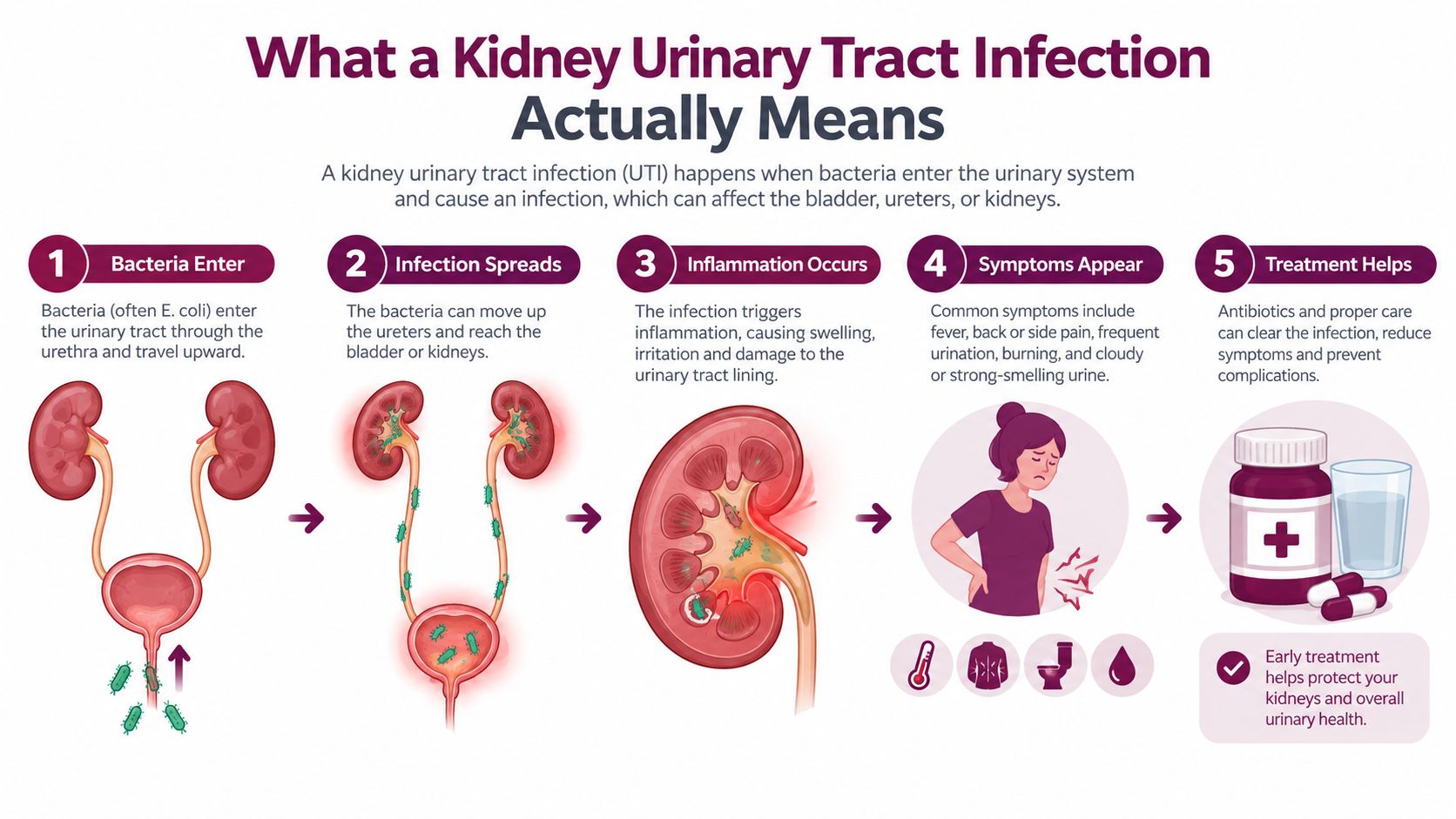
A urinary tract infection begins when bacteria enter the urinary system and multiply. In many cases, bacteria from the skin or gastrointestinal area move through the urethra into the bladder, producing cystitis, or bladder inflammation associated with infection. Signs often stay localized, such as frequent urination, straining, accidents, or blood in the urine.
Sometimes bacteria move upward through the ureters, the narrow tubes connecting the bladder to the kidneys. When they reach the renal pelvis or kidney tissue, the condition is called pyelonephritis. In dogs and cats, veterinary references describe this as an ascending infection in most cases, rather than a primary infection that begins inside the kidney. (veterinary review of pyelonephritis)
Why location changes the risk
The bladder stores urine. The kidneys perform broader work involving filtration and fluid balance. Consequently, a pet with kidney involvement may develop fever, weakness, appetite loss, vomiting, dehydration, pain near the back or abdomen, or changes in kidney-related blood values.
That doesn't mean every pet with frequent urination has a kidney infection. In fact, one of the most important diagnostic questions is whether urinary signs reflect bacterial pyelonephritis, lower urinary disease, stones, sterile inflammation, or another condition. Current veterinary guidance emphasizes culture confirmation alongside imaging, bloodwork, and susceptibility testing when pyelonephritis is suspected. (IRIS guidance on pyelonephritis)
The difference also explains why treatment shouldn't be selected from symptoms alone. A drug that reaches bladder urine isn't automatically suitable for infected kidney tissue, and a refill that helped a previous episode may be wrong for a new bacterial strain. Owners looking for veterinary urinary and kidney resources can review the Bandana Rx urinary tract and kidney category, while prescription decisions remain the veterinarian's responsibility.
Recognizing the Signs in Dogs and Cats
Consider a dog that begins asking outside frequently. During each trip, she squats several times, passes only small amounts, and has one accident near the door. Those signs fit lower urinary tract disease, but they don't prove that the infection is limited to the bladder.
If the same dog becomes quiet, stops eating, vomits, drinks noticeably more, or reacts when her back or abdomen is touched, the concern changes. Fever and generalized illness suggest that the urinary problem may be affecting more than the bladder. Kidney infection can also occur without every classic sign, so a normal appetite or lack of obvious pain doesn't rule it out.
Cats can be harder to read. A cat may hide, groom differently, sleep more, stop using the litter box, or appear “off.” Kidney involvement may be accompanied by vomiting, weight loss, a dull coat, or reduced activity. In cats, bacterial UTI is uncommon enough that guidance recommends confirming suspected infection with aerobic culture rather than assuming that urinary signs are bacterial. (veterinary guidance on infectious urinary disease)
Bladder vs. kidney infection signs in pets
| Sign category | Bladder-level infection | Kidney infection |
|---|---|---|
| Urination | Frequent attempts, small volumes, straining, accidents | Lower urinary signs may occur, with broader illness possible |
| Urine | Blood or altered appearance may occur | Blood may occur, but urine findings alone don't establish kidney involvement |
| Behavior | Restlessness, licking, litter-box avoidance | Lethargy, hiding, reduced activity, or unusual quietness |
| Appetite | Often preserved, though discomfort can reduce interest in food | Reduced appetite or refusal to eat is more concerning |
| Whole-body signs | Usually limited urinary discomfort | Fever, vomiting, dehydration, increased thirst, or weakness |
| Pain | Lower abdominal or bladder discomfort | Back, flank, abdominal, or kidney-region pain may occur |
The table is a guide, not a home diagnostic tool. Lower urinary signs alone don't rule out an ascending infection, and kidney disease or obstruction can mimic infection. If your cat is repeatedly entering the litter box or your dog suddenly strains to urinate, arrange veterinary assessment rather than waiting for the behavior to resolve. The signs of UTI in cats guide can help you organize observations before the appointment.
How Veterinarians Diagnose a Kidney Urinary Tract Infection
Diagnosis usually starts with the story you bring to the clinic. Your veterinarian will ask when the signs began, whether they recur, what the urine looks like, how much your pet drinks, and whether appetite, energy, or vomiting has changed. The physical examination may include abdominal palpation and assessment for bladder discomfort, kidney-region pain, dehydration, and other clues.
A urine sample provides the next layer of information. Veterinarians may collect urine by cystocentesis, using a needle to obtain urine directly from the bladder. This approach can reduce contamination from the lower urinary opening and skin, which makes the sample more useful for culture.
What the laboratory work adds
Urinalysis may identify white blood cells, red blood cells, protein, bacteria, and urine concentration changes. Pyuria, meaning white blood cells in urine, can support urinary inflammation or infection, but it doesn't independently prove pyelonephritis. A positive culture helps identify whether bacteria are growing and which antimicrobial agents may be active against them.
Culture and susceptibility testing become especially important when kidney involvement, recurrence, previous antibiotic exposure, or a complicated urinary history is present. Veterinary sources describe diagnosis as commonly supported by pyuria, a positive urine culture, compatible complete blood count changes such as neutrophilia or a left shift, and imaging abnormalities. (IRIS diagnostic guidance)
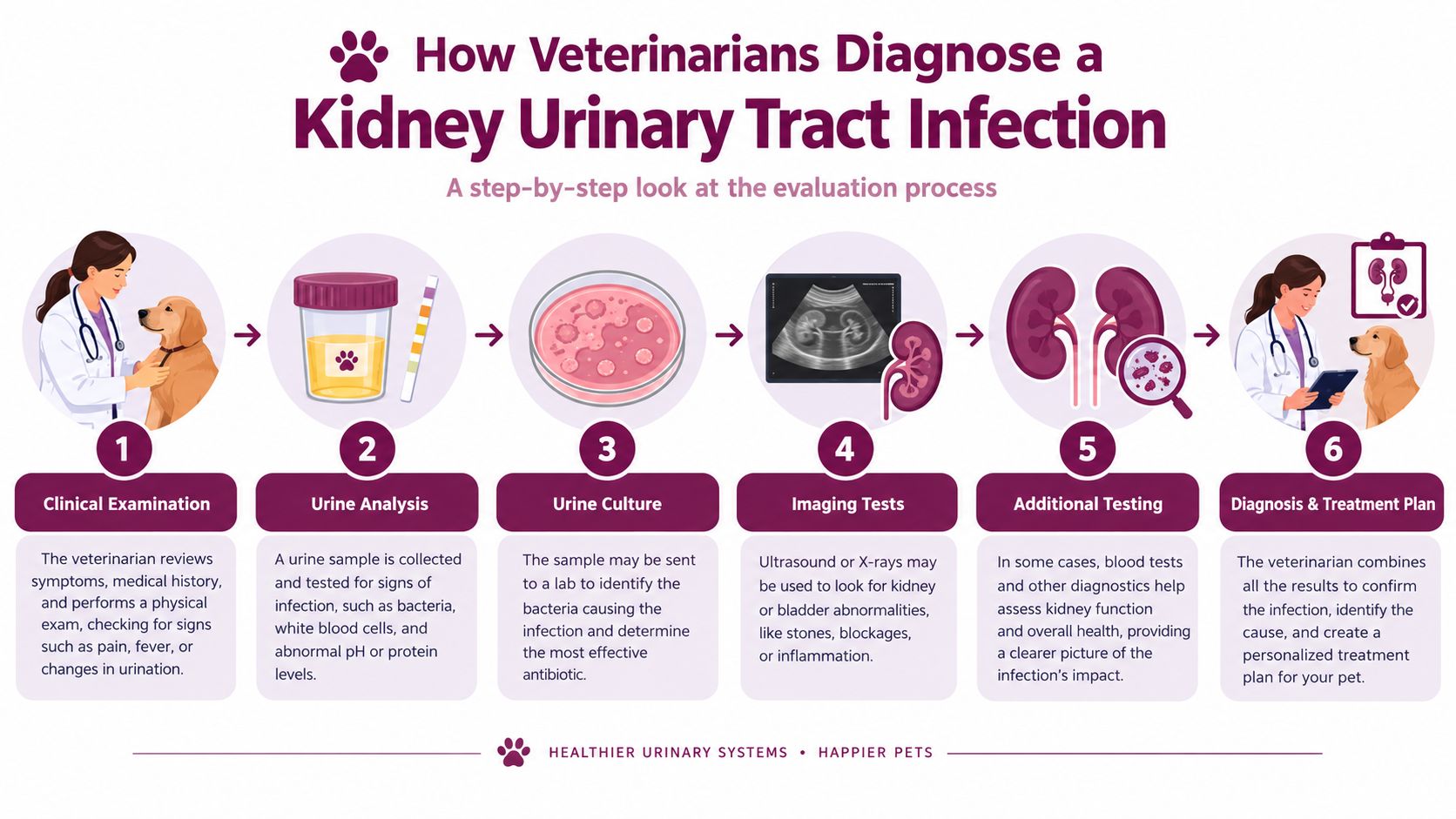
Bloodwork can include a CBC and chemistry panel, with SDMA considered as part of kidney assessment when clinically appropriate. These tests help the veterinarian evaluate systemic illness and kidney function. Abdominal ultrasound or radiographs may assess kidney size, shape, the renal pelvis, bladder, stones, obstruction, or other structural changes that support or complicate a diagnosis.
No single result always answers the question. The veterinarian interprets the history, examination, urine findings, culture, bloodwork, and imaging together.
How Treatment Differs From a Routine Bladder Infection
A simple bladder infection may be managed with a veterinarian-selected prescription based on the clinical picture and test results. Suspected pyelonephritis calls for a more deliberate plan because the medication must be appropriate for the identified bacteria and reach the tissues involved.
Culture-guided selection is central. Veterinary guidance cautions that susceptibility for pyelonephritis should be interpreted using serum breakpoints, rather than relying only on drug levels in urine. Kidney tissue exposure matters more when the infection is located in the upper urinary tract.
Comparing the treatment approach
| Factor | Simple bladder UTI | Kidney infection, pyelonephritis |
|---|---|---|
| Main goal | Clear infection in the lower tract and relieve urinary signs | Clear infection from kidney tissue and protect systemic health |
| Medication choice | Veterinarian-selected, ideally informed by testing when indicated | Strongly dependent on culture, susceptibility, kidney function, and tissue exposure |
| Duration | Determined by the veterinarian and the confirmed condition | Often requires a longer, closely monitored plan when appropriate |
| Supportive care | May be limited if the pet is otherwise stable | Fluids, pain control, appetite support, or hospitalization may be needed |
| Follow-up | Recheck based on symptoms and clinical judgment | Repeat cultures, bloodwork, imaging, or other monitoring may be recommended |
There isn't a universally proven treatment length for companion-animal urinary infections. A 2025 systematic review found only three eligible studies, all with high or serious risk of bias, and concluded that available evidence is too limited to establish whether short courses are inferior or superior. (systematic review of treatment duration)
Never use leftover antibiotics, human medication, or a previous prescription without veterinary direction. Resistance is a practical concern, with recent companion-animal hospital research reporting multidrug-resistant urinary pathogens, including a CTX-M-14-producing Escherichia coli ST354 clone associated with UTIs. (companion-animal antimicrobial resistance study)
If your veterinarian prescribes a medication, follow the label and contact the clinic before changing the amount, timing, or duration. Bandana Rx lists prescription products such as Clavamox for veterinary use, but a listed product isn't a diagnosis or a substitute for culture-guided veterinary prescribing.
Common Misconceptions Owners Should Question
“If an antibiotic works in urine, it will treat the kidneys.” Not necessarily. A kidney urinary tract infection requires attention to bacterial susceptibility, kidney tissue exposure, renal function, and the possibility of a resistant organism. The useful question isn't only whether a drug appears in urine. It's whether the prescribed treatment is suitable for the infection's location and the culture findings.
“A short course is always enough.” Treatment length depends on the confirmed condition and the pet's response. The evidence for companion-animal UTI duration remains limited, and suspected pyelonephritis generally requires closer monitoring than an uncomplicated bladder problem. Owners shouldn't shorten therapy because the pet looks better or extend it because symptoms return.
“Cloudy or smelly urine proves infection.” Urine appearance and odor can change for several reasons. Bacteria may be present without clinical illness, a state called subclinical bacteriuria, and current guidance generally advises against treating it unless a pet has a high-risk clinical reason. Symptoms and laboratory evidence must be interpreted together. (consensus guidance for dogs and cats)
“Leftover pills are a sensible first step.” They can be the wrong medication, the wrong amount, or an incomplete supply. They may also suppress signs temporarily while deeper disease, obstruction, stones, or kidney involvement remains undiagnosed.
Urinary signs deserve assessment even when your pet seems comfortable. A culture-first approach can prevent a cycle of repeated empiric treatment and unexplained recurrence.
Preventing Recurrence and Supporting Urinary Wellness
Prevention starts with habits that support regular drinking and complete, comfortable urination. Place water in more than one quiet area, consider a flowing fountain if your pet prefers moving water, and ask your veterinarian whether adding water to food is appropriate. Hydration strategies can support urine flow, but they can't prevent every infection or replace medical evaluation.
Cats benefit from clean, accessible litter boxes in locations where they feel safe. Dogs need regular opportunities to go outside, including after sleeping and meals. Avoid forcing a pet to hold urine for long periods, and pay attention if your pet suddenly avoids a box, asks out repeatedly, or produces unusually small amounts.
Build prevention around the individual pet
Weight management matters because excess body condition can alter the anatomy around the urinary opening and may make regular activity more difficult. Your veterinarian can also discuss diet, moisture content, and urinary formulations based on your pet's history. Don't switch to a therapeutic urinary diet without guidance, especially if kidney disease, stones, or another medical condition is possible.
After a kidney urinary tract infection, follow-up urine testing may help detect persistence or relapse that isn't obvious at home. The timing and type of recheck depend on the original diagnosis, treatment, kidney function, and clinical response.
- Track patterns: Record urination frequency, accidents, appetite, thirst, energy, and medication administration.
- Keep routines predictable: Regular walks and litter maintenance make changes easier to notice.
- Treat recurrence as new information: A return of signs needs reassessment, not an automatic repeat of an old prescription.
- Ask before adding supplements: Products marketed for urinary support may not suit every pet or every diagnosis.
These habits reduce avoidable risks, but they aren't a guarantee. For owners discussing supplements with a veterinarian, cranberry tablets for dogs are one educational resource, not a replacement for diagnosis or prescribed treatment.

When to Seek Veterinary Care Right Away
Some urinary signs allow you to call your regular veterinarian promptly. Others should move your pet to urgent or emergency care, particularly when urinary changes appear with whole-body illness.
Seek immediate veterinary help if your pet has:
- Sudden lethargy or collapse: A pet that becomes profoundly weak needs assessment without delay.
- Vomiting or refusal to eat: These signs can accompany systemic illness and dehydration.
- Fever or marked pain: Back, flank, abdominal, or kidney-region pain is more concerning than isolated urinary frequency.
- Blood with weakness: Blood in urine combined with low energy, vomiting, or pain warrants urgent evaluation.
- Straining with little or no output: This may indicate obstruction, especially in male cats, and can become an emergency.
- Rapid deterioration: A pet that worsens over hours shouldn't be monitored at home while waiting for symptoms to settle.
Don't give leftover antibiotics, human pain relievers, or medication obtained without a current prescription. A licensed veterinarian needs to determine whether the problem is infection, obstruction, stones, inflammation, kidney disease, or another condition, and a licensed pharmacy should dispense prescription treatment after authorization.
Veterinary teams can also use operational tools to organize communication and follow-up. Clinics exploring AI for vet practices may find value in systems that support administrative workflows, but technology doesn't replace examination, testing, or clinical judgment. For more guidance on recognizing escalation points, review when to call the vet.
Recognizing the difference between bladder-level signs and kidney-level illness gives you a practical reason to act. Prompt evaluation can't guarantee a particular outcome, but it can reduce dangerous delays and help your veterinarian choose the right diagnostic and treatment path.
Bandana Rx provides prescription and over-the-counter medications and pet-care products for dogs and cats, with prescription orders processed after veterinary authorization. Visit Bandana Rx to review relevant urinary and kidney options and coordinate an authorized prescription refill when your veterinarian recommends continued treatment.