




You notice your cat visiting the litter box again, then again. The clumps are unusually small, there may be a pink tinge in the litter, or your cat suddenly urinates on the bathroom floor. It's worrying, but these changes don't automatically mean a bacterial urinary tract infection.
The same outward signs can come from bladder inflammation, stones, crystals, or a urethral blockage. A cat may also have a bacterial infection without obvious litter-box symptoms. The safest approach is to recognize the pattern, identify emergencies quickly, and let a veterinarian determine the cause.
Table of Contents
- What Urinary Trouble Can Look Like in Your Cat
- The Core Signs of UTI in Cats Explained
- UTI Versus Other Causes of Feline Urinary Problems
- Warning Signs That Need Urgent Veterinary Care
- How Vets Diagnose Urinary Tract Infections in Cats
- Prevention and At-Home Monitoring for Your Cat
- Key Takeaways and When to Reach Out to Your Vet
What Urinary Trouble Can Look Like in Your Cat
A cat can appear comfortable while its urinary habits shift without obvious warning. You may notice longer litter-box visits, smaller wet patches, or urine on a cool, smooth surface instead of in the box. These observations are clues, not a diagnosis. They show that urination may be uncomfortable or abnormal and deserve a veterinary assessment.
Veterinarians group many of these problems under feline lower urinary tract disease, or FLUTD. The term covers conditions involving the bladder and urethra, the tube that carries urine out of the body. A bacterial UTI is one possibility, alongside inflammation without infection, stones, crystals, and obstruction. At home, these causes can look much like one another, rather like several different faults producing the same warning light.
Bacterial infection is uncommon in cats overall. A clinical review reports that 1–2% of cats experience a UTI during their lifetime. Among cats showing signs of FLUTD, UTIs accounted for 2–19% of cases, with an estimated 40–45% in cats older than 10 years (clinical review of feline urinary tract infections). These figures explain why symptom spotting alone cannot confirm infection.
Keep a simple record of three areas:
- Urination pattern: Note extra litter-box visits, smaller amounts, or no visible urine.
- Comfort: Watch for vocalizing, repeated repositioning, restlessness, or licking around the lower abdomen and genital area.
- Whole-body changes: Hiding, poor appetite, vomiting, weakness, or increased drinking can suggest illness beyond the bladder, including possible upper-tract involvement.
A practical rule helps: any new litter-box pattern warrants attention, even if your cat still eats and plays. No urine, vomiting, marked lethargy, or worsening weakness should prompt urgent veterinary contact rather than home monitoring. For general information and products to discuss with your veterinary team, see Bandana Rx's urinary care category.
The Core Signs of UTI in Cats Explained
Your cat may visit the litter box repeatedly, strain, or suddenly urinate on the floor. These observations are useful clues, but they cannot show whether bacteria are present. The same pattern can come from bladder inflammation, stones, crystals, or other urinary problems, so new signs deserve a veterinary assessment.
Pollakiuria means frequent small urination
Pollakiuria means urinating often, usually in small amounts. Your cat may enter the box, squat, leave, and return soon afterward. Instead of one normal clump, you may find several tiny clumps. Frequent trips can reflect irritation that makes the bladder signal urgency before it is full.
Dysuria means painful or difficult urination
Dysuria describes painful or difficult urination. A cat may cry, growl, twitch its tail, crouch tightly, or seem restless while trying to pee. Some cats stay quiet, so a tense posture, repeated repositioning, or a sudden jump out of the box may be the only visible clue.
Stranguria means straining to urinate
Stranguria is straining during urination. The posture can resemble constipation, which makes this sign easy to misread. A cat that remains squatting and produces only drops or no urine needs prompt veterinary attention. A blocked urethra is an emergency, particularly in male cats.
Hematuria means blood in the urine
Hematuria means blood in the urine. It may appear pink, red, orange, or rust-colored, or be found only through testing. Blood can occur with infection, inflammation, stones, or trauma, so it identifies urinary bleeding, not its cause.
Periuria means urinating outside the litter box
Periuria means urinating somewhere unusual, such as a bathtub, sink, carpet, laundry, or bedding. This is usually a sign of pain, urgency, or an unpleasant association with the litter box rather than revenge. Inflammation can make the need to urinate arrive suddenly, leaving little time to reach the box.
Cats often conceal discomfort. Lingering in the box, grooming the belly or groin repeatedly, avoiding stairs, hiding, or becoming unusually quiet can matter even when the urine looks normal. Vomiting, unusual tiredness, or drinking more may suggest illness affecting more than the lower urinary tract and should receive prompt veterinary attention.
| Clinical Term | What It Means | What Owners Notice at Home |
|---|---|---|
| Pollakiuria | Frequent urination in small amounts | Repeated litter-box trips and tiny clumps |
| Dysuria | Painful or difficult urination | Crying, tense posture, restlessness, or sudden departure from the box |
| Stranguria | Straining to urinate | Prolonged squatting and drops or no urine |
| Hematuria | Blood in the urine | Pink, red, orange, or rust-colored urine |
| Periuria | Urinating outside the litter box | Puddles on floors, bedding, tubs, or other unusual surfaces |
Any combination of these signs warrants a veterinary visit. Symptoms alone cannot confirm a bacterial UTI, because several urinary conditions produce the same warning pattern.
UTI Versus Other Causes of Feline Urinary Problems
A cat can look as though it has a UTI when the bladder is inflamed for another reason. Feline idiopathic cystitis, often shortened to FIC, is a leading explanation for lower urinary signs in young adult and mature cats. It causes bladder inflammation without an identifiable bacterial cause, and stress can contribute to flare-ups.
Other possibilities include bladder stones, crystals, anatomical abnormalities, tumors, and urethral obstruction. A bacterial infection can also occur, particularly when age or underlying disease changes the urinary tract's defenses. The important point is that the litter-box picture overlaps so heavily that owners can't reliably separate these causes at home.
A clinical study of 214 cats evaluated for urinary disease illustrates the problem. Among cats with UTI, 100 cats, or 64.5%, showed one or more lower urinary tract signs, while 55 cats, or 35.5%, had no signs. Control cats also showed substantial overlap, with 114 cats, or 61.3%, showing signs and 72 cats, or 38.7%, showing none (study summary and feline UTI information). Symptoms can raise suspicion, but they can't confirm infection.
The possibilities form a practical map:
- Feline idiopathic cystitis: Inflammation without a confirmed infectious cause, often associated with stress and environmental disruption.
- Bladder stones or crystals: Mineral material can irritate the bladder, cause blood, or contribute to obstruction.
- Urethral obstruction: A blockage prevents urine from leaving the bladder. This is especially dangerous in male cats.
- Bacterial UTI: Bacteria multiply in the urinary tract, but testing is needed to establish that infection is present.
- Other disease: Kidney disease, diabetes, anatomical problems, or masses may alter urinary signs and treatment choices.
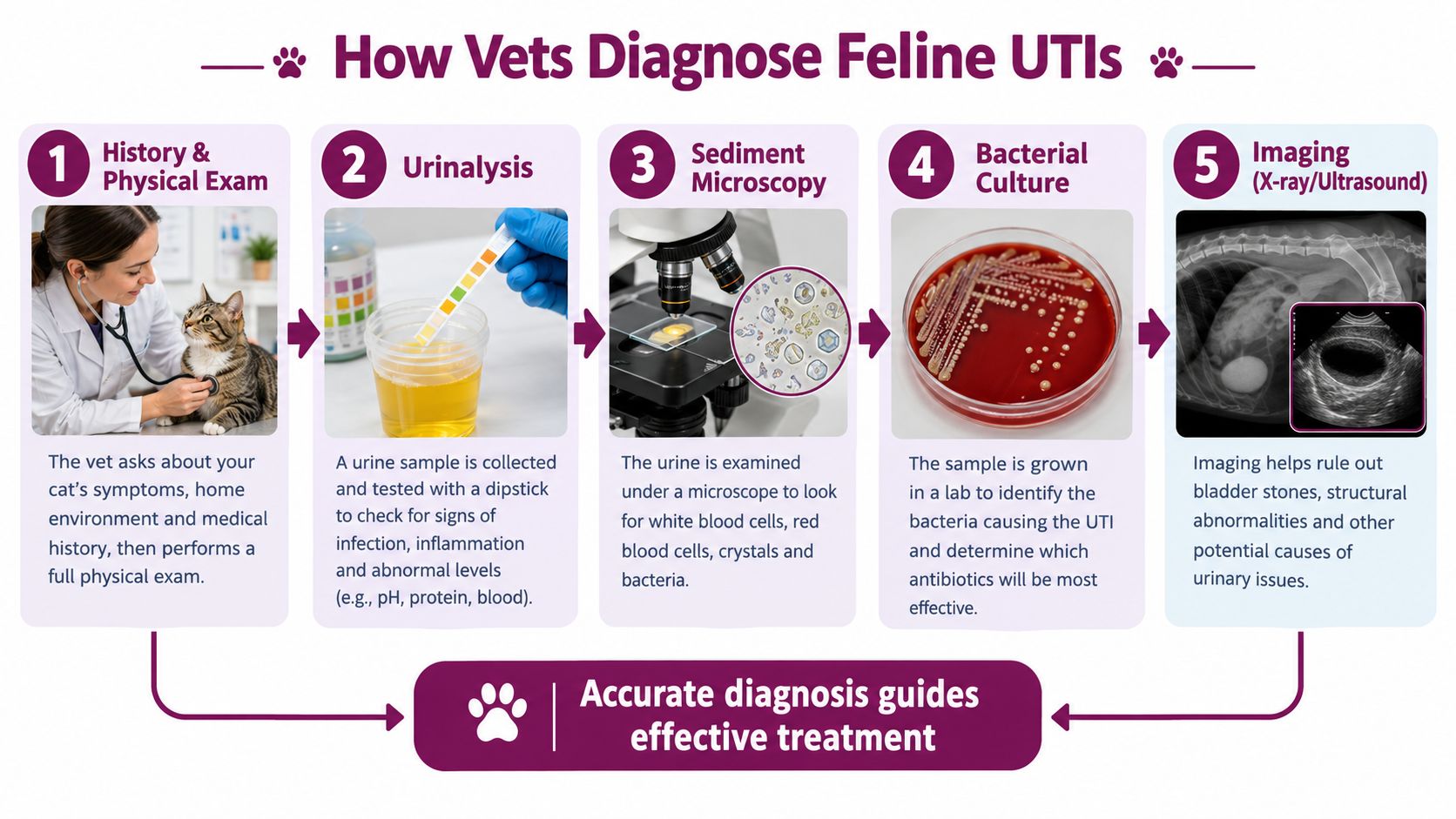
Your veterinarian may recommend different tests depending on your cat's age, history, examination, and urine findings. The feline urinary tract resource collection can provide additional educational context, but it shouldn't replace an examination or urine testing.
Warning Signs That Need Urgent Veterinary Care
A cat that keeps squatting in the litter box without producing a normal stream needs immediate attention. Some urinary changes may allow a promptly arranged appointment, but repeated unsuccessful attempts can signal a life-threatening blockage.
A blocked urethra is especially dangerous in male cats. Look for repeated unproductive squatting, crying, restlessness, a tense or painful abdomen, and little or no urine. A cat may seem unsettled at first, then become withdrawn, weak, or visibly ill. Because urine cannot leave the body normally, the condition can worsen within hours.
The phrase “12–24 hours” sometimes appears in discussions of complete obstruction. Do not treat that range as safe waiting time. If your cat has made repeated attempts and you cannot confirm urine output, contact an emergency veterinarian immediately. For broader guidance, see when to call your vet.
Upper-tract signs can look different
Kidney involvement may cause fewer obvious litter-box changes. Feline pyelonephritis, meaning a kidney infection, may cause anorexia, lethargy, and vomiting. Other possible upper-tract signs include increased urination, increased drinking, back pain, fever, and poor appetite, as described in this clinical update on feline pyelonephritis.
A cat can therefore have serious urinary disease without visible straining or accidents. Call your veterinarian about vomiting, marked tiredness, hiding, sudden appetite loss, fever, or a noticeable change in drinking. Collapse, severe weakness, breathing difficulty, or inability to urinate requires emergency care.
Use this decision rule: a cat that hasn't urinated in 12 hours, is vomiting, or is collapsed should be seen immediately. If you cannot tell whether urine is being produced, treat that uncertainty seriously and call a veterinary clinic.
How Vets Diagnose Urinary Tract Infections in Cats
Diagnosis usually begins with the history you provide. Tell the veterinarian when the change started, how often your cat visits the box, whether you've seen urine, and whether appetite, thirst, energy, or grooming has changed. The physical examination may include abdominal palpation to assess bladder size, firmness, and pain, along with checks of hydration, body condition, and kidney region.
Urinalysis provides the first detailed clues
A urinalysis examines urine concentration and may assess pH, protein, blood, glucose, white blood cells, crystals, and other findings. It can reveal that inflammation is present, but inflammatory cells or bacteria-like material don't always prove a bacterial infection.
For bacterial cystitis, Merck Veterinary Manual describes diagnosis as lower urinary signs plus confirmation of bacteriuria on urinalysis or culture. It identifies quantitative urine culture as the gold standard, and notes that growth of at least 1,000 CFUs/mL from cystocentesis urine is usually considered clinically relevant bacteriuria (Merck Veterinary Manual guidance on bacterial cystitis).
Culture helps confirm infection
A quantitative culture obtained through cystocentesis uses a sterile needle to collect urine directly from the bladder. This avoids contamination from the urethra, skin, litter, or a collection container. If bacteria grow in a clinically meaningful pattern, the veterinarian can use the results to guide treatment.
Bloodwork may be appropriate when kidney disease, diabetes, dehydration, or systemic illness is possible. Abdominal radiographs and ultrasound can help identify stones, bladder-wall changes, masses, or other structural problems.
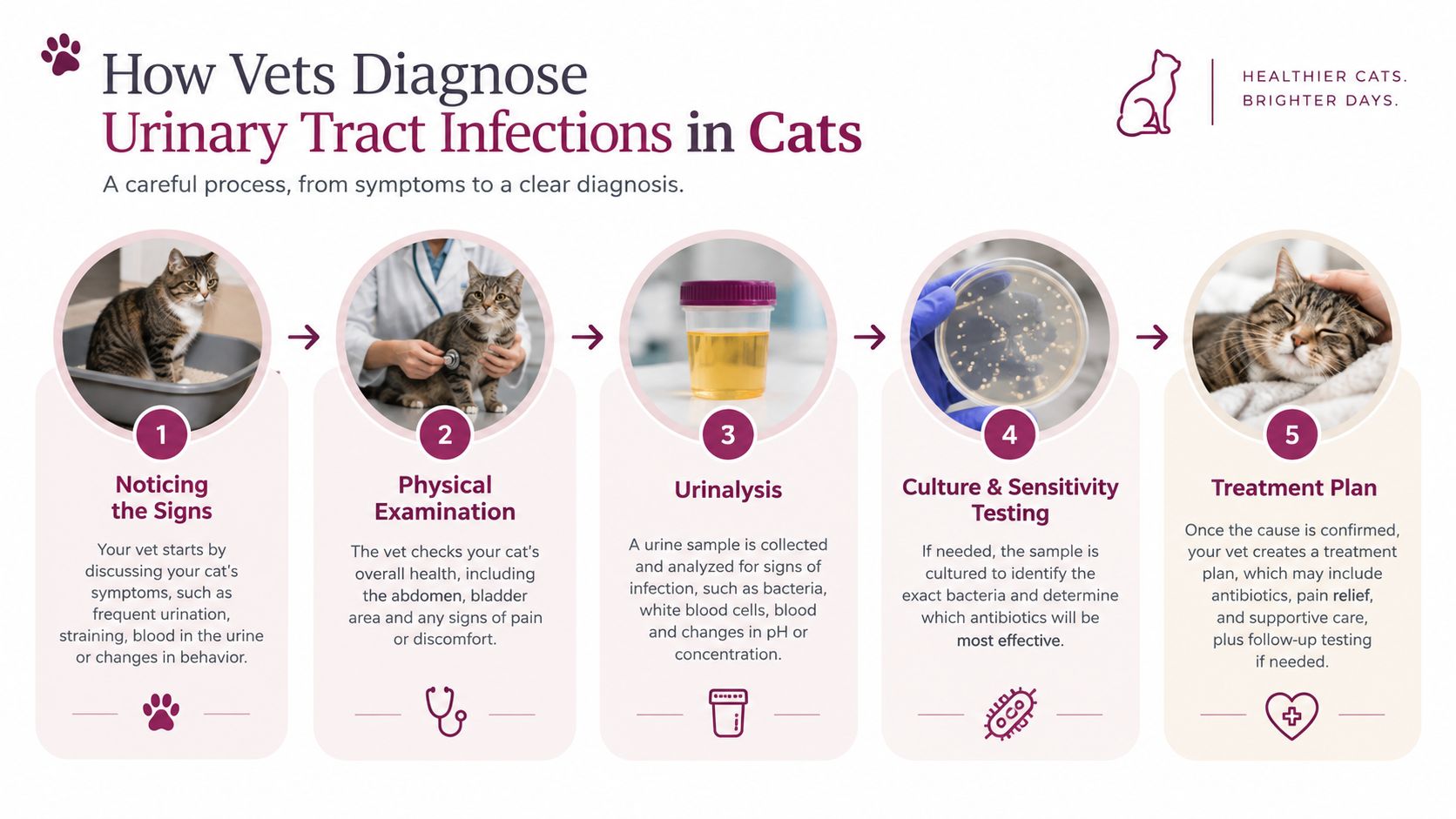
Diagnosis is a sequence rather than a single test. Starting antibiotics solely because a cat is straining can miss FIC, stones, or obstruction. For a separate owner-friendly overview of treatment decisions, how to treat cat UTI may be useful, but medication selection and dosing still belong to your veterinarian. You can also read about routine veterinary visits and online pharmacy safety.
Prevention and At-Home Monitoring for Your Cat
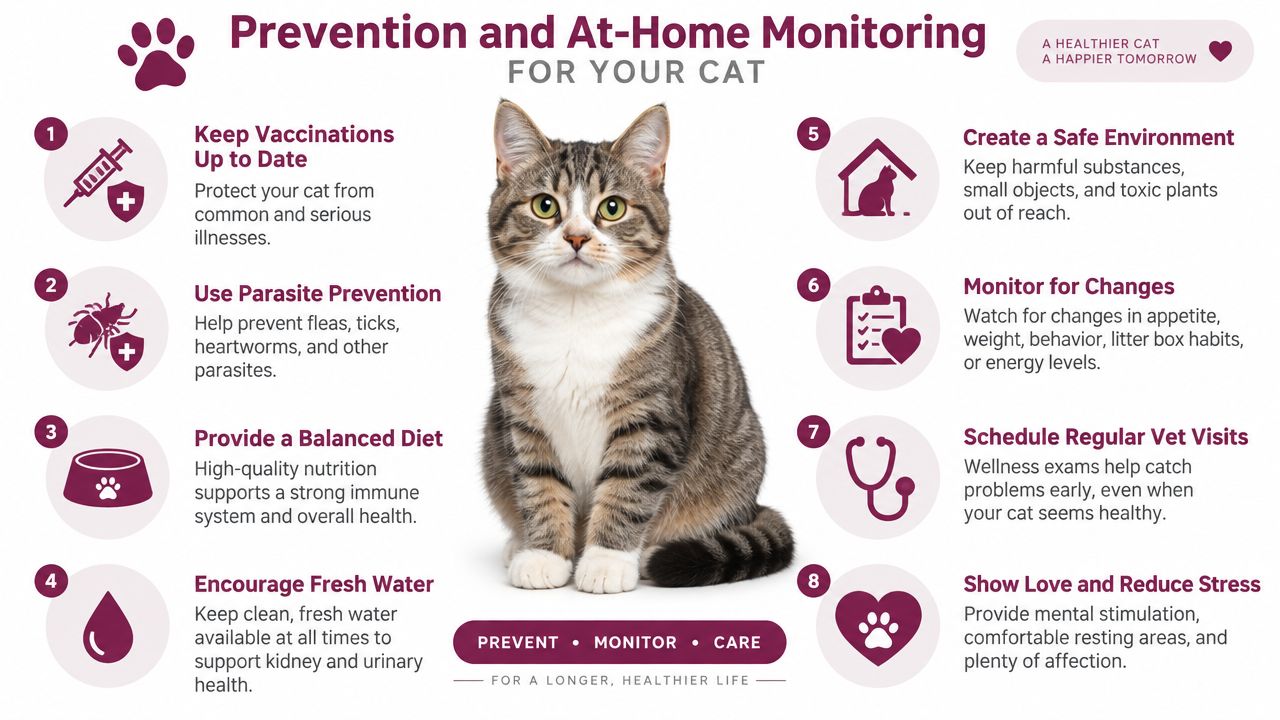
Home care supports urinary health, but it doesn't replace diagnosis or prescribed treatment. Prevention also isn't perfect. A cat can develop another episode despite careful routines, especially when the underlying problem is recurrent inflammation or another condition requiring long-term management.
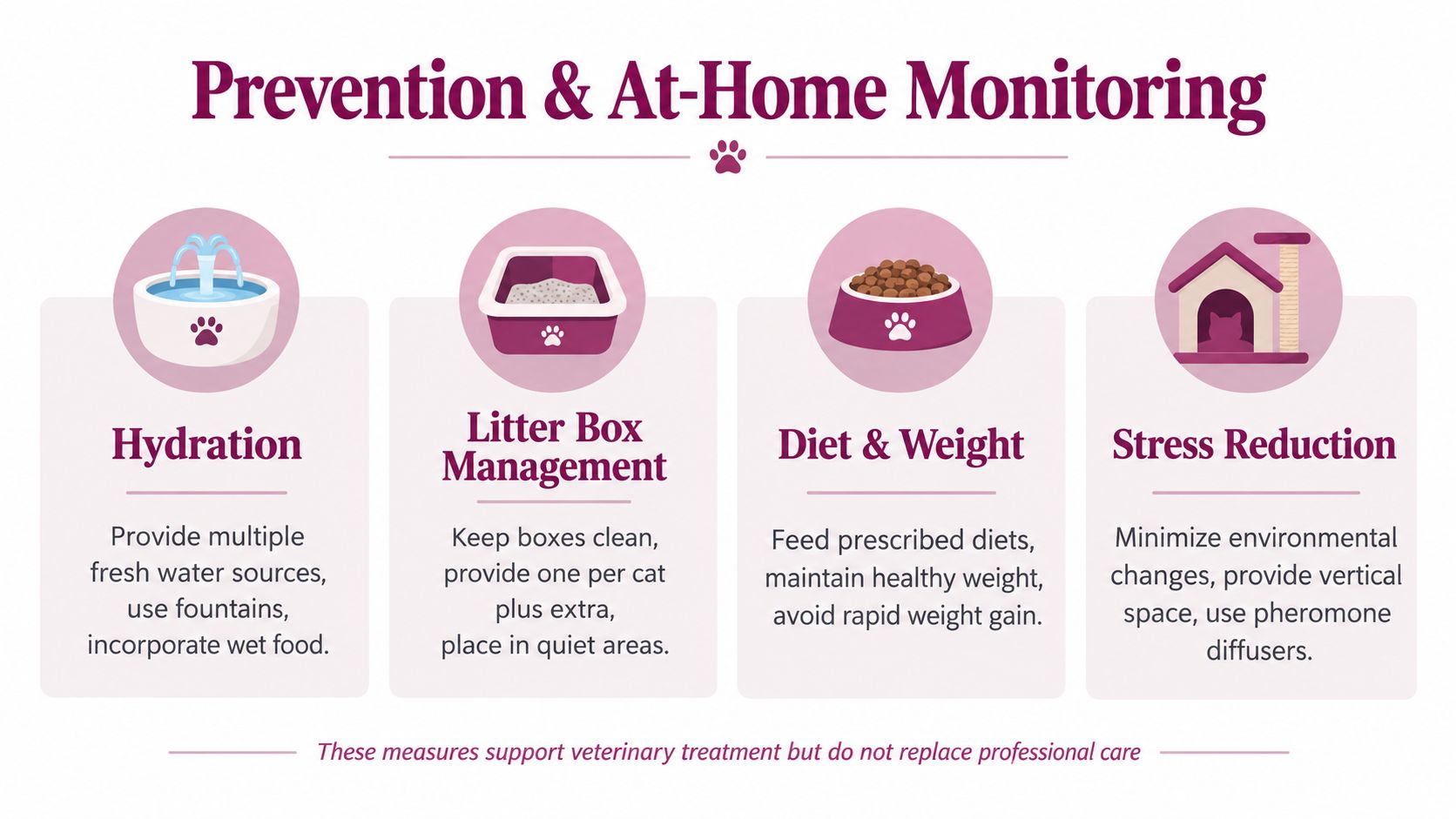
Support water intake
Offer several clean water sources and refresh them regularly. Some cats prefer a fountain, while others drink more from wide bowls placed away from food and busy walkways. Wet food can add moisture, and your veterinarian can advise whether a diet change or a prescribed urinary formulation fits your cat's diagnosis.
Make the litter area easy to use
Keep boxes clean, accessible, and located in quiet areas. A common household guideline is one box per cat plus one extra, with frequent scooping and regular washing. If a cat associates a dirty or hard-to-reach box with discomfort, it may delay urination or choose another location.
Reduce environmental stress
Predictable meals, stable routines, hiding spaces, and vertical areas can help your cat feel secure. Minimize abrupt household changes when possible, and consider pheromone diffusers if your veterinary team believes they may fit your cat's situation. Stress management matters particularly for cats with idiopathic cystitis, where inflammation can occur without bacterial infection.
Keep a simple health record
Write down litter-box visits, approximate urine volume, appetite, water consumption, stool consistency, and behavior. A monthly weight check can help you notice a gradual change that isn't obvious day to day. Report persistent or worsening changes rather than trying to interpret them as proof of a UTI.
For products that may complement a veterinarian's plan, you can review urinary supplements for cats. Supplements, diets, and hydration products shouldn't substitute for culture, obstruction assessment, or other medical care.
Key Takeaways and When to Reach Out to Your Vet
A change in litter-box habits deserves attention, even when your cat seems comfortable between visits. Use a simple watch, monitor, act rhythm.
Watch for frequent small urinations, straining, vocalizing, blood, excessive grooming, or urinating outside the box. These signs show urinary discomfort, but they do not identify the cause. Infection is possible, yet feline idiopathic cystitis, stones, crystals, and other noninfectious conditions often create the same pattern.
Monitor urine output and your cat's general condition. A cat may have a bacterial UTI without obvious lower-tract signs, while another cat with dramatic symptoms may not have an infection. As noted earlier, UTIs are relatively uncommon in cats overall, though risk differs with age and existing urinary disease.
Act promptly if your cat strains without producing urine. This can indicate an obstruction, particularly in male cats, and requires urgent veterinary care. Vomiting, lethargy, collapse, severe pain, sudden appetite loss, or increased drinking alongside urinary changes may signal upper-tract or more serious disease. Do not wait to test a home remedy.
Arrange a veterinary examination when signs appear. Testing may include urinalysis, culture, or imaging, followed by treatment for infection or another cause.
Bandana Rx offers prescription and over-the-counter pet health products, including urinary and kidney care options. Visit Bandana Rx and discuss any product with your veterinarian.