


Only 37% of 2.4 million active U.S. veterinary patients received at least one heartworm-preventive transaction between August 2021 and July 2024, according to a 2026 study in the National Library of Medicine's PMC archive. A recorded purchase doesn't prove that a dog received every dose, but the finding highlights an important challenge: prevention depends on keeping medication available and administering it consistently.
To prevent heartworms in dogs, you need a veterinarian-directed medication schedule and the right testing plan. The easily overlooked problems are a missed dose and an infection that's too young for testing to detect. Neither your dog's appearance nor a negative test immediately after a lapse can replace follow-up care.
Table of Contents
- Year-Round Prevention Schedule by Age
- How Mosquitoes Spread Heartworms
- Build a Routine That Keeps Doses On Time
- What to Do After a Missed Dose
- Choose a Preventive With Your Veterinarian
Year-Round Prevention Schedule by Age
The practical approach is continuous, veterinarian-chosen prevention plus regular testing, rather than a schedule based only on warm weather. Your dog's age and preventive history determine how to begin safely.
The FDA's guide to heartworm disease supports starting puppies on prevention no later than 8 weeks of age, testing unprotected dogs 7 months or older before starting, and maintaining prevention with testing at least every 12 months. Oral and topical medications generally follow a monthly schedule; veterinarian-administered injectables follow their approved label intervals.
Heartworm testing and prevention timing by situation
| Dog situation | Test before starting | Prevention timing | Follow-up test |
|---|---|---|---|
| Puppy under 7 months | Not required before the first dose | Start by 8 weeks of age, then on the product interval | Six months after the first visit, again six months later, then yearly |
| Dog 7 months or older and not currently protected | Antigen test and microfilaria test | Start only after the veterinarian clears it | Again in 6 to 7 months, then yearly |
| Dog already on prevention | Annual antigen and microfilaria testing | Monthly oral or topical, or injectable on its labeled interval | At least every 12 months |
| Seasonal-only program | Same age-based testing rules | Start at least 1 month before transmission and continue up to 6 months after it ends | Yearly, plus prompt testing if any dose was missed |
The American Heartworm Society's heartworm basics explains the puppy follow-up schedule and why older dogs starting prevention need another test after the parasite's development period. The table is a planning aid, not permission to begin a prescription without your clinic's instructions.
Why the starting test matters
Heartworm preventives act against immature stages of infection. They aren't treatments for established adult heartworms. An infected dog needs a different management plan, and administering a preventive to a dog with circulating microfilariae can cause a serious reaction.
That's why the clinic needs more than an estimate that your dog probably received medication recently. Bring previous veterinary records, the medication name, and the last confirmed administration date. If you've adopted a dog with an incomplete history, say so directly.
Practical rule: Match your dog to the appropriate table row, then confirm the testing and first-dose instructions with the clinic before starting or restarting medication.
Keep the calendar simple
The American Heartworm Society's Think 12 approach means prevention throughout the year and testing on an annual schedule. It removes the need to decide when local mosquito activity has started or stopped.
Seasonal-only prevention requires careful timing before and after transmission, not just giving medication during summer. Don't create that schedule from outdoor temperatures or the date of the first mosquito you notice. Your veterinarian should determine whether a seasonal approach is appropriate and write out the administration dates.
Other parasites need their own plan, too. Our guide to fleas and ticks can help you prepare questions about broader protection without assuming that every parasite medication covers heartworms.
How Mosquitoes Spread Heartworms
Say your dog goes outside for an evening bathroom break and an infected mosquito bites them. The bite may be unremarkable, but it can introduce the immature parasite that causes heartworm disease.
The CDC's overview of dirofilariasis identifies Dirofilaria immitis as the cause of canine heartworm disease and mosquitoes as its transmitting vectors. Dogs don't acquire heartworms by sharing a water bowl, playing together, or living beside an infected dog. A mosquito is part of the transmission process.
The path from that bite to adult infection explains why medication timing matters.
Follow the parasite through your dog
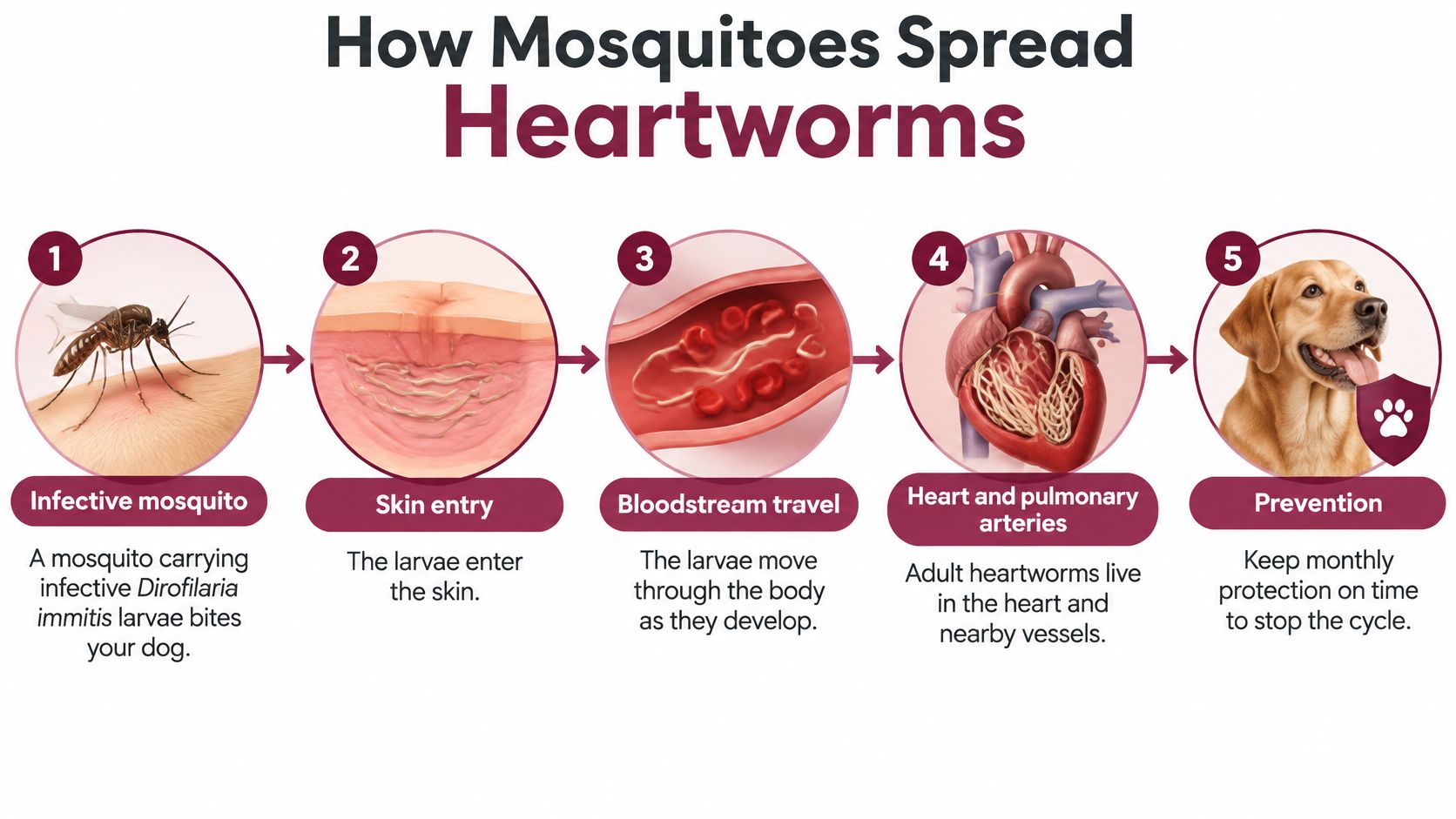
An infective mosquito carries larvae that enter through the bite site. The larvae develop as they move through the dog's body, eventually becoming adult worms in the pulmonary arteries, the blood vessels connecting the heart and lungs. Adult worms can also involve the heart.
Monthly prevention targets susceptible immature stages before they become established adults. Think of each scheduled administration as part of an ongoing program, not as a mosquito repellent or a way to remove adult worms.
Once mature female worms produce microfilariae, those tiny offspring circulate in the bloodstream. Another mosquito can ingest them while feeding. After further development inside that mosquito, infective larvae can be transmitted during a later bite.
That distinction can be confusing: microfilariae circulating in an infected dog aren't the same developmental stage as the infective larvae a mosquito introduces. The mosquito allows the parasite to continue its life cycle.
A heartworm preventive and a mosquito-control measure do different jobs. Reducing bites helps limit exposure; prescribed prevention addresses susceptible parasite stages inside your dog.
Why a recent negative test can mislead
A test can only detect what it's designed to find. Antigen tests identify material associated with adult female worms, not the earliest larvae introduced during a recent mosquito bite.
The Merck Veterinary Manual's heartworm guidance explains that antigen testing is preferred for confirming suspected infection but can't identify early infection. That's why a test immediately after travel or a suspected exposure doesn't settle whether that recent exposure caused an infection.
The dog in the evening-walk example could have a negative result soon afterward without that result being incorrect. The infection may be too immature to detect. Your veterinarian accounts for that limitation when scheduling follow-up testing.
Reduce bites without relying on avoidance alone
Make your home and yard less welcoming to mosquitoes:
- Empty standing water: Check plant saucers, buckets, outdoor toys, and other containers that collect rain or irrigation water.
- Repair screens: Close gaps in window and door screens rather than assuming an indoor dog won't encounter mosquitoes.
- Adjust outdoor time: During heavy mosquito activity, limit unnecessary exposure around dusk and dawn when practical.
- Discuss travel: Tell the clinic where your dog will stay and whether the trip changes their parasite-control needs.
No U.S. state should be treated as heartworm-free, and a mild winter isn't proof that prevention can pause. For travel context, owners visiting the United Kingdom can check seasonal mosquito patterns in Britain, but a weather calendar shouldn't determine a dog's prescription schedule.
You won't prevent every mosquito bite. Keeping prescribed doses on time is the part of this cycle you can organize reliably.
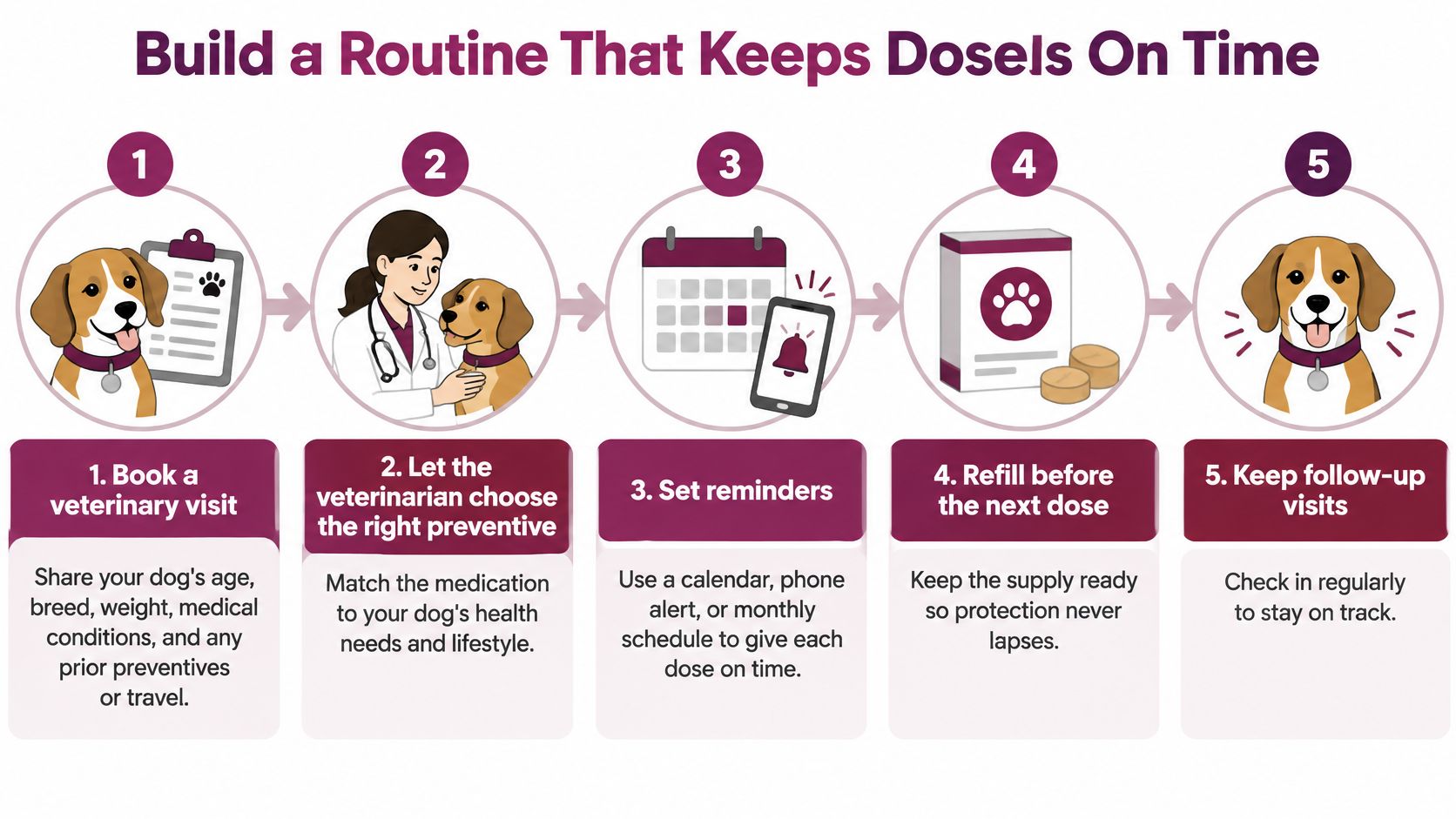
Build a Routine That Keeps Doses On Time
A workable prevention plan should survive ordinary disruptions: a late delivery, a weekend away, a growing puppy, or someone assuming another family member gave the medication. Make administration observable and refills predictable.
Purchase records also need careful interpretation. A preventive transaction shows that medication was obtained, not that every scheduled dose was administered correctly. Your household record should track what happened.
Set up the prescription correctly
Book a veterinary visit and bring a usable history. Share your dog's age, breed, current weight, medical conditions, other medications, previous preventives, and travel history. Bring package photographs or records rather than relying on a description such as the brown chew. To provide appropriate care, we ask for your pet's medical conditions, weight, breed, and age.
Let the veterinarian choose the product and testing plan. Relevant options include monthly oral medications, monthly topical medications, and longer-acting injections administered at the clinic. The choice should fit your dog's health and your ability to administer it reliably. Some products address heartworm prevention alone, while others also control specified intestinal parasites or additional parasites; the individual label defines that coverage.
Arrange veterinary authorization before you run out. Prescription medication isn't dispensed solely because an owner selects it online. We dispense prescription medications only after receiving authorization from your pet's veterinarian. If your veterinarian doesn't work with online pharmacies, you must use our mailed prescription method.
Confirm weight at each prescription renewal. A growing puppy or an adult whose weight has changed may no longer fit the previous package's labeled weight band. Give the clinic a current weight and let the veterinarian confirm the appropriate strength. Don't split, increase, or otherwise modify a dose to make an old package fit.
Preparing these details before ordering helps avoid preventable back-and-forth. It also gives your veterinarian an opportunity to catch overlapping ingredients or a product that no longer suits your dog.
Make each administration easy to verify
Choose a repeating calendar date and record completion. Use a phone reminder, shared calendar, or medication log. For a clinic-administered injectable, book the next appointment before leaving and keep the appointment reminder. A reminder means a dose is due; a completed record means someone administered it.
For example, your calendar might say heartworm medication due, while the log records the product, administration date, and who gave it. If your dog spits out part of a chew, record that uncertainty instead of marking the dose complete.
Follow the prescribed amount and interval without improvising. Don't stretch a package by skipping a month, combine preventives on your own, or substitute livestock ivermectin or another unapproved product. If the instructions are unclear, contact the clinic or dispensing pharmacist before administration.
Check the package every time you open a refill. Our guide to reading pet medication labels, dosage warnings, and storage instructions explains the details worth reviewing. Keep the original packaging so the product name, strength, expiration information, and directions remain available.
Order before the last dose and name a responsible person. Allow time for prescription authorization, order processing, and delivery rather than treating the scheduled administration date as the day to request a refill. In a multi-person household, assign one person to give and record doses, with a clearly named backup.
Scheduled refills can make recurring purchases easier, but they don't administer the medication. Where Buy Once and AutoShip options are available, choose the purchasing arrangement that fits your household, then keep a separate administration reminder.
Household safeguard: Before anyone gives a dose, check the shared record. Before marking it complete, confirm that the medication was administered as directed.
Account for changes outside your normal routine
Boarding, travel, and rescue adoption can introduce uncertainty even when everyone intends to help. Ask a boarding facility to document the product and administration date rather than only confirming that medications were given.
If you adopt a dog, request veterinary records and the last confirmed preventive date. A verbal statement that the dog is on prevention doesn't establish which medication was used or whether there was a gap.
Tell your veterinarian about changes in your dog's health, medications, or travel before the next prescription renewal. If giving a chew or applying a topical repeatedly becomes difficult, describe the problem. The clinic can consider an appropriate alternative instead of leaving you to struggle with a plan that isn't working in practice.
What to Do After a Missed Dose
One late or missed monthly dose can leave a gap in protection. Properly used preventives are highly effective, but they aren't an absolute guarantee, and giving extra medication isn't a safe way to erase uncertainty.
The immediate goal is to establish what happened, get veterinary instructions, and schedule any necessary testing. Don't wait for your dog to look unwell before calling.
Late or missed heartworm prevention and the next test
| What happened | What to do now | Next heartworm test |
|---|---|---|
| Dose slightly late and still possibly within label guidance | Call the veterinarian before giving it; don't double the dose | Sooner if the clinic advises, otherwise stay on the yearly schedule |
| One or more doses missed | Test promptly and restart only under veterinary direction | Again six months later, then yearly |
| Vomited chew, topical rubbed off, or dose possibly not swallowed | Contact the clinic the same day and report the product and time | As the veterinarian directs, often including a six-month follow-up |
The American Heartworm Society's guidance for dogs recommends immediate testing after late or missed preventive doses, another test six months later, and annual testing afterward. Your veterinarian should decide how and when prevention resumes.
Why the follow-up appointment matters
The first test helps evaluate your dog's current detectable infection status. The later test addresses infection that may have been too immature to detect when the lapse was discovered.
A negative result after a missed dose isn't an all-clear for the coming year. Keep the follow-up appointment even if your dog seems healthy and the initial result is reassuring.
Write down the last date you're certain a complete dose was given. If your dog vomited, include when that happened relative to administration; if a topical was rubbed off, explain what you observed. Different products have different instructions, so there isn't a universal replacement-dose rule.
If you're also concerned about a reaction, our overview of heartworm medication side effects can help you organize questions for the clinic. It shouldn't be used to decide independently whether a dose should be repeated.
What if prevention appears to have failed?
A positive result despite reported preventive use needs investigation, not blame. The veterinarian should confirm the diagnosis, review administration and purchase history, consider travel and exposure, and choose the next protocol.
Certain Dirofilaria immitis strains have shown reduced response to preventive medications under controlled conditions. Resistance appears uncommon overall and has been concentrated particularly in parts of the Mississippi River Valley, according to the Cardiac Education Group's heartworm recommendations.
Those recommendations still identify macrocyclic lactone preventives as effective and essential. They also note that alternating formulations hasn't been shown to prevent resistance. Switching, stacking, or abandoning medications without veterinary guidance isn't the answer.
Bring to the appointment: The medication package, your dog's current weight, the last confirmed dose date, and any travel or administration records.
Annual antigen and microfilaria testing helps the clinic find infections that an owner wouldn't recognize at home. If a result is unexpected, let the veterinarian interpret it and determine whether additional testing is needed before any medication changes.
Choose a Preventive With Your Veterinarian
The next step is a decision with your clinic, not a search for a universally best product. Your veterinarian should choose an FDA-approved preventive that fits your dog's age, weight, test results, medical history, and other parasite-control needs.
A medication that suits another dog may not suit yours. Prescription selection and dosing require more information than a product name or an online description.
Match the product to the whole plan
Before ordering, make sure you can answer these questions:
- Testing: Has the clinic confirmed which tests your dog needs before the next dose?
- Product and weight band: Do the prescription and package match your dog's current veterinary instructions?
- Other parasite coverage: Which parasites does the selected product address, and what additional protection, if any, has the veterinarian prescribed?
- Administration: Can you give the medication reliably and keep a record of each dose?
Broader resources, including a guide to preventing pet parasites, can help you prepare questions. They don't replace U.S. product labeling or your veterinarian's recommendations.
Use online ordering to support veterinary care
As one relevant example, Tri-Heart Plus Chewables for Dogs is a prescription heartworm preventive that also controls roundworms and hookworms; we list it at $24.63. Selection still depends on your veterinarian, your dog's current weight band, and heartworm status. It isn't treatment for adult heartworm infection or permission to replace another prescribed medication independently.
We dispense veterinarian-authorized prescriptions, and orders ship only after veterinary authorization and only to eligible U.S. states. Online ordering should support the relationship with your clinic, not bypass it. Our explanation of routine veterinary visits when using online pharmacies describes why those visits remain important.
Confirm the test plan, ask which product and weight band to use, and put the administration and refill dates on your calendar. The strongest prevention plan is one your veterinarian approves and your household can follow consistently.
Bandana Rx offers prescription heartworm preventives for dogs, with dispensing after veterinary authorization. Visit Bandana Rx to explore available options, strengths, and package sizes after your veterinarian confirms the right product for your dog. Keep your test appointments and administration reminders alongside your refill plan.