

Capstar does not kill flea eggs, larvae or pupae. It kills adult fleas on your pet, beginning within about 20 to 30 minutes, so seeing fleas again later doesn't necessarily mean the tablet failed.
The surprising part is where those returning fleas may have been during treatment: protected in your carpet, bedding or other resting areas, not living on your dog or cat. Understanding that separation helps you choose a follow-up plan without assuming your pet needs another medication immediately.
Table of Contents
- Capstar Kills Adult Fleas but Not Their Eggs
- Why the Flea Life Cycle Outlasts a Single Dose
- Capstar Alone Versus a Combined Flea Plan
- Cleaning the Home and Yard to Break the Cycle
- A Week-by-Week Plan to Break the Cycle
- Confirm Your Flea Plan With a Veterinarian
Capstar Kills Adult Fleas but Not Their Eggs
Capstar contains nitenpyram, an oral adult-flea treatment. The U.S. Food and Drug Administration's Capstar document identifies its indication as killing adult fleas in dogs, puppies, cats and kittens weighing at least 2 pounds and at least 4 weeks old, not treating eggs, larvae or pupae.
Nitenpyram begins killing adult fleas within approximately 20–30 minutes and can achieve 100% flea mortality within 3–4 hours, according to the veterinary pharmacology information summarized with that documentation. That rapid adult-flea action shouldn't be interpreted as a promise that every flea stage in your household disappears within hours.
Which flea life stages Capstar affects
| Flea stage | Where it is found | Affected by Capstar? | Key timing |
|---|---|---|---|
| Adult flea | On the dog or cat | Yes | Begins killing in about 20–30 minutes; up to 100% mortality within 3–4 hours |
| Egg | Deposited on the pet, then falls into bedding, carpet and soil | No | Hatches in about 1–6 days |
| Larva | Bedding, carpet and soil, off the host | No | Develops in the environment |
| Pupa | Protected cocoon in the environment | No | Can persist for months indoors before emerging |
Use this table to understand the stages, not to choose a dosing schedule. A veterinarian should confirm which product fits your pet, especially if your dog or cat has a medical condition or takes other medicines.
Killing an adult flea stops that flea from continuing to reproduce. It doesn't destroy eggs already scattered through the home, and it doesn't make protected cocoons vulnerable to the tablet.
Practical rule: Capstar provides fast adult-flea relief on the pet. It isn't an egg-killing treatment.
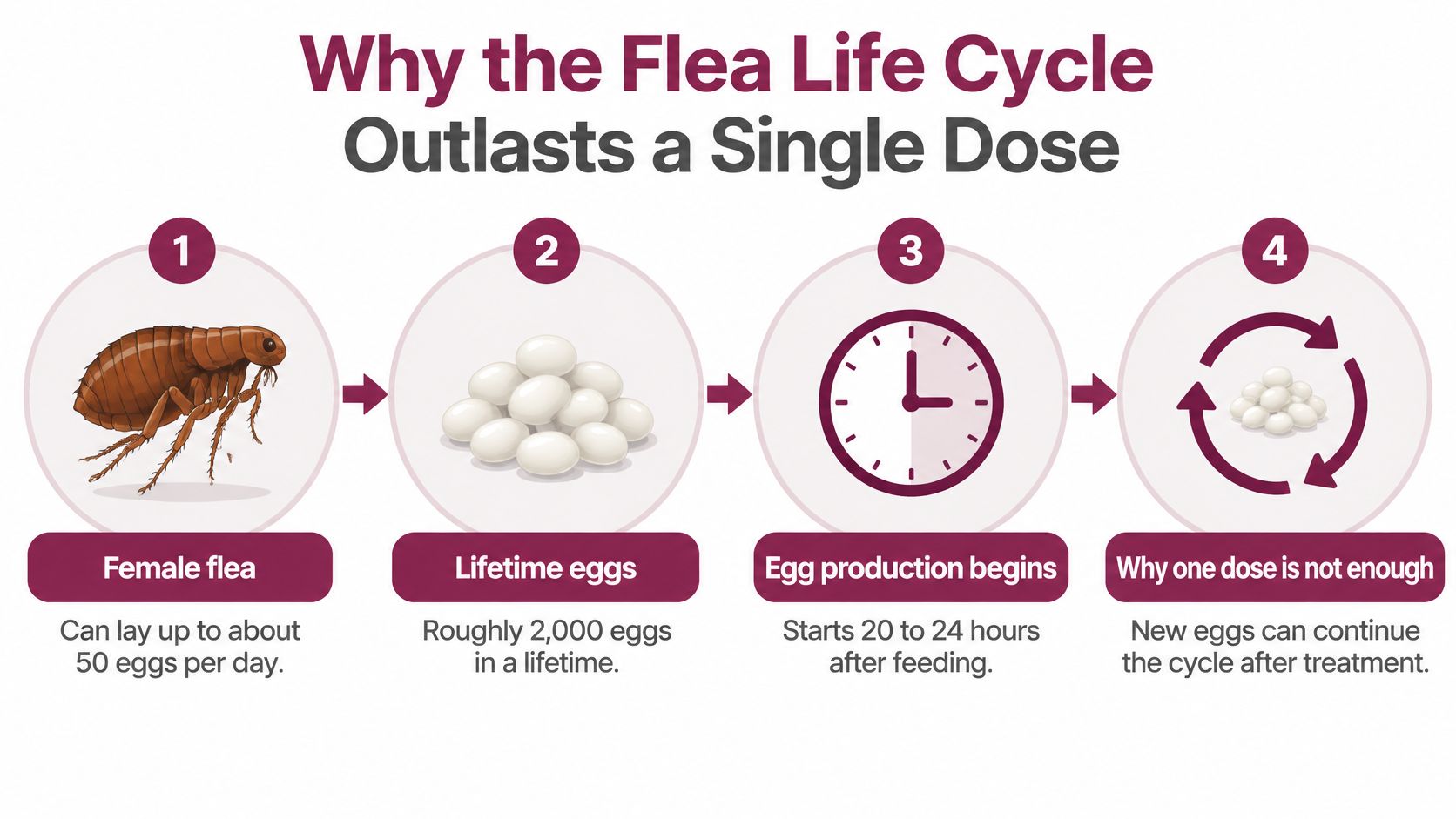
Why the Flea Life Cycle Outlasts a Single Dose
A female flea feeds on your pet and deposits eggs that readily fall into the surrounding environment. Bedding, rug fibers and sheltered floor edges can then become development sites, even when your pet looks much better.
The egg hatches into a larva, which develops away from the animal. Later, the flea enters a protected cocoon as a pupa before emerging as an adult that seeks a host.
Why improvement can be followed by more fleas
Say your dog receives an appropriately selected Capstar tablet and the adult fleas decline. Later, adults emerge from cocoons beneath a favorite chair and jump onto your dog.
Those fleas weren't necessarily on your dog when treatment began. They were developing elsewhere, beyond the tablet's adult-flea action on the treated animal.
This is why a short-acting adulticide, meaning a drug that kills adult fleas, isn't the same as continuous infestation control. Your veterinarian needs to consider both the fleas feeding now and those still developing around your pet.
Flea symptoms after a Capstar dose, likely causes and next steps
These are possible explanations, not a diagnosis or a reason to give another dose automatically.
| Symptom | Likely cause | Next step |
|---|---|---|
| Adult fleas on the pet within days of a dose | New adults emerging from untreated eggs, larvae or pupae in the home | Treat the environment and confirm the follow-up plan with a veterinarian |
| Fleas present again after about 48 hours | The short adult-killing effect may have ended while new emergence continues | Ask a veterinarian about a product with ongoing activity, following its label |
| Fleas on one pet while other animals are untreated | Untreated animals keep the cycle going | Treat all animals in the household as the veterinarian directs |
| Fleas gone from the pet but eggs still in bedding | Environmental eggs and pupae are unaffected by an adult-killing dose | Clean bedding and vacuum as described in the home plan |
Eggs are easy to overlook, so don't rely on seeing them before cleaning. Focus on places your pet uses, including upholstered furniture and bedding shared with other animals.
For broader parasite-prevention context, the guide to fleas and ticks can help you prepare questions for your veterinary visit. Judge progress by the pattern of new fleas over time, not by a single inspection immediately after treatment.
Capstar Alone Versus a Combined Flea Plan
| Approach | Adult fleas on the pet | Flea eggs hatching | Key label limits |
|---|---|---|---|
| Capstar alone | Kills adult fleas quickly | Not labeled to prevent hatching | Dogs and cats at least 2 pounds and 4 weeks old |
| Capstar with Sentinel or Program Flavor Tabs, an FDA-listed combination | Kills adult fleas | Prevents eggs from hatching in dogs and puppies under the label | Follow the specific product label; eligibility and dosing set by label and veterinarian |
| Insect growth regulator used with a separate adult-flea product | Adult-flea action comes from the selected adulticide | Interferes with immature flea development | Product-specific; confirm label and veterinarian guidance |
The FDA's combination-use record documents concurrent Capstar use with Sentinel Flavor Tabs or Program Flavor Tabs in dogs and puppies to kill adult fleas and prevent flea eggs from hatching. It also identifies Capstar's minimum eligibility as 4 weeks of age and 2 pounds of body weight.
That combination claim belongs to the specified products under their labeled conditions. It isn't permission to combine any flea tablets, use a dog product on a cat or assume every lufenuron-containing product has identical directions.
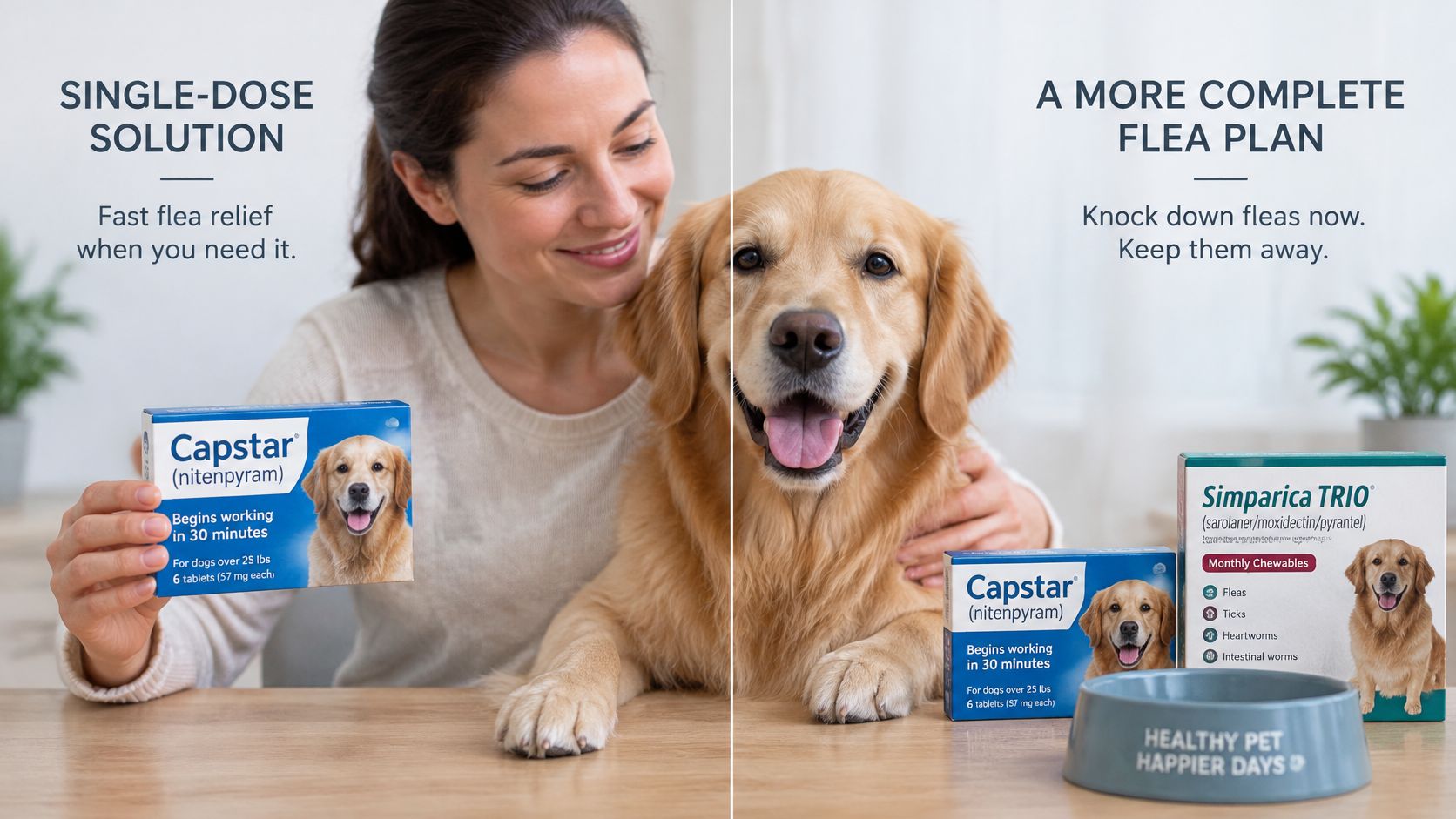
Different jobs require different label checks
Capstar alone addresses adult fleas. In a suitable combined plan, another ingredient may address flea development, but that doesn't mean the products are interchangeable.
An insect growth regulator interferes with immature flea development rather than providing nitenpyram's rapid adult-killing action. The precise effect, approved species and dosing directions come from the individual product label.
Sentinel Flavor Tabs is a prescription medication, so veterinary authorization and product-specific directions matter. Images of other treatments alongside Capstar don't establish that they should be given together.
Before adding or substituting anything, ask your veterinarian to review:
- Species and size: Confirm that every product is intended for your animal and current weight.
- Life stage and health: Discuss pregnancy, nursing, illness and any history of medication reactions.
- Current treatments: Include flea collars, shampoos, topical products, tablets and other medicines.
The explanation of over-the-counter flea-product effectiveness offers additional context for comparing product roles. Availability without a prescription doesn't make a product universally appropriate or establish that a combination is safe.
Cleaning the Home and Yard to Break the Cycle
A clean pet is not necessarily a flea-free home. Capstar acts on adult fleas on the animal, while eggs and pupae in resting areas can remain untouched and later contribute to renewed exposure. Regular cleaning helps address those environmental stages without replacing a pet-directed treatment plan.
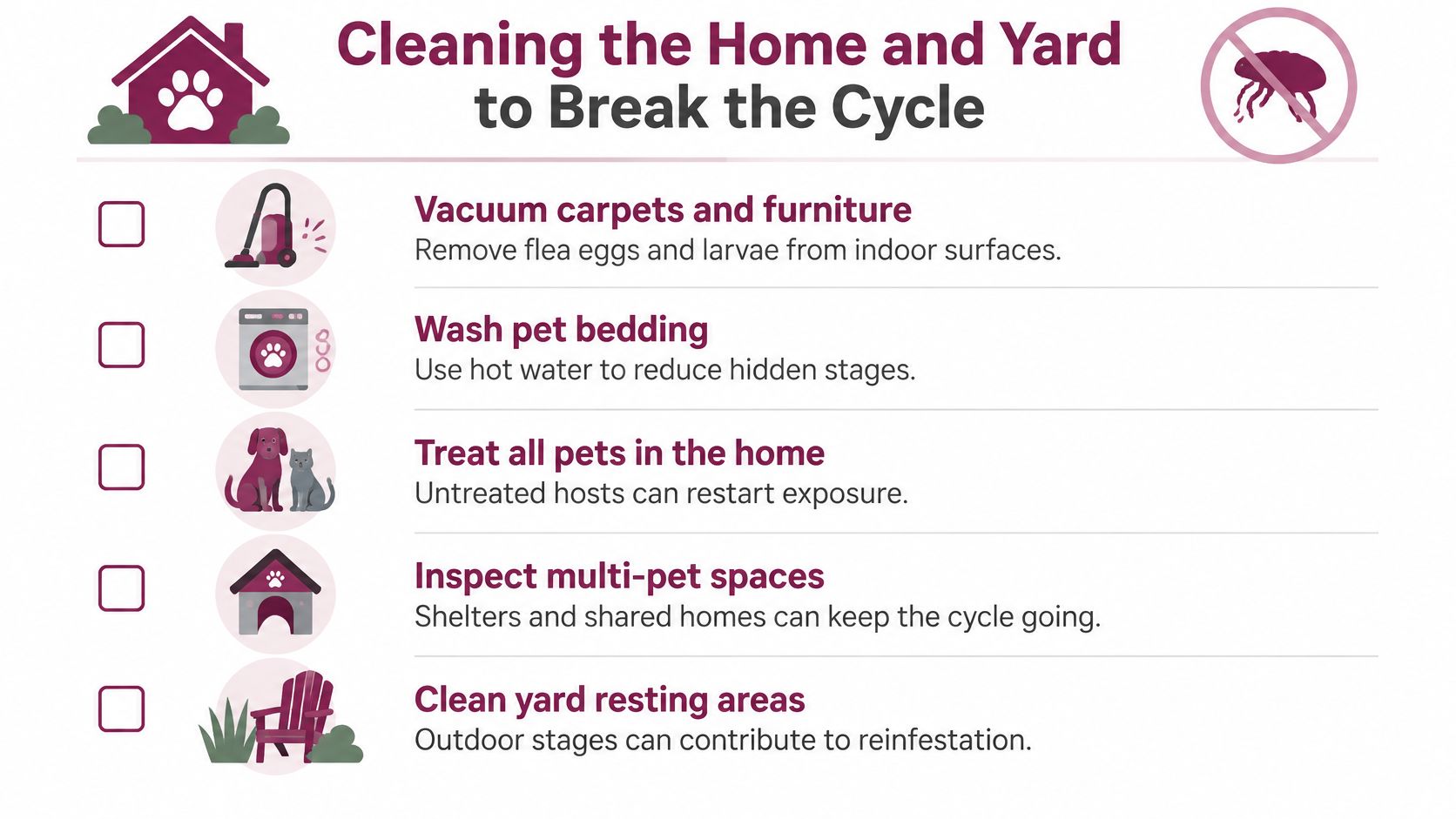
A practical home checklist
- Vacuum carpets and rugs: Use a beater-bar brush if the flooring manufacturer permits it. Focus on rug edges and the spaces beneath furniture where pets rest.
- Clean upholstery: Run an upholstery or crevice attachment along cushion seams and other pet resting spots. Empty the vacuum into a sealed bag and discard it outside.
- Wash bedding and blankets: Use detergent and the hottest wash and drying settings allowed by the fabric's care label. Include washable furniture covers your pet sleeps on.
- Clear sleeping areas: Move clutter from around beds and crates so you can clean the floor beneath them. Keep washable bedding accessible for repeat cleaning.
- Include every household animal: Ask your veterinarian for a species-appropriate plan for each pet. Don't share products unless the labels and veterinary directions permit it.
- Maintain outdoor resting areas: Remove accumulated debris from places your pets use. If exposure continues, ask about targeted environmental treatment rather than applying pesticides indiscriminately.
For regional household-control considerations, flea guidance for Southeast Texas homeowners may help you spot places where fleas could persist. Keep premises treatment separate from medication decisions, and follow all application directions around animals.
Comfort and control are different measures
A pet may have fewer biting adult fleas while new fleas continue to emerge from untreated stages in the home.
Cleaning doesn't replace treatment on your pet, and medication doesn't clean resting areas. Both parts matter because they address different parts of the flea problem.
If scratching continues, the guide to dog skin irritation from fleas can help you describe the signs you see. Persistent irritation deserves veterinary assessment rather than repeated flea-product changes.
A Week-by-Week Plan to Break the Cycle
Use this as an organizational timeline, not a dosing schedule or a guarantee of when an infestation will end. Your veterinarian may adjust the sequence to your pet's circumstances.
Start treatment and environmental care together
Day 0: Confirm the product matches your pet's species, age and current weight. Give it exactly as labeled or directed by your veterinarian, keep the packaging, and begin vacuuming and washing bedding.
Days 1 to 2: Observe your pet and note where you find live fleas. Record the treatment name and administration time so your veterinarian can interpret what happens afterward.
Days 3 to 7: Continue cleaning resting areas rather than assuming that improved comfort means the home is clear. Ask whether a follow-up adult-flea treatment or an ongoing-activity product is appropriate, and follow the approved interval exactly.
Review the pattern rather than chasing each flea
Weeks 2 to 4: Check that every household animal has an appropriate plan. If the veterinarian recommends an insect growth regulator or a labeled combination, clarify which product performs each job and when each is due.
Weeks 4 to 8: Look for a sustained reduction in new adult fleas, not a promised clearance date. Contact your veterinarian if fleas persist despite consistent treatment and cleaning, or if your pet develops skin irritation, unusual lethargy or other signs of illness.
A simple record can include where fleas appeared, which animals were affected, missed cleaning tasks and any possible new exposure. These details are more useful than increasing treatment frequency on your own.
Keep the schedule separate from the symptoms: Seeing another flea is a reason to review the plan, not automatic permission to give an extra dose.
If you're considering a different delivery method, the guide to whether flea and tick collars work provides background for a veterinary discussion. A collar is another medication decision, not a household-cleaning substitute or an automatic addition to tablets.
Confirm Your Flea Plan With a Veterinarian
The useful question isn't only, “Does Capstar kill flea eggs?” It's also, “What will address the stages Capstar doesn't treat, and how will we monitor progress?”
Bring the exact packaging or clear label photographs to your appointment. Your veterinarian needs to know what your pet has already received, not just that you used a flea treatment.
Bring information that changes product selection
- Your pet's details: Species, current weight, age, pregnancy or nursing status, and known medical conditions.
- Every current product: Prescription medicines, supplements, flea shampoos, collars, topical treatments and oral preventives.
- The household picture: Other animals, shared sleeping spaces, outdoor access and where you've noticed fleas.
- Your treatment record: Administration dates, cleaning efforts, missed doses and any concerning changes afterward.
Ask the veterinarian whether Capstar alone fits the immediate situation and whether ongoing protection or a specific development-control product belongs in the plan. Agree on what to do if you find more fleas before the next scheduled treatment.
Leave with a clear decision path
You should know which product goes to which animal, the correct dose, the permitted interval and when to call for reassessment. If a prescription medication is selected, use it only under the prescribing veterinarian's directions.
Don't combine products, substitute a different formulation or add an extra dose without guidance. If you're reviewing topical options, the Advantix flea-control guide can help frame questions, but a product discussion doesn't establish suitability for your pet.
Steady follow-through matters more than repeatedly switching treatments. Keep the label handy, follow the agreed environmental plan and ask for help if the pattern isn't improving.
Bandana Rx offers prescription and over-the-counter pet medications, including preventive-care options, with veterinary authorization required for prescription orders. Visit Bandana Rx to browse flea-control options, and keep the product label handy for your veterinary discussion before choosing or combining treatments.