
You give your dog a heartworm preventive, then notice vomiting, loose stool, or unusual tiredness later that day. Your first thought may be, “Is this a normal reaction, or should I call the veterinarian?” That concern is reasonable. Medication side effects can be mild and temporary, but some signs need prompt attention.
The safest way to interpret heartworm medication side effects is to identify which type of medication your pet received, understand the pet's individual risk factors, and know what symptoms require action. Preventive drugs and adulticide treatments are not interchangeable, and their safety profiles are different.
Table of Contents
- Why Understanding Heartworm Medication Side Effects Matters
- Preventives Versus Adulticide Treatments How They Differ
- Common and Rare Side Effects of Heartworm Preventives
- Risk Factors That Influence Side Effect Severity
- Recognizing Warning Signs and When to Contact a Veterinarian
- Safe Administration Practices and Ongoing Monitoring Tips
- Moving Forward with Confidence in Heartworm Care
Why Understanding Heartworm Medication Side Effects Matters
A responsible owner may give a monthly chewable exactly as directed and still feel uneasy when a dog seems quieter than usual afterward. A short period of mild digestive upset can be difficult to interpret, especially when your pet can't explain whether they feel mildly nauseated or seriously unwell.
That uncertainty shouldn't lead to panic, but it shouldn't be dismissed either. Reading the medication label, recording when the dose was given, and watching your pet's behavior can help you give a veterinarian useful information if a reaction occurs. Guidance about heartworm prevention for cats also needs to be species-specific, because a product appropriate for one animal may not be appropriate for another.

What a reaction can tell you
Documented reactions to heartworm preventives are often digestive or mild systemic signs, such as vomiting, diarrhea, reduced appetite, or lethargy. More concerning signs can involve the nervous system or breathing, including tremors, unsteadiness, seizures, facial swelling, or difficulty breathing.
The important question is not just whether a side effect is listed. It's how severe the sign is, how long it lasts, and what your pet's overall condition looks like. A dog that has one episode of vomiting but remains alert and drinks normally needs a different response from a dog that repeatedly vomits, collapses, or struggles to breathe.
Practical rule: Keep the package, prescription instructions, and administration date available when you call the clinic. Accurate details make triage safer.
Most owners don't need to avoid heartworm prevention because side effects are possible. They need a plan for using the medication correctly and responding appropriately if something changes. Prevention protects against a serious disease, while informed observation helps catch the uncommon reactions that need veterinary care.
Preventives Versus Adulticide Treatments How They Differ
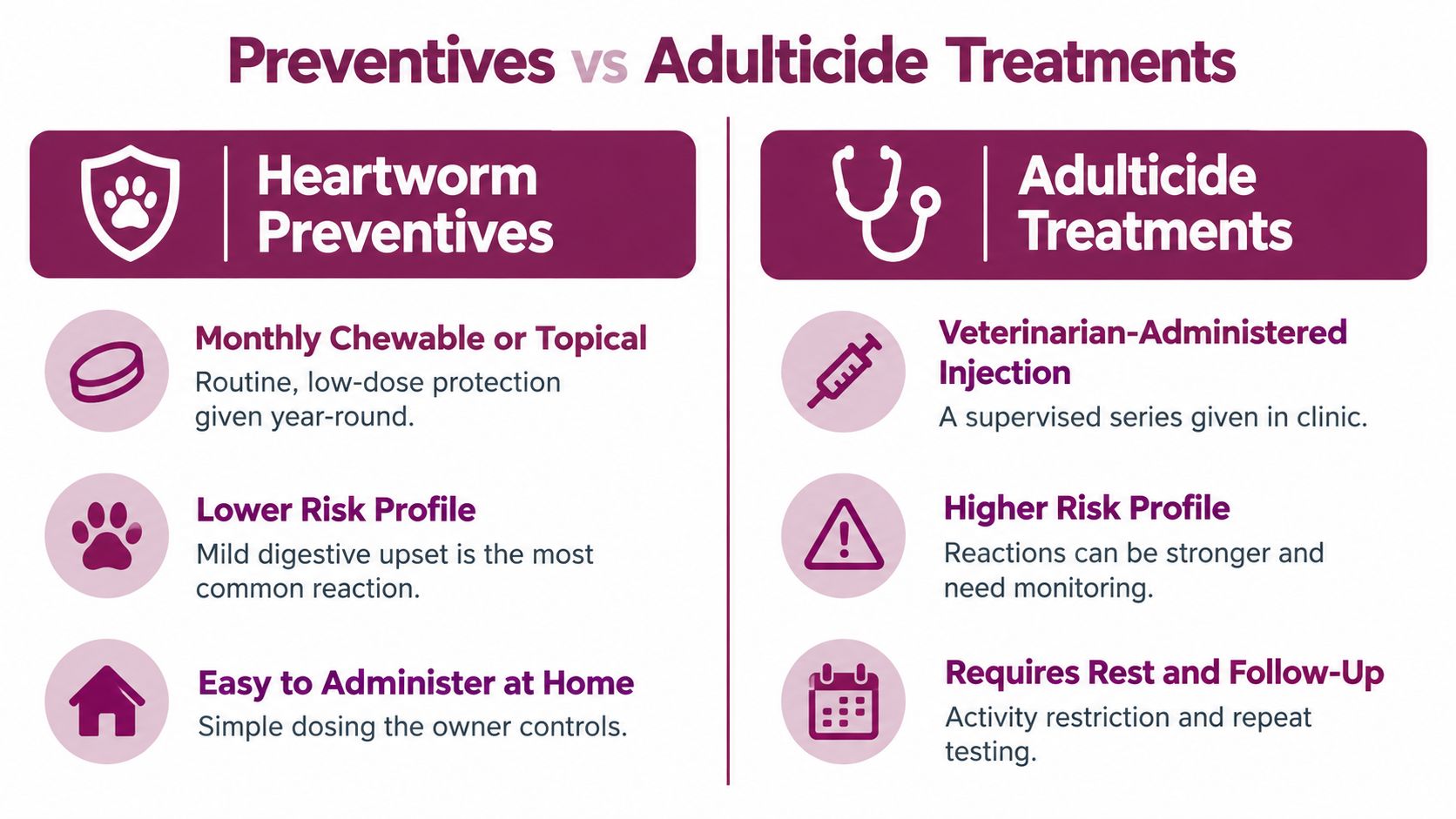
The phrase “heartworm medication” describes two very different kinds of treatment. Understanding the difference prevents confusion about both purpose and risk.
Heartworm preventives are used to stop immature heartworms from developing. Depending on the product, prevention may involve a monthly oral chewable, a topical medication, or a long-acting injection. These products are given to dogs or cats that have been evaluated as appropriate candidates for prevention, with product choice and dosing determined by species, weight, health history, and veterinary direction.
Adulticide treatment is used for an infected dog with established adult heartworms. Melarsomine is administered by a veterinarian as part of a supervised treatment protocol. Because adult worms are already affecting the heart and pulmonary vessels, treatment involves more than giving a drug and waiting for the parasite to disappear.
Why the distinction matters
A preventive doesn't kill adult heartworms. The U.S. Food and Drug Administration explains that giving a preventive to a dog that already has adult heartworms may be harmful or deadly. If microfilariae are circulating in the bloodstream, their sudden death can trigger a shock-like reaction and possibly death.
That's why a veterinarian may recommend heartworm testing before starting or restarting prevention. A negative result helps establish that a preventive can be used safely for its intended purpose. It also explains why a missed dose shouldn't automatically be handled by doubling medication or restarting without professional advice.
| Medication category | Main purpose | Typical safety focus |
|---|---|---|
| Preventive | Stops immature heartworms from developing | Correct product, accurate dose, and observation for reactions |
| Adulticide treatment | Kills established adult heartworms | Veterinary supervision, monitoring, and carefully controlled recovery |
Adulticide reactions can also reflect the dying worms and the inflammation or circulation problems that follow treatment. The risk profile is therefore different from the brief digestive upset that may follow a preventive dose. For product options intended for heartworm prevention, owners can review the available heartworm medications, but the appropriate choice still belongs with the prescribing veterinarian.
Common and Rare Side Effects of Heartworm Preventives
A dog that vomits after a chewable and a dog that develops a reaction after an injection may be experiencing different types of medication effects. The product, dose, route, study conditions, and the animals enrolled all influence the reported results. A percentage from one preventive cannot be applied automatically to another.
For HEARTGARD Plus, which contains ivermectin and pyrantel, vomiting or diarrhea within 24 hours of dosing occurred in 1.1% of administered doses during clinical field trials, according to its FDA labeling on DailyMed. The label also reports vomiting, diarrhea, lethargy, anorexia, seizures, ataxia, muscle tremors, hypersalivation, and pruritus as adverse events.
Oral preventives
After an oral dose, a dog may vomit, pass loose stool, eat less, or seem tired for a short time. These signs often call for observation, not panic, but repeated symptoms or signs such as tremors, poor coordination, or seizures warrant prompt veterinary advice.
The same labeling reports choking and intestinal obstruction after administration. These are rare mechanical complications rather than the expected response to a chewable. Observe your pet after dosing and confirm that the medication was swallowed safely.
Read the HEARTGARD Plus chewable information alongside the directions from the prescribing veterinarian. Products differ in active ingredients and dosing instructions, so do not substitute another preventive, split a product, or change the amount without professional guidance.
Preventives also have a specific job. They stop immature heartworms from developing. They do not remove established adult worms, so a preventive should not be treated as an adulticide treatment for an existing infection.
Injectable preventives
Long-acting moxidectin injections have generated postmarketing safety data from real-world veterinary records. A database study covering 1,399,289 doses identified 1,999 acute adverse-reaction visits, an estimated rate of 14.3 adverse reactions per 10,000 doses, according to the published AVMA study.
Reported signs included injection-site reactions, vomiting, diarrhea, weight loss, listlessness, seizures, and high body temperatures. The study recorded 53 severe vaccine reactions, 2 cardiac arrests, 2 deaths while under treatment, and 1 dead-on-arrival case. These outcomes were uncommon within the reported cases, but they show why post-injection observation matters.
In a field study of an extended-release moxidectin product involving 593 dogs, vomiting occurred in 25.3%, diarrhea in 14.5%, anorexia in 13.8%, lethargy in 15.5%, and seizures in 3.4% of treated dogs, with comparable rates in the active-control group, as described in the FDA product approval update. The label also warns that anaphylactic and anaphylactoid reactions can occur and, rarely, may be fatal.
These figures describe groups, not a precise forecast for one pet. An injection therefore deserves a different monitoring discussion from an at-home chewable.
Risk Factors That Influence Side Effect Severity
Two dogs can receive the same class of heartworm preventive and have different experiences. The reason may involve dose exposure, age, breed-related drug sensitivity, underlying illness, or the route of administration.
Accurate body weight is one of the most practical safety controls. Toxicology references describe serious neurologic effects from macrocyclic lactones primarily as a dose-exposure problem, with overdoses capable of causing tremors, ataxia, seizures, coma, and blindness. In cats, overt central nervous system or respiratory depression occurs at doses far above the recommended therapeutic range, as summarized in this University of Illinois toxicology reference.
The factors your veterinarian weighs
Weight and dosing accuracy: A recent weight helps the veterinarian select the correct labeled range. Never estimate a dose from an old weight or divide a product unless the veterinarian specifically directs you to do so.
Age and health history: Puppies, senior pets, and animals with chronic illness may need individualized product selection and monitoring. Tell the veterinarian about seizure history, neurologic signs, liver concerns, heart disease, and every medication or supplement your pet receives.
Breed and genetic susceptibility: Some dogs, particularly those with known breed-related MDR1 or P-glycoprotein susceptibility, may be more vulnerable to idiosyncratic neurologic reactions. A veterinarian can discuss whether breed history or genetic testing is relevant before prescribing.
Species: A dog product isn't automatically safe for a cat, and a cat product shouldn't be given to a dog. The active ingredient, concentration, formulation, and labeled species all matter.
The route also changes the practical risk. An oral product can be observed at home after administration, while an injectable preventive is administered by a veterinary professional and may warrant clinic observation. In the AVMA database study, 14.3 acute adverse reactions per 10,000 doses were recorded for extended-release moxidectin injections, with serious outcomes rare but documented, including cardiac arrest and death in a very small number of cases in the study data.

Veterinary decision: A risk factor doesn't automatically mean a pet can't receive prevention. It means the veterinarian may need better history, a different formulation, closer observation, or a more deliberate dosing decision.
Recognizing Warning Signs and When to Contact a Veterinarian
Your dog has just received a heartworm preventive and then vomits once. Should you call immediately? The answer depends on the whole picture. A brief, isolated change that resolves may be monitored, while symptoms that intensify, combine, or affect breathing, coordination, hydration, or responsiveness need veterinary attention.
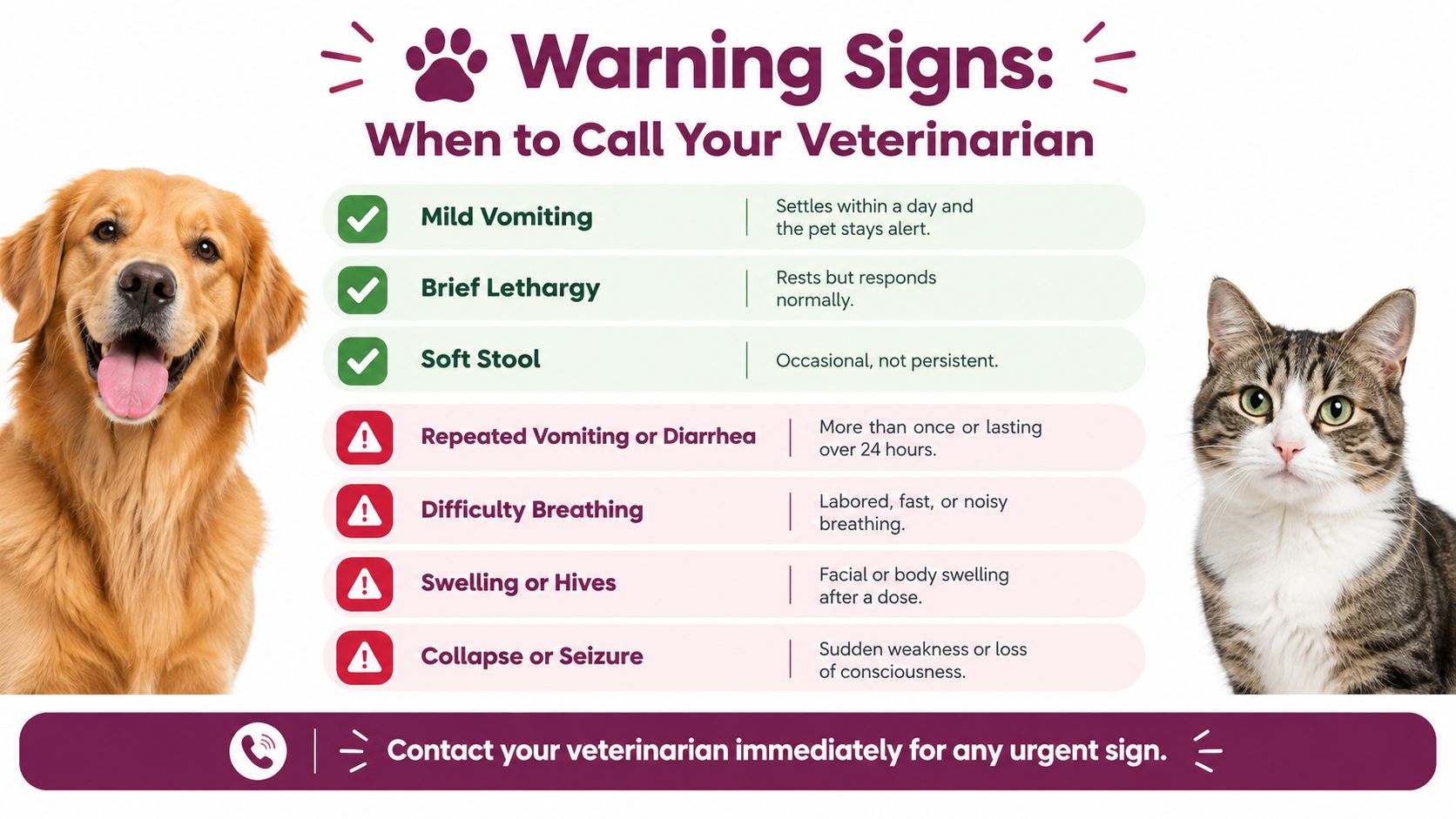
One episode of vomiting or soft stool may be observed if your pet remains alert, comfortable, and able to drink. Brief tiredness may also be monitored when your dog wakes easily, walks normally, and shows interest in water. Keep the package and administration details available. The clinic may need the product name, active ingredients, dose, and time given. Learn how to interpret dosage, warnings and storage instructions in our guide to reading pet medication labels.
Signs that need a prompt call
Contact your veterinarian promptly for:
Repeated vomiting or diarrhea: Continuing gastrointestinal loss can lead to dehydration. Symptoms that persist or keep returning need professional assessment.
Refusal to eat or drink: Concern increases when this occurs with vomiting, diarrhea, weakness, or unusual sleepiness.
Marked lethargy: A pet that is difficult to rouse, unusually weak, or not responding normally should not be watched at home without veterinary guidance.
Tremors, ataxia, or seizures: Shaking, stumbling, poor coordination, or seizure activity can indicate a neurologic emergency.
Facial swelling, hives, or breathing difficulty: These signs can indicate hypersensitivity. Rarely, anaphylactic or anaphylactoid reactions after extended-release moxidectin can be fatal, as described in the FDA's product safety information.
Collapse, loss of consciousness, severe weakness, labored breathing, or a seizure requires emergency veterinary care. Do not give another medication to counteract the reaction or induce vomiting unless a veterinarian specifically instructs you.
Treatment reactions follow a different pattern
Adulticide treatment is not the same as routine prevention. Reported treatment-related signs include depression or lethargy, cough, lameness, pain, and gastrointestinal symptoms. Some reactions described in a treatment protocol study were rare, mild, and short-lived, yet melarsomine labeling information also identifies serious possibilities, including thromboembolism, breathing difficulty, right-sided heart failure, fever, and death.
A preventive also cannot clear an established adult heartworm infection. Follow the treating veterinarian's plan even when a symptom seems mild. A cough or drop in energy during adulticide treatment may signal a different problem than the same sign after a routine preventive.
Safe Administration Practices and Ongoing Monitoring Tips
Good medication safety starts with preparation. Before giving a preventive, confirm the pet's species, current weight, product name, dose instructions, and administration date. Use the medication exactly as prescribed, and don't increase, reduce, repeat, or combine doses without veterinary guidance.
Store the product according to its label and keep it separate from medications intended for people or other animals. For an oral chewable, make sure your pet swallows the dose. For a topical, follow the application directions and prevent other pets from contacting the treated area if the label advises that precaution.
A simple routine for safer prevention
Confirm infection status when instructed. A veterinarian may recommend heartworm testing before prevention is started or restarted. This helps avoid giving a preventive to a dog with an existing infection, a situation that can cause a dangerous reaction involving circulating microfilariae.
Use a written record. Note the product, dose, date, time, appetite, energy, stool, vomiting, and any unusual behavior. A short log is more useful than trying to reconstruct events days later.
Check before adding another product. Tell the veterinarian about flea and tick treatments, dewormers, supplements, and prescription drugs. Don't combine preventives or use leftover medication from another pet without approval.
Follow adulticide restrictions exactly. Dogs recovering from adult heartworm treatment may need strict exercise restriction and follow-up care. The purpose is to reduce complications while the body responds to dying worms and inflammation.
Prepare questions in advance. If you're unsure what to ask, this resource on preparing for a veterinary appointment can help you organize medication, symptom, and monitoring questions before the visit.
A medication log also helps when a pet has a delayed reaction or receives care from more than one clinic. Bring it to wellness visits and update it whenever the veterinarian changes the prevention plan. Information about routine veterinary visits and online pharmacy safety can provide further context for coordinating refills and veterinary oversight.
Adulticide treatment deserves extra discipline. Don't assume that a dog feels safe to resume normal activity just because the injection site looks comfortable. The treating veterinarian's recovery timeline takes priority over general advice.
Moving Forward with Confidence in Heartworm Care
Heartworm prevention is a long-term health decision, not a one-time purchase. The most useful approach combines accurate dosing, appropriate testing, attention to the product's labeled species and instructions, and communication with the veterinarian who knows your pet's medical history.
The evidence supports a balanced view. Oral preventives have documented digestive and neurologic adverse events, while extended-release injectable products have generated real-world safety data that quantify uncommon acute reactions. Adulticide treatment is a separate clinical process with a different and more demanding risk profile. Neither set of facts justifies ignoring symptoms, but neither means that a pet should go unprotected without a veterinary discussion.
The decisions that make care safer
Start with the purpose of the medication. A preventive is intended to stop immature heartworms from developing, not to eliminate adult worms. An infected dog needs veterinary diagnosis and a treatment plan, not an improvised preventive schedule.
Next, make the administration precise. Use the prescribed product for the correct species and weight range, keep track of doses, and report vomiting, diarrhea, lethargy, neurologic changes, swelling, or breathing problems. If your pet has a known MDR1-related susceptibility, a seizure disorder, chronic disease, or an uncertain medical history, raise that issue before the next dose.
Finally, treat monitoring as part of the medication plan. Ask what signs are expected, how long they may last, whom to call after hours, and whether your pet should remain at the clinic after an injection. Clear instructions reduce both delayed care and unnecessary panic.
Prevention works best when it's paired with testing, accurate administration, and a plan for responding to symptoms.
Licensed veterinary pharmacies can support prescription coordination, product handling, and refill organization, but they don't replace the veterinarian's role in diagnosis or treatment selection. Ask the prescribing clinic to authorize the medication and confirm that the product, formulation, and dose match your pet's needs.
Bandana Rx provides prescription and over-the-counter pet medications, including heartworm products, with prescription orders processed after veterinary authorization. Visit Bandana Rx to review available pet medication options and coordinate a refill while keeping your veterinarian involved in every treatment decision.