

You've just left the clinic with a small bottle in your bag, your cat is still in her carrier, and you're trying to remember everything the veterinarian said about prednisolone 5 mg for cats. It's easy to feel uncertain at that moment. The tablet looks simple, but the right amount, how long to give it, and what to watch for all depend on your cat, not just the strength printed on the label.
Table of Contents
- Understanding Prednisolone for Cats
- Why Prednisolone Is Preferred Over Prednisone
- Typical Dosing and Tapering Schedules
- Side Effects and Risks to Know
- Monitoring Your Cat During Treatment
- Safe Storage, Handling, and Tapering
- Getting Prednisolone Through a Licensed Pharmacy
- Frequently Asked Questions About Prednisolone
Understanding Prednisolone for Cats
Picture a common visit. Your cat has been scratching, wheezing, or losing weight, and after an exam your veterinarian explains that inflammation or an overactive immune response is driving the problem. You're handed a prescription and a tapering plan, and you leave wondering what this medication does.
Prednisolone is a glucocorticoid, a type of corticosteroid. According to veterinary guidance on therapy for autoimmune diseases, prednisolone is a glucocorticoid used in cats to reduce inflammation and suppress abnormal immune activity. At lower doses, your veterinarian may use it mainly to calm inflammation. At higher doses, it can suppress immune activity more strongly, which is sometimes needed for immune mediated disease.
What Conditions Might Lead to a Prescription
Your veterinarian might consider prednisolone for allergic skin disease, other inflammatory conditions, or immune mediated diseases where the immune system is harming the body. Respiratory inflammation linked to allergy is another context owners often ask about, and you can learn more in this explanation of allergic asthma in pets and how it affects breathing. The diagnosis matters because the goal is different in each case. Calming itchy skin isn't the same treatment target as controlling a serious immune disorder.
That distinction explains why two cats can receive the same 5 mg tablet strength and very different instructions. One cat might get a short course, another might need a longer plan with rechecks. The tablet strength alone doesn't tell you the dose your cat is receiving.
Practical starting point: Think of prednisolone as a prescription tool your veterinarian adjusts to your cat's diagnosis, weight, and response, not as a one tablet fits all remedy.
Prednisolone is a prescription medication, so you shouldn't start, stop, or share it without veterinary direction. It's also not meant to replace a diagnosis. If your cat's signs change or don't improve as expected, your veterinarian needs to know, because the original plan may need reassessment.
When you understand that basic purpose, the next questions become clearer. Why prednisolone instead of the similar sounding prednisone, and how does your veterinarian turn a 5 mg tablet into a dose that makes sense for your particular cat?
Why Prednisolone Is Preferred Over Prednisone
Owners often notice the names first. Prednisone and prednisolone sound almost interchangeable, and it's natural to assume a pharmacy substitution wouldn't matter. In cats, your veterinarian's choice is deliberate.
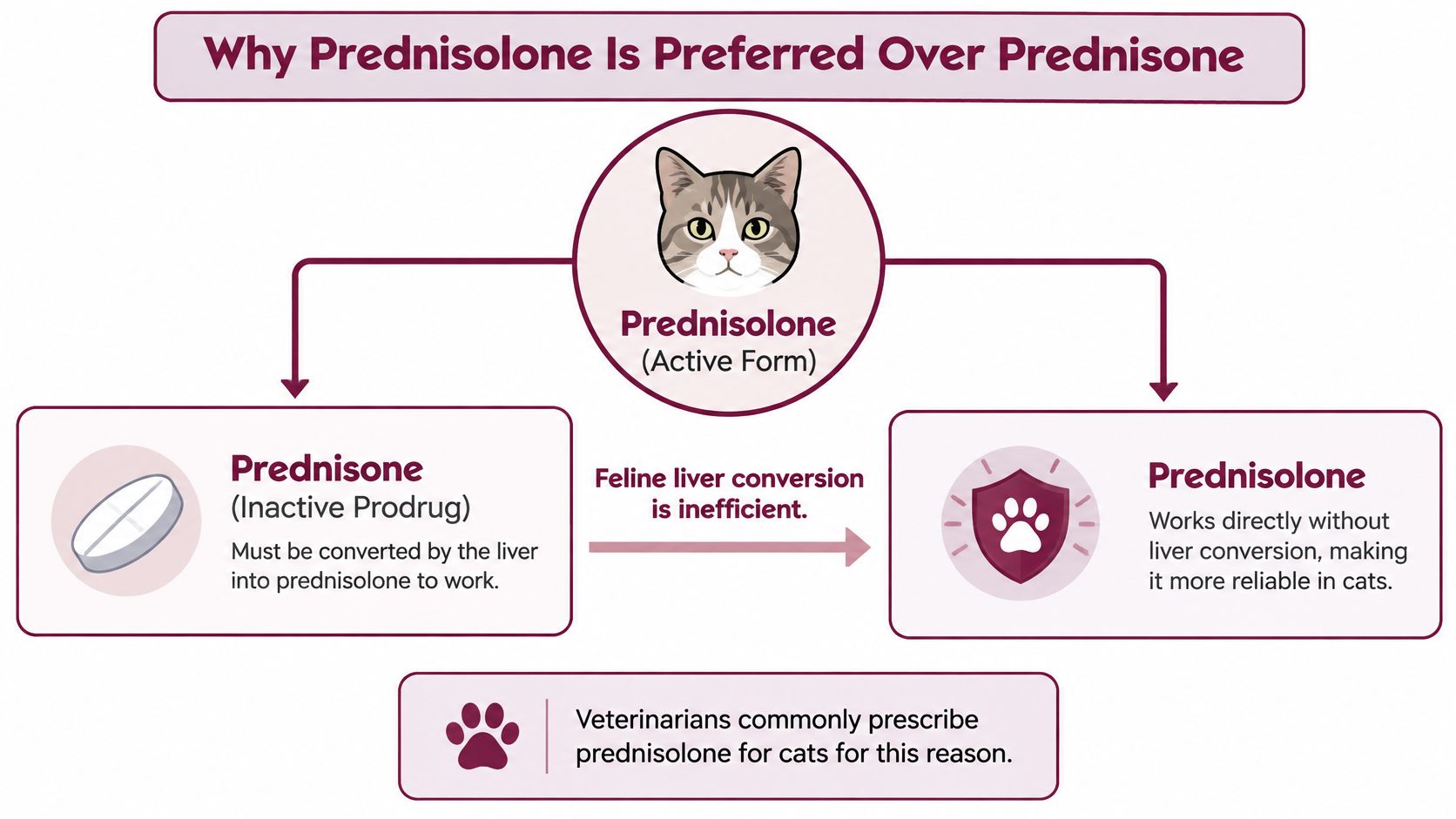
Prednisone needs to be converted in the body into prednisolone, the active metabolite, before it can do its work. Cats don't handle that conversion as reliably as some other species, so feline conversion of prednisone to prednisolone may be less reliable. Giving prednisolone directly removes that uncertain step.
A Simple Way to Picture the Difference
Think of prednisone as an unopened letter that still needs processing, and prednisolone as the message already ready to read. If the processing step is inconsistent, the dose your cat effectively receives becomes less predictable. That's a problem when your veterinarian is trying to balance benefit against risk.
- Prednisone needs activation: Your cat's body must convert it before it works as intended.
- Prednisolone is already active: It doesn't depend on that conversion step to the same extent.
- Predictability matters: A more predictable active form helps your veterinarian plan dosing and tapering with more confidence.
This doesn't mean prednisone has no place in veterinary medicine for other species. You can see how it's presented separately among skin and coat medications for pets, but that doesn't make it interchangeable for your cat. Species matters in drug metabolism, and cats frequently handle medications differently from dogs.
Don't substitute a leftover prednisone tablet prescribed for a dog, or for a person, because the names look close. If a label, refill, or substitution ever looks different from what you expected, call the prescribing clinic before you give it. A quick check prevents a dosing problem that's easy to avoid.
Your veterinarian chooses prednisolone for cats because feline physiology makes that choice more reliable. Once that choice is made, dosing is the next piece, and it's where body weight becomes the most important number on the page.
Typical Dosing and Tapering Schedules
A 5 mg tablet is a strength, not a universal feline dose. The clinically relevant quantity is milligrams per kilogram, often written as mg/kg. Your veterinarian calculates how many milligrams your cat should receive based on body weight, then works out how that translates into tablets or fractions of a tablet.
Merck Veterinary Manual guidance on hormonal treatment for skin disease lists an anti-inflammatory feline dose of 1 to 2 mg/kg orally every 24 hours, while an immunosuppressive dose may reach 4.4 mg/kg every 24 hours. Published veterinary guidance also describes higher ranges for some autoimmune diseases. Those ranges are examples from references, not instructions for your cat, because diagnosis, severity, duration, and other illnesses all change the decision.
How One Tablet Changes With Body Weight
5 mg Tablet Dosing by Cat Weight
| Cat Weight | Dose per Tablet (mg/kg) | Typical Anti-inflammatory Range? |
|---|---|---|
| 2 kg | 2.5 mg/kg | Above the 1 to 2 mg/kg range |
| 4 kg | 1.25 mg/kg | Within that range |
| 5 kg | 1 mg/kg | At the low end of that range |
| 6 kg | 0.83 mg/kg | Below that range |
This table shows why neighbors with cats on the same tablet can't safely compare doses. One tablet is a modest anti-inflammatory exposure for a larger cat and a much higher mg/kg exposure for a small cat. For some immune mediated disorders, even a full tablet may be below the induction range your veterinarian is targeting.
Why Doses Often Come Down Over Time
Corticosteroids are often tapered after initial control instead of being stopped suddenly. A study design in cats with allergic dermatitis used a short treatment period followed by a taper, which illustrates that pattern. In practice, your veterinarian may lower the amount, extend the interval, or move to alternate day use once signs are controlled, aiming for the lowest effective dose.
Don't adjust the schedule because your cat looks better, and don't double up to catch up. If splitting a tablet won't give an accurate amount for a planned step down, tell your veterinarian. A different strength or formulation may be needed for the dose they intend.
Side Effects and Risks to Know
Most owners want a balanced picture, not reassurance that ignores real risks. Prednisolone can be very helpful, and risk generally rises with higher dose, longer duration, and individual sensitivity. Short, carefully selected courses are not the same as prolonged high dose treatment.
In a 2019 study of systemically normal cats, oral prednisolone was given at 1 or 2 mg/kg/day for 7 consecutive days with no clinically relevant changes in hemodynamic, clinicopathologic, or echocardiographic variables during that short period, as reported in the American Journal of Veterinary Research study on short term prednisolone. That finding is useful context, but it doesn't prove every cat tolerates treatment the same way.
Effects You May Notice at Home
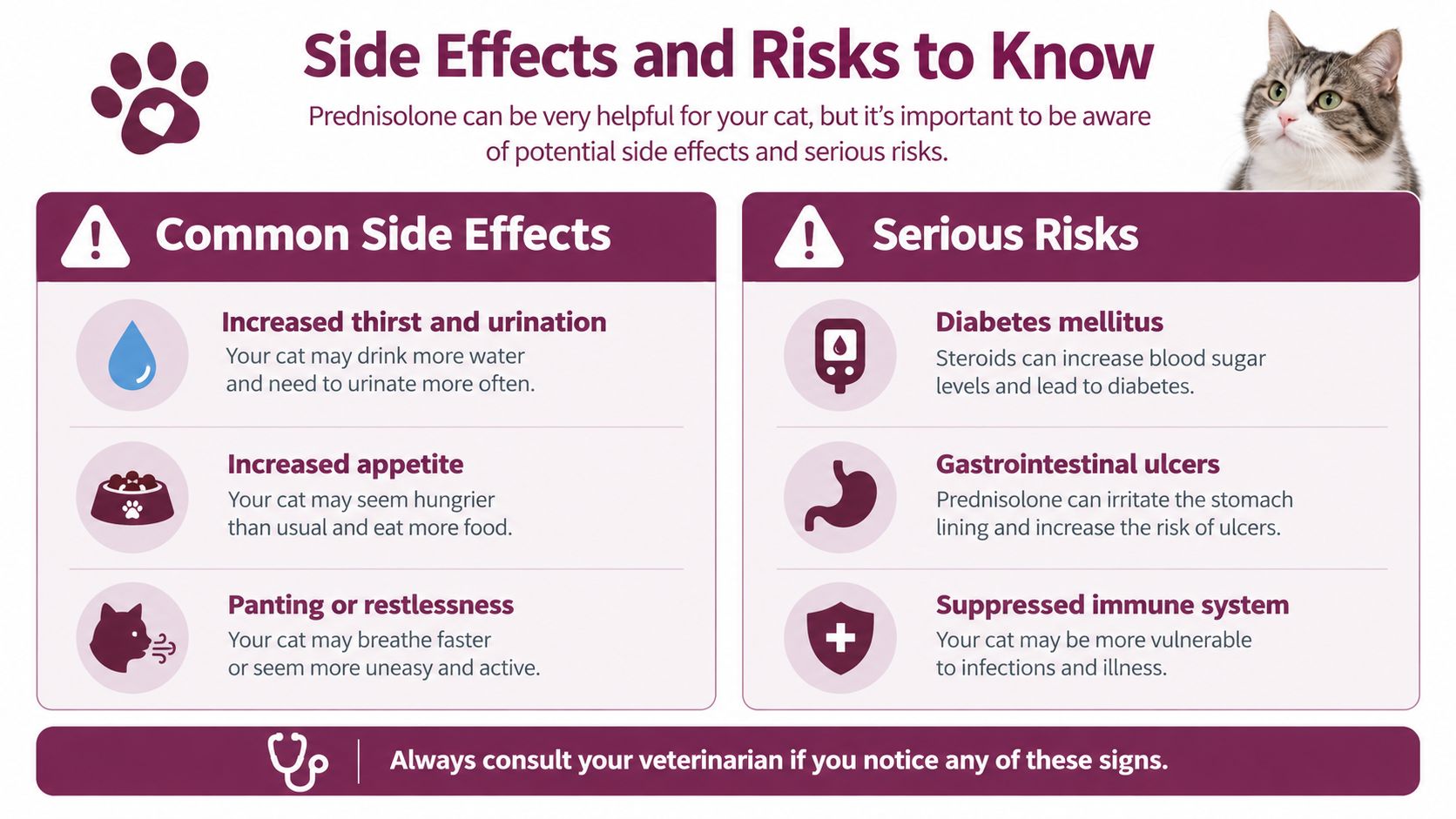
- Increased thirst and urination: You may refill the water bowl more often and see larger litter box clumps.
- Increased appetite and weight gain: Your cat may beg more or finish meals faster than usual.
- Gastrointestinal upset: Vomiting or diarrhea can occur, and ulceration is a more serious concern.
- Other changes: Hyperglycemia, pancreatitis, steroid muscle effects, and infection susceptibility are also described with corticosteroid treatment.
Diabetes mellitus deserves particular attention in cats. In a historical cohort of 143 cats receiving high dose prednisolone for more than three weeks, 14 cats, or 9.7%, developed prednisolone induced diabetes mellitus, and 12 of those 14 cases, or 85.7%, appeared within three months of starting therapy, according to the published cohort on prednisolone induced diabetes in cats. Prednisolone can promote gluconeogenesis and antagonize insulin, so overweight cats or cats with prior glucose abnormalities need especially careful veterinary planning.
Owners researching immune conditions in people sometimes come across general wellness material such as lupus supplement recommendations, but human supplement advice shouldn't be applied to your cat's prescription plan. For itchy cats, topical questions are separate too, and this guide to anti-itch cream options for cats can help you distinguish skin care from systemic steroid treatment. Report persistent thirst, appetite change, digestive signs, or signs of infection promptly rather than waiting for the next refill.
Monitoring Your Cat During Treatment
You know your cat's normal habits better than anyone, and that makes your observations valuable. Monitoring doesn't need to be complicated. A short note on your phone each day is often enough for your veterinarian to spot a trend.
Start before the first dose if you can. Note your cat's usual appetite, water intake, litter box use, weight, and energy. Without that baseline, it's hard to tell whether a fuller water bowl or a bigger appetite is new.
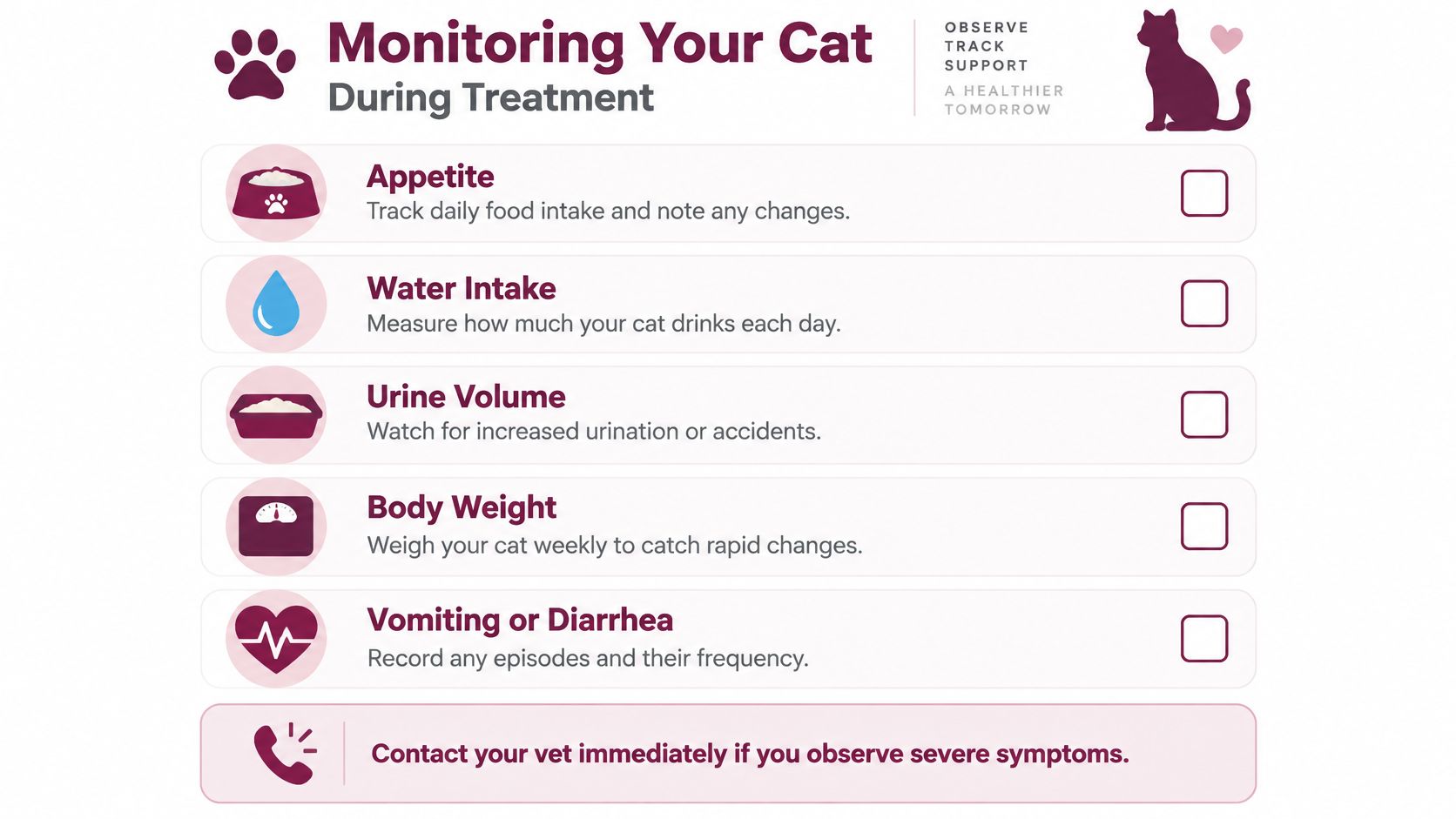
A Daily Checklist You Can Actually Keep
- Appetite: Write down whether meals are finished, left, or followed by unusual begging.
- Water intake: Note how often you refill the bowl and whether drinking seems persistent.
- Urine volume: Watch for larger or more frequent clumps, or accidents outside the box.
- Body weight: Weigh weekly if your veterinarian advises it, using the same scale and time of day.
- Digestive signs: Record vomiting, diarrhea, or black stools and when they happen.
- Infection signs: Note coughing, sneezing, wounds that look slow to heal, or new lethargy.
Be especially attentive during the early months of higher dose or longer treatment, when metabolic problems are more likely to emerge. Increased thirst, urination, and appetite can be expected steroid effects, but they can also overlap with diabetes. That's why persistent or escalating changes shouldn't be dismissed as normal without asking.
Call sooner rather than later if a change is persistent, worsening, or paired with vomiting, weakness, or loss of appetite. Early reporting gives your veterinarian more options.
During prolonged or high dose therapy, your veterinarian may recommend blood glucose testing, fructosamine, or other laboratory work based on your cat's condition. Keep recheck appointments even if your cat looks well. Those visits are how the dose gets reduced safely and how quiet problems get caught before they become emergencies.
Safe Storage, Handling, and Tapering
Safe home use starts with reading the label every time, even after you've given several doses. Check your cat's name, the drug name, the strength, and the directions. If anything on a refill looks different, pause and call the pharmacy or clinic.
Store tablets as directed on the container, away from children and other pets, and don't transfer them into an unlabeled bottle. This practical guide to reading pet medication labels for dosage warnings and storage is a useful refresher if label abbreviations confuse you. Keep a simple dose log on the bottle or calendar so another family member doesn't accidentally repeat a dose.
Why Tapering Is Not Optional After Sustained Use
Exogenous glucocorticoids suppress the hypothalamic pituitary adrenal axis, the system that regulates the body's own cortisol production. Merck Veterinary Manual information on corticosteroids in animals reports that abrupt discontinuation after sustained treatment can produce an Addisonian like crisis, with lethargy, weakness, vomiting, and diarrhea. That risk is the reason stopping suddenly can be dangerous even when your cat seems improved.
Your veterinarian may reduce treatment after clinical control by halving the dose or switching to alternate day administration at intervals of approximately 5 to 7 days, under veterinary direction. The exact steps belong to your cat's plan, not a general schedule copied from another pet.
- Follow the sequence as written: Don't skip steps because signs have resolved.
- Don't improvise tablet splitting: If a 5 mg tablet can't be divided accurately enough, ask about a different strength or compounded formulation.
- Plan refills ahead: Running out mid taper can force an abrupt stop you were trying to avoid.
If you miss a dose, don't guess and don't stack doses. Contact the prescribing veterinarian or follow the missed dose instruction they gave you at the start. Keeping the taper steady protects your cat while the body's own cortisol regulation recovers.
Getting Prednisolone Through a Licensed Pharmacy
Prednisolone 5 mg tablets for cats are prescription only. That means a licensed pharmacy needs veterinary authorization before the medication can be shipped, even if your cat has taken it before. A refill is still a medical decision, because dose and duration may need to change.
Bandana Rx is one licensed online veterinary pharmacy option where prescription orders are processed after veterinary authorization. For owners comparing care models across countries, questions such as can vets prescribe remotely in the UK show why rules differ by place, so U.S. owners should follow the authorization process required by their own veterinarian and state. Don't use an online order to bypass an exam your veterinarian says is needed.
What to Expect When You Order
- Your veterinarian prescribes: They choose the strength, quantity, and directions for your cat.
- The pharmacy verifies: The prescription is confirmed with the prescriber before dispensing.
- You confirm the label on arrival: Check the name, strength, and taper directions before the first dose.
For chronic conditions that need regular reordering, subscription style refills can be convenient when they're available for a product and your veterinarian has authorized refills. Still, convenience shouldn't outrun rechecks. This discussion of routine vet visits alongside online pharmacies explains why ongoing veterinary contact remains important even with home delivery.
Order early enough that shipping time doesn't interrupt a taper. If your cat's dose changes, update the pharmacy before the next shipment rather than trying to use up old tablets in a new way. When the prescription, monitoring, and refill timing line up, home delivery supports your veterinarian's plan instead of replacing it.
Frequently Asked Questions About Prednisolone
Can Prednisolone Be Given With Other Medications
Sometimes, but only with a full medication review. Prednisolone shouldn't be combined concurrently with nonsteroidal anti-inflammatory drugs, or NSAIDs, unless the prescribing veterinarian provides a specific supervised plan, because of concern about additive gastrointestinal effects. VCA Hospitals guidance on prednisolone and prednisone lists other medicines that may need caution, including insulin, vaccines, ketoconazole, macrolide antibiotics, cyclosporine, phenobarbital, potassium depleting diuretics, and aspirin.
Tell your veterinarian about every prescription drug, over the counter product, vitamin, supplement, and herbal product your cat receives. Even something that seems minor can matter when glucose regulation or immune suppression is involved.
What Should I Do if I Miss a Dose
Don't double the next dose and don't rewrite the taper on your own. Call the prescribing clinic for instructions based on how much time has passed and where your cat is in the schedule. A written dose log helps prevent the next miss.
How Long Will My Cat Need Prednisolone
There's no single duration that fits every diagnosis. A cat with a short inflammatory flare may need a brief course and taper, while a cat with an immune mediated disease may need longer treatment with gradual reduction to the lowest effective regimen. Your veterinarian decides based on response, recheck findings, and laboratory results when those are needed.
A useful question at every recheck: Ask whether the current dose is still the lowest dose that keeps your cat comfortable and controlled.
Can Prednisolone Be Used Long Term
It can be in selected cats, but long term use needs planned monitoring, dose minimization, and regular reassessment. Immunosuppression may mask infection, and metabolic effects need attention over time. Long term doesn't mean set it and forget it, and it shouldn't continue without your veterinarian confirming that benefits still outweigh risks for your cat.
If your veterinarian has prescribed prednisolone and you're arranging refills, Bandana Rx offers prescription medication fulfillment after veterinary authorization, along with pet health products and educational resources for U.S. cat owners. Visit to explore available prescription options, coordinate your cat's verified prescription, and keep the next step in her taper on schedule.