



At 2 a.m., you notice your cat licking the same patch of skin again. By morning, the fur looks thin, the skin is pink, and the tube of human anti-itch cream in your cabinet seems tempting. Before applying anything, pause. Itching in cats is usually a symptom of another problem, not a condition that a generic cream can solve by itself.
The right response depends on the cause, the location of the lesion, whether the skin is infected, and whether your cat can lick the product. This guide explains how veterinarians think about anti-itch cream for cats, where topical treatment fits, which ingredients require caution, how to apply a feline-appropriate product, and when a veterinary examination matters more than another topical trial.
Table of Contents
- When Your Cat Cannot Stop Scratching
- Why Cats Itch and Why the Cause Matters
- OTC and Prescription Anti-Itch Options Compared
- Active Ingredients That Actually Calm the Itch
- Human Creams and Unsafe Ingredients to Avoid
- How to Apply an Anti-Itch Cream Safely
- When to Stop and Call Your Veterinarian
- Choosing a Path Forward for Your Cat
When Your Cat Cannot Stop Scratching
Your cat keeps returning to one spot, licking until the fur thins, or rubbing its face against furniture. The skin may look only mildly irritated, yet repeated grooming can damage the skin barrier, remove fur, and create more inflammation. Cats often conceal discomfort, so a small bald patch can be the first visible sign of an ongoing problem.
The behavior provides clues, not a diagnosis. Focus near the tail can occur with flea-related irritation. Scratching around the ears may point to ear disease or mites. Belly licking can accompany allergy, stress-related overgrooming, or another source of discomfort. Similar actions can arise from very different conditions, so the cream that calms one cat may be unsuitable for another.
Practical rule: Less scratching after a cream does not prove that the underlying problem has gone.
Feline atopic dermatitis is one possible cause of recurring skin disease. A retrospective study found it among 45 cases, representing 12.5% of all feline dermatoses in that case series, with domestic mixed-breed cats, Abyssinians, and Devon Rex cats affected (retrospective study of feline atopic dermatitis). This finding does not mean every itchy cat has atopic dermatitis. It does show why persistent itch deserves more thought than a quick topical trial.
Before choosing an anti-itch cream, ask:
- What might be triggering the itch? Fleas, allergy, infection, food sensitivity, and stress can appear similar at home.
- Is the problem localized or widespread? A reachable small lesion may suit topical care, while generalized pruritus often needs a broader plan.
- Is the skin open, wet, crusted, or painful? These changes make veterinary assessment more important.
- Can your cat lick the area? Grooming can turn a topical product into an ingestion exposure.
The goal is to match treatment to the suspected cause and decide whether a cream belongs in the plan at all.
Why Cats Itch and Why the Cause Matters
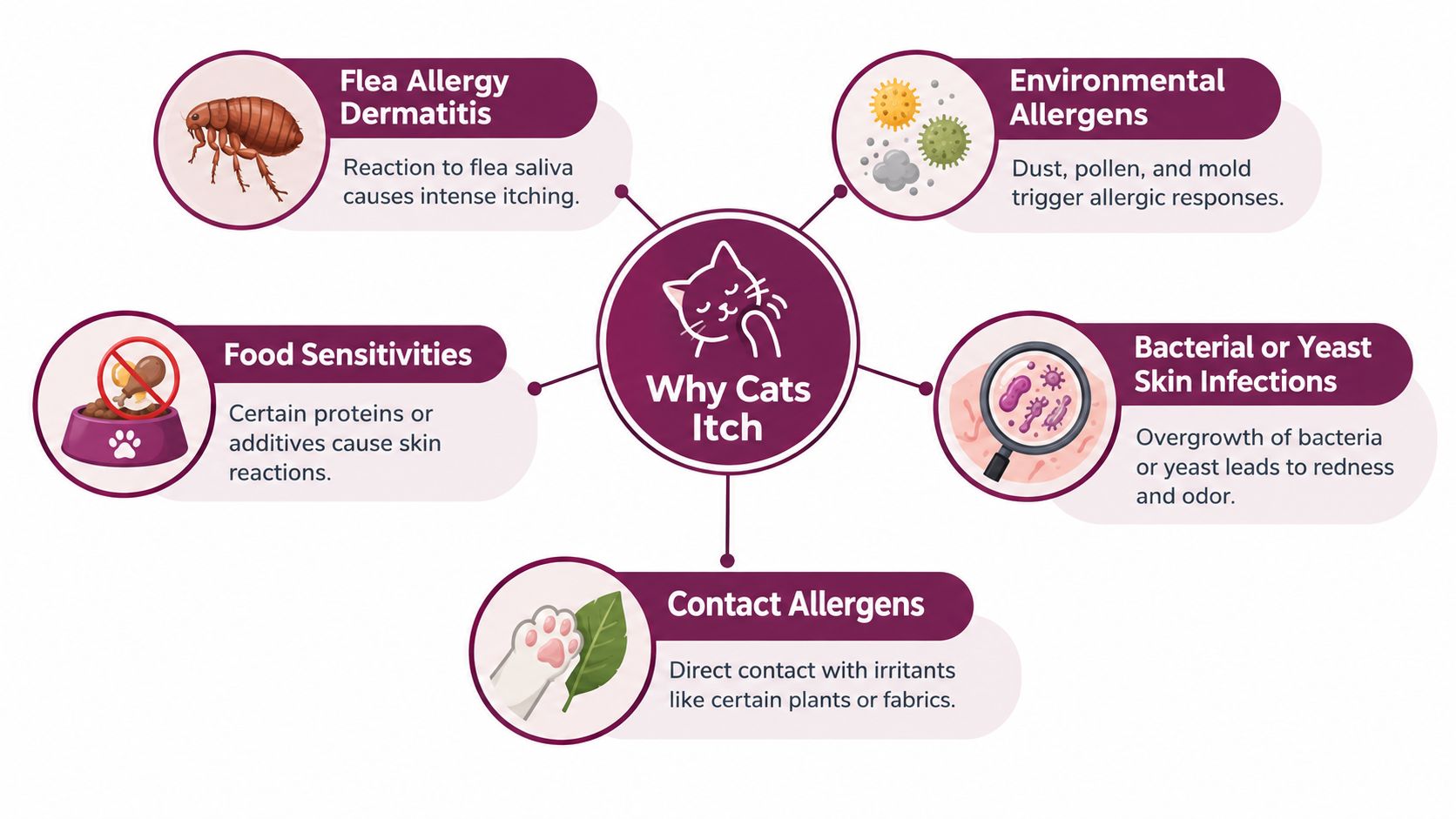
A red patch tells you that the skin is inflamed, but it doesn't tell you why. Common causes include flea allergy dermatitis, environmental allergies, food sensitivity, bacterial or yeast overgrowth, contact irritation, and stress-related overgrooming. Pain, ear disease, and other medical problems can also produce scratching or focused grooming.
A flea-allergic cat may itch intensely after exposure to flea saliva, even when you don't see fleas on the coat. An indoor lifestyle doesn't eliminate the possibility of exposure. A cat reacting to pollen, dust, or mold may develop recurring itch, face rubbing, or overgrooming. Food-related skin reactions can continue until the dietary trigger is properly evaluated.
Infection creates a different treatment problem. Bacteria or Malassezia yeast can add odor, greasy skin, crusting, moisture, or discharge. A topical antimicrobial may be useful when infection is confirmed or strongly suspected, but it won't correct an allergic trigger. Conversely, a steroid can reduce inflammation while allowing an untreated infection to persist or worsen.
Match the treatment to the problem
Veterinary references describe feline pruritus as a condition managed by addressing the trigger. That can involve ectoparasite control, infection treatment, anti-inflammatory therapy, dietary evaluation, or a combination of approaches (Merck Veterinary Manual guidance on itching in cats).
Ring-shaped lesions or suspected fungal disease shouldn't be treated like ordinary allergy irritation. Cleaning products also require care around pets. For background on why household disinfectants shouldn't be treated as a universal answer for fungal disease, see this Clorox wipes ringworm guide. If ringworm is a concern, the ringworm rash treatment cream guide can help you prepare questions for your veterinarian.
The diagnostic mindset is simple: identify the likely trigger before selecting the active ingredient. A soothing product may support irritated skin, but it shouldn't delay examination when the lesion is spreading, infected, recurrent, or causing substantial distress.
OTC and Prescription Anti-Itch Options Compared
A cat scratching one small area may seem like a cream-selection problem. Often, the cream is only one part of the answer. OTC and prescription products differ in access, ingredient control, and the amount of diagnostic information behind the choice. Match the treatment to the suspected cause before focusing on rapid itch relief.
An OTC product may be reasonable for mild, localized irritation only when its label supports feline use and a veterinarian agrees that home care is appropriate. Check the complete ingredient list, concentration, intended species, directions, and precautions that limit licking. A product made for people can contain ingredients or inactive additives that are unsafe for cats.
Prescription topicals may contain a veterinarian-selected corticosteroid, antimicrobial, antifungal, or combination. They are more appropriate when examination or cytology points to a specific inflammatory, bacterial, yeast, or mixed skin problem. A topical cream also may be the wrong format for a widespread or recurrent condition.
| Factor | OTC Topicals | Prescription Topicals |
|---|---|---|
| Access | May be sold without a prescription, but feline suitability still needs verification | Requires veterinary authorization and an appropriate diagnosis |
| Typical role | Mild, localized irritation when a veterinarian approves home care | Targeted inflammatory, bacterial, yeast, or mixed skin disease |
| Ingredient control | Formulas vary, and human products may contain unsafe excipients | The veterinarian selects the active ingredient and formulation |
| Monitoring | Owner watches for worsening or adverse reactions | Follow-up may be needed for response, duration, and side effects |
| Extent of disease | Usually limited to small, superficial areas | More suitable when disease is recurrent, painful, infected, or widespread |
Some prescription approaches are not topical. For generalized or recurrent feline allergic dermatitis, a veterinarian may consider systemic ciclosporin. A feline atopic dermatitis case series reported good responses in its treated group, but that finding does not establish that the medication suits every cat. Dose selection, medical history, monitoring, and the suspected cause all matter.
Review information about Atopica for Cats as preparation for a veterinary discussion. Atopica for Cats is a prescription option used under veterinary direction for feline allergic dermatitis, not a topical cream or a substitute for examination. Even a soothing OTC product should be stopped if the area worsens, spreads, becomes painful, or fails to improve as expected.
Active Ingredients That Actually Calm the Itch
The active ingredient determines what a topical can do. Corticosteroids reduce inflammatory signaling, which can make them useful for a localized allergic flare. Non-steroid products may soothe the surface or support the skin barrier, but they generally don't provide the same anti-inflammatory effect or speed in every situation.
A systematic review of feline atopic syndrome identified only one prospective clinical trial of topical 0.0584% hydrocortisone aceponate in cats with perennial pruritus. In that trial, 10 cats received two sprays per 10 x 10 cm area daily for 28 days, followed by every-other-day treatment, and the topical steroid was rapidly effective in 7 of 10 cats (systematic review of feline atopic syndrome). Those details illustrate why formulation, body-surface area, schedule, and duration must be controlled by the label and veterinarian.
Topical corticosteroids can be useful, but prolonged use may contribute to skin fragility and other steroid-related complications. Veterinary guidance also notes that cats may be sensitive to steroid complications, including diabetes risk (veterinary guidance on feline allergic dermatitis).
Non-steroid ingredients such as colloidal oatmeal, pramoxine, and topical ceramides may appear in skin-care products. Their roles differ. Colloidal oatmeal can provide soothing support, pramoxine is a topical anesthetic used in some formulations, and ceramides support barrier function. Their suitability depends on the feline formulation, lesion condition, and risk of licking. They shouldn't be treated as interchangeable with prescription anti-inflammatory or antimicrobial therapy.
| Active class | Mechanism | Typical onset | Best use case | Key trade-off |
|---|---|---|---|---|
| Corticosteroid | Suppresses local inflammation and can reduce pruritus | Often rapid when the diagnosis fits | Localized inflammatory or allergic lesions selected by a veterinarian | Prolonged or high-potency use can cause local and systemic complications |
| Colloidal oatmeal | Soothes and supports irritated surface skin | Usually gentler and less predictable | Mild surface irritation or barrier support | Doesn't treat fleas, bacteria, yeast, or a significant allergic disease |
| Pramoxine | Provides topical antipruritic anesthetic action in appropriate formulations | May feel relieving at the skin surface | Selected feline products with veterinary approval | Formula safety and licking exposure remain important |
| Ceramides | Helps support the skin barrier | Gradual supportive effect | Dry or barrier-compromised skin | Not a replacement for treatment of infection or parasites |
For a broader explanation of topical categories and safety questions, see topical medication for itchy skin. The most appropriate choice depends on the lesion, location, chronicity, and confirmed cause.
Human Creams and Unsafe Ingredients to Avoid
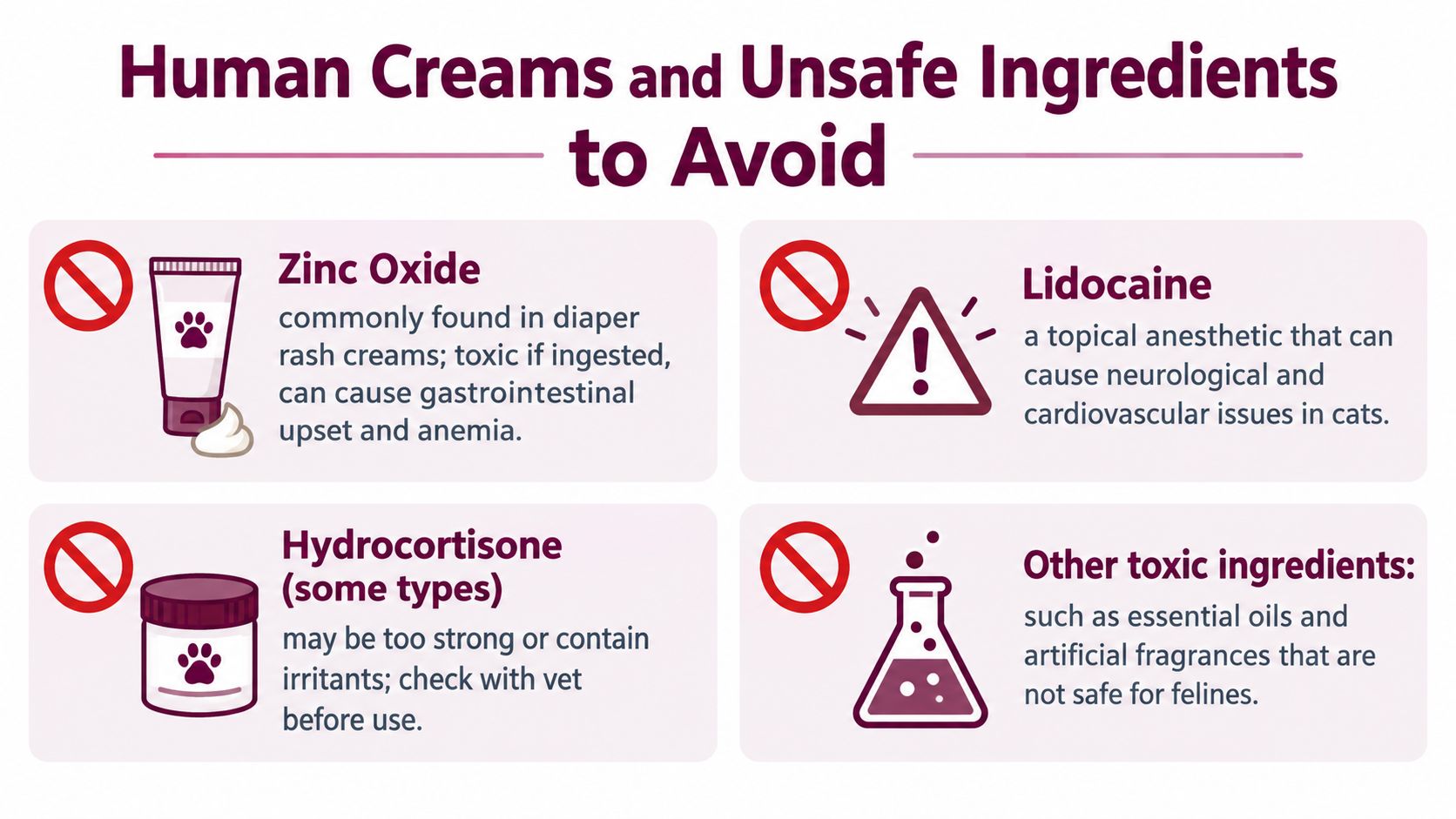
A human anti-itch cream isn't automatically safe for a cat. Cats groom frequently, so a product applied to the skin can be licked from the coat and swallowed. The risk comes from the complete formula, not only the ingredient named on the front of the package.
Veterinary-adjacent guidance identifies ingredients of concern in human products, including tea tree oil, zinc oxide, salicylic acid, camphor, menthol, and some NSAID ingredients (guidance on human creams and cats). Essential oils and fragrances can also be unsuitable for feline exposure. Lidocaine requires particular caution because safety depends on the formulation and concentration, and human products aren't automatically adjusted for cats.
Why licking changes the risk
People generally leave a cream on the skin. Cats may remove it during grooming, spread it to other body areas, or ingest it repeatedly. That makes “just a small amount” an unreliable safety argument, especially when the product contains a combination of active ingredients and excipients.
Watch for drooling, vomiting, lethargy, tremors, unusual weakness, or behavior changes after accidental exposure. If your cat licks a human cream or develops symptoms, contact a veterinarian or emergency animal service promptly. Don't induce vomiting or give another product unless a veterinary professional directs you to do so.
A prescription feline product may still need licking precautions. For example, the fluocinonide cream information should be reviewed with a veterinarian before use, because potency, formulation, lesion location, and exposure control all affect safety.
How to Apply an Anti-Itch Cream Safely
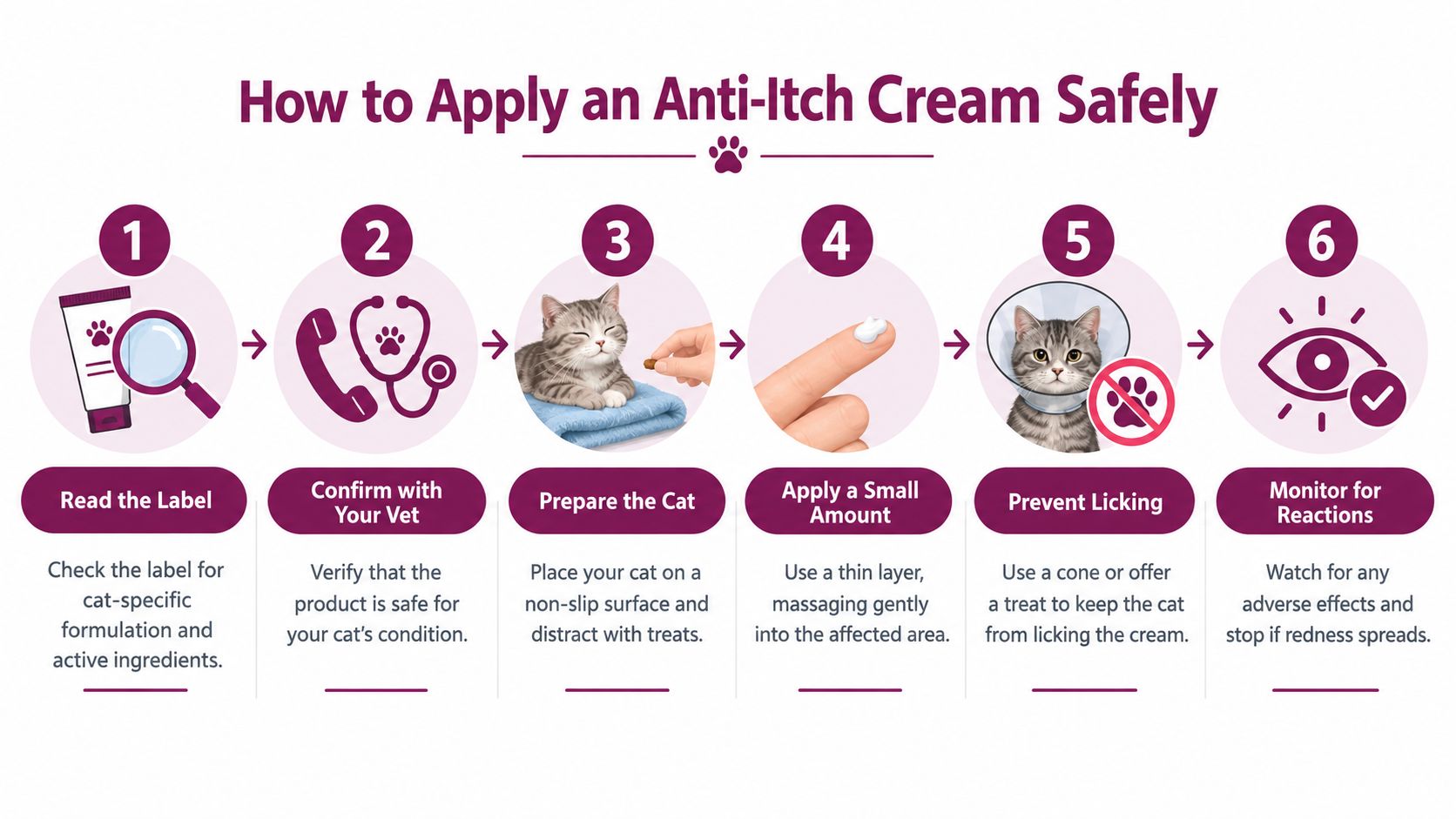
Application starts before you open the tube. Confirm that the product is formulated for cats, read the active ingredients and warnings, check the prescribed or labeled frequency, and make sure the intended lesion matches the reason the product was selected. If the skin is open, wet, rapidly changing, or painful, ask the veterinarian whether home application is appropriate.
A calmer routine
Prepare the area. Use only a veterinarian-approved cleanser or wipe if cleaning is advised. Don't scrub raw skin or use household disinfectants on a lesion.
Set up the cat. Choose a quiet moment when your cat is resting. A non-slip surface, gentle towel wrap, and a second person can reduce struggling. Treats may help create a calmer association.
Expose the skin. Topical medication needs to reach the skin, not just coat the fur. Don't clip hair or manipulate a painful lesion unless your veterinarian recommends it.
Measure by the affected area. Use the amount and frequency on the veterinary label or prescription. Don't guess based on how severe the itch looks, and don't apply more often because your cat is still scratching.
Limit grooming. Prevent licking for the contact period specified by the product instructions. An Elizabethan collar may be appropriate when your veterinarian recommends it. Quiet supervision after application can help.
Record the response. Note the time, site, product, amount directed, licking attempts, and any change in redness or scratching.
The pet medication label guide can help you review warnings, storage instructions, and dosing directions. If your cat becomes distressed, develops new redness, or repeatedly removes the product, stop the home routine and contact the prescribing veterinary team.
When to Stop and Call Your Veterinarian
A cream shouldn't become a reason to postpone care. Stop and seek veterinary advice if the lesion spreads, becomes hotter or more painful, develops fluid or crusting, or appears infected. Sudden patchy hair loss also deserves evaluation because it can reflect parasites, allergy, infection, or another disorder that a soothing topical won't resolve.
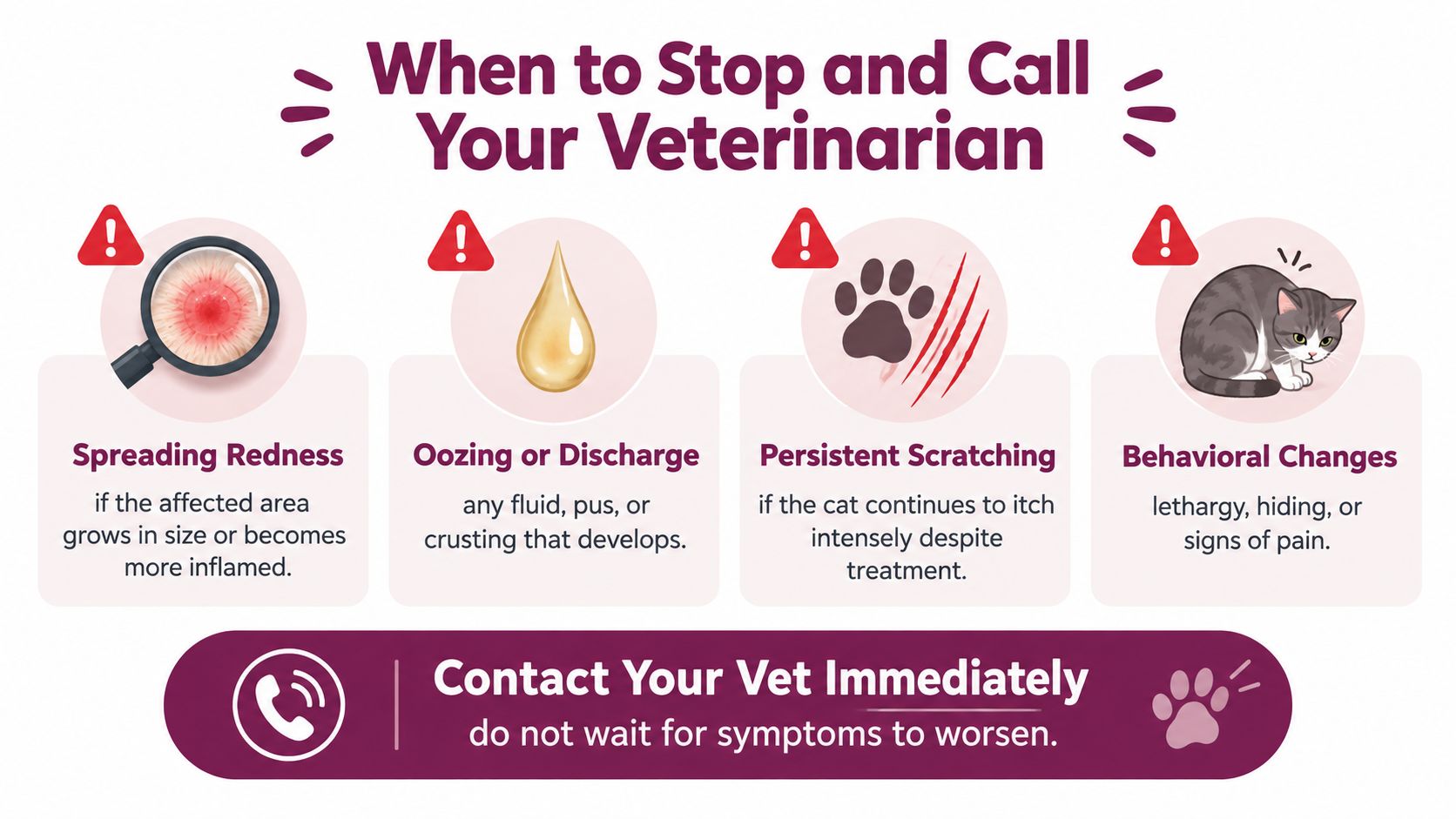
Contact a veterinarian promptly for:
- Spreading redness: The affected area is growing or becoming more inflamed.
- Oozing or discharge: Fluid, pus, moisture, or new crusts appear.
- Persistent scratching: Your cat continues intense scratching despite an appropriate topical plan.
- Behavioral changes: Hiding, lethargy, appetite loss, unusual aggression, or signs of pain develop.
Suspected ingestion is another reason to call. FDA guidance states that flea and tick products can cause adverse reactions and identifies neurologic risks associated with isoxazoline products in cats, including tremors, ataxia, and seizures (FDA guidance on safe flea and tick product use). A topical product is also not automatically safe for every age, weight, health status, or life stage. One FDA-approved feline topical label says not to use it in sick, debilitated, or underweight cats, or in cats younger than 9 weeks or weighing less than 2 lb (FDA-approved feline topical product label).
Before the appointment, gather useful information:
- Photographs: Take clear pictures with timestamps as the lesion changes.
- Product details: Photograph the label and list every ingredient used.
- Application record: Note when and where you applied the product.
- Exposure history: Record flea prevention, diet changes, new cleaners, bedding, or plants.
- Behavior notes: Describe grooming, scratching, appetite, sleep, hiding, and activity.
This information helps the veterinarian distinguish a treatment failure from an incorrect diagnosis or a new complication.
Choosing a Path Forward for Your Cat
A safe plan follows a sequence rather than a product impulse.
First, look for the likely trigger, but don't treat visual pattern matching as a diagnosis. Flea allergy, food sensitivity, environmental allergy, infection, and stress-related overgrooming can overlap. A veterinarian may need to examine the skin, ears, coat, or cells from the lesion before recommending an anti-itch cream for cats.
Next, match the active ingredient to the problem. A veterinarian-selected corticosteroid may suit a localized inflammatory flare, while an antimicrobial or antifungal approach is more appropriate when infection is involved. A barrier-support product may help dry, irritated skin, but it can't replace parasite control, dietary evaluation, or prescribed infection treatment.
Use a simple monitoring system
An itch diary can reveal patterns that are easy to miss from memory. Record:
- Location: Note whether the same site, ears, face, belly, or tail is involved.
- Skin changes: Track redness, scabs, odor, moisture, discharge, and hair loss.
- Possible triggers: Write down diet, flea prevention, household changes, cleaners, bedding, and outdoor exposure.
- Treatment response: Record the product, application time, licking attempts, and changes afterward.
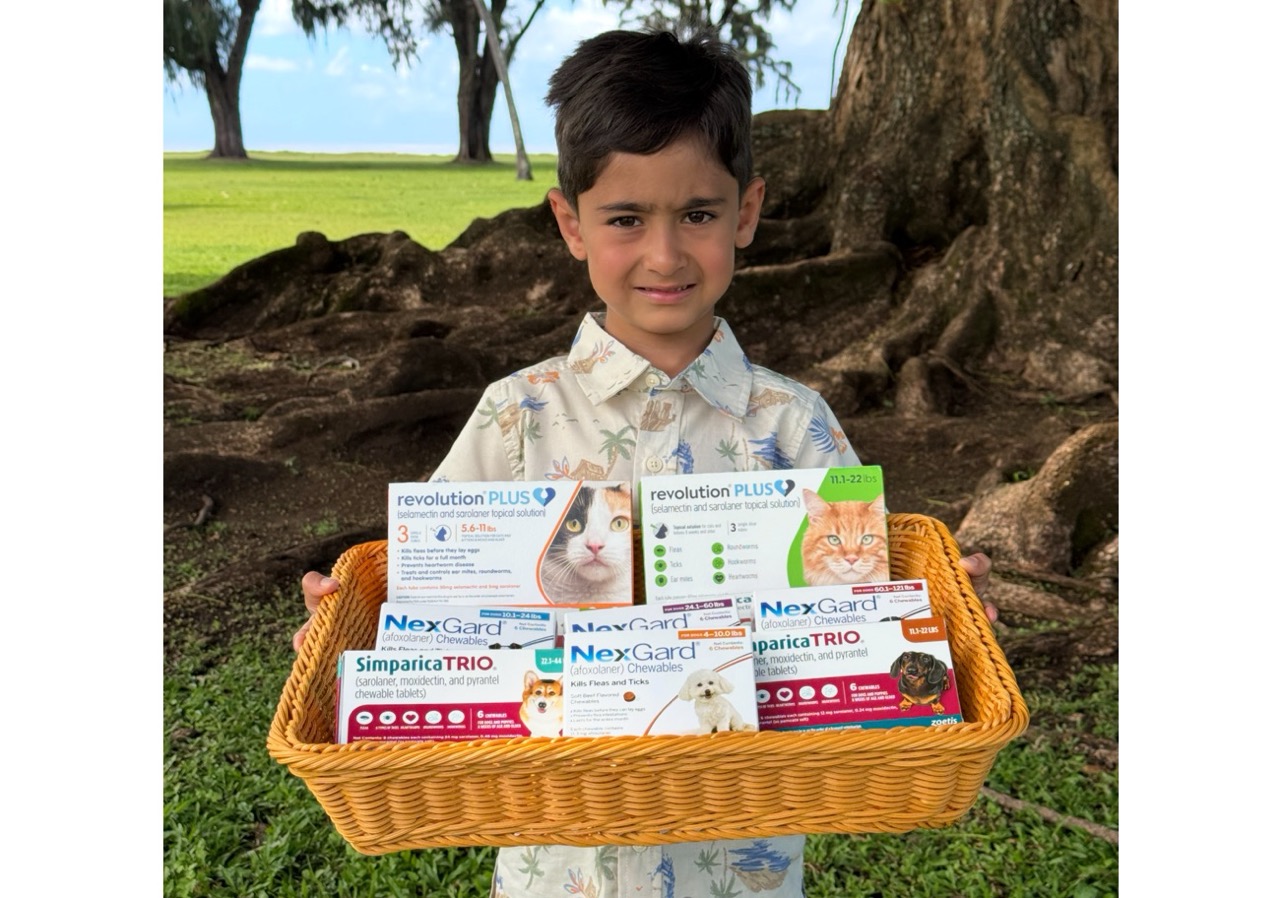
Parasite control also requires label discipline. Selamectin is an FDA-approved topical parasiticide for cats indicated for prevention and control of flea infestations, prevention of heartworm disease, and treatment and control of ear mite infestations. Its labeling reports salivation and intermittent vomiting after oral ingestion of the recommended topical dose in safety testing (FDA animal drug labeling for selamectin). Fluralaner topical labeling states that the product is for topical use only, should not be given orally, and hasn't been established as safe in breeding, pregnant, or lactating cats. The same label discusses neurologic adverse reactions associated with the isoxazoline class (FDA-reviewed fluralaner labeling).
Some owners also explore supplements or plant-derived products. If you're considering hemp-derived support, discuss it with your veterinarian and review a resource such as buy hemp oil for cats before giving anything, particularly if your cat takes other medication.
For prescription coordination and feline skin-care products, Bandana Rx provides access to prescription and over-the-counter pet medications subject to veterinary authorization and applicable product labeling. Visit the pharmacy to review relevant options, confirm prescription requirements, and keep your cat's treatment plan connected to veterinary guidance.