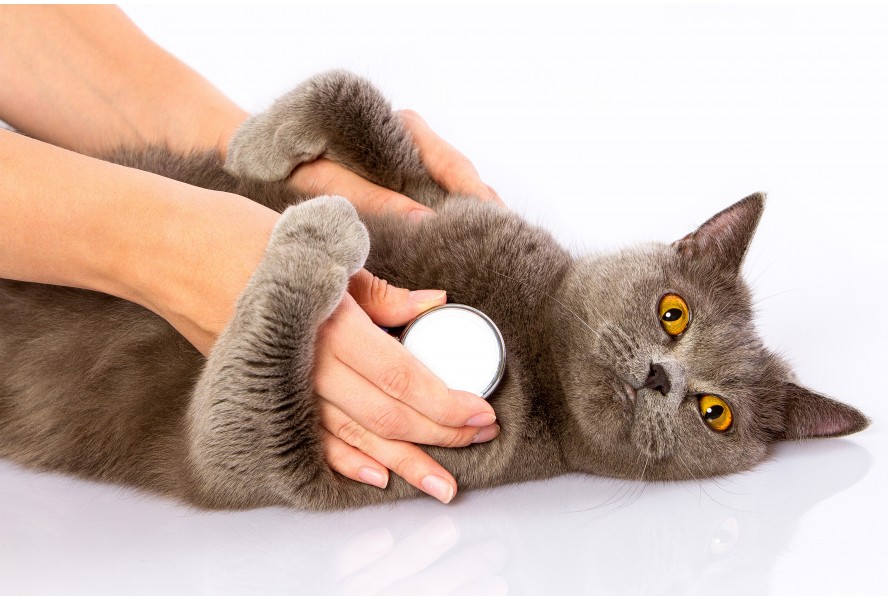




A low white blood cell count, called leukopenia, means the total number of white cells falls below the laboratory's reference range, and it signals a cause to investigate rather than a diagnosis.
You may be looking at your cat's bloodwork with a flagged result and wondering whether you should be worried, especially if your cat seems comfortable at home. Or your veterinarian may have mentioned the finding while investigating vomiting, poor appetite, or unusual tiredness.
The most useful question isn't just how low the total is. Your veterinarian also needs to know which white cells are low, how the results are changing, and whether red blood cells or platelets are affected. Those details help separate a result that needs a planned recheck from one that needs urgent care.
Table of Contents
- What a Low White Blood Cell Count Means on Your Cat's Report
- Common Causes of a Low White Cell Count
- How Vets Work Up a Low White Cell Count
- How Prognosis Shifts With the Count and Trend
- Treatment Options and Supportive Care
- Medication Safety and Prevention for Cats
- Confirm the Next Step With Your Veterinarian
What a Low White Blood Cell Count Means on Your Cat's Report
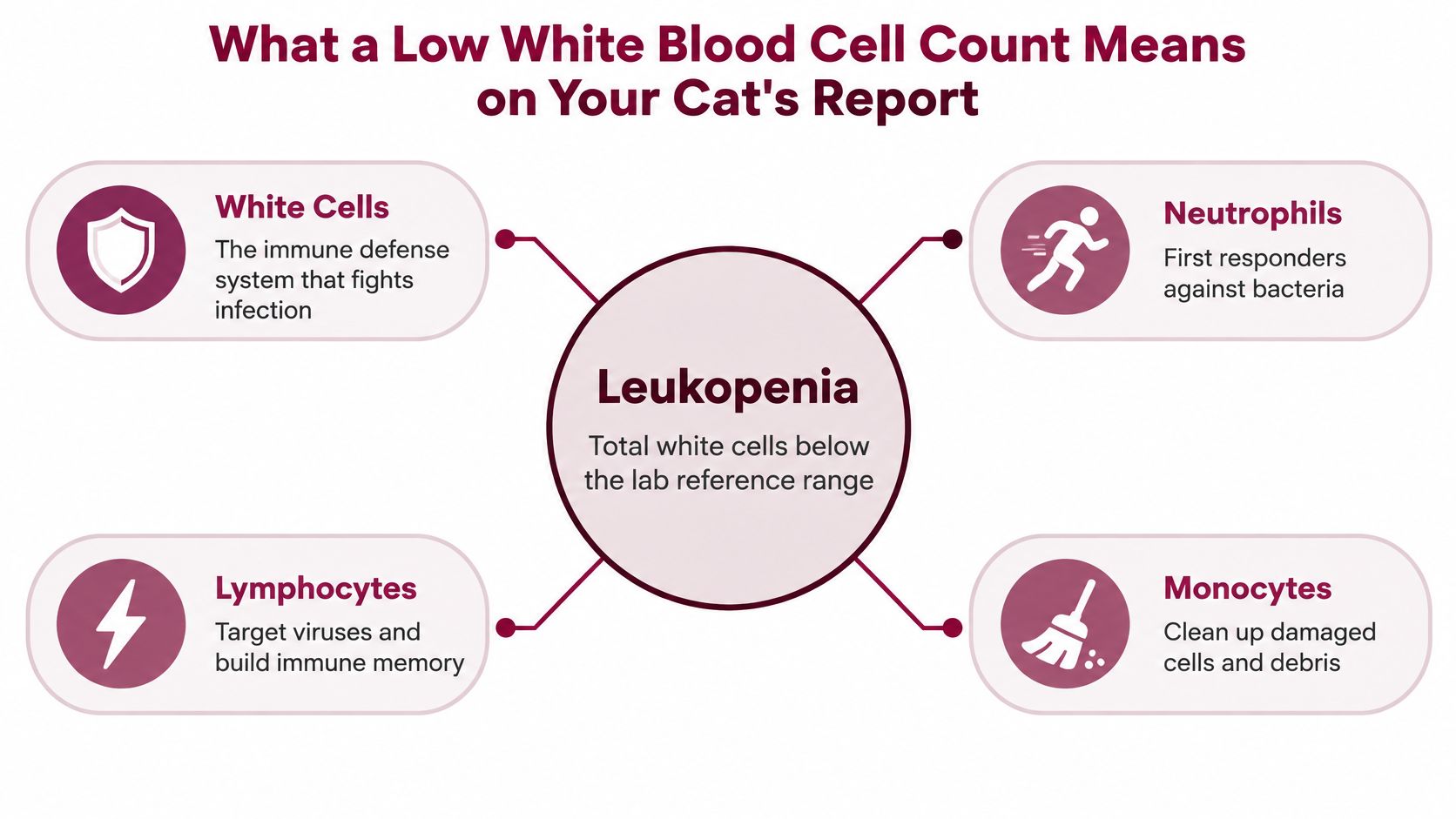
White blood cells work like a security team with different jobs. Neutrophils are first responders against bacterial infection, lymphocytes recognize specific threats and help coordinate targeted immune responses, and monocytes clear damaged cells and debris. When the team is short-staffed, the first question is which members are missing.
A complete blood count, usually called a CBC, measures the cells circulating in your cat's blood. The white blood cell total is the headline number on that report. The differential count, the breakdown beneath it, is what your veterinarian reads to interpret the headline.
The total and the individual cell lines
Neutropenia means a low neutrophil count. Lymphopenia means a low lymphocyte count. A cat can have a reduced total because either group is low, or because both are low.
The Merck Veterinary Manual's guide to white blood cell disorders describes different processes behind white-cell abnormalities, including reduced production, excessive use during infection, and destruction of cells. Each of those processes can lower the same total through a different cell line, so the differential steers the workup.
Blood count lines and what a low result suggests
| Blood count line | Example reference interval | What a low result may suggest | Why it matters |
|---|---|---|---|
| Total white blood cells (WBC) | 6,300–19,600 cells/µL in a published clinical case described in the clinical article available through PubMed Central | Total leukopenia caused mainly by neutropenia, lymphopenia, or both | A low total alone doesn't identify the cell line involved |
| Neutrophils | 3,900–8,000 cells/µL in the same published case | Neutropenia, an important finding for bacterial infection defense | The absolute count matters more than the percentage |
| Lymphocytes | Interval printed on your cat's report | Lymphopenia, which can accompany a stress response or some viral illnesses | Interpret alongside the other white cells and your cat's condition |
| Red blood cells, hemoglobin, and platelets | Interval printed beside each measurement | Concurrent reductions may indicate a broader marrow or systemic process | Review these values on the same report |
These are example intervals, not universal cutoffs. Different laboratories and analyzers set different reference intervals, so your cat's report supplies the appropriate comparison.
That published clinical case reported a total white-cell count of 3,940 cells/µL and a neutrophil count of 1,339 cells/µL. Both sat below the laboratory's intervals. The low total flagged the problem, but the neutrophil count identified it: a shortage of the cells a cat needs most for defense against bacterial infection. A total and a differential answer different questions, and the differential is the one that shapes the next step.
Read the absolute counts, not percentages alone
A percentage tells you what share of the white cells belongs to a particular group. An absolute count tells you how many of those cells are circulating in a measured volume of blood.
A percentage can stay respectable while the pool shrinks. If the total white-cell count falls far enough, even a normal-looking neutrophil percentage can leave too few neutrophils in circulation. Your veterinarian relies on the absolute neutrophil count to judge whether enough of those first responders are available.
Practical rule: Read the total as a starting point, not as the final interpretation.
Work through the report in this order:
- Start with the total WBC: Compare it with the report's own reference interval.
- Find the absolute neutrophil and lymphocyte counts: Identify which group accounts for the change.
- Check red cells and platelets: Look for abnormalities beyond the white cells.
- Compare repeat results: Ask whether the pattern is stable, worsening, or recovering.
A slightly low total in a well cat isn't equivalent to severe neutropenia in a cat with fever, lethargy, or vomiting. Low white cells also don't prove infection is absent. In an overwhelming infection, your cat may use neutrophils faster than the marrow can replace them.
The urgency of a low count comes from the combination: which cell line is low, how far it has fallen, whether it is still dropping on repeat tests, and what the rest of the blood count is doing.
Common Causes of a Low White Cell Count
Infections and medication reactions are important possibilities to investigate early, but there isn't a single explanation that fits every cat. Veterinarians narrow the possibilities using the affected cell lines, your cat's symptoms, exposure history, and current treatments.
The key distinction is often between cells being lost or used too quickly and the bone marrow not producing enough cells. Some illnesses cause both.
How the main cause groups differ
Cause groups for a low white cell count in cats
| Cause group | How it lowers white cells | Examples |
|---|---|---|
| Infections | Rapid consumption of neutrophils or viral injury to rapidly dividing marrow cells | Feline panleukopenia, feline leukemia virus, severe sepsis |
| Drug reactions | Unpredictable reactions can injure marrow stem cells, sometimes appearing first as neutropenia | Sulfonamides, penicillins, cephalosporins, chloramphenicol |
| Bone marrow disorders | Reduced production of white cells | Marrow disease, sometimes accompanied by low red cells or platelets |
| Immune-mediated disease | The immune system destroys white cells | Immune-mediated destruction of neutrophils |
| Other infections | Infection can deplete or alter circulating white cells | Certain vector-borne infections and other infections selected for testing |
| Stress response | Circulating lymphocytes can decrease | Stress associated with illness or hospitalization |
Stress-related lymphopenia doesn't automatically explain a low total, particularly when neutrophils are also reduced. Your veterinarian needs the full pattern before attributing a result to stress.
Why vaccination and medication histories matter
Feline panleukopenia is a highly contagious parvovirus infection that damages rapidly dividing cells, including cells in the marrow and intestinal tract. The Merck Veterinary Manual's feline panleukopenia guide describes the combination of gastrointestinal illness and marked white-cell reductions that makes vaccination and exposure history especially relevant.
In a 2010 retrospective study of 184 cats with panleukopenia, 60.3% of cats with known vaccination status had never been vaccinated, while 39.7% had received at least one vaccine; among vaccinated cats, 79.5% had received only one dose before 12 weeks of age. A record saying “vaccinated” therefore needs more detail about the actual schedule.
For medication reactions, neutrophils may fall first because they have a relatively short lifespan. Bring the names of all medications, including prescriptions used for unrelated conditions. If your cat takes prescription methimazole, include it in that review; it's not a treatment for leukopenia, and you shouldn't change it independently.
Possible toxic exposure also deserves discussion. Some toxic exposures can injure marrow, but feline-specific evidence is limited for many household substances. Tell your veterinarian about accessible household products, plants, human medications, and pet medications rather than assuming a particular exposure explains the result.
These groups overlap. A cat may have a viral illness, secondary bacterial infection, and medication exposure at the same time. Testing helps your veterinarian distinguish those possibilities.
How Vets Work Up a Low White Cell Count
Your veterinarian's workup connects the laboratory result to what's happening in your cat. Not every cat needs every available test, and an ill cat may need stabilization while diagnostic testing proceeds.
The Merck Veterinary Manual's discussion of feline white blood cell disorders emphasizes interpreting individual white-cell abnormalities in clinical context rather than treating a low total as a diagnosis.
The examination and testing sequence
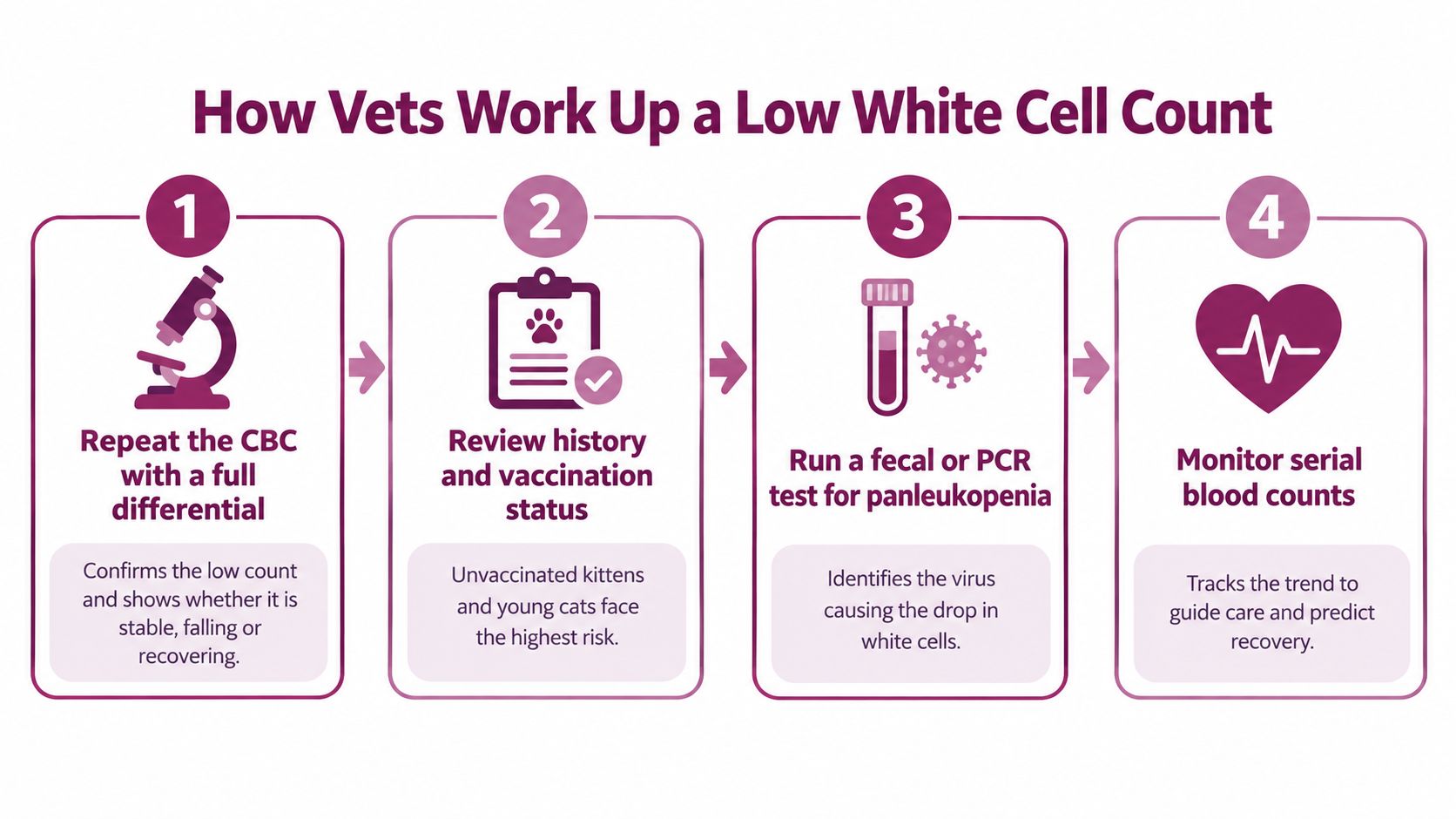
Repeat the CBC with a full differential when appropriate. This confirms the finding and helps show whether the count is stable, falling, or recovering. The veterinarian sets the timing according to your cat's condition rather than using a universal recheck schedule.
Review a blood smear. Looking at cells under a microscope helps assess cell appearance, immature forms, and changes associated with substantial inflammation. “Toxic change” describes certain cellular changes; it doesn't, by itself, mean your cat swallowed a toxin.
Check red cells and platelets on the same report. Concurrent abnormalities may suggest a wider marrow or systemic problem rather than an isolated white-cell issue. The veterinarian also considers whether a flagged platelet result needs confirmation on the smear.
Examine your cat. Temperature, hydration, gum color, lymph nodes, and abdominal findings help establish how sick your cat is. A laboratory result has a different meaning in a comfortable, eating cat than in a dehydrated cat with abdominal pain.
Build a complete history. Vaccination records, contact with sick cats, outdoor access, recent illness, and medication or supplement use help determine which causes deserve attention. Include recently finished treatments, not just products your cat takes today.
Choose targeted tests. Depending on the signs and history, these may include a rapid in-clinic parvovirus test, feline leukemia virus testing, or other infection screens. Testing should answer a clinical question rather than simply expand the list of results.
Decide the appropriate level of care. Fever, lethargy, poor appetite, vomiting, diarrhea, pale gums, bleeding, or suspected infectious exposure call for prompt assessment. Your veterinarian decides whether hospitalization or supervised monitoring at home is appropriate.
The visual below outlines parts of this process. Your cat's testing sequence may differ, and a panleukopenia test is only relevant when the clinical picture supports it.
What to bring to the appointment
Bring the complete report rather than a cropped image of the flagged total. Medication packaging, vaccination records, and a short timeline of appetite, vomiting, stool changes, and activity can make the history more useful.
A low count tells your veterinarian where to investigate. It doesn't identify the cause on its own.
How Prognosis Shifts With the Count and Trend
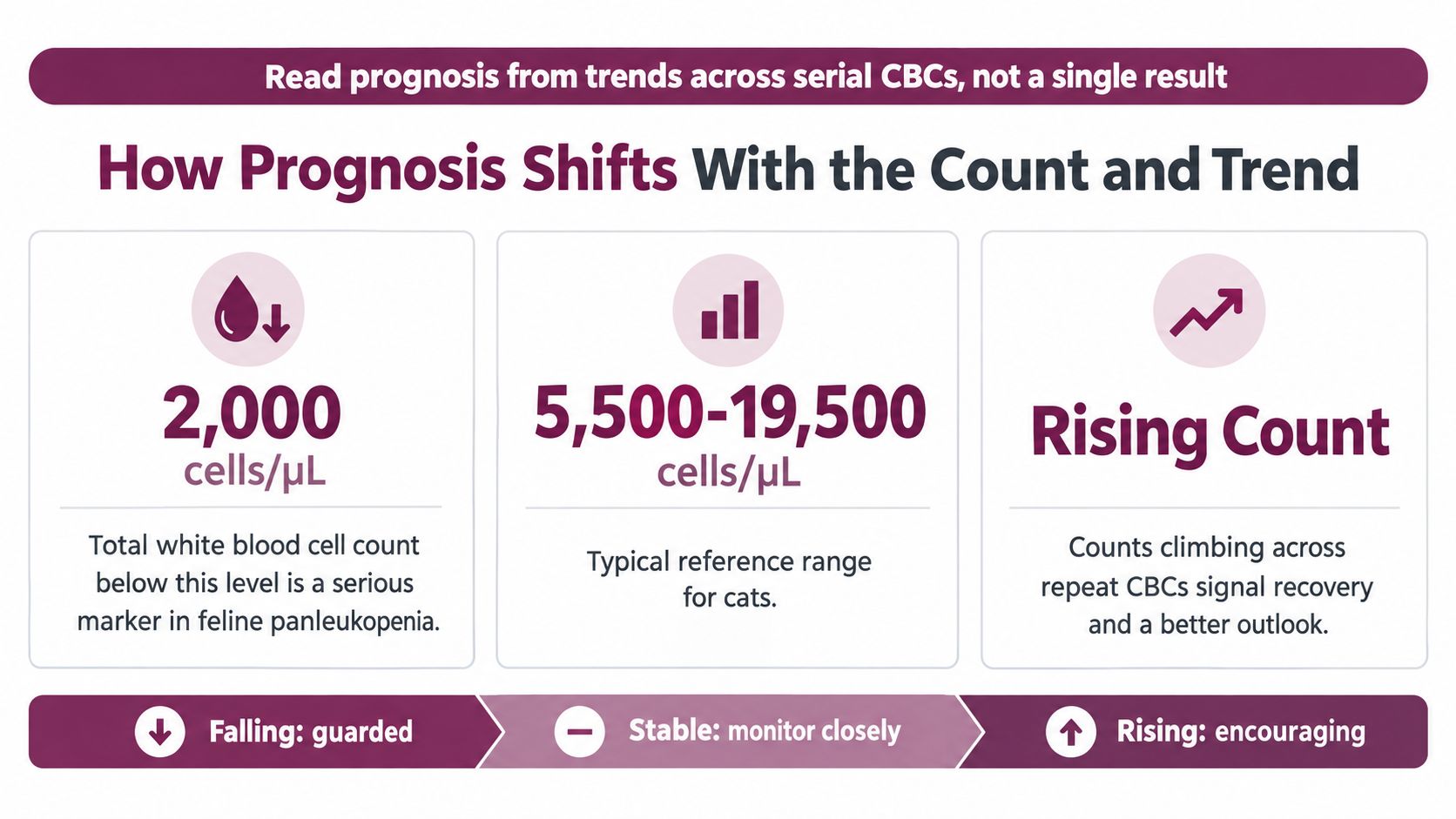
In cats with feline panleukopenia, a total white blood cell count below 2,000 cells/µL is associated with a poorer prognosis, according to the Merck Veterinary Manual's panleukopenia reference. That threshold belongs to this one disease. A cat whose count is low for another reason is judged against different markers, so the number on its own does not set the outlook.
Among hospitalized panleukopenia patients receiving supportive care, survival varies widely. Reported outcomes depend on how early treatment begins and how intensively that care is delivered, and any published figure describes a group of affected cats rather than your cat's individual probability of recovery.
Why repeat results matter
A single count is a snapshot.
Serial CBCs supply the motion behind it, showing whether the marrow and circulating cell populations are recovering while your veterinarian assesses the response to care. The total white cell count works like a headline, and the lines beneath it carry the detail. In panleukopenia, neutropenia generally develops before lymphopenia, so the neutrophil line often moves first. Your veterinarian watches the order of changes instead of assuming every white-cell type will fall or recover together, and reads the platelet and red-cell lines alongside it, since a dip confined to one line carries a different meaning than declines across several.
The graphic illustrates why the trend matters more than any single reading. Any reference interval shown in a general visual should not replace the interval supplied by your cat's testing laboratory, and an upward trend still needs clinical interpretation.
The findings that change the outlook
Beyond the CBC, veterinarians weigh features of the illness itself:
- More concerning findings: Abnormally low body temperature, low body weight, low platelets, low blood protein, and low potassium can worsen the outlook in panleukopenia.
- Encouraging findings: Recovery of the white-cell count and return of appetite support a more favorable assessment.
- Findings needing explanation: A rising count without improvement in appetite, hydration, or comfort still warrants careful evaluation.
That last point surprises many owners. The laboratory number can recover faster than the cat does, which is why each result gets paired with what the examination shows.
Ask how the laboratory trend matches your cat's recovery, not just whether the latest number is higher.
The underlying disease shapes the reading as well. The same numerical result can carry a different meaning in a cat with immune-mediated destruction than in a cat with parvovirus-related marrow injury, because one involves the body attacking circulating cells while the other involves damage where those cells are produced.
Vaccination belongs in a prevention conversation, scheduled when your cat is well. It does not raise a count that is already low. If you are reviewing a product such as the Nobivac Feline 1-HCP vaccine, ask your veterinarian whether it fits your cat's health status and vaccination plan rather than arranging vaccination in response to the current illness.
Your veterinarian combines the count, the trend across repeat tests, and examination findings to discuss prognosis. The most useful follow-up question is often the simplest: "What has changed since the previous test, and does that change our plan?"
Treatment Options and Supportive Care
There's no specific antiviral cure for feline panleukopenia, an important viral cause of marked leukopenia. Treatment supports your cat through the illness and addresses complications, with the intensity of care matched to severity.
The Merck Veterinary Manual's treatment guidance for feline panleukopenia identifies vigorous fluid therapy and supportive nursing as central to giving affected cats the best chance of survival. “Supportive” doesn't mean minor or optional care. It can involve intensive hospital treatment.
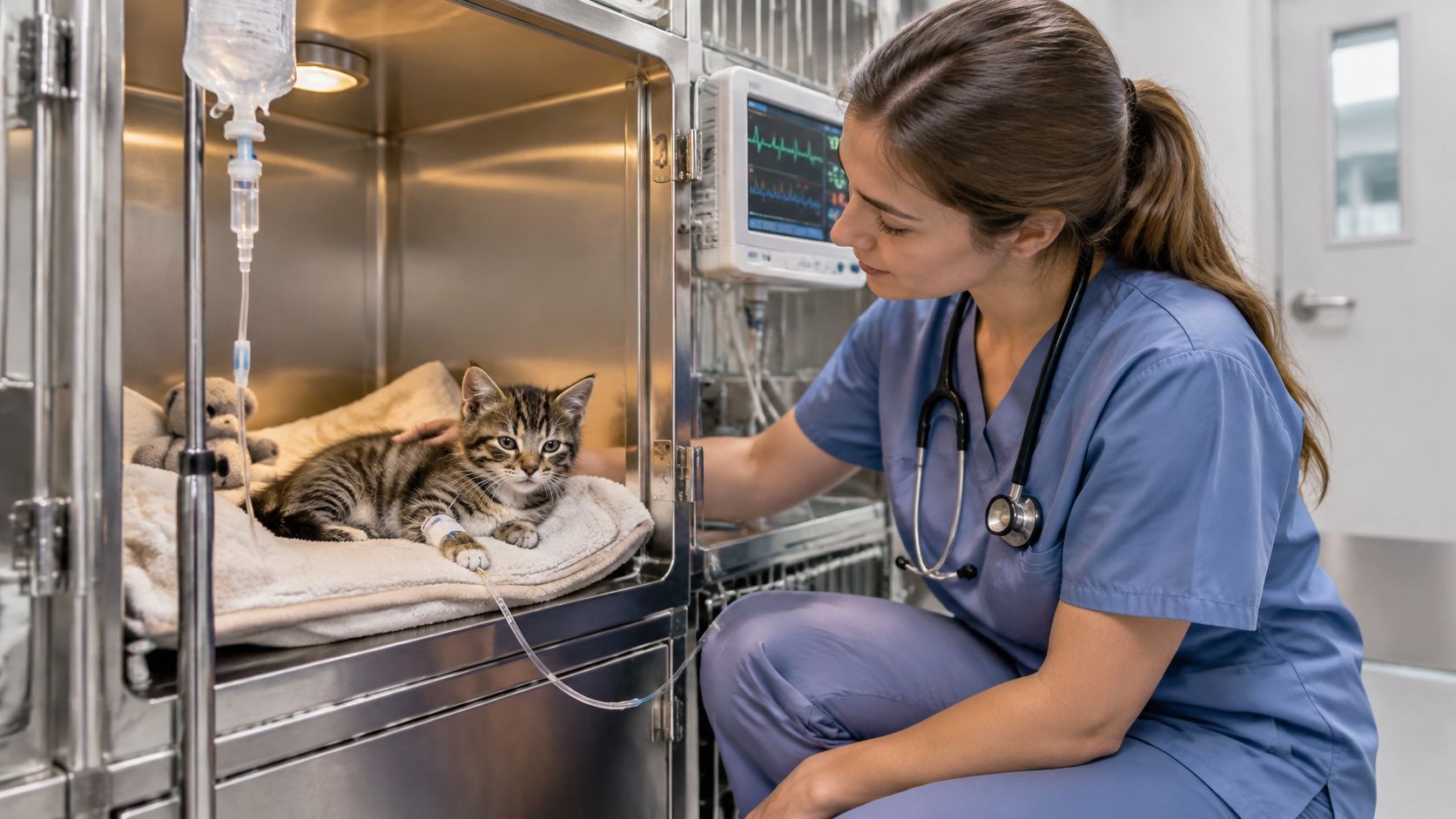
Matching care to illness severity
Seriously ill cats may need intravenous fluids to replace gastrointestinal losses, prescription anti-nausea medication, nutritional support, antibiotics when indicated, and close nursing care. Vitamins may be included when clinically appropriate, but they aren't a stand-alone response to leukopenia.
Selected mild cases may sometimes receive outpatient treatment with fluids under the skin, antimicrobials, and anti-nausea medication. Your veterinarian must decide whether that approach is safe for your cat and give clear instructions for reassessment.
Cats with anemia or severe protein loss may require transfusion. That decision addresses specific complications; it isn't a routine way to correct every low white-cell count.
Treating the cause rather than the number
| Clinical problem | What treatment aims to address |
|---|---|
| Bacterial infection or substantial bacterial infection risk | Veterinarian-selected antimicrobial treatment when indicated |
| Suspected medication reaction | A prescribing-veterinarian review and a supervised treatment decision |
| Immune-mediated disease | A diagnosis-specific plan, sometimes involving a veterinary specialist |
| Marrow disease | Further investigation and treatment directed at the identified disorder |
| Dehydration, vomiting, or poor intake | Fluid, nausea, and nutritional support matched to clinical need |
Antibiotics treat susceptible bacteria, not the panleukopenia virus itself. They may still be appropriate when bacterial complications are present or the veterinarian judges infection risk to be substantial. Information about staph infections in cats concerns a particular bacterial problem, not a diagnosis that can be made from low white cells alone.
Drug selection, dosing, duration, and hospitalization decisions depend on hydration, vomiting, kidney function, concurrent illness, and blood-cell findings. There isn't a universal medication that veterinarians give to raise the WBC total.
If contagious disease is suspected, follow your clinic's isolation and cleaning instructions to protect other cats. Call before arriving so the staff can arrange appropriate precautions. Over-the-counter products can't safely replace this evaluation or the treatment plan.
Medication Safety and Prevention for Cats
Unpredictable drug reactions can injure bone marrow stem cells and may affect several blood-cell lines. Neutropenia can appear first because neutrophils have a relatively short lifespan; anemia or low platelets may also develop.
The Merck Veterinary Manual's reference on leukogram abnormalities lists sulfonamides, penicillins, cephalosporins, and chloramphenicol among drugs associated with this type of reaction in cats. Their inclusion doesn't mean every cat receiving one will develop a blood disorder or that these medications are never appropriate.
Give the prescriber the information needed to act
A possible drug reaction is a reason for prompt veterinary review, not an instruction to stop treatment yourself. Depending on the medication and illness, the veterinarian may change the plan, arrange monitoring, or investigate another explanation.
Owner actions for medications, supplements and prevention
| Area | Owner action | Why it matters | Who decides |
|---|---|---|---|
| Current prescription medications | Share the full list, including recent doses and completed courses | Some drug classes are associated with neutropenia in cats | Prescribing veterinarian |
| Prescribed dosing and schedule | Follow instructions and ask before changing timing or dose | Changes can affect treatment effectiveness and side-effect risk | Prescribing veterinarian |
| Supplements and over-the-counter products | Tell the veterinarian before and during treatment | Supplements don't replace diagnosis or treatment of a low count | Veterinarian |
| Vaccination history | Ask about the feline panleukopenia vaccine schedule, especially for kittens or unknown histories | Vaccination history helps assess exposure risk and prevention needs | Veterinarian |
| Feline leukemia virus status | Ask whether testing fits your cat's history and contact with other cats | FeLV can be associated with abnormal white-cell counts | Veterinarian |
Bring photographs of labels if you can't bring the containers. Include products applied to the skin, injections given at another clinic, human medications your cat could access, and supplements marketed as immune support.
Make the home plan easy to follow
Before leaving the clinic, confirm which medications to give, how to give them, and what to do if your cat vomits after a dose or refuses treatment. Don't repeat a dose or combine products without asking. Your cat's written instructions should resolve those situations whenever possible.
Use a medication log to record what you gave, especially when several people share care. Guidance on reading pet medication labels, dosage warnings, and storage instructions can help you identify details to confirm with the prescriber.
For prevention, discuss an individualized vaccination plan and whether FeLV testing is appropriate for your cat's outdoor access or contact with other cats. Neither a prescription nor a supplement replaces the need to establish why the blood count is low.
Confirm the Next Step With Your Veterinarian
Ask your veterinarian these questions so you leave with a plan rather than just a flagged result:
- Which cell line is low? What are your cat's absolute neutrophil and lymphocyte counts?
- Has the finding been confirmed? Does your cat need a repeat CBC or blood-smear review?
- Which causes are most likely? Which tests would help distinguish them?
- Where should your cat receive care? Is hospital treatment needed, or is home monitoring appropriate?
- Should current medications be reviewed? Does the prescriber need to assess any recent treatment?
- When should your cat be rechecked? What determines the timing?
- Which signs require an immediate call? Who should you contact outside regular clinic hours?
If your cat develops fever, marked lethargy, poor appetite, vomiting, diarrhea, pale gums, or bleeding, contact your veterinarian promptly rather than waiting for the planned recheck. Suspected infectious exposure also deserves a call.
Bring the full laboratory report, its reference intervals, and a medication and supplement list. A short record of your cat's eating, drinking, activity, and gastrointestinal signs can help your veterinarian interpret changes between appointments.
Regular veterinary follow-up keeps testing, prescriptions, and home care connected. Once your veterinarian has established a plan, you can explore medication options with confidence about what your cat needs. Prescription medications should only be used under veterinary guidance.
Bandana Rx offers prescription and over-the-counter pet medications, with prescription orders processed after veterinary authorization. Once your veterinarian has identified the cause of your cat's low white blood cell count and selected treatment, visit Bandana Rx to explore relevant prescribed options and support your cat's ongoing care.