



Six of 101 cats in a 2010 study carried methicillin-susceptible Staphylococcus aureus, while 4 carried MRSA, showing that cats can harbor staph without looking sick. A red sore or positive swab doesn't automatically mean your cat has an active staph infection, because diagnosis depends on the lesion, the sample, and the cat's overall health.
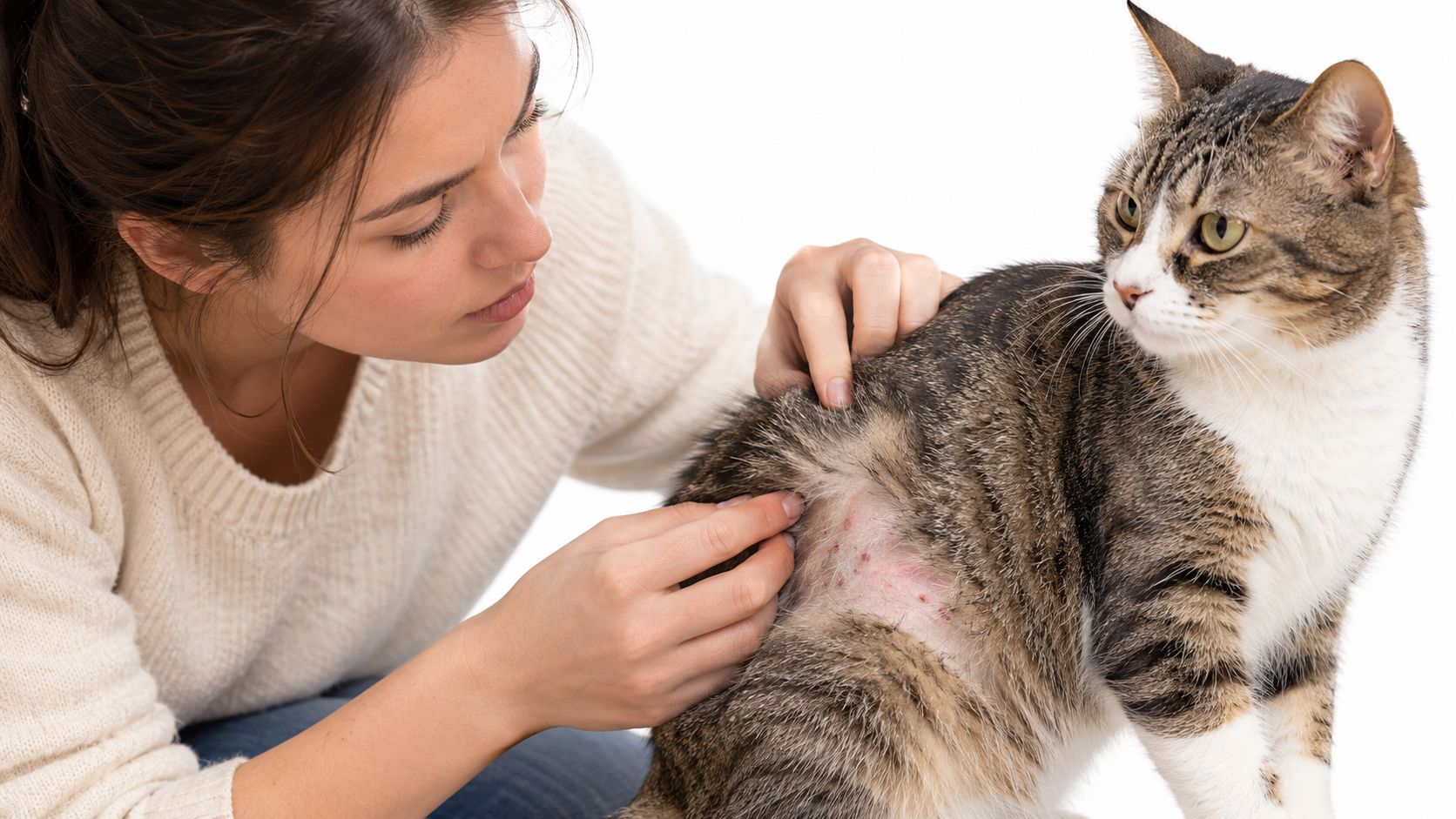
You may have noticed red bumps, crusts, or a bald patch while petting your cat. It's understandable to worry, especially if the area looks tender or your cat keeps licking it. Staphylococcal bacteria are common residents of feline skin, but they usually become a problem when an allergy, parasite, wound, excessive grooming, or another condition weakens the skin barrier.
Think of staph like weeds in a garden. A few may be present without causing trouble. If the soil becomes damaged or conditions favor rapid growth, the weeds can take over. In the same way, staph may live on a cat's skin without illness, then multiply in an already irritated area.
A practical overview of differences between bacterial and other types of illness may also help you understand why appearance alone can be misleading in this symptom breakdown from VirusFAQ.com. If your cat has spreading redness, draining fluid, marked pain, or a wound that isn't healing, arrange a veterinary examination rather than trying to identify the bacteria at home.
Table of Contents
- What Staph Infections Are in Cats
- Recognizing the Signs of Staph Infection
- How Veterinarians Diagnose Staph in Cats
- Treatment Options for Feline Staph Infections
- Antimicrobial Stewardship and Prescription Safety
- Home Care and Prevention Strategies
What Staph Infections Are in Cats
A laboratory report may name “staph” after a swab, yet that result alone cannot tell you whether your cat is ill. Feline isolates can include Staphylococcus felis, Staphylococcus aureus, and Staphylococcus pseudintermedius. These species differ in their clinical significance and antibiotic resistance patterns, so one label can represent several different situations.
A 2010 report of 101 cats found methicillin-susceptible S. aureus in 6 cats, or 5.94%, and methicillin-resistant S. aureus in 4 cats, or 3.96% (Journal of Veterinary Internal Medicine). Those findings illustrate carriage, meaning bacteria were present without proving that they were causing tissue damage.
A related comparison found coagulase-positive staphylococci in 24 of 48 cats with inflammatory skin disease, or 50%, and 17 of 50 healthy cats, or 34%. Methicillin resistance occurred among S. aureus isolates in both groups, at 7% in cats with inflammatory skin disease and 20% in healthy cats. Together, these findings show why a positive culture must be read alongside the lesion, a microscope examination, and the cat's overall condition.
Carriage is like a passenger riding along without causing a crash. Infection means the bacteria are contributing to inflammation, injury, drainage, or other clinical problems. The same organism can be harmless in one cat and relevant in another, depending on the skin barrier and the underlying condition.
Practical rule: A positive culture is evidence to interpret, not a diagnosis to treat in isolation.
Localized irritation may need examination and targeted care. Deep, recurrent, spreading, or painful lesions warrant more prompt veterinary attention. For broader context on how bacterial and other illnesses can look different, see the VirusFAQ.com symptom breakdown and these pet skin infection resources. Online information cannot replace an examination.
Recognizing the Signs of Staph Infection
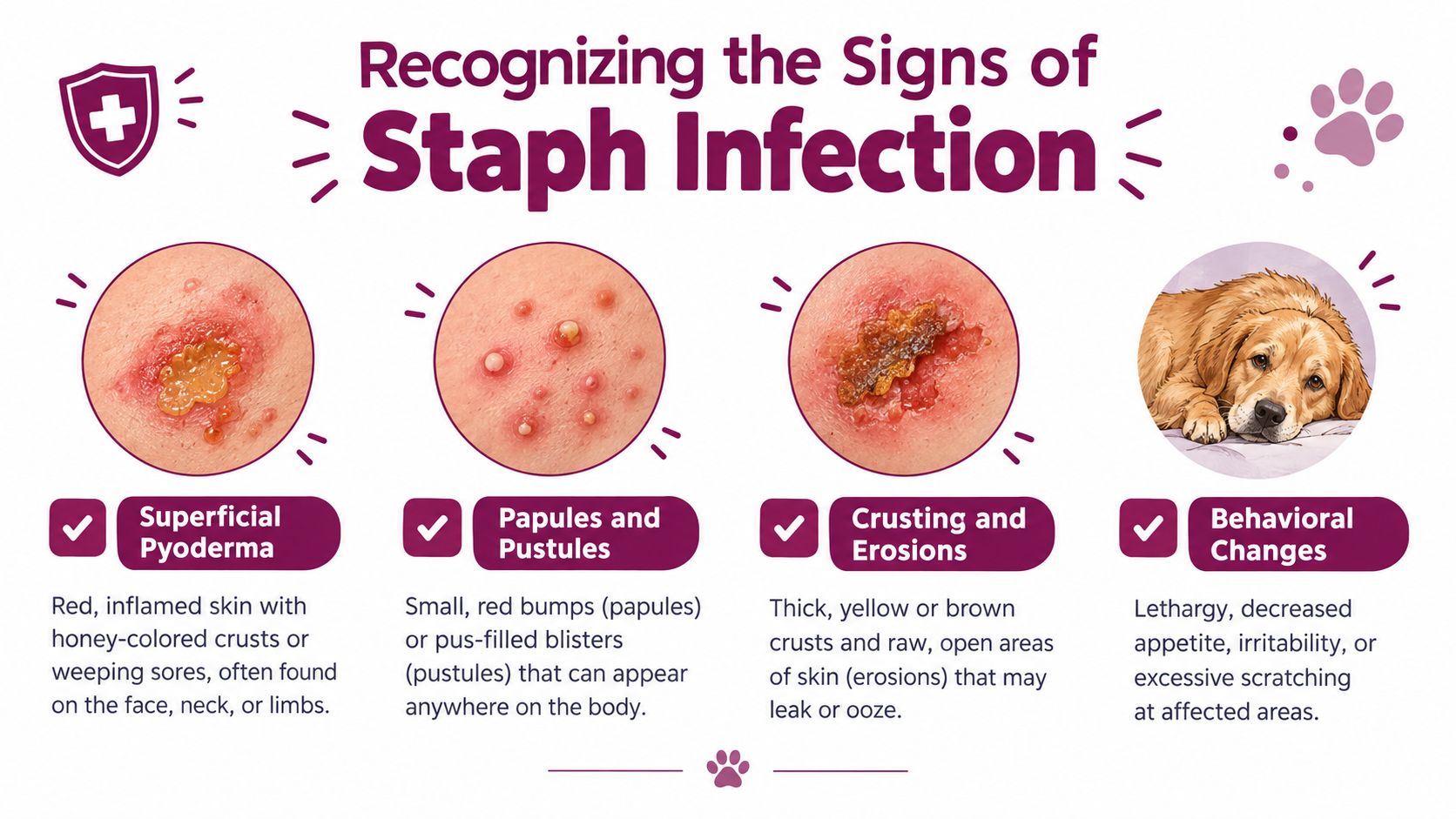
Superficial pyoderma affects the outer skin and hair follicles. In cats, possible signs include papules, pustules, crusting, erosions, and small areas of hair loss, although these findings can also occur with allergies, parasites, dermatophytosis, trauma, or overgrooming. Staphylococci are commonly associated with feline pyoderma, but finding them on the skin doesn't prove they're the primary cause (MSD Veterinary Manual).
Look closely at the pattern and progression rather than focusing on one bump. Lesions may occur on the belly, groin, armpits, or around the mouth. A cat may lick, scratch, chew, or avoid being touched in the affected area. Some cats show subtle discomfort by hiding more, grooming repeatedly, or becoming less willing to jump or play.
Surface changes and deeper warning signs
Deeper infection can look different from a mild surface rash. Nodules, hemorrhagic bullae, draining tracts, open wounds, or significant swelling suggest that bacteria may be affecting deeper tissue and should be assessed by a veterinarian. A lesion that keeps returning or fails to close also deserves more than home observation.
Before the appointment, note:
- How it started: Record when you first noticed the lesion and whether it expanded, crusted, opened, or began draining.
- What your cat is doing: Mention licking, scratching, pain, appetite changes, hiding, or unusual irritability.
- Relevant history: Tell the veterinarian about fleas, allergies, recent wounds, surgery, other illnesses, and previous skin problems.
- Medication exposure: List every recent antibiotic or topical product, including anything left over from another prescription.
A rash isn't automatically staph. Flea allergy, environmental or food-related allergic disease, fungal infection, mites, self-trauma, immune dysfunction, and endocrine disease can all damage the skin or create similar lesions. The right treatment depends on identifying the driver as well as deciding whether bacteria are involved.
Seek prompt care if the area is rapidly worsening, very painful, producing pus or blood, associated with a draining tract, or accompanied by marked lethargy. Don't squeeze an abscess or apply human creams unless your veterinarian specifically tells you to do so.
How Veterinarians Diagnose Staph in Cats
Veterinarians begin by asking whether the lesions look compatible with infection and whether the cat has an underlying reason for skin-barrier damage. Cytology is often an early step. The clinician collects material from the lesion and examines it under a microscope to look for coccoid bacteria and inflammatory cells.
That result helps answer an important question: are bacteria present in a meaningful lesion, or are they just sitting on the surface? A superficial swab can collect organisms from normal or colonized skin. A positive result therefore needs to be matched with lesion appearance, the depth and quality of the sample, and the cat's clinical signs.
One recent analysis of 1,278 feline Staphylococcus isolates found S. felis in 26%, S. aureus in 22%, and S. pseudintermedius in 15% of isolates. Skin and soft tissue accounted for 52% of isolation sites, while urinary samples accounted for 22% (feline isolate analysis). Those findings reinforce why species identification and infection site matter. “Staph” isn't enough information to predict behavior or antibiotic susceptibility.
When culture becomes especially useful
Culture grows the organism from a properly collected sample. Antimicrobial susceptibility testing then examines which drugs are active against that isolate. Merck Veterinary Manual recommends this approach for deep infections, recurrent or relapsing disease, nonhealing wounds, treatment failure, unusual organisms on cytology, multiple previous antimicrobial courses, or possible exposure to methicillin-resistant staphylococci in a healthcare setting (antibacterials for integumentary disease).
For a first-time, superficial infection, empirical treatment may sometimes be reasonable when cytology confirms coccoid bacteria. That doesn't mean every positive swab needs antibiotics. It means the veterinarian has judged that the clinical picture supports treatment while weighing the risks and benefits.
Your veterinarian may also investigate flea allergy, allergic skin disease, trauma, overgrooming, dermatophytosis, immune dysfunction, or endocrine disease. If the trigger remains active, bacteria may return after an apparently successful course.
For reliable decision-making about examinations, prescriptions, and follow-up, owners can review the importance of routine veterinary visits. The central question is not just “Which antibiotic kills staph?” It's “Is this bacteria causing the lesion, which organism is present, and what treatment is safest for this cat?”
Treatment Options for Feline Staph Infections
Treatment depends on where the infection is, how deep or extensive it is, whether it has returned, and what testing shows. A small, superficial lesion may improve with a veterinarian-directed topical antiseptic or antibacterial product. Applying treatment directly to the skin can limit whole-body exposure when disease is confined to a small area.
Systemic antibiotics become more relevant when infection is deep, widespread, recurrent, or failing to respond to topical care. They require a prescription and a veterinary plan. The veterinarian selects the drug, route, strength, frequency, and duration for that cat. A medication with a familiar-sounding name may still be the wrong choice.
Wounds and abscesses may need more than an antibiotic. Cleaning, debridement, opening, or drainage can remove damaged tissue or trapped material that blocks healing. The JAVMA report describes U.S.-approved options reported for feline wounds and abscesses, including amoxicillin-clavulanate, cefadroxil, orally administered amoxicillin, and injectable ampicillin. It also describes orally administered cephalexin as commonly used but not approved for that indication in cats, and reports that approximately 50% of staphylococcal infections are refractory to penicillins (JAVMA report).
Why the choice isn't based on the organism's name
A laboratory report naming staphylococcus does not, by itself, identify the best treatment. Feline isolates can include S. felis, S. aureus, or S. pseudintermedius, and their resistance patterns and clinical significance may differ. The veterinarian therefore weighs the organism, susceptibility results, infection site, and whether the bacteria are causing disease rather than only being carried on the skin.
Because penicillin resistance is common, a veterinarian may consider a cephalosporin in an appropriate case. A prescription product such as cephalexin for pets should be used only after the veterinarian has selected it for the diagnosed condition and supplied directions. The product page cannot determine whether a cat has colonization, superficial pyoderma, an abscess, fungal disease, or an allergy.
Treatment length varies. Merck Veterinary Manual states that superficial infections are generally treated for seven days after the skin has healed, often totaling about three to four weeks. Deep infections are generally treated for seven to 21 days after clinical resolution and may require approximately eight to 12 weeks when improvement continues (Merck Veterinary Manual treatment guidance). These are clinical guidelines, not instructions to change a prescription yourself.
Antimicrobial Stewardship and Prescription Safety
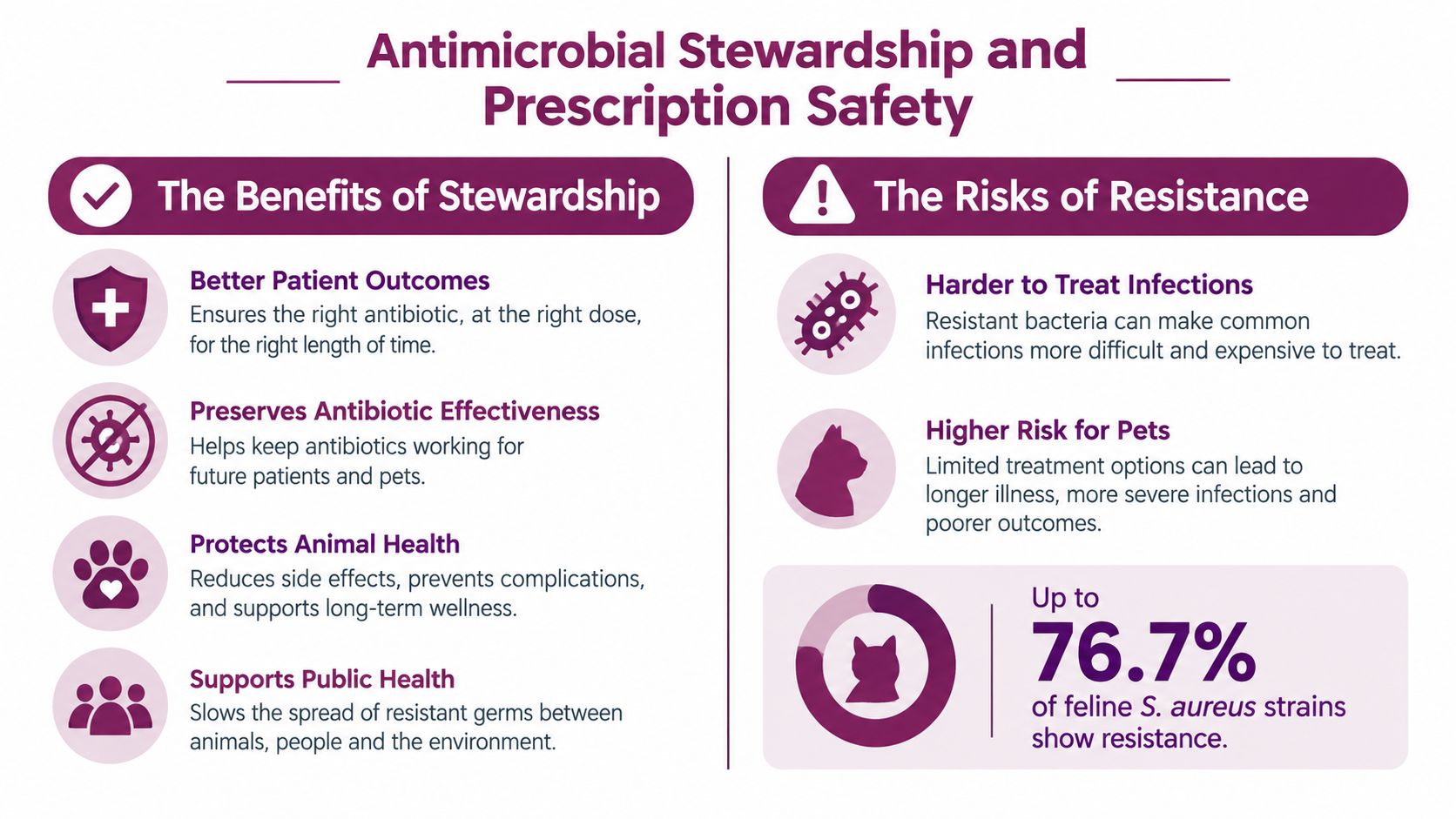
Antimicrobial stewardship means using an antibiotic only when it is likely to help, selecting it with the best available evidence, and giving it exactly as prescribed. This protects your cat from ineffective treatment and helps preserve useful drugs for future infections.
Resistance is a substantial concern in feline staphylococcal disease. A 15-year retrospective analysis of 1,278 feline Staphylococcus isolates found that 54% were resistant to at least one antimicrobial and 19% met the study's definition of multidrug resistance. Susceptibility was lowest for penicillin, at 48%, and ampicillin, at 49%. Among feline S. aureus isolates, 76.7% were resistant to penicillin G and 23.3% were resistant to at least three antimicrobial classes (feline antimicrobial susceptibility analysis).
Safer decisions at home
- Don't reuse leftovers: A drug prescribed for a previous illness, another cat, or another species may be inactive against the current organism or unsuitable for the current problem.
- Avoid unapproved self-treatment: Over-the-counter antibacterial products, human medications, and household antiseptics can irritate tissue or delay the correct diagnosis.
- Follow the prescription precisely: Never change the dose or frequency, combine medications, or stop early without veterinary direction.
- Report a poor response: Worsening lesions, new drainage, recurrence, or failure to improve may call for reassessment and culture rather than an unplanned drug change.
Methicillin-resistant staphylococci can narrow treatment choices. In one study of feline MRSA, all MRSA strains were resistant to fluoroquinolone and macrolide antimicrobials, while methicillin-susceptible strains retained high susceptibility to those classes and beta-lactam drugs (feline MRSA susceptibility study). This is why “stronger” isn't a reliable substitute for “appropriate.”
Laboratory testing measures whether a medication inhibits the isolated organism, a concept explored in this overview of measuring antimicrobial effectiveness. Your veterinarian then combines that result with the infection site, minimum inhibitory concentration, medical history, and drug safety profile. Additional guidance on responsible use is available through pet antibiotic safety information.
Prescription orders are processed only after veterinary authorization and shipped through licensed channels to eligible U.S. states. That process helps connect the prescribed product with the correct patient and veterinary instructions.
Home Care and Prevention Strategies
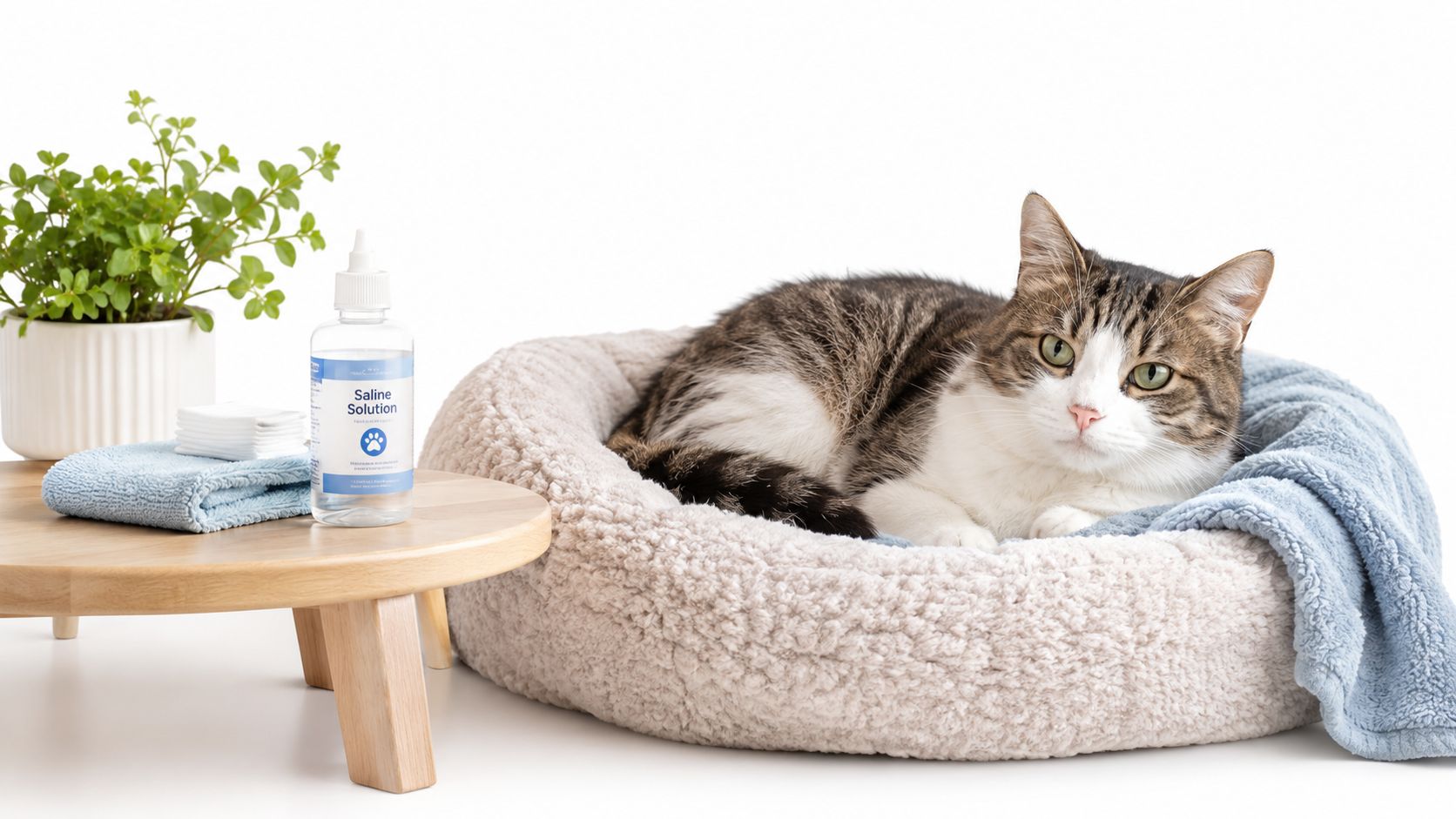
Home care should support, not replace, veterinary treatment. Keep the affected area clean and dry according to your veterinarian's instructions, and don't apply hydrogen peroxide, creams, or other products unless they were specifically recommended. If licking or chewing is delaying healing, ask about an appropriate cone, recovery garment, or other protective option.
Give every prescribed dose for the full course unless the veterinarian changes the plan. Improvement in redness or comfort doesn't prove that the underlying infection has cleared. Contact the clinic if the lesion worsens, opens, develops discharge, returns, or fails to improve.
Preventing recurrence usually means treating the reason the skin became vulnerable. That may involve consistent flea control, allergy management, treatment of dermatophytosis, or evaluation for immune or endocrine disease. Wash bedding regularly and use sensible hand hygiene after touching draining lesions, particularly if your veterinarian suspects a methicillin-resistant organism.
For topical products and guidance related to irritated skin, you can review topical medication for itchy skin. Keep follow-up appointments even when your cat seems comfortable, because the veterinarian may need to confirm healing or reconsider the diagnosis.
Bandana Rx offers prescription fulfillment and preventive and over-the-counter care products for cats, with prescription orders processed after veterinary authorization. Visit Bandana Rx to coordinate an authorized refill or explore relevant pet-care options while your veterinarian manages the infection.