

Indoor cats aren't automatically protected from heartworm disease, and the product with the most familiar name isn't automatically the best heartworm prevention for cats. A mosquito can enter a home, feline testing can miss important stages of infection, and cats have no FDA-approved medication that kills adult heartworms. The safer way to make this decision is to combine year-round prevention, the correct product and dose, consistent timing, and veterinary-guided screening.
The American Heartworm Society recommends continuous prevention for cats because prevention is the only reliable protection available. Kittens should begin as early as the product label permits, but no later than 8 weeks of age, and preventive medication must be administered strictly on schedule. Depending on the product, that schedule may be monthly or every six months for an injectable option. (American Heartworm Society feline guidance)
| Question | What matters most |
|---|---|
| Does an indoor cat need prevention? | Yes. Mosquitoes can enter homes, so indoor status doesn't eliminate exposure. |
| Is there an adult heartworm treatment for cats? | No FDA-approved treatment is available to kill adult heartworms in cats. |
| How often is prevention given? | Many oral and topical products are monthly. Some injectable options are given every 6 months. |
| Does a negative test rule out infection? | No. Feline antibody and antigen results can provide different information, and a negative antigen result doesn't reliably exclude exposure or infection. |
| Which product is best? | The option your veterinarian selects based on age, weight, health, lifestyle, administration and adherence. |
Table of Contents
- Why Prevention Is the Only Protection for Cats
- How Heartworm Disease and Testing Differ in Cats
- Comparing Available Heartworm Preventive Options for Cats
- Dosing Schedules and Timing That Keep Protection Continuous
- Safety Profiles and Risks of Off Label or OTC Alternatives
- Choosing the Right Prevention for Your Cat's Lifestyle
- Working With Your Veterinarian and Managing Refills on BandanaRx
Why Prevention Is the Only Protection for Cats
Indoor living lowers some risks, but it does not remove heartworm exposure. Mosquitoes can get indoors, and a single bite can transmit immature larvae. The American Heartworm Society recommends year-round prevention for cats because regular preventive medication is the only established way to prevent feline heartworm disease. (American Heartworm Society guidance for cat owners)
Preventives target developing heartworm stages before they mature. That makes timing part of the protection. A missed dose cannot be corrected by waiting for symptoms, especially because feline heartworm disease may cause breathing or general health changes that resemble other illnesses. Some infected cats show no obvious signs at first.
The feline treatment gap
Cats and dogs do not have the same treatment options. There is no FDA-approved medication for killing adult heartworms in cats, so prevention matters especially in feline care. If infection is suspected, the veterinarian must assess the individual cat and manage the disease and its complications rather than rely on an approved adult-killing drug. (American Heartworm Society feline guidelines)
Outdoor access is not the only factor that affects a prevention decision. An American Heartworm Society cited estimate found adult heartworm infections in shelter cats at about 5% to 15% of the rate seen in unprotected dogs in the same area. A U.S. and Canada study estimated feline heartworm seroprevalence at 0.4%. Extrapolated to 85.8 million owned cats in the United States, that estimate could represent more than 300,000 infected cats.
The practical question is not whether a product sounds strongest. It is whether your cat has continuous, veterinarian-selected protection and an appropriate screening plan.
- Continuous coverage: Give the prescribed preventive throughout the year instead of relying on indoor-only or seasonal assumptions.
- Label-based timing: Follow the product's monthly or injectable schedule exactly.
- Veterinary selection: Let age, weight, medical history, other medications, and administration fit guide the choice.
- Appropriate screening: Ask which testing approach your veterinarian recommends, since feline screening may not provide a simple yes-or-no answer.
For a broader explanation of how to protect cats against heartworms, owners can review prevention and related care together. The main point is clear: after infection, feline treatment choices are limited, so prevention provides the primary protection.
How Heartworm Disease and Testing Differ in Cats
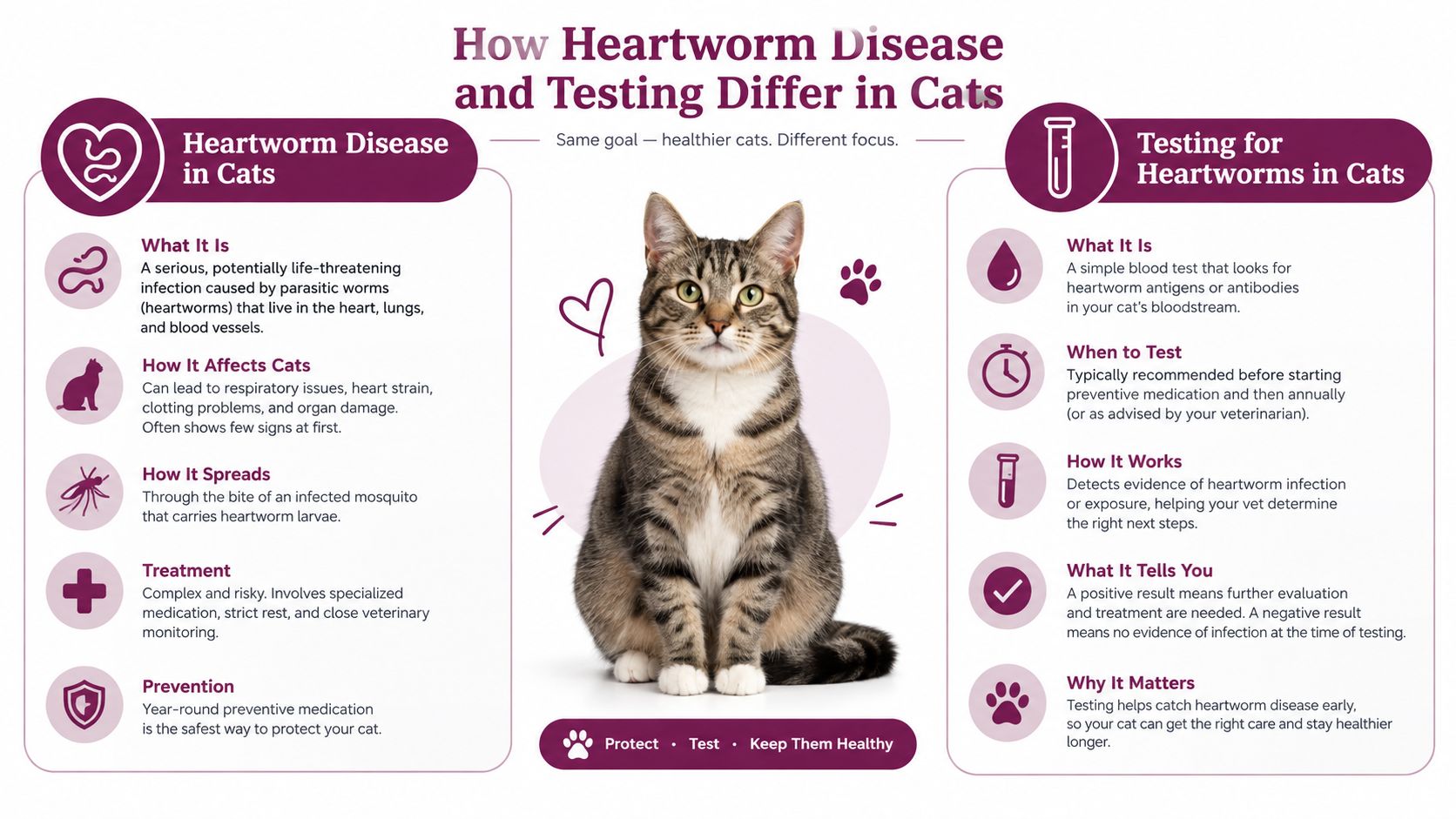
Heartworm testing is more complicated in cats than many owners expect. A dog's positive test often fits a more familiar pattern, while feline infection may involve a small number of worms, immature stages, or an immune response without detectable adult female worms. That means veterinarians may need to interpret several pieces of information together rather than treat one negative result as conclusive.
A heartworm antibody test indicates that a cat's immune system has reacted to heartworm exposure. An antigen test looks for evidence associated with adult female heartworms. These tests answer different questions, so a cat may have antibody evidence while producing a negative antigen result. A negative antigen test therefore doesn't reliably rule out exposure or infection in a cat.
Reading the testing pattern
A recent nationwide survey found heartworm antibodies in 3.5% of cats across 26 U.S. states, while antigen was detected in 0.3%. The difference illustrates why feline testing can understate exposure if owners focus only on antigen results. (AAHA discussion of feline screening updates)
The same recent guidance has shifted toward annual screening for all cats using both antigen and antibody tests. That doesn't mean every cat has the same testing needs in every circumstance. A veterinarian may consider travel, regional parasite risk, mosquito exposure, preventive history and clinical signs when deciding how to interpret results and whether additional evaluation is appropriate.
Prevention remains necessary after a negative result
Testing and prevention serve different purposes. Testing can help identify exposure or support an investigation when a cat is ill. Prevention reduces the chance that developing larvae will progress after a mosquito bite. Because testing has limitations in cats, a negative result shouldn't become a reason to stop a veterinarian-approved preventive plan.
Owners should bring the cat's medication history to the appointment, including missed or late doses and any product changes. For more context on why routine examinations matter, see the importance of routine veterinary visits. Regular care gives the veterinarian a chance to combine test results with the cat's physical condition and preventive history.
Comparing Available Heartworm Preventive Options for Cats
The best heartworm prevention for cats is not a single product. It is a year-round plan that combines a veterinarian-selected preventive with appropriate screening. Product choice depends on the active ingredient, delivery method, dosing interval, age and weight requirements, and whether the medication also addresses other parasites. A preventive only helps when the cat can receive it correctly and on schedule.
| Active Ingredient | Delivery Form | Dosing Interval | Prescription Status |
|---|---|---|---|
| Milbemycin oxime | Oral chewable | Monthly | Prescription medication |
| Selamectin | Topical | Monthly | Prescription medication |
| Moxidectin with imidacloprid | Topical combination | Monthly | Prescription medication |
| Eprinomectin in a topical combination | Topical combination | Monthly | Prescription medication |
| Moxidectin in an applicable topical product | Topical | Every other month for the listed option | Prescription medication |
Oral milbemycin oxime
An oral option may fit a cat that accepts medication by mouth calmly. HEARTGARD for Cats is labeled by the FDA to prevent feline heartworm disease by eliminating the tissue stage of heartworm larvae for 30 days after infection. Its label specifies oral administration at monthly intervals during mosquito season. (FDA veterinary product label for HEARTGARD for Cats)
The chewable strength is selected according to body weight. The veterinarian should confirm the cat's current weight, age and health before prescribing it, and the owner must be able to give the medication reliably. A cat that repeatedly refuses oral treatment may be better suited to another delivery method.
Monthly topical options
Topical prevention can help when oral medication causes a struggle. Selamectin products are applied to the skin, and topical moxidectin combinations also use a monthly schedule. Some topical formulations pair heartworm prevention with protection against other parasites, which may reduce the number of separate treatments a cat receives.
Application technique still matters. The owner needs to use the tube intended for the cat's weight, place it on the labeled skin site and maintain the prescribed interval. A topical is not automatically easier if the cat resists application or if people and other pets could touch the treated area before it is safe.
The practical differentiator
The most useful comparison is whether the selected product fits your cat's weight, temperament, health profile and your ability to maintain prevention throughout the year.
For example, Advantage Multi for Cats is a topical combination that may be considered when the veterinarian wants a particular active-ingredient profile and broader parasite coverage. That does not make it suitable for every cat. Product names, tube sizes and application methods can look similar, so owners should not substitute one medication for another without veterinary direction.
Dosing Schedules and Timing That Keep Protection Continuous
The best preventive is not a product on the shelf. It is a product given at the labeled interval, all year when the veterinarian recommends continuous coverage. Monthly oral and topical preventives are common, while injectable options may use a different interval. The exact medication, strength and schedule must come from the veterinarian because formulations are not interchangeable.
Start with the label and the cat's age
Kittens can begin prevention as soon as the selected product's label permits. The veterinarian still needs the kitten's current weight and health history before choosing a prescription. Age helps determine eligibility, but it does not determine the correct strength.
HEARTGARD for Cats shows why weight-based dosing requires care. Its labeling uses a minimum ivermectin dose of 24 micrograms per kilogram and different chewable strengths for cats in different weight ranges. Cats over 15 pounds require the labeled combination of chewables rather than an improvised adjustment. (DailyMed HEARTGARD labeling)
These details are instructions, not a guide for estimating a dose by appearance. Do not use a dog product or alter a feline product without veterinary direction.
Follow product-specific exposure windows
Selamectin labeling allows heartworm prevention to start year-round or within one month after the cat's first mosquito exposure. Administration then continues monthly through mosquito season, with the final dose given within one month after the last exposure. When changing from another preventive, the first selamectin dose should be given within a month of the previous medication's last dose. (DailyMed selamectin labeling)
Advantage Multi for Cats uses its own timing instructions. The label permits starting year-round or at least one month before the first expected mosquito exposure, then continuing monthly until one month after the last exposure. Its labeled minimum dose is 4.5 mg per pound of imidacloprid and 0.45 mg per pound of moxidectin, applied topically once a month. (DailyMed Advantage Multi labeling)
A missed dose creates a timing question, not an invitation to guess. Contact the veterinarian before doubling a dose or changing the interval.
A simple adherence checklist
- Record the dose date: Use a calendar, reminder or pharmacy refill schedule.
- Keep the packaging: The label helps verify the active ingredient, strength and instructions.
- Recheck growing kittens: A kitten may enter a different weight range as it grows.
- Plan travel early: Share the prevention history if the cat will visit another region.
- Ask about screening: Testing may be difficult to interpret in cats, so prevention and veterinary assessment work together.
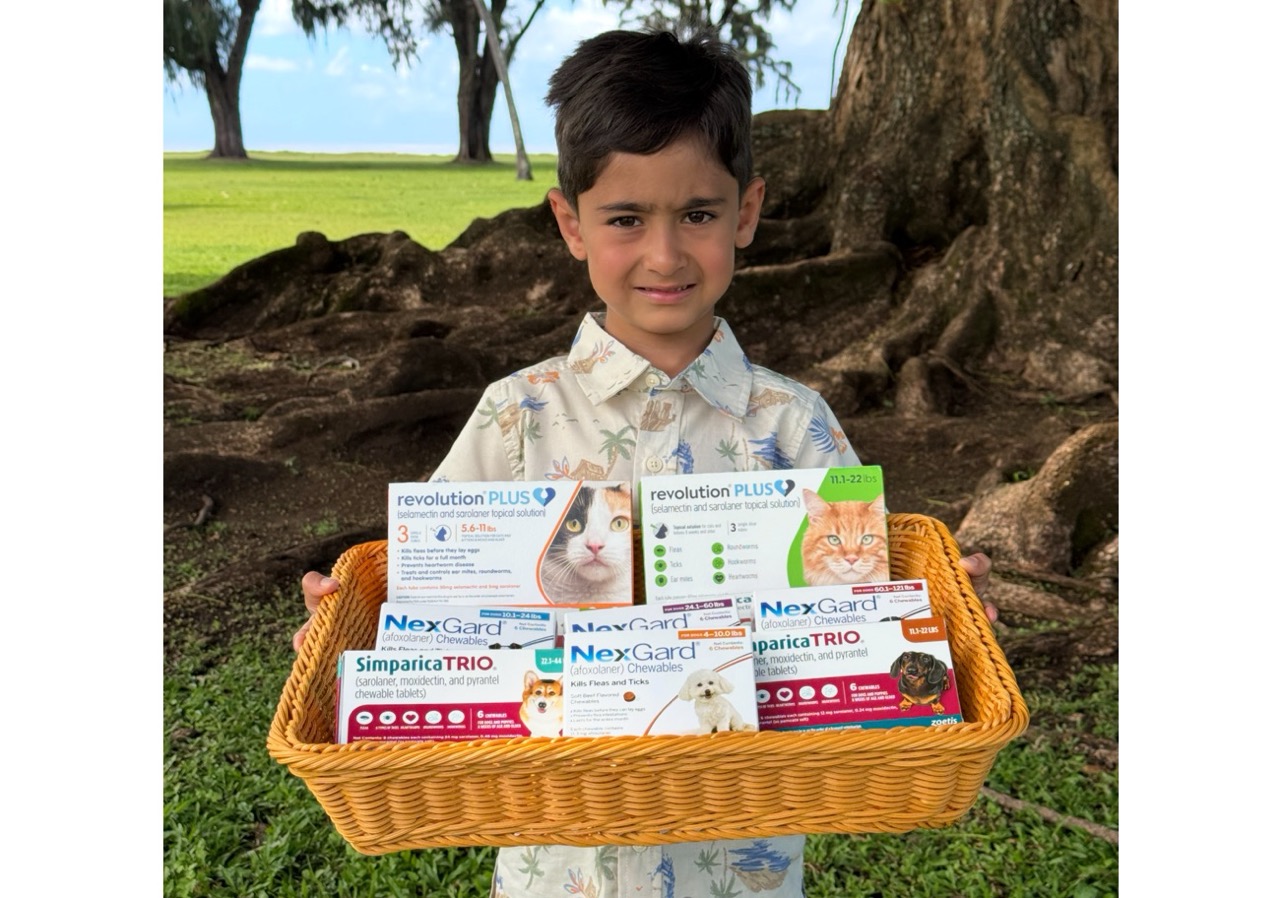
For a monthly topical combination option, owners can review Revolution Plus for Cats with their veterinarian and confirm that its labeled use, strength and application instructions fit the cat.
Safety Profiles and Risks of Off Label or OTC Alternatives
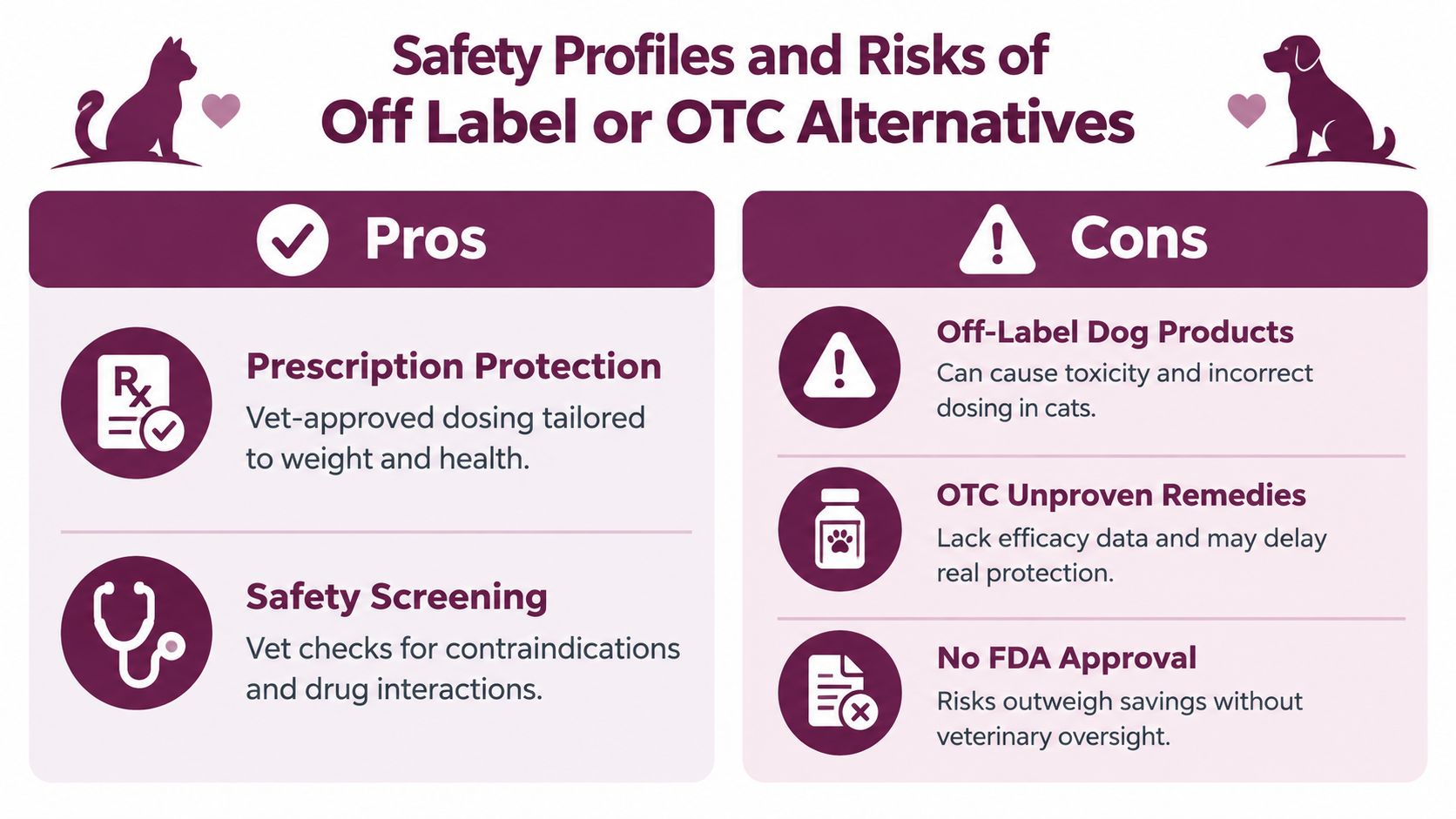
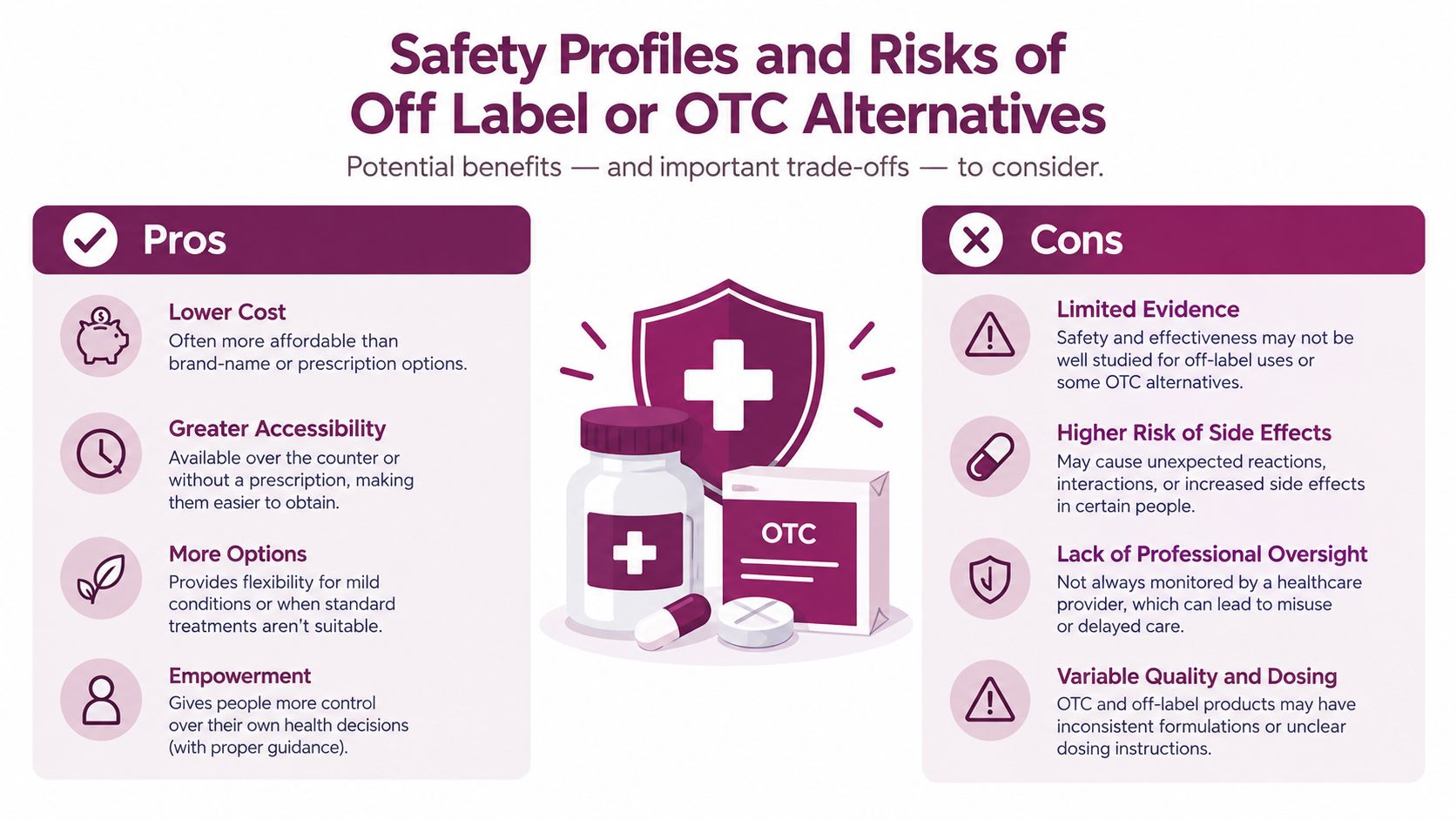
A heartworm preventive is a medication, not a general wellness product. Prescription status matters because a veterinarian can confirm the cat's species, age, current weight, medical history and other treatments before selecting a product. That review also gives the owner a place to discuss contraindications, possible interactions and what to do if the cat is ill or a dose is missed.
Dog-formulated products should never be repurposed for cats unless a veterinarian has specifically directed an appropriate use. A product can contain an ingredient, concentration or delivery system that isn't suitable for feline dosing. “Natural,” over-the-counter or unproven remedies also shouldn't be treated as equivalent to an FDA-labeled preventive.
Match the decision to the cat
| Cat circumstance | Safety question for the veterinarian |
|---|---|
| Kitten or small cat | Is the cat old and heavy enough for the selected label and strength? |
| Senior cat | Does the overall health profile support the chosen medication? |
| Cat taking other medications | Could the preventive affect or be affected by another treatment? |
| Difficult-to-handle cat | Which approved delivery method can the owner administer accurately? |
| Recently adopted cat | What is the preventive and testing history, and what should happen next? |
A precise weight matters. Owners shouldn't split, combine or substitute tubes or chewables unless the veterinarian and product labeling support that approach. The same caution applies to switching between active ingredients. A new product may have different start, stop and exposure rules.
Why marketing claims deserve scrutiny
No preventive should be described as a cure for established adult heartworm infection in cats. Prevention and treatment are different medical purposes, and a product's label controls how it should be used. Owners considering nonprescription parasite products can also review the effectiveness of over-the-counter flea products, while remembering that flea control information doesn't replace feline heartworm guidance.
A lower price or easier purchase doesn't make an unapproved product a safer choice. Accurate species, weight and prescription matching come first.
If a cat has breathing changes, unexplained illness or a suspected exposure, the owner should contact a veterinarian instead of trying an alternative remedy. The veterinarian may recommend testing, observation or additional evaluation based on the cat's individual findings.
Choosing the Right Prevention for Your Cat's Lifestyle
The best choice is not the product with the longest list of features. It is a year-round prevention plan that fits the cat's exposure, health, weight and the owner's routine, with screening decisions made by the veterinarian. Indoor living lowers some exposures, but mosquitoes can still enter through doors, windows or other openings. Prevention should therefore be based on context, not the assumption that an indoor cat has no risk.
Indoor-only cats
An indoor cat may never go outside and still encounter a mosquito indoors. If prevention has been skipped because the cat stays home, ask the veterinarian whether a year-round schedule is appropriate.
If handling is easy but outdoor exposure seems minimal, discuss whether a monthly oral or topical product can become a dependable household routine. The right option is the one the owner can administer correctly and repeat on schedule.
Indoor-outdoor cats
Outdoor access can increase mosquito exposure and make medication routines less predictable. A monthly topical may suit an owner who can apply medication but cannot reliably give an oral product. A combination preventive may also address other parasite concerns, if the veterinarian recommends it.
If outdoor access is regular, ask the veterinarian to review continuous prevention and whether screening fits the cat's history. Feline testing has limits, so a test result is one piece of the decision rather than a substitute for prevention.
Kittens and growing cats
Kittens can pass through weight ranges quickly. The preventive must match the product label and the veterinarian's assessment, with the dose reviewed as the kitten grows.
If the kitten is approaching a new weight range, arrange a medication review before selecting a different strength. Do not estimate a dose from an older measurement.
Senior or medically complex cats
A senior cat, or one receiving other medicines, may need a closer review of medical history and possible interactions. Product selection should reflect the cat's full health picture, not convenience alone.
If your older cat has ongoing treatment, bring a complete medication and supplement list to the appointment. Changes in health may affect the veterinarian's recommendation.
Traveling cats
Travel can change mosquito exposure and disrupt refill routines. Carry the product information, confirm the schedule before leaving, and follow the veterinarian's plan while away.
Working With Your Veterinarian and Managing Refills on BandanaRx
A productive veterinary visit starts with practical information. Bring your cat's current weight, medication list, preventive history, missed-dose details and travel plans. Ask whether annual screening with both antigen and antibody testing is appropriate, and ask exactly what to do if a dose is late.
Prescription fulfillment should preserve the veterinarian's authorization rather than bypass it. Bandana Rx processes prescription orders after veterinary authorization and offers prescription verification, scheduled delivery options where available, order tracking and the RxVault portal for prescribers. The pharmacy lists free standard shipping on orders over $49, excluding cold-shipped products, according to the publisher information provided for this article.
For a preventive that needs regular reordering, Buy Once can suit owners who prefer to manage each purchase, while AutoShip may help maintain a recurring schedule when that option is available for the selected product. Confirm the product's current prescription requirements, supply details and purchasing options before placing an order. If your veterinarian has already authorized a feline preventive, you can explore cat heartworm medications on BandanaRx.
A refill reminder can support adherence, but it doesn't replace veterinary review. Contact the clinic before restarting, combining or changing products, especially after a missed dose, a new diagnosis or a change in the cat's other medications.
Bandana Rx offers prescription feline heartworm preventives and refill coordination after veterinary authorization, with ordering and tracking tools designed for ongoing medication routines. Visit Bandana Rx to review available cat heartworm options and coordinate the product your veterinarian recommends.