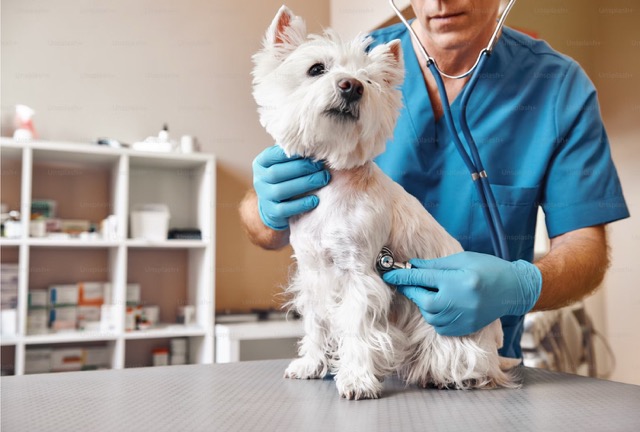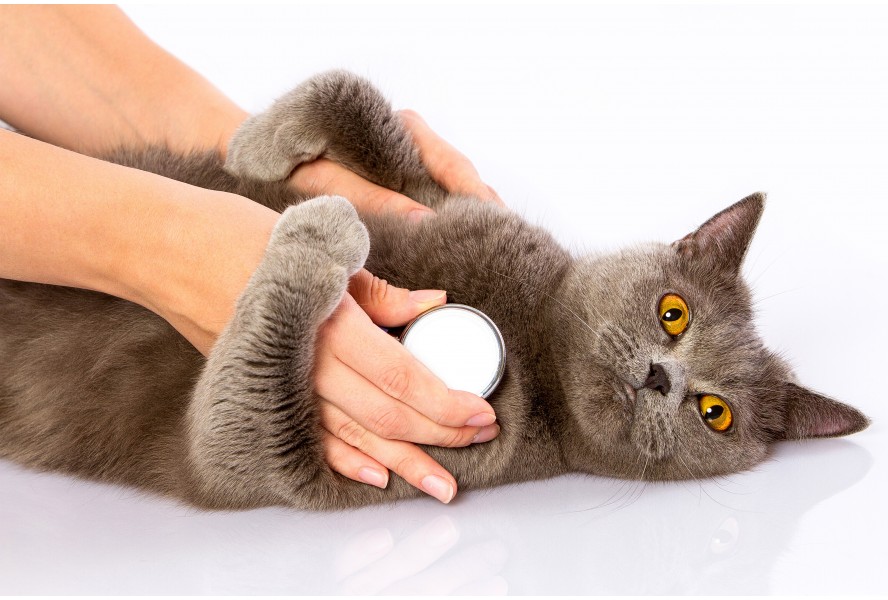



Ofloxacin eye drops for cats are prescription-only fluoroquinolone antibiotics used specifically for bacterial eye infections such as conjunctivitis and corneal ulcers. They should never be used without a veterinarian's diagnosis and guidance.
You may be looking at your cat right now, noticing a half-closed eye, redness, or discharge that wasn't there yesterday. It's natural to wonder whether a few drops from the medicine cabinet could help. Eye problems in cats can look similar while needing very different treatments, so the safest next step is an examination rather than a trial of leftover medication.
Table of Contents
- Recognizing When Your Cat Needs Eye Medication
- Understanding Ofloxacin as a Feline Ophthalmic Antibiotic
- Proper Administration Technique for Cat Eye Drops
- Dosing Frequency and Treatment Duration Guidelines
- Safety Considerations and Potential Side Effects
- Comparing Ofloxacin with Other Feline Eye Antibiotics
Recognizing When Your Cat Needs Eye Medication
Maya's owner first noticed a small amount of watery discharge after breakfast. Maya was squinting, but she was still eating and moving around normally. By evening, the discharge had become thicker, the eyelids looked irritated, and Maya pulled away whenever anyone tried to look at the eye.
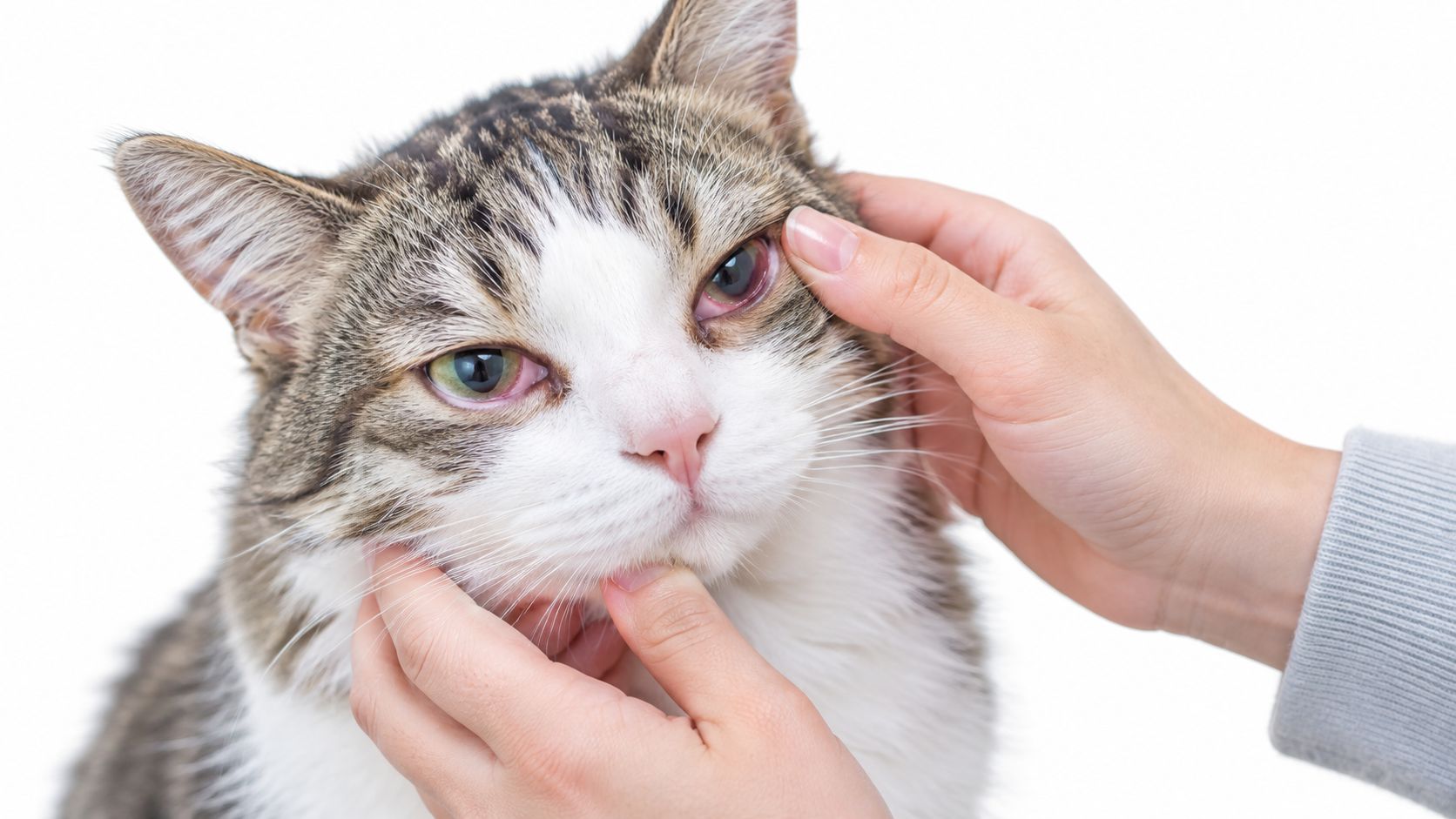
That pattern deserves veterinary attention. Squinting, persistent redness, swelling, cloudiness, pain, or yellowish discharge can indicate more than minor dust or temporary irritation. A veterinarian may use fluorescein staining and a complete eye examination to check for a corneal ulcer, assess the depth of injury, and look for causes such as trauma, eyelid problems, or feline herpesvirus.
Signs that shouldn't wait
Arrange prompt veterinary care if your cat:
- Keeps the eye partly or completely closed: Squinting and blepharospasm often signal ocular pain.
- Develops a cloudy, blue, gray, brown, or white area: Any change in corneal clarity can require urgent assessment.
- Has thick or worsening discharge: Discharge may accompany bacterial disease, viral disease, or a damaged corneal surface.
- Rubs the face or avoids light: Self-trauma can worsen an ulcer.
- Shows swelling, marked redness, or sudden vision changes: These signs need professional evaluation rather than home treatment.
Bacterial conjunctivitis is only one possibility. Viral disease, especially feline herpesvirus, allergic or irritant reactions, foreign material, eyelid abnormalities, and corneal ulcers can produce overlapping symptoms. Ofloxacin may be appropriate when susceptible bacteria are involved, but it won't treat viral or fungal disease.
A useful place to review general eye-inflammation information is Bandana Rx's cat eye inflammation resource. Even when discharge looks mild, avoid using human eye drops, steroid products, or another pet's prescription unless your veterinarian specifically approves it. A damaged cornea can deteriorate while a surface symptom temporarily appears less noticeable.
Practical rule: A painful or cloudy eye is an examination problem, not a medication-guessing problem.
Understanding Ofloxacin as a Feline Ophthalmic Antibiotic
If your cat needs treatment several times a day, success depends on more than choosing an antibiotic. Each dose must reach the eye without contaminating the bottle, and the schedule must be followed closely enough to maintain antibacterial coverage.
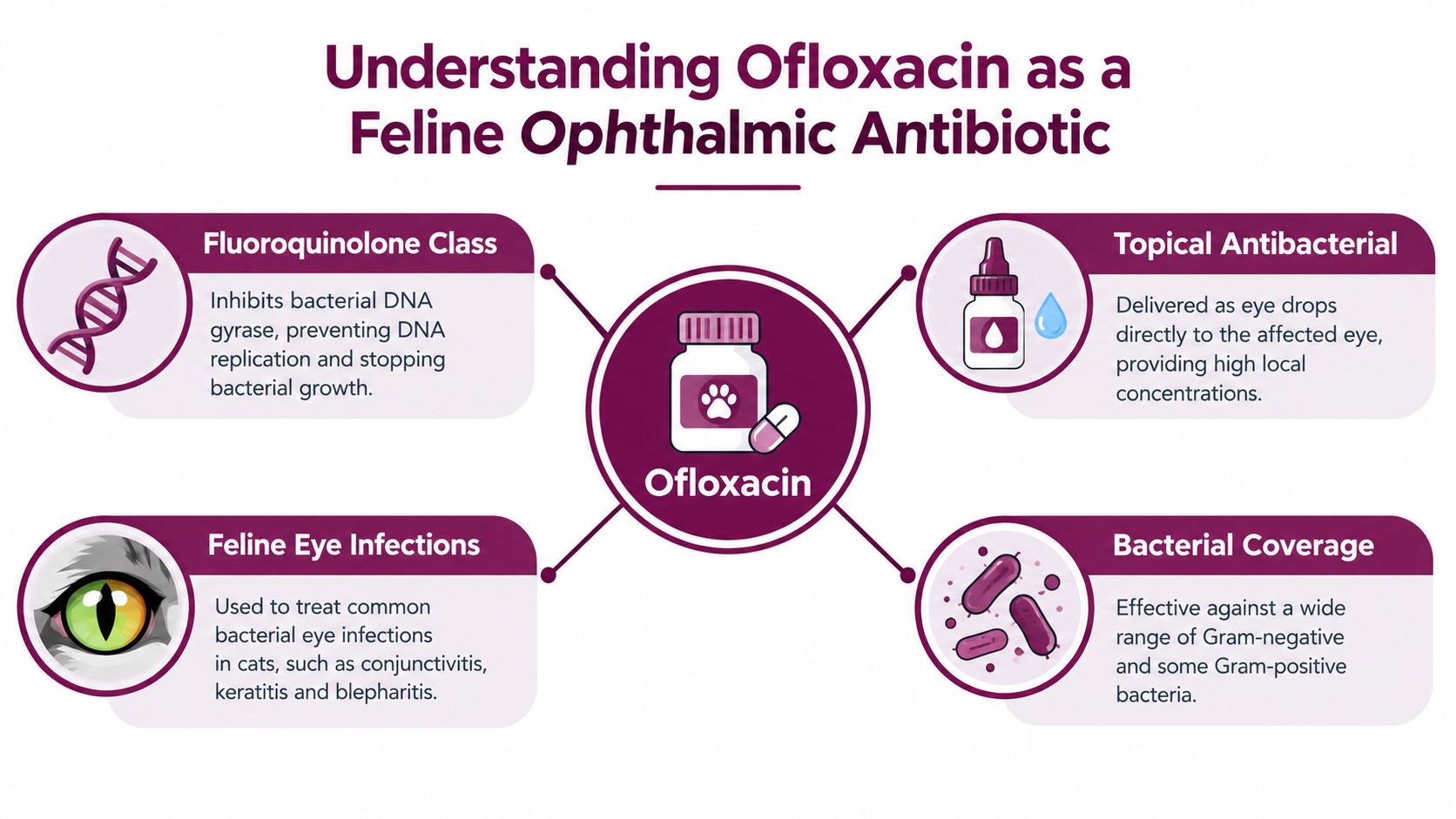
Ofloxacin is a fluoroquinolone antibacterial applied to the eye. It disrupts bacterial DNA processes needed for replication, so it can act against susceptible organisms causing external ocular infections. Veterinary references describe its use for bacterial conjunctivitis, bacterial keratitis including corneal ulcers, blepharitis, blepharoconjunctivitis, and dacryocystitis when the organisms are susceptible to ofloxacin.
Its role is targeted, not universal. Second-generation fluoroquinolones, including ofloxacin, have expanded gram-negative activity relevant to organisms such as Pseudomonas aeruginosa. That coverage can matter in severe corneal infections, but the veterinarian still needs to assess the eye and choose treatment based on the findings.
What the medicine can and cannot address
Ofloxacin may help when susceptible bacteria are suspected or confirmed. It does not eliminate feline herpesvirus, cure fungal infection, correct an inward-rolling eyelid, remove a foreign body, or repair a deep corneal defect. Those conditions may call for antiviral treatment, mechanical correction, additional testing, pain control, or surgery.
A corneal ulcer can therefore need more than an antibiotic. Bacteria may infect a surface already damaged by another problem, making ofloxacin one part of treatment rather than the complete plan.
Strength and formulation
Sterile ofloxacin ophthalmic solution is commonly labeled at 0.3%, equal to 3 mg/mL, and may contain benzalkonium chloride 0.005% as a preservative according to DailyMed labeling. The prescribed product matters. Human labeling gives human dosing, not a universal feline regimen, and the FDA-approved human product is not labeled for animal use.
A veterinarian may use the examination, cytology, culture, and the eye's progression to select treatment. Give every dose at the prescribed time, because irregular spacing can reduce coverage, while extra drops do not make the medicine work faster. For context, ciprofloxacin ophthalmic information concerns another fluoroquinolone option, not a substitute for the prescribed product.
Proper Administration Technique for Cat Eye Drops
The bottle can be appropriate and the prescription can be correct, yet treatment may still fail if the dropper tip becomes contaminated or the medication misses the eye. Cats blink quickly, tear constantly, and often resist restraint, so preparation makes a real difference.
Before opening the bottle
Wash and dry your hands. Read the veterinary label, check whether the product requires shaking, and inspect the solution for changes your veterinarian or pharmacist has told you to report. Don't warm the bottle in a microwave or use hot water. If your veterinarian approves bringing the solution closer to room temperature, warm the closed container gently in your hand.
Choose a quiet room and have treats ready. If your cat is likely to struggle, ask another adult to help rather than forcing the eye open alone. A calm helper can steady the head while you control the bottle.
Applying the drop
- Position your cat securely: Keep the body against yours or use a towel only if your cat tolerates it. Avoid pressure on the neck or chest.
- Support the head: Place one hand beneath the jaw or over the top of the head, keeping the face steady without squeezing.
- Create a small opening: Use a finger to gently draw down the lower eyelid, exposing the conjunctival sac.
- Place the prescribed drop: Hold the bottle above the eye and let the drop fall into the sac. Don't touch the cornea, eyelids, fur, or any other surface with the nozzle.
- Release and reward: Allow your cat to blink naturally, then offer calm praise or a treat if safe.
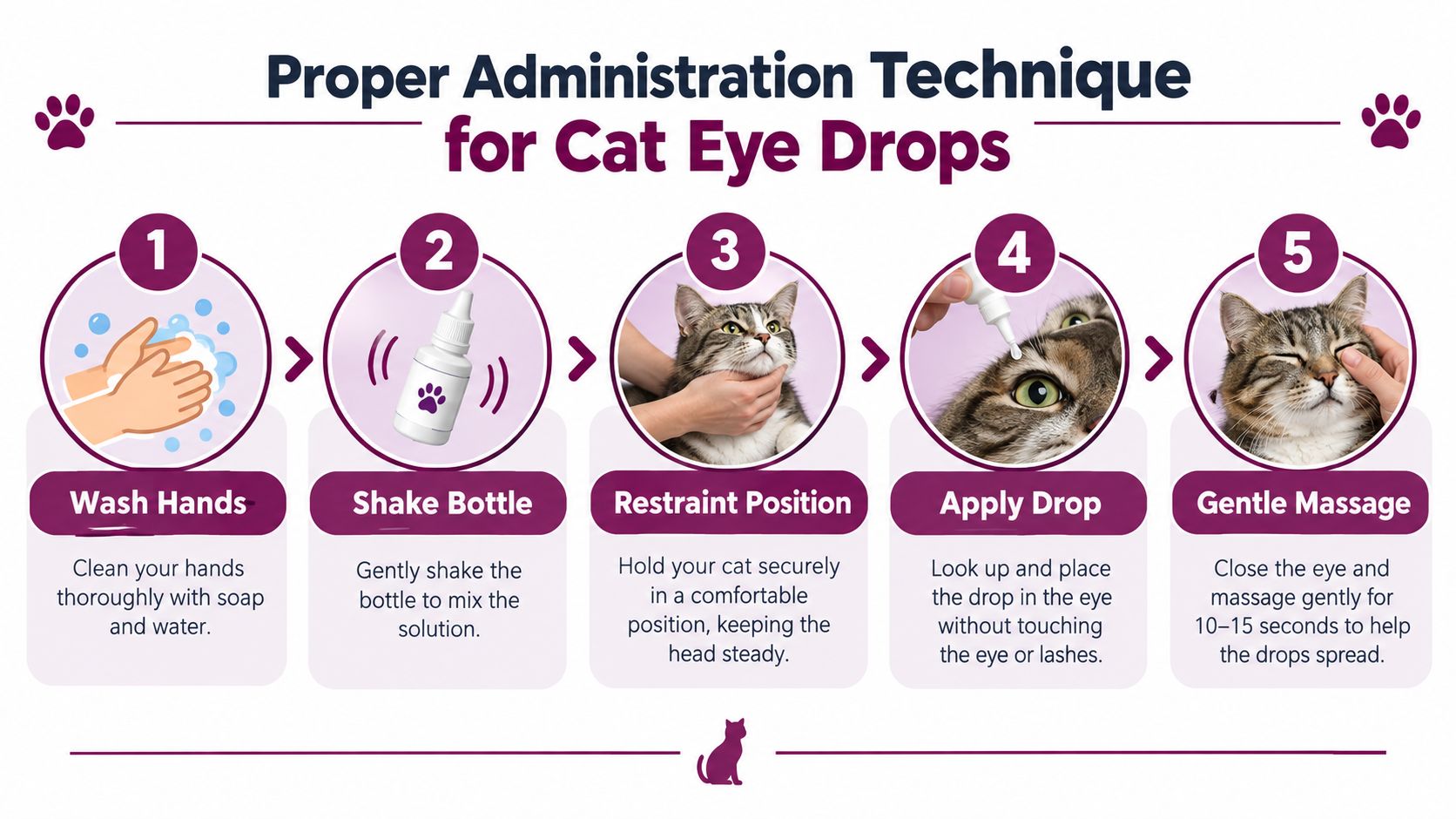
Don't massage the eyeball. If your veterinarian has prescribed more than one ophthalmic product, ask how long to wait between applications and whether an ointment should be applied after a solution. A cleaning product isn't a substitute for an antibiotic, but a veterinary eye-cleaning product such as Optixcare Eye Cleaning Solution may be relevant for cleaning around the eye when your veterinarian considers it appropriate.
If the bottle tip touches the eye or another surface, stop and contact the pharmacy or veterinary clinic for advice about contamination. Don't wipe the nozzle with a household tissue and continue automatically. Sterility protects the already irritated ocular surface.
Dosing Frequency and Treatment Duration Guidelines
A cat may look better after a few doses while bacteria remain active. The schedule and sterile handling work together like a timed relay: each dose must arrive before the previous protection fades, and contamination can undermine the treatment. Follow the prescription written for your cat, never a human package insert or another animal's regimen.
Product leaflets for the human-labelled solution describe a baseline of one drop every six hours, with more intensive treatment in serious cases, including one drop every fifteen minutes for up to four applications at the beginning according to veterinary product information. These ranges are background information, not a feline prescription. Your veterinarian must choose the interval, concentration, and duration for your cat's diagnosis.
A superficial bacterial problem and a deep, rapidly progressing ulcer require different plans. In a 13-cat study of deep ulcerative keratitis, 10 cats received topical 0.3% ofloxacin, typically one drop every two hours, with intervals ranging from every two to six hours. All 13 ulcers resolved under intensive medical management, and the median time to re-epithelialization was 21 days reported in the feline study. Ofloxacin was one part of broader care, not a stand-alone solution.
Keeping the schedule reliable
Tears and blinking dilute eye medicine quickly. Set alarms, use a written chart, or share phone reminders so doses stay evenly spaced. If a dose is missed, do not double the next one. Ask the clinic whether to give it late or wait.
Treatment instructions commonly call for at least five days and continuing 48 hours after symptoms disappear, unless the veterinarian sets another plan. Stopping when the eye looks clearer can leave infection active beneath the improving surface. Review warnings and storage details in this guide to reading pet medication labels, while treating your veterinarian's instructions as the authority.
Safety Considerations and Potential Side Effects
A cat may blink, squint, or rub the eye briefly after ofloxacin is applied. Mild, short-lived irritation can occur, but marked, persistent, or worsening discomfort needs a call to the prescribing veterinarian. Tolerance varies, and a reaction should not be dismissed only because the drops were prescribed.
Crystalline residue has been reported in treated eyes for a few days after therapy begins in product labeling. That observation comes from product information rather than feline-specific evidence. Product labeling describes the residue as harmless and self-limited in the relevant leaflet. Tell your veterinarian about new material, cloudiness, or any change in vision, especially if the cornea is ulcerated.
Contact the veterinary team promptly if you notice
- Increasing redness or swelling: Worsening inflammation can signal disease progression or intolerance.
- More painful squinting: A cat that keeps the eye closed needs reassessment.
- Worsening or newly thick discharge: The infection may not be controlled, or the original diagnosis may need review.
- Facial swelling, breathing changes, collapse, or widespread skin reactions: These signs can indicate a serious allergic response and require urgent veterinary help.
Steroid eye drops require particular caution. Never add one to a painful or ulcerated eye unless a veterinary ophthalmologist specifically directs it, because steroids can worsen an ulcer or certain infections. Keep the bottle tip sterile by avoiding contact with the eye, lashes, skin, or other surfaces. Contamination can turn careful dosing into another source of irritation or infection.
Do not use human ofloxacin or another household eye product without veterinary approval. Human labeling includes regimens for conditions such as bacterial conjunctivitis and corneal ulcers, but those directions are not feline instructions DailyMed human labeling.
A prescription gives the veterinarian a chance to confirm that an antibiotic fits the problem, identify a corneal emergency, and monitor healing rather than mask a condition needing different treatment.
Comparing Ofloxacin with Other Feline Eye Antibiotics
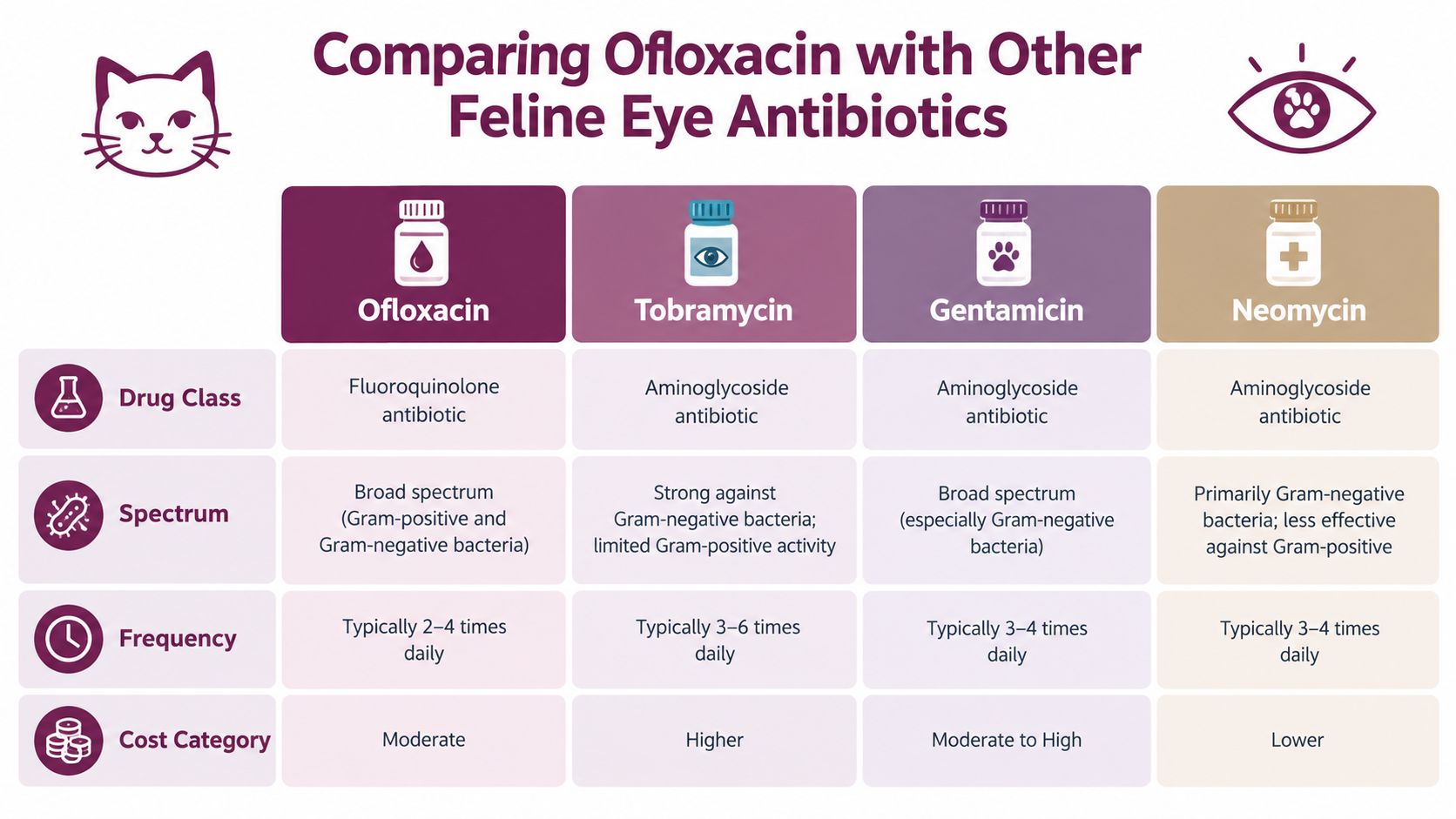
A cat may still squint after treatment begins, yet the problem may be the product, the dosing schedule, or contamination at the bottle tip rather than antibiotic choice alone. Veterinarians compare the suspected organisms, disease location and depth, previous treatment, examination findings, and whether testing is needed. The best option is the one that fits those findings and can be given accurately.
Why the choice varies
- Ofloxacin: A topical fluoroquinolone used for susceptible bacterial eye infections. Its activity can be relevant when gram-negative organisms are a concern, and its liquid drop formulation may be practical when frequent, clean application is needed.
- Ciprofloxacin: Another fluoroquinolone used in selected bacterial ocular cases. It is not automatically interchangeable with ofloxacin, because the product, concentration, and prescribed schedule may differ.
- Gentamicin: A topical aminoglycoside with useful gram-negative coverage, including organisms such as Pseudomonas. It can cause more ocular stinging than some fluoroquinolones, so the veterinarian may reserve it for a fitting bacterial pattern.
- Tobramycin: An aminoglycoside available in ophthalmic formulations and used when its spectrum and product are suitable. See our tobramycin eye drops for cats guide for dosing and formulation details.
- Terramycin: A tetracycline-class ophthalmic ointment used for selected susceptible bacterial or rickettsial-related conditions. Because it is an ointment rather than a liquid drop, it may remain on the eye longer but can temporarily blur vision.
These products are not interchangeable because they are eye antibiotics. Formulation affects contact with the eye, while dosing frequency affects whether enough medication is present between applications. A missed dose or a tip touching lashes can undermine an otherwise appropriate prescription. Do not combine antibiotics, anti-inflammatory medicines, or glaucoma treatments unless the veterinary team prescribed the full plan.
A feline corneal-ulcer treatment series reported topical ofloxacin three to four times daily until recovery, with healing over a 7- to 28-day period. In that series, 4 of 15 cats healed by day 14, 11 of 15 by day 21, and all 15 by day 28 in the published treatment series. Those findings describe one treatment series, not a guarantee for an individual cat. Ulcer cause and depth, other medicines, sterile technique, and follow-up findings can change the result.
Bandana Rx can coordinate prescription and over-the-counter veterinary eye-care products for companion animals after veterinary authorization. Ask your veterinarian to confirm the exact product, strength, and schedule before ordering. Keep the bottle clean and follow the prescribed timing.