

Yes, fleas can cause hair loss in dogs through flea allergy dermatitis, and in one veterinary review, 79 of 133 dogs with flea-allergy skin disease showed signs mainly when they had only 1 to 5 fleas on them. That's why a dog can scratch, chew at the lower back, and start thinning in the coat even when you barely see any fleas at all.
If you're reading this because your dog has started licking near the tail, waking up to scratch at night, or developing a rough, thinned patch over the rump, you're not overreacting. Flea-related hair loss is common, and it often fools owners because the problem isn't always a heavy flea infestation. In many dogs, it's the allergic reaction to flea saliva that does the damage.
Table of Contents
- What This Guide Covers and Why It Matters
- How Fleas Actually Cause Hair Loss in Dogs
- Where Flea-Related Hair Loss Shows Up on Your Dog
- Other Conditions That Look Like Flea Hair Loss
- How Vets Diagnose Flea-Related Alopecia
- Treatment Options for Flea-Related Hair Loss
- Preventing Flea Hair Loss From Coming Back
- Common Myths About Fleas and Dog Hair Loss
What This Guide Covers and Why It Matters
Your dog is chewing near the tail at 2 a.m. The fur over the lower back suddenly looks thin. You check the coat, expect to find fleas, and come up empty.
That gap confuses a lot of owners. If you cannot see fleas, it seems logical to blame something else. Yet flea-related hair loss often starts with irritation you can see before you ever spot the insect causing it.
The reason is simple. Fleas do not have to be easy to find to be a problem, and in an allergic dog, a very small trigger can set off a much larger skin reaction. A spark works like this in dry grass. The spark is tiny, but the visible damage spreads fast.
Why owners miss the connection
Owners often expect flea trouble to look obvious, with insects crawling through the coat or dark flea dirt collecting on the skin. Real cases are often less dramatic. A dog may groom, scratch, or chew away the evidence faster than you can find it, especially around the tail base and rump.
Hair loss also does not come from the flea "taking" hair. It usually comes from what happens after the bite. The skin gets itchy, the dog scratches or chews for relief, and the coat starts breaking or thinning in the same spots over and over. That is why this topic matters even if the coat does not look heavily infested.
What this guide helps you sort out
This guide is built for the owner who keeps asking, "Could fleas really do this if I only see a little scratching, or no fleas at all?" It explains where flea-related hair loss usually shows up, how veterinarians tell it apart from mites or ringworm, what treatment usually involves, and how to stop the cycle from coming back.
One point deserves extra attention. Hair loss near the tail does not automatically mean fleas, but it should keep fleas high on the list of suspects until a veterinarian rules them out.
Professional diagnosis matters because several skin problems can copy each other closely at home. If your dog keeps having repeat flare-ups, this article on the importance of routine vet visits in the age of online pharmacies explains why regular exams help catch patterns owners cannot always sort out on their own.
How Fleas Actually Cause Hair Loss in Dogs
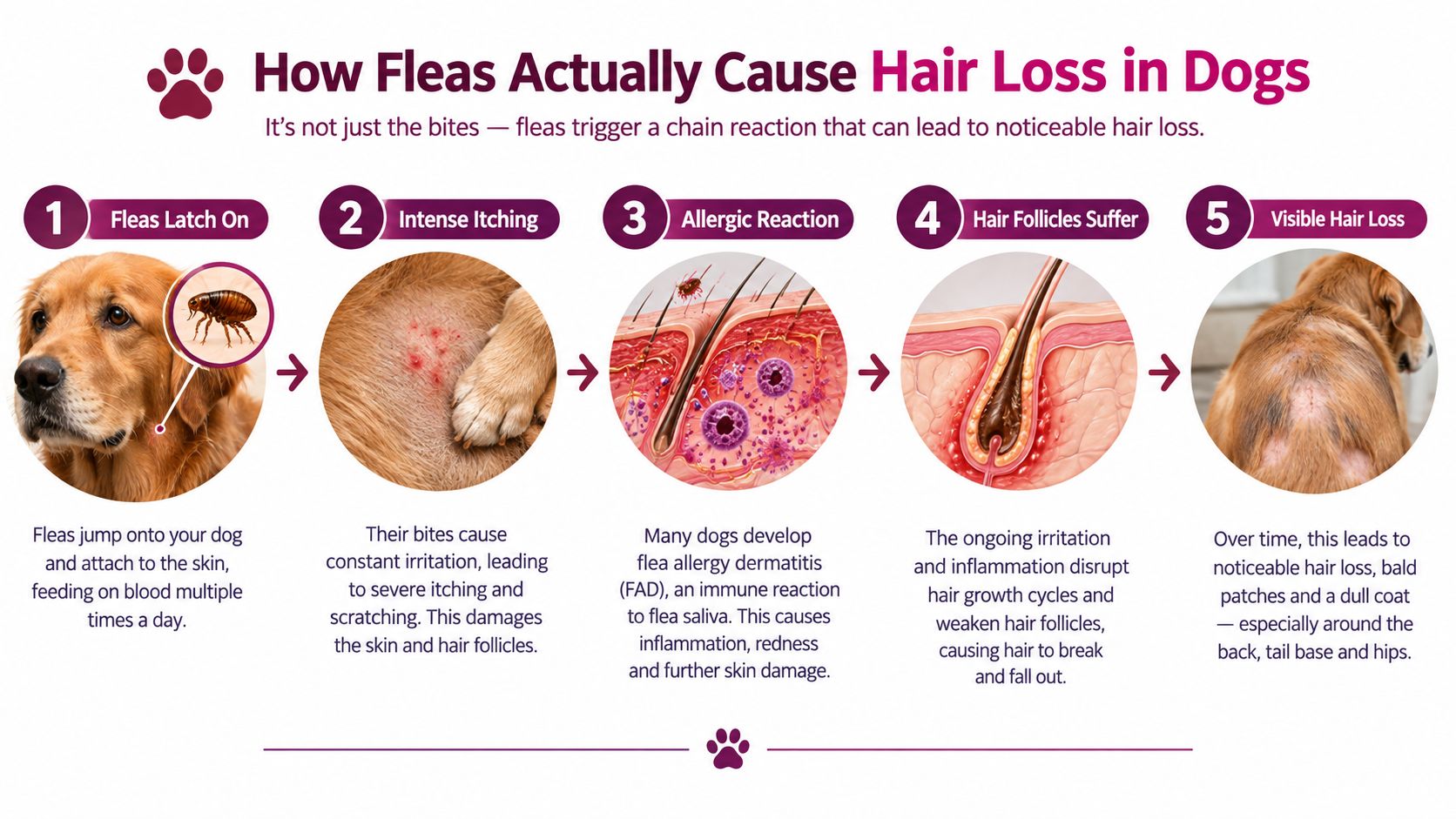
Hair loss from fleas makes more sense once you separate the flea bite from the body's reaction to it. In a non-allergic dog, a flea bite may cause mild irritation. In a sensitized dog, that same bite can set off a much bigger response.
The allergic trigger
Veterinary references describe flea allergy dermatitis as a pruritic skin disease triggered by sensitization to flea salivary antigens, not by the bite alone in the AVMA external parasites brochure. Think of flea saliva like a tiny drop of venom to an allergic dog. The amount is small, but the immune system reacts out of proportion.
The Merck Veterinary Manual also notes that one bite can sometimes be enough to trigger intense itching, self-trauma, and hair loss in a flea-allergic dog in its flea allergy dermatitis review. That's the key point owners often miss.
The itch, trauma, and inflammation cycle
Once the bite happens, the cycle often looks like this:
Flea saliva enters the skin.
The immune system recognizes it as a threat.Your dog starts itching.
Scratching, chewing, and licking begin, often around the tail base or lower back.Hair shafts break.
Repeated rubbing and chewing act like sandpaper on the coat.Skin gets inflamed.
Redness, papules, crusting, and raw areas can develop.Hair loss becomes visible.
What started as irritation turns into patchy alopecia.
A flea-allergic dog doesn't need a carpet of fleas to lose hair. The immune reaction does most of the work.
Why small exposures can cause big coat changes
This is why prevention matters even in homes that don't seem "flea ridden." If your dog is prone to flea allergy dermatitis, even brief exposure can restart the whole cycle.
For owners comparing control options, Bandana Rx has a flea and tick category for dogs and cats with products used for prevention and treatment under veterinary guidance.
Where Flea-Related Hair Loss Shows Up on Your Dog
You may notice the hair loss before you ever spot a flea. A dog that keeps whipping around to chew at the rear end, then starts thinning over the lower back or tail base, is showing a pattern many vets recognize quickly.
The classic body map
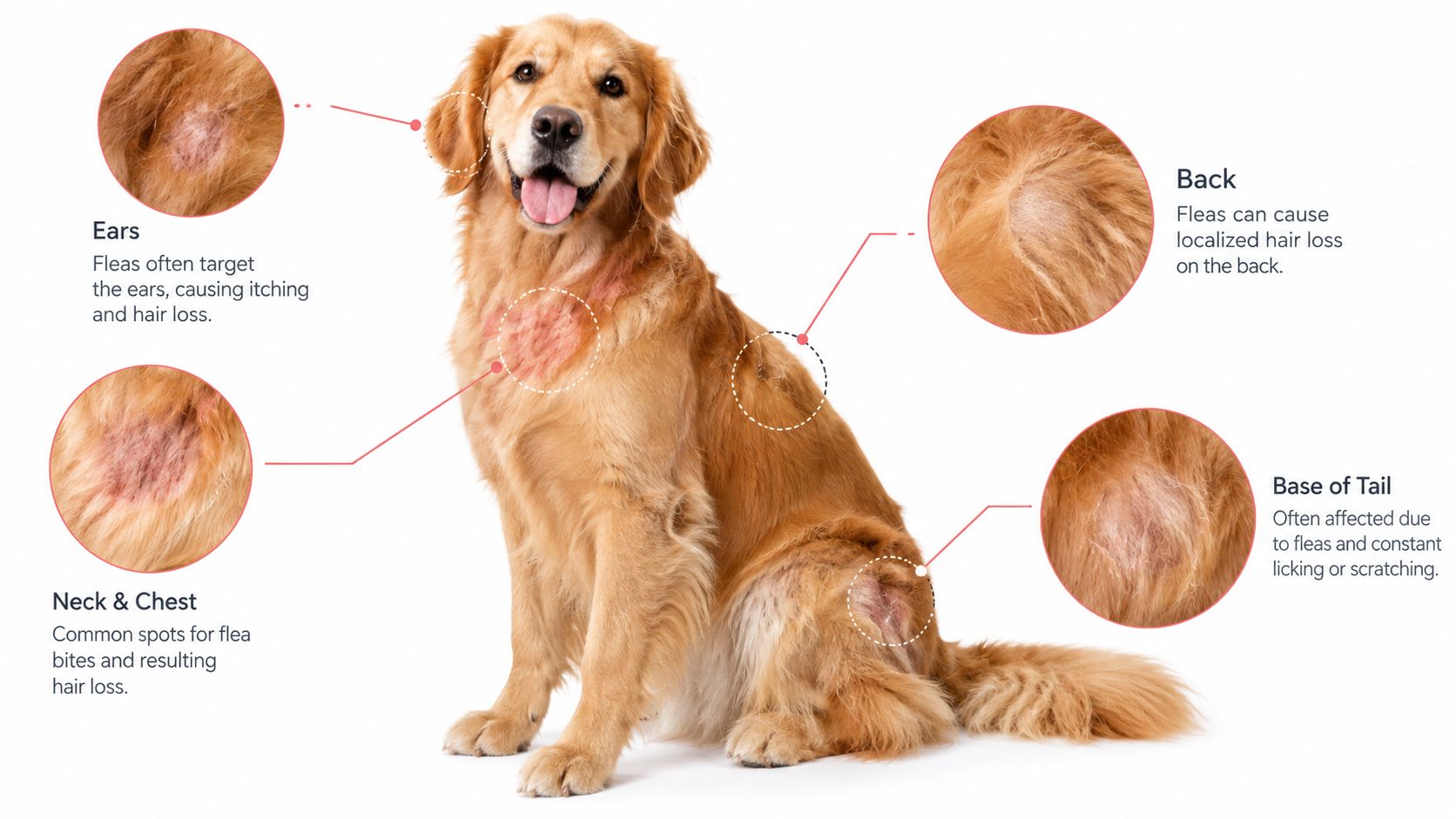
Flea-related alopecia usually follows a body map rather than appearing at random. The most common trouble spots are the base of the tail, rump, lower back, belly, and groin, as described in this PetMD veterinary overview. Many veterinarians also refer to the rear end and lower back as a classic flea pattern because that area is often where itching, chewing, and skin irritation become easiest to see.
A simple way to picture it is this. If your dog's body were a map, flea allergy often lights up the "back half" first. That does not mean every itchy dog with rear-end hair loss has fleas, but it does give your vet an important clue.
What the coat often looks like
Owners often expect a clean bald circle. Flea hair loss usually looks messier than that.
You may see:
- Patchy thinning instead of one smooth bare spot
- Broken, rough, or stubbly hairs from repeated chewing
- Red or darkened skin under the coat
- Small scabs, crusts, or bumps
- Moist irritated areas from licking
- Heavy nibbling or scratching focused near the tail base or thighs
- Flea dirt, which looks like dark pepper-like specks in the fur or bedding
That rough, chewed look matters. Hair often breaks off before it falls out completely, much like carpet fibers wearing down in the same area after repeated rubbing.
Why owners miss the cause
Many owners search for live fleas and find none. That is a common reason flea allergy gets overlooked at first. A dog may react strongly to very little exposure, so the visible problem is the coat loss and skin irritation, not a crowd of fleas crawling through the fur.
Other pets in the home can also keep the cycle going. If you also live with cats, learning about using a flea comb on cats can help you check another possible source of exposure.
In flea-allergic dogs, the pattern on the body and the dog's behavior often give the first clue, even when owners never see a single flea.
If your dog's hair loss is centered on the tail base, rump, or lower back, fleas belong high on the list. Your vet still needs to confirm the cause, because several other skin problems can mimic this pattern closely.
Other Conditions That Look Like Flea Hair Loss
Not every itchy bald patch is caused by fleas. Some other skin problems can look similar at first glance, which is why a pattern-based approach helps.
Quick comparisons that matter
Sarcoptic mange often causes fierce itching with crusting around the ears, elbows, and hocks. Demodectic mange may cause patchy hair loss with redness, but itch can vary. Ringworm is a fungal infection, not a worm, and often creates scaly circular patches. Hormonal diseases usually cause a different kind of coat loss that is more symmetrical and often less itchy.
Here's a simple side-by-side guide to the clues.
Flea Alopecia vs. Other Common Causes of Dog Hair Loss
| Condition | Typical Location | Itch Level | Key Clue |
|---|---|---|---|
| Flea alopecia | Tail base, lower back, rump, groin, belly | Usually high | Chewing and scratching focused on rear end, may have flea dirt |
| Sarcoptic mange | Ear edges, elbows, hocks, chest | Very high | Crusting, severe itch, often spreads quickly |
| Demodectic mange | Face, feet, around eyes, scattered patches | Variable | Patchy loss, may be more common in younger or immune-stressed dogs |
| Ringworm | Circular patches anywhere on body | Mild to variable | Scaly round lesions, can spread to people |
| Environmental or food allergy | Often more generalized | Moderate to high | Recurrent itch, paw licking, ear issues |
| Hormonal disease | Flanks, trunk, tail | Often low | Symmetrical non-itchy thinning |
Why self-diagnosis goes wrong
Owners often focus on the hair loss itself and miss the location and itch pattern. That's understandable. But the map matters. Hair loss over the tail base suggests a different problem than symmetrical thinning over both flanks.
If ringworm is on your list of possibilities, Bandana Rx has a related educational article on ringworm treatment for dogs that can help you understand how fungal skin disease differs from parasite-driven coat loss.
How Vets Diagnose Flea-Related Alopecia
A common exam-room story goes like this: a dog is chewing at the rear end, the coat is thinning, and the owner says, "But I haven't seen a single flea."
That does not rule flea allergy out.
Vets diagnose flea-related alopecia by putting several clues together: the itch pattern, the location of the hair loss, what the skin looks like up close, whether flea dirt is present, and whether the dog improves after effective flea control. The reason this can be tricky is that fleas are easy to miss, and a sensitive dog can react to very little exposure. One bite can act like a smoke alarm that keeps blaring long after the spark is gone.
What the exam looks for
Your veterinarian usually starts with the history. They may ask when the scratching began, whether it flares during warmer months or persists year-round, what flea prevention your dog receives, whether there are cats or other pets in the home, and whether the dog has had similar episodes before.
Then comes the skin exam.
Vets look closely at the lower back, tail base, rump, belly, groin, and inner thighs. They check for broken hairs, self-trauma from chewing, small red bumps, scabs, crusts, darkened skin, and signs of secondary infection. A flea comb is often part of the visit because flea dirt can be more informative than finding a live flea.
Why fleas may not be visible
Adult fleas do not stay put for inspection. Dogs also lick, chew, and groom evidence away.
In dogs with flea allergy dermatitis, the trigger is flea saliva. Merck Veterinary Manual notes that even a small number of bites can set off intense itching in a sensitized dog in its overview of flea allergy dermatitis. That helps explain the gap many owners notice between "I never see fleas" and "my dog is losing hair."
A treatment trial is often part of the diagnosis. If the pattern fits and the dog improves after reliable flea control, that response supports flea-related alopecia.
Tests used to rule out similar problems
Because several skin diseases can look similar, vets often check for other causes at the same visit. Depending on what they see, they may use:
- Skin scrapings to look for mites
- Cytology to look for yeast or bacteria on the skin surface
- Fungal testing if ringworm is a possibility
- Targeted allergy workup in recurrent or complicated cases
This step matters because hair loss is the end result, not the diagnosis itself. Fleas, mites, infection, and allergies can all damage the coat, but they do not get treated the same way. A careful workup helps your vet sort out whether fleas are the main cause, one piece of the problem, or a lookalike that needs a different plan.
Treatment Options for Flea-Related Hair Loss
A common owner experience goes like this: the dog is still chewing at the base of the tail, the hair is thinning, and you still have not spotted a single flea. Treatment has to account for that gap. In flea-allergic dogs, the problem is often the bite itself and the skin reaction that follows, not a large visible infestation.
Step one is effective flea control
The first job is stopping new bites fast enough that the allergic cascade can settle down. The FDA advises choosing flea products by species, life stage, and weight class, and following label directions exactly in FDA consumer guidance on safe flea and tick product use. That matters even more in homes with both dogs and cats, because a product that is appropriate for one pet may be unsafe for another.
Your veterinarian may recommend an oral medication, a topical product, or a longer-acting option based on your dog's age, health history, and how severe the skin flare has become. If you are comparing categories before that conversation, this Bandana Rx article on the effectiveness of over-the-counter flea products gives a useful overview of how common options differ.
Step two is calming the skin so it can heal
Hair loss usually comes from the itch-scratch cycle. The bite triggers itching. The dog chews, scratches, and rubs. The skin gets more inflamed, and then the damaged skin keeps the itching going.
By the time a dog reaches the hair-loss stage, fleas may be only one part of the problem. Secondary bacterial or yeast infections are common, and some dogs create raw spots from repeated chewing. As noted earlier, flea problems can lead to intense itching, skin infection, and broader coat thinning in severe cases.
That is why treatment often includes more than flea medicine alone. Your veterinarian may prescribe short-term anti-itch medication, medicated baths, treatment for pyoderma, or an Elizabethan collar to give the skin a chance to recover. Prescription products should be chosen and dosed by your veterinarian, especially if your dog has open sores, widespread redness, or signs of infection.
Step three is reducing exposure inside the home
Flea control works best when the dog and the environment are treated as one problem. Adult fleas live on pets, but eggs and immature stages can remain in bedding, rugs, cracks in flooring, and favorite resting spots.
A practical cleanup plan often includes:
- Vacuuming floors and upholstery regularly
- Washing pet bedding
- Treating all in-contact pets
- Using household flea control when your veterinarian advises it
If your vet is also sorting out whether mites are involved, general educational material on scabies treatment permethrin lotion can help explain why mite conditions are treated differently from flea allergy. It is not a substitute for veterinary prescribing for your dog.
Hair regrowth takes patience. Once new bites are stopped and the skin inflammation settles, the coat usually needs weeks to months to fill back in.
Preventing Flea Hair Loss From Coming Back
A dog can seem fully better, then lose hair again after just a few new bites. That pattern surprises many owners, especially when they never spot a single flea. In flea-allergic dogs, prevention matters because the skin can react to a tiny trigger. One missed month, one untreated pet, or one small exposure can restart the itch-scratch cycle and set back coat recovery.
The three habits that prevent relapse
Prevention works best when you treat flea control like keeping a campfire from flaring up again. Putting out the visible flames is only part of the job. You also have to deal with the hidden sparks.
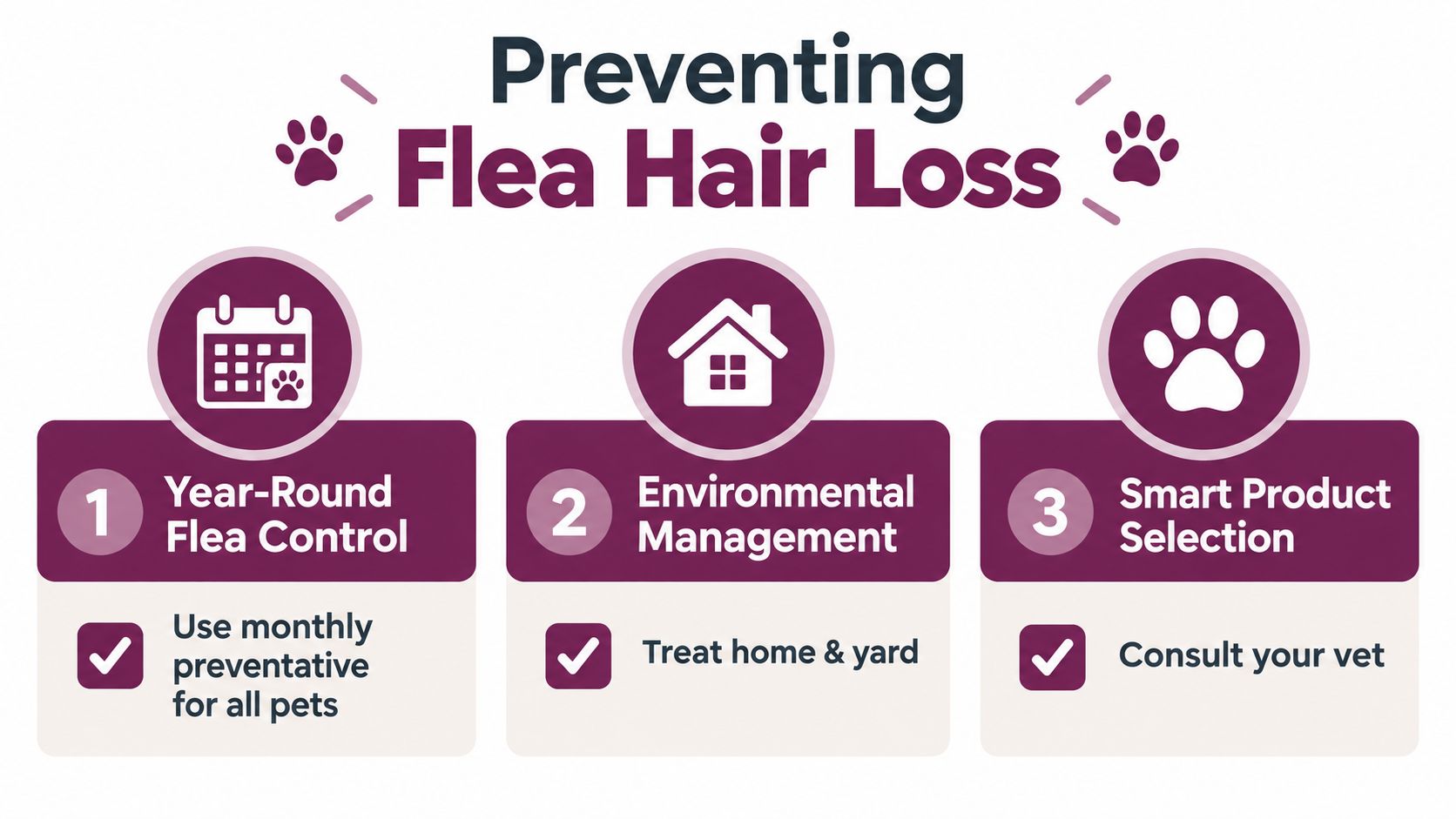
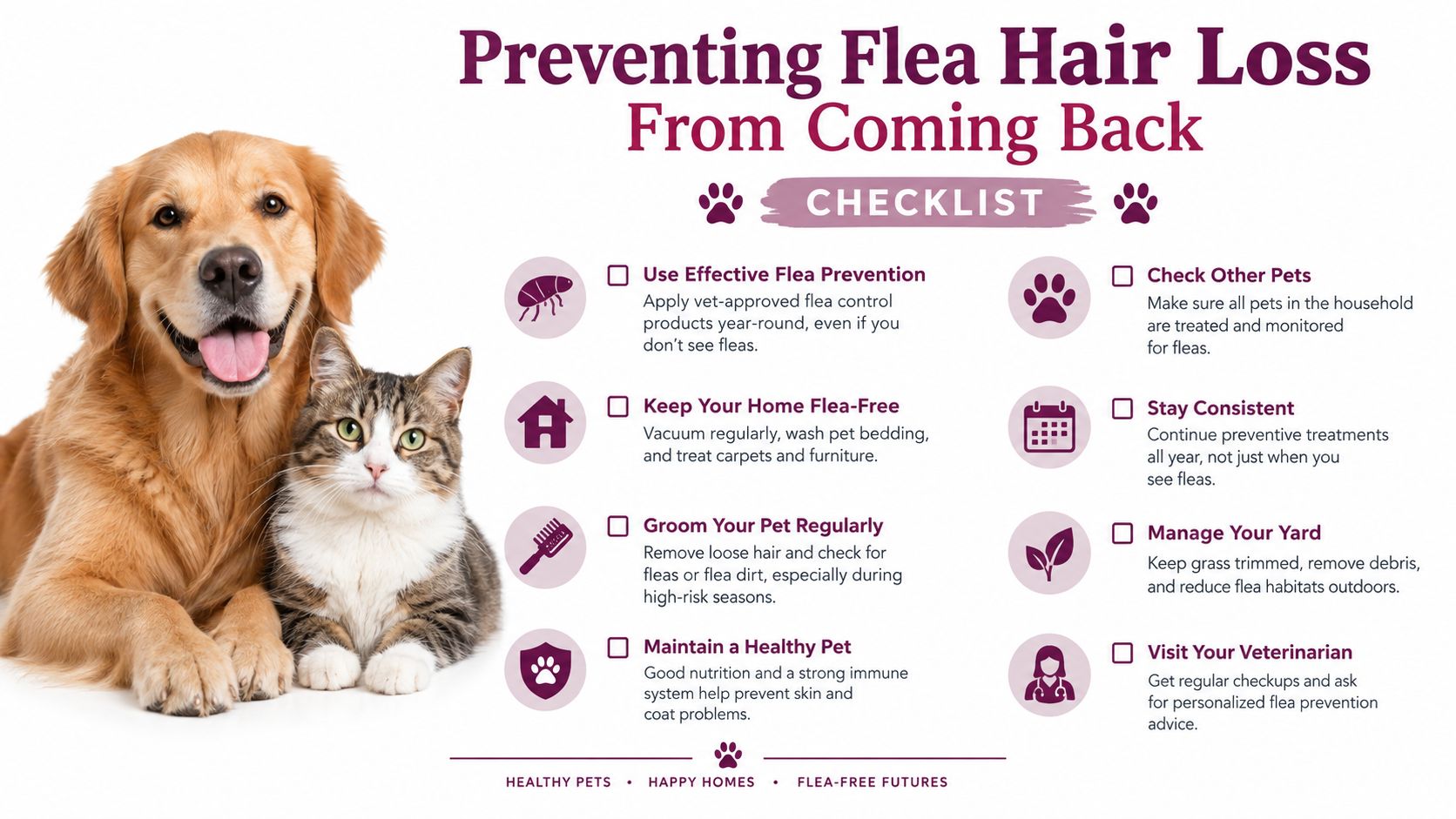
That usually means focusing on three habits:
Use year-round prevention for every pet in the home
If one dog or cat is left out, fleas can keep feeding and reproducing. Your itchy dog may be the one showing the reaction, but another pet may be carrying the problem.Stay strict with home cleanup during and after an outbreak
Fleas do not spend their whole life on your dog. Bedding, rugs, upholstery, and favorite nap spots can keep the cycle going, which is why home care matters even after your dog seems more comfortable.Match the product to the pet
Flea products have to fit your pet's species, age, weight, and health status. A label check sounds simple, but it prevents many avoidable mistakes, especially in homes with both dogs and cats.
That last point matters more than many owners expect. A product that is appropriate for one pet may be unsafe for another, so use the label exactly as directed and ask your veterinarian before combining products or switching brands.
When to call your veterinarian
Sometimes hair loss returns even though you are trying to prevent it. That does not always mean you failed. It can mean your dog is highly flea-allergic, the product timing needs adjustment, another pet is serving as the flea source, or a different skin disease is also present.
Call your veterinarian promptly if you notice any of these:
- Rapidly spreading hair loss
- Open sores or oozing skin
- Redness with odor or crusting
- Lethargy or behavior changes
- Persistent itch despite prevention
Those signs raise concern for infection, ongoing allergy, or a lookalike condition that needs a proper diagnosis.
If your veterinarian recommends long-term prevention, you can review flea and tick prevention options for dogs and cats through Bandana Rx as part of that plan.
Common Myths About Fleas and Dog Hair Loss
Some of the biggest delays in treatment come from ideas that sound reasonable but aren't.
Myth one and myth two
"If I can't see fleas, it can't be fleas."
That's the myth that causes the most confusion. Flea-allergic dogs can react to a very small exposure, and grooming may remove the evidence before owners spot it.
"My indoor dog doesn't need prevention."
Indoor dogs are still at risk, as fleas can enter on other pets, people, or household items. Once inside, they don't need much help getting comfortable.
Myth three and myth four
"All flea products work the same way."
They don't. Some are prescription medications, some are over-the-counter products, and some are inappropriate for certain ages, weights, or species. Safe use depends on reading the label and following veterinary guidance.
"Once the fleas are gone, the hair comes right back."
Coat recovery usually lags behind itch control. Skin needs time to calm down, and some dogs also need treatment for infection or ongoing inflammation before the coat fills back in.
Good flea care starts with a diagnosis, not a guess. If your dog is losing hair and itching hard, let your veterinarian confirm the cause before you change products or combine treatments.
If your dog may be dealing with flea-related itching or coat loss, Bandana Rx offers prescription and over-the-counter pet medications, including flea and tick prevention options, through a licensed U.S. veterinary pharmacy. You can visit Bandana Rx to explore product categories, review educational resources, and coordinate prescribed treatments with your veterinarian.