




You notice a small bald patch on your dog's shoulder after grooming. The skin looks scaly, perhaps a little red, and the shape seems almost circular. Your first thought may be an insect bite, allergy, or an ordinary scrape. Ringworm is one possibility, but appearance alone can't confirm it, and the right treatment involves more than applying cream to a visible spot.
Successful ringworm treatment for dogs usually combines veterinary-directed antifungal medication with environmental control. The most important question isn't only when the skin looks better. It's when testing shows that the fungus has cleared and the home no longer contains a meaningful source of reinfection.
Table of Contents
- What Is Ringworm in Dogs
- Recognizing the Signs Your Dog May Have Ringworm
- How Veterinarians Diagnose Ringworm
- Topical Versus Systemic Treatment Options
- Cleaning Your Home to Stop the Spread
- How Long Does Ringworm Treatment Take
- When to Call Your Veterinarian
- Supporting Your Dog Through Recovery
What Is Ringworm in Dogs
The name causes unnecessary confusion. Ringworm isn't a worm and doesn't live beneath the skin like a parasite. It's a fungal infection called dermatophytosis, caused by organisms that grow in keratinized tissues such as the outer skin, hair, and nails. Microsporum canis is a common cause in dogs, along with other dermatophytes such as Microsporum gypseum and Trichophyton mentagrophytes. The FDA-labeled miconazole information identifies those organisms among fungal infections affecting dogs and cats on DailyMed.
The familiar “ring” describes a possible pattern of hair loss and scaling, not a guaranteed appearance. A dog might develop a circular patch with broken hairs, flaky skin, or a crusted edge, but infections can also look diffuse or affect the paws and nails. Fungal spores may spread through direct contact with an infected animal or through contaminated bedding, grooming tools, furniture, and other objects.

Why the infection keeps returning
A dog can improve on the surface while infected hairs and spores remain on the coat or in the surroundings. That's why authoritative veterinary guidance treats the dog and the environment as one connected problem. VCA describes the common approach as topical products such as creams, ointments, or shampoos used with oral antifungal drugs, followed by periodic fungal cultures and continued treatment until the veterinarian advises stopping in its ringworm guidance for dogs.
Ringworm can also spread to people. The CDC's guidance on emerging ringworm advises taking a potentially infected pet to a veterinarian promptly and checking other pets when appropriate. This isn't a reason to panic or abandon normal care. It's a reason to handle the diagnosis methodically, limit unnecessary contact, and clean the spaces and items that collect infected hair.
Recognizing the Signs Your Dog May Have Ringworm
The classic presentation is patchy hair loss with scaly or reddened skin, often on the face, ears, legs, or paws. Broken hairs may surround the area, and the border can look more inflamed than the center. Some dogs itch, while others show little discomfort, so the absence of scratching doesn't rule out infection.
A useful way to assess suspicious changes is to look beyond the word “ring.” Consider the full pattern:
- Coat changes: Look for broken hairs, localized alopecia, dandruff-like scaling, or crusting.
- Skin appearance: Redness, darkening, roughness, and raised areas can occur, but none is unique to ringworm.
- Paws and nails: Infection may involve nail beds or claw folds, causing brittle or abnormal nails and sometimes discomfort when walking.
- Distribution: A lesion can appear almost anywhere, and several small areas may be more informative than one obvious circle.
Atypical cases are easy to miss
Some dogs develop widespread scaling without a neat circular border. Others have infection concentrated around the paws or nails. A dog may even carry and spread dermatophytes without obvious lesions, which makes household transmission difficult to trace by visual inspection alone.
That uncertainty matters because allergies, bacterial infections, yeast overgrowth, parasites, and hormonal disorders can produce similar hair and skin changes. Treating the wrong condition with an antifungal product can delay the diagnosis and leave the actual problem unresolved.
Practical rule: A suspicious bald patch deserves a veterinary diagnosis, not a home diagnosis based on shape.
Keep children and other pets from sharing bedding, grooming tools, and close-contact spaces until you've spoken with your veterinarian. Use disposable gloves when handling suspicious lesions or applying products, and wash your hands afterward. These steps reduce exposure while you wait for a confirmed plan, but they don't replace testing.
How Veterinarians Diagnose Ringworm
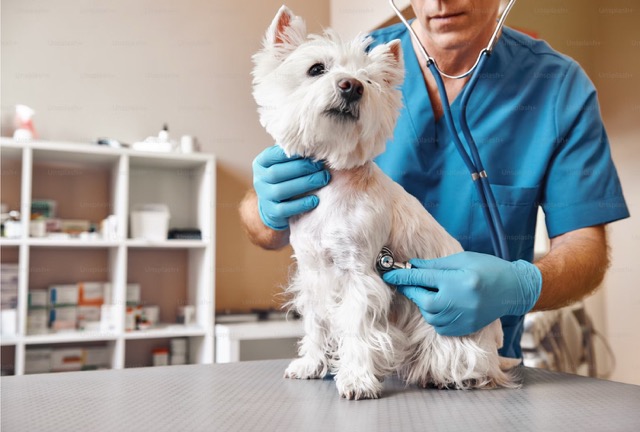
A visual examination can identify a pattern that deserves investigation, but it usually can't prove that dermatophytes caused it. Your veterinarian may use several tests because each answers a different question.
Wood's lamp examination
A Wood's lamp emits ultraviolet light. Some fungal material fluoresces, which can help the veterinarian identify hairs for sampling. The limitation is important: not every ringworm organism fluoresces, so a negative examination doesn't reliably exclude infection.
Hair examination and fungal culture
The veterinarian may collect affected hairs, scale, or material from the coat and send it for fungal testing. A fungal culture attempts to grow the organism and can support confirmation and later clearance testing. Results may require patience, but that wait can prevent weeks of inappropriate treatment.
PCR testing
Polymerase chain reaction testing looks for fungal DNA. It can provide a faster diagnostic route in some settings, and it may also be used during follow-up. PCR and culture aren't interchangeable in every case, so ask your veterinarian which test fits the clinical situation and how the result will affect treatment decisions.
A confirmed diagnosis also helps your veterinarian decide whether other animals need examination and whether the household should follow a more intensive decontamination plan. Routine veterinary care supports safer medication decisions, especially when an oral antifungal is being considered. Bandana Rx's educational article on the importance of routine vet visits also explains why ongoing professional oversight remains relevant when online pharmacy access is part of care.
Topical Versus Systemic Treatment Options
The established approach is combination therapy, not a single product used in isolation. Topical treatment reduces infectious material on the hair coat and helps limit spore shedding. Systemic oral medication reaches infection within hair follicles, where a cream applied to the skin surface can't reliably address the entire process.
VCA describes topical creams, ointments, or shampoos used alongside oral antifungal drugs, and a veterinary review identifies concurrent systemic therapy plus topical disinfection of the hair coat as the foundational standard of care in this clinical overview.
What each treatment contributes
Topical therapy may include whole-body rinses, medicated shampoos, creams, or lotions. Shelter medicine guidance identifies twice-weekly lime sulfur as a topical option, while the Merck Veterinary Manual's dermatophytosis guidance describes whole-body rinses such as lime sulfur at 1:16 or enilconazole at 1:100, used twice weekly. These precise dilutions belong to veterinary-directed protocols. Don't mix or apply a dip based on a general internet formula without professional instructions.
Systemic therapy may involve prescription antifungals such as terbinafine or itraconazole. Shelter medicine guidance identifies terbinafine and non-compounded itraconazole as effective systemic choices in dogs, with terbinafine often described as the more cost-effective option. The decision still depends on your dog's health, weight, concurrent medications, infection extent, and the veterinarian's assessment.
Miconazole is another relevant topical antifungal ingredient. An FDA-labeled miconazole nitrate 1% product lists fungal infections caused by M. canis, M. gypseum, and T. mentagrophytes, with once-daily application for 2 to 4 weeks and courses of up to 6 weeks in difficult cases according to its DailyMed labeling. Follow the specific label and veterinary directions for the product you receive.

Ringworm treatment approaches comparison
| Treatment Type | How It Works | Common Options | Veterinary Supervision |
|---|---|---|---|
| Topical | Disinfects the hair coat, removes contaminated material, and treats accessible skin | Lime sulfur rinses, medicated shampoos, creams, and lotions | Needed for product choice, dilution, application, and duration |
| Systemic | Treats infection from within hair follicles | Terbinafine or itraconazole may be considered | Required for selection, dosing, monitoring, and treatment endpoint |
| Combined | Addresses both the coat surface and follicular infection | Topical therapy paired with a prescribed oral antifungal | Essential because the plan must be coordinated |
A topical product may be appropriate for a limited area, but spot treatment alone doesn't address contaminated hair throughout the coat. Likewise, oral medication without coat disinfection can leave infectious material available for shedding. If your veterinarian recommends clotrimazole for a localized fungal lesion, you can review clotrimazole cream for dogs, while treating the product as one component of a veterinary plan rather than a universal solution.
Cleaning Your Home to Stop the Spread
Medication can fail to deliver a lasting result if infected hairs continue circulating through the home. Ringworm can survive in the environment for up to two years, according to PDSA's veterinary guidance. The highest-yield target is contaminated hair and dander, not endless wiping of every surface.
Start with the dog's main area
Choose a low-furnishing space that's easier to vacuum and disinfect. Limit access to rooms with difficult-to-clean upholstery, rugs, and piles of fabric while your veterinarian manages the infection. Isolation doesn't mean neglect. It means reducing the number of surfaces that collect infected hairs while keeping feeding, exercise, enrichment, and contact predictable.
A 2024 client handout recommends aggressive cleaning at least once, preferably twice, weekly until cure, including vacuuming, hot laundering, and disinfecting hard surfaces with bleach or accelerated hydrogen peroxide in this veterinary handout.

Prioritize the actions that remove spores
- Vacuum first: Remove loose hair and dander from floors, furniture, and the dog's resting area. Empty the canister or dispose of the bag outside, then clean the vacuum according to its manufacturer's directions.
- Launder fabrics: Wash bedding, towels, blankets, and removable covers in hot water when the material allows it. Keep contaminated items contained until they can go directly into the washer.
- Disinfect hard surfaces: Clean away visible debris before applying an appropriate disinfectant. Bleach solutions and accelerated hydrogen peroxide products may be used when compatible with the surface and handled exactly as directed.
- Clean tools separately: Wash or disinfect grooming tools, crates, bowls, and other equipment that contacts your dog. Don't share them with other pets during treatment.
The point isn't to create a sterile home. It's to interrupt the cycle of infected hairs leaving the coat, settling in the dog's environment, and contacting another animal or person. A medicated shampoo such as Malapet for dogs and cats may support coat-level management when selected and used according to veterinary directions.
How Long Does Ringworm Treatment Take
A small first lesion can make treatment seem brief, but owners should plan for at least 4 to 6 weeks, with some infections lasting longer. Antifungal baths may be prescribed one to two times weekly, while oral medication can continue daily for a month or more. Household decontamination must continue alongside treatment. Veterinary guidance reports that resolution often takes about 6 to 8 weeks, although some cases extend to 6 to 12 weeks as summarized in PDSA's guidance.
The timeline depends on disease severity, coat type, affected areas, general health, response to medication, and the amount of contamination in the home. A patch that is healing may not reflect fungal status elsewhere in the coat, so elapsed time cannot determine whether treatment is finished.
The stopping point is a test result
The skin can look normal before the fungus is gone. This gap between appearance and cure is why follow-up testing matters. Veterinary guidance recommends continuing treatment until testing confirms clearance, usually with at least one, and preferably two, negative fungal cultures or PCR tests after clinical signs resolve in this review of dermatophytosis.
Before stopping, ask your veterinarian:
- Which test will confirm clearance, culture, PCR, or both?
- Should testing wait until the lesions have healed?
- When can isolation end?
- When can grooming, daycare, boarding, or contact with other pets resume?
Keep giving the prescribed antifungal even when the coat looks better. Your veterinarian should interpret the examination and test results together, then provide a clear plan for stopping treatment and resuming normal activities.
When to Call Your Veterinarian
Call your veterinarian immediately if lesions spread beyond the original patch, your dog develops vomiting or diarrhea after starting antifungal medication, or you notice new hair loss in areas you have not examined closely. Prompt advice also matters when the skin becomes more inflamed, your dog seems uncomfortable, appetite changes, or unusual tiredness appears.
Ringworm can resemble other skin disorders, and antifungal products are not interchangeable for every dog. Your veterinarian should select the medication, dose, frequency, and duration for your dog's condition. Do not change the dose, combine antifungals, or substitute products without approval.
Protect people and other animals
The CDC recommends prompt veterinary care for a pet with suspected ringworm and advises checking other pets when applicable. Household members should contact a healthcare professional if they develop a suspicious red, scaly, or itchy lesion, especially after handling an infected animal or contaminated bedding. Ask your veterinarian whether other dogs, cats, or small animals need examination.
A topical label provides product-specific instructions, but it does not replace monitoring by your veterinarian. DailyMed labeling for miconazole nitrate 1% describes application once daily for 2 to 4 weeks, with treatment of up to 6 weeks in difficult cases. Those directions apply to the labeled product and organisms, not automatically to every cream, lesion, or dog.
If symptoms are urgent or your regular clinic cannot respond, use Bandana Rx's urgent care resource to identify an appropriate next step. Keep the medication packaging and your dog's current treatment details available when you call. Ask how follow-up testing will confirm that treatment is complete, rather than stopping only because the lesions look better.
Supporting Your Dog Through Recovery
Ringworm care can be tiring for both of you. Regular baths, topical applications, cleaning, and temporary separation may unsettle your dog, so keep the routine consistent. Use calm handling, reward cooperation, and make the designated recovery area comfortable without filling it with difficult-to-clean fabrics.
Protect the skin from unnecessary irritation. Follow bathing instructions exactly, rinse thoroughly when directed, and don't add human creams, essential oils, or extra antiseptics unless your veterinarian approves them. Give prescribed oral medication on the schedule provided, and keep a simple record of doses, baths, lesion changes, and follow-up appointments.
Nutrition and general comfort support recovery, but supplements don't replace antifungal treatment or environmental control. If your veterinarian agrees that a skin-support product is appropriate, Welactin Omega-3 Skin and Coat Liquid for Dogs is one option to discuss. It shouldn't be used to delay diagnosis or as a substitute for the prescribed plan.
Bandana Rx offers prescription coordination and over-the-counter pet-care products, including relevant topical and shampoo options, with prescription orders processed after veterinary authorization. Visit Bandana Rx to review available pet medications and organize refills that support your dog's treatment plan.