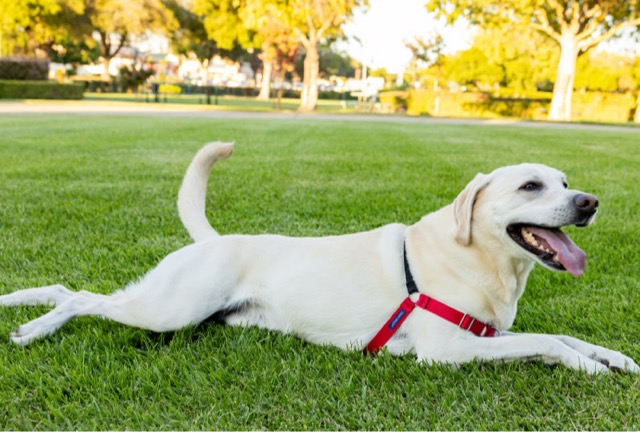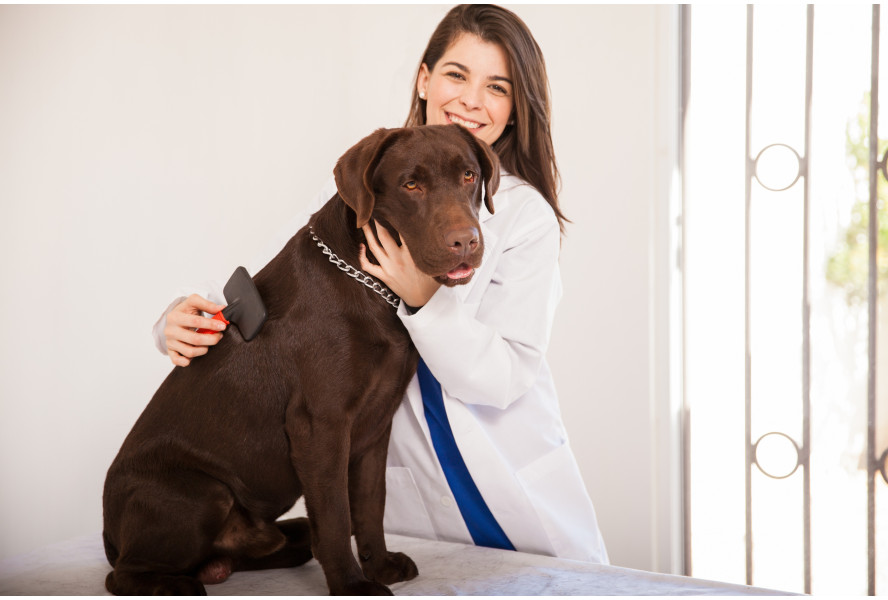




Your dog still finishes breakfast and wags when you reach for the leash, but pauses at the stairs. Getting out of bed takes more effort, and the evening walk ends sooner than it used to. Those changes deserve attention, even when your dog still seems happy to see you.
Table of Contents
- When Everyday Movement Starts to Hurt
- What Is Happening Inside a Painful Joint
- Signs of Joint Pain in Dogs at Home
- How Veterinarians Evaluate Joint Pain
- Prescription Options for Canine Joint Pain
- Weight, Movement, and Joint Support at Home
- How to Tell Whether Care Is Helping
When Everyday Movement Starts to Hurt
The first sign of joint pain in dogs is often a quiet decision rather than a limp. Your dog stands at the open car door and waits to be lifted. He sits at the edge of the couch, gauging the jump, then lies down on the floor instead. The ball lands nearby, and he watches it roll away.
Each moment is easy to explain on its own. Together they form a pattern.
A dog can still eat well, greet you at the door, and enjoy short bursts of play while hurting during ordinary movement. Many dogs compensate by shortening their stride, shifting weight to a different leg, or doing less of whatever hurts. What looks like a calmer, maturing personality may be a smaller zone of comfortable activity.
Why aging alone isn't the whole explanation
When a dog slows down, "he's just getting old" is a common explanation. Age matters, but it is a risk factor, not a diagnosis. Osteoarthritis, often shortened to OA, is the condition veterinarians most often associate with chronic joint pain, and no owner can confirm or rule it out by watching a dog cross the living room.
Routine medical records also understate how many dogs hurt. Owners may not mention stiffness during a visit booked for something else, a dog may mask discomfort well, or the appointment may focus on another problem entirely. Studies that examine joints deliberately can find a different picture than records suggest.
Practical rule: A change from your dog's own normal matters more than whether your dog seems "old enough" for arthritis.
A dog who still gets excited about dinner has not ruled out pain. Enthusiasm and discomfort can exist in the same animal, the way a person with a sore knee can still enjoy a film.
Comfort while you arrange an assessment
Until a veterinarian examines your dog, the useful goal is making daily life easier, not testing what your dog can still push through.
- Make rest easy to reach. A supportive bed on the ground floor removes the need to climb or jump down from a favorite spot. Options such as orthopedic beds designed for dogs can be compared by entry height and firmness rather than by packaging claims.
- Record what your dog avoids. Note when hesitation happens, whether after resting, on slippery floors, or before jumping. A short phone video gives your veterinarian more than a memory does.
- Start a simple baseline. Time how long your dog takes to rise after a nap, or note how far into a familiar route the slowing begins. Repeatable observations like these give you something concrete to compare later.
- Keep expectations realistic. A better bed supports rest, but it does not identify the cause of pain. Joint products also vary widely in how much evidence stands behind them, so comfort aids and treatments deserve different levels of confidence.
You do not need to decide which joint hurts before calling your veterinarian. What helps most is a clear before-and-after: what your dog used to do without thinking, and what now takes visible effort.
What Is Happening Inside a Painful Joint
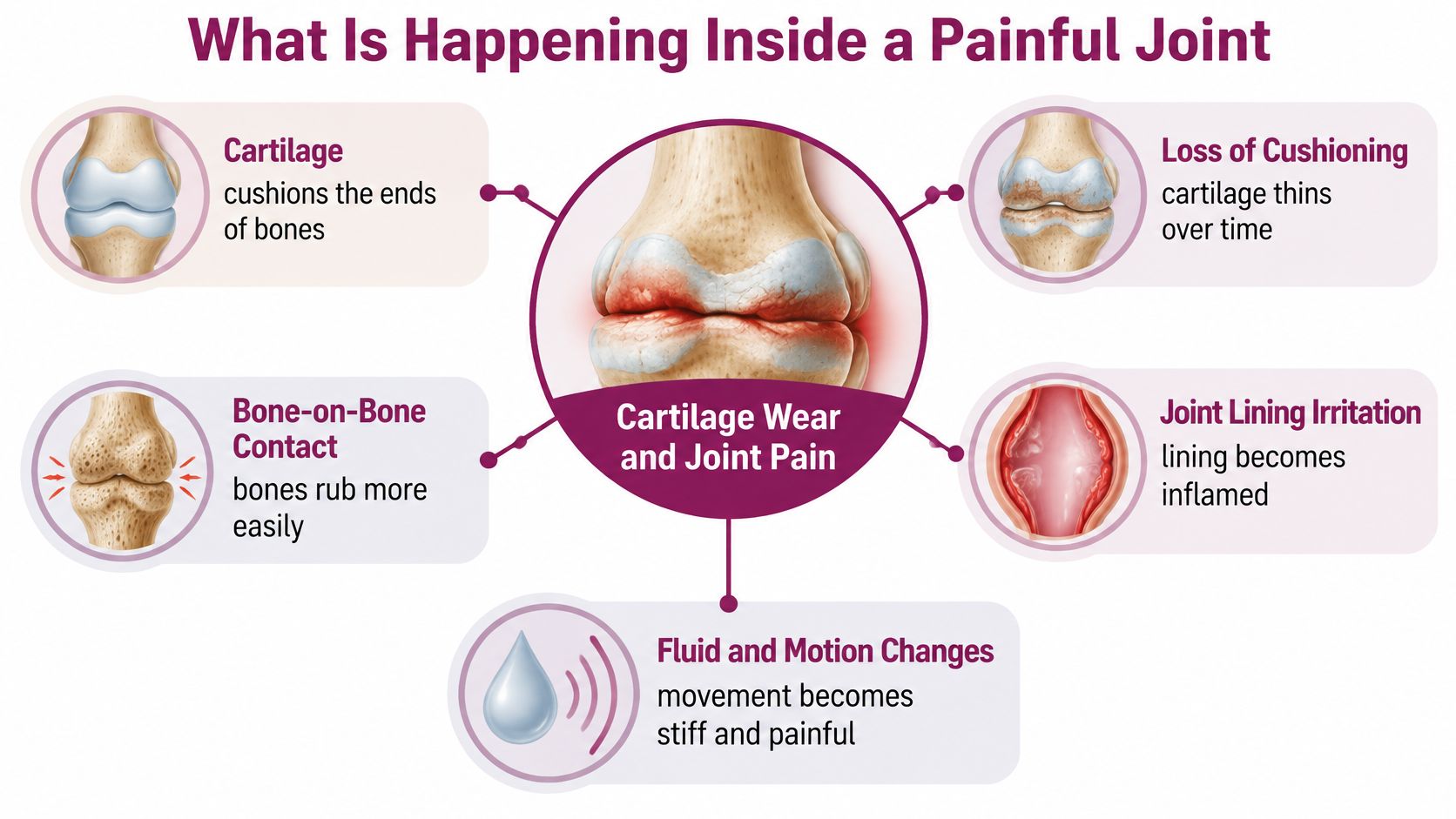
A healthy joint allows bones to move against a smooth, cushioned surface. Cartilage covers the ends of the bones, helping them move without the friction that direct bone contact would create.
Think of cartilage as a smooth pad inside a hinge. When that pad wears down, movement becomes less smooth. In osteoarthritis, cartilage breaks down, bones can rub against each other, and inflammation contributes to pain, as described in the FDA's explanation of canine osteoarthritis and pain treatment.
Why joints develop problems
Osteoarthritis is the most common chronic cause of joint pain, but it isn't the only explanation for painful movement. Its development can involve inherited susceptibility, abnormal limb or joint shape, a previous orthopedic injury, aging, and excess body weight.
These influences can overlap. For example, an old injury may have changed how a joint carries weight, while later weight gain adds more load. That's why a veterinarian asks about earlier injuries even when they seemed to heal long ago.
Extra body weight has more than a mechanical effect. It increases the load across cartilage and the bone beneath it, while inflammatory signals associated with obesity may also worsen joint inflammation and pain.
Look beyond the joint itself
A useful assessment considers the whole dog, not just an image of a painful hip or knee.
- Walking pattern: Is your dog shifting weight or shortening a stride?
- Joint movement: How comfortably does each joint bend and extend?
- Muscle symmetry: Do the muscles on both sides look and feel similar?
- Body condition and weight trend: Is excess weight adding to the problem, and has it been increasing?
Veterinary guidance on canine osteoarthritis management and assessment supports considering body condition, controlled exercise, and individualized treatment together rather than focusing on a single intervention.
The household can't change inherited joint structure or undo an old injury. It can help with weight, appropriate activity, and consistent observation under veterinary direction. That's a practical opportunity, not a reason to blame yourself for your dog's condition.
Signs of Joint Pain in Dogs at Home
Watch what your dog can comfortably do, not just whether a leg looks lame. A dog may distribute weight differently or avoid a painful task without developing an obvious limp.

Stiffness after sleep is a useful clue. Your dog may rise slowly, take careful steps, then appear more comfortable after moving around. That improvement doesn't mean the initial difficulty was harmless.
Changes worth recording
- Getting up and moving: Difficulty rising, slipping on smooth floors, or taking longer to settle into position.
- Height changes: Hesitating at stairs, avoiding the couch, or waiting for help at the car.
- Walks and play: Lagging behind, choosing shorter outings, or losing interest in activities that previously involved running or turning.
- Touch and grooming: Licking around a joint or reacting irritably when a hip or shoulder is touched.
- Body shape: Less muscle over a thigh or shoulder, particularly when one side appears different from the other.
These observations suggest a need for assessment, not a diagnosis. Don't repeatedly press a sore area or force your dog to demonstrate a difficult movement for a video.
Gradual changes and sudden problems need different responses
A slow decline in mobility can fit chronic joint pain. A sudden limp with refusal to bear weight needs prompt veterinary attention, because an injury or another problem may require a different approach.
Book an examination for discomfort that persists beyond a few days, sudden worsening, trouble standing, or a change in appetite. If your dog can't stand or appears severely painful, seek urgent veterinary care rather than waiting to collect more observations.
A dog who can still perform a movement may not be able to perform it comfortably.
For a useful comparison, observe the same familiar route, the same necessary stairs, and the same time of day across a week. Don't add stairs or jumps as a test if your dog is already avoiding them. One energetic afternoon shouldn't outweigh a repeated pattern of difficulty.
Contact your veterinarian before starting any pain medicine. The same outward sign can have different causes, and owners shouldn't choose treatment by appearance alone.
How Veterinarians Evaluate Joint Pain
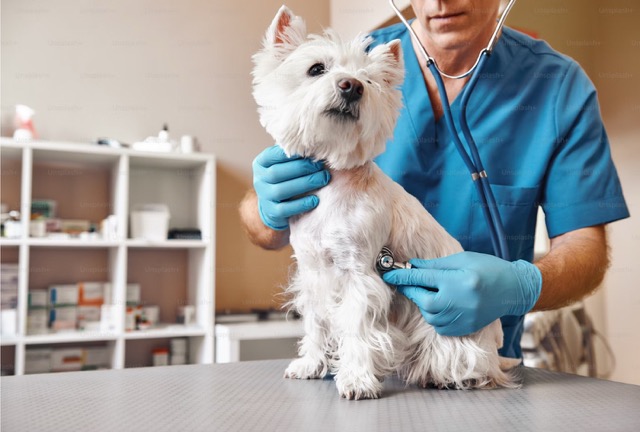
A dog who limped all week can trot across the clinic floor looking sound. Excitement and an unfamiliar environment mask discomfort for a few minutes, so your veterinarian combines what the examination shows with what you report from home. Bring short videos, notes on which movements have become difficult, a full list of medicines and supplements, and any history of injuries or changes in exercise.
The visit works like assembling a puzzle from two boxes. The examination supplies one set of pieces: where pain, thickening, or restricted movement appears. Your home observations supply the other: when the problem began, what triggers it, and whether stiffness follows rest or activity.
What the examination can include
Your veterinarian may watch your dog walk and trot, then feel each joint for pain, swelling, heat, and restricted motion. Muscle condition, differences between limbs, body condition, and weight bearing show whether one joint or several are involved.
| Part of the evaluation | What it helps clarify |
|---|---|
| Activity and injury history | When the problem began and what may contribute |
| Walking and joint examination | Which movements or areas appear affected |
| Muscle and body-condition assessment | Whether weakness or excess load needs attention |
| Imaging when appropriate | Structural changes within bones and joints |
| Health and medication review | Which treatments may be suitable and require monitoring |
Radiographs can confirm osteoarthritis, but the amount of change on an X-ray does not directly measure pain. A worn-looking joint may still function comfortably, and mild changes can accompany real discomfort. Your veterinarian reads the images beside the examination and your account of daily function.
Why the health review matters
Kidney, liver, and gastrointestinal health shape which pain medicines a dog can safely take. Current medications, hydration concerns, and possible interactions factor in too. Bloodwork may be recommended, though the testing plan should follow your dog's history rather than an assumption that every dog needs identical tests.
Age alone does not settle the question. Joint disease can appear well before old age, so persistent difficulty in a younger dog still deserves assessment.
A good appointment ends with a workable plan: the suspected source of pain, which joints are involved, whether weight contributes, and how progress will be checked. Ask which specific movements signal improvement for your dog, since a defined target lets you measure change instead of guessing. A clear diagnosis also keeps treatment grounded in options with demonstrated benefit, because joint therapies differ in how strongly the evidence supports them.
Follow-up visits let your veterinarian compare new findings against the original baseline. This guide to routine veterinary visits when using an online pharmacy explains why prescription access should stay connected to ongoing care.
Prescription Options for Canine Joint Pain
Maybe a friend's Labrador limped less within days of starting one medication, and now you wonder whether the same drug would help your own stiff dog. Nobody can answer that from the product name alone. Prescription pain control is an individual medical decision, built from your dog's exam findings, health history, and daily function.
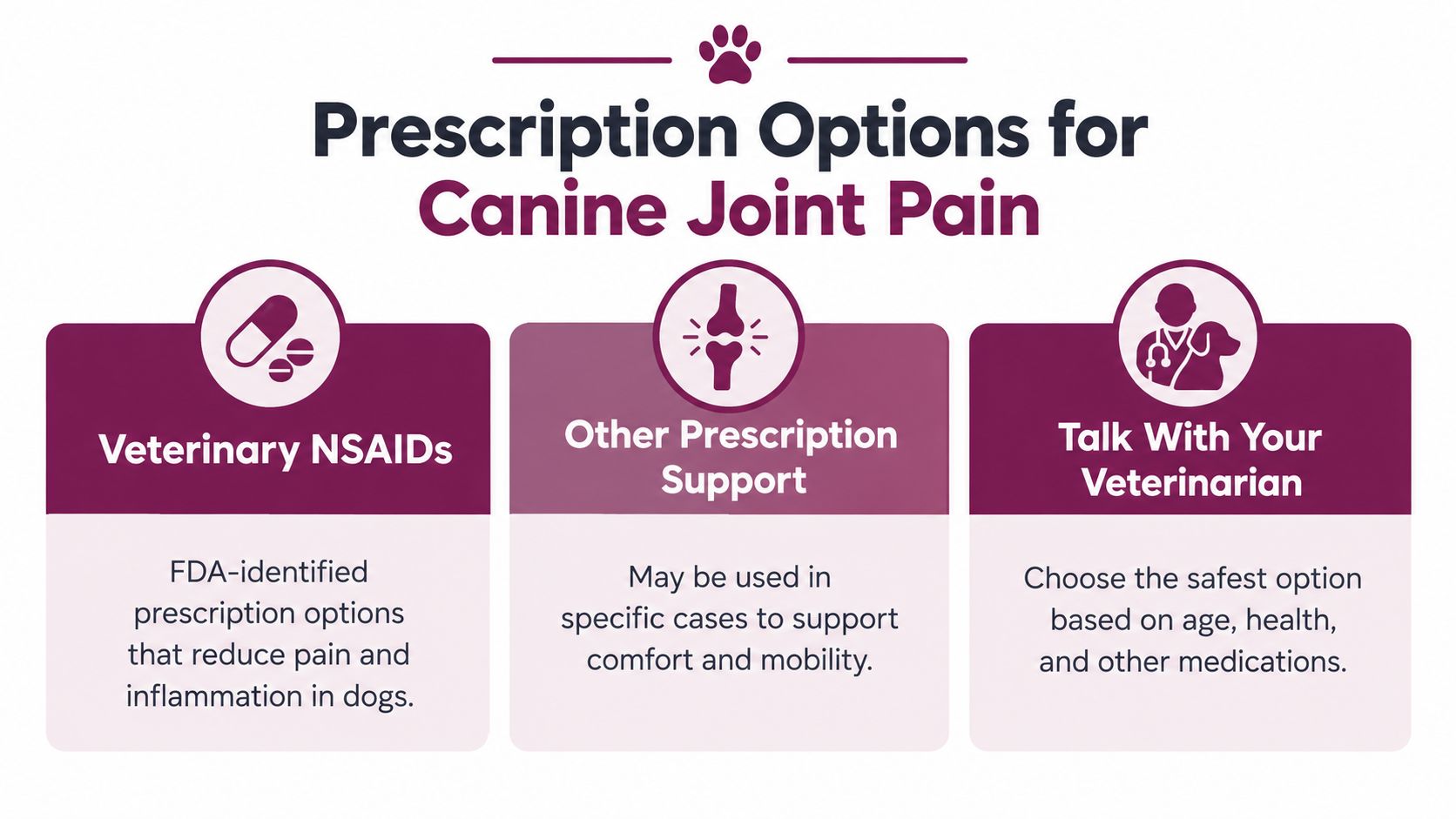
Veterinary nonsteroidal anti-inflammatory drugs, or NSAIDs, are commonly prescribed to control pain and inflammation associated with canine osteoarthritis. They are the longest-established prescription option for this condition, which is why veterinarians often reach for them first. An NSAID may still be unsuitable for a particular dog, and another dog's prescription is not a safe substitute for an examination.
Some options carry stronger evidence than others
| Approach | Standing in the care plan | Who decides | Owner limit |
|---|---|---|---|
| Prescription veterinary NSAIDs | Longest-established control of OA-related pain and inflammation | Prescribing veterinarian | Follow the prescription exactly |
| Therapies targeting nerve growth factor | Address pain through a different pathway for selected dogs | Veterinarian assessing suitability | Don't treat them as interchangeable with an NSAID |
| Other individualized prescription support | Fill specific gaps within the care plan | Veterinary team | Don't add, combine, or substitute on your own |
| Rehabilitation and supportive care | Support movement alongside medical care | Veterinary team with owner participation | Stay within the recommended activities |
A newer mechanism may still be the wrong fit for a particular dog. Before any prescription starts, ask your veterinarian three questions: why this option, what improvement you should notice first, and how the clinic will measure benefit and adverse effects. Those answers give you a yardstick for judging whether the treatment is working.
Know the medication boundaries
The FDA's guidance on veterinary NSAID counseling advises following prescribed dosing and using the lowest dose that adequately controls pain. Don't increase the dose, frequency, or duration yourself.
Commonly reported adverse effects include vomiting, reduced or absent appetite, and decreased activity. Serious complications can include gastrointestinal ulceration or perforation, kidney failure, and liver failure. These complications aren't diagnoses an owner can make at home, so report concerning changes promptly and ask for instructions before stopping, adjusting, or replacing treatment.
For product-specific educational context, review the guide to Meloxidyl for dogs, then confirm any questions with the prescriber. An educational page can't establish that the medication suits your dog.
Filling an existing prescription
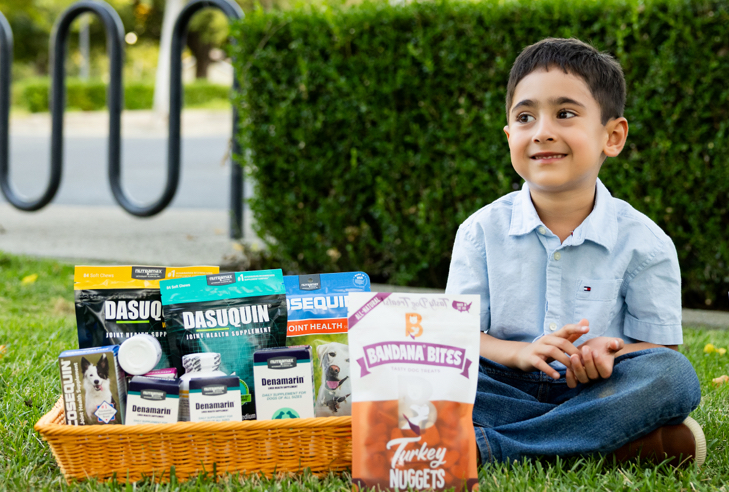
Bandana Rx is a licensed U.S. online veterinary pharmacy based in Concord, California. It processes prescription orders after veterinary authorization and ships to eligible states, with prescription verification, order tracking, and scheduled deliveries where available.
Once your veterinarian has selected a treatment, you can review the pharmacy's pain-management products and purchasing details on its site. Confirm prescription status, strength, and whether Buy Once or AutoShip is offered for the particular product. Convenient refills should support the prescribed plan, and reassessment still matters when your dog's needs change.
Weight, Movement, and Joint Support at Home
A dog carrying extra weight loads every step with more force than its joints were built for. Extra body fat works like a backpack worn all day: each stair climb and each rise from rest costs more effort. That is why home care matters, and it is also why home care has limits. Home care should make prescribed treatment easier to carry out, and it should never compete with that treatment.
Start with weight. Ask your veterinarian for a calorie target, a safe rate of loss, and rechecks that assess muscle as well as pounds on the scale. Cutting food sharply on your own can strip muscle along with fat, and muscle is what keeps a sore joint stable.
Movement needs the same kind of matching. Shorter, more frequent controlled walks are usually easier for a painful dog than one demanding weekend outing. Repetitive ball chasing on hard ground adds sudden stops and twists that a sore joint handles poorly, so save fetch for when your veterinarian agrees the joint is ready.
Build a manageable routine
- Reduce slipping and jumping. Secure rugs give traction on hard floors, and an appropriate ramp helps with cars, couches, or porch steps.
- Choose controlled movement. Follow the veterinary activity plan, and report increased discomfort after exercise instead of pushing through it.
- Ask about rehabilitation. Veterinary-directed physical therapy can address strength, range of motion, and controlled activity without asking you to improvise exercises at home.
- Review food and treats together. Look at weight-management products only within the nutritional plan your veterinarian recommends.
Each measure does a different job. A rug improves footing. Rehabilitation guides exercise. Calorie control reduces the load the joint carries. None of them establishes a diagnosis.
Rank supplement evidence by the product actually studied
Omega-3 fatty acids have supporting evidence as an add-on to prescribed treatment, with benefits measured over weeks rather than days. In a randomized 90-day trial involving 38 dogs with osteoarthritis, a diet containing 3.5% fish-oil omega-3 fatty acids, compared with 0.11% in the control diet, produced a 5.6% improvement in mean peak vertical force versus 0.4%; improvement occurred in 82% of supplemented dogs versus 38% of controls.
Peak vertical force is a pressure-plate measurement of how much weight a dog puts through a limb while walking. It works like a bathroom scale under one paw, captured mid-stride. A higher number means the dog trusted the limb more. That result came from one specific diet, so it cannot guarantee that any fish-oil bottle on a store shelf matches the studied formulation or outcome.
Check the actual EPA and DHA content with your veterinarian before buying. Raise pancreatitis risk, bleeding disorders, gastrointestinal disease, and current medications at that conversation.
Evidence elsewhere is thinner. A 2025 critical appraisal of seven platelet-rich plasma studies concluded that evidence for reducing canine osteoarthritis pain and lameness remained weak. Eggshell-membrane findings apply only to the products studied, and sensory-nerve block methods remain under investigation rather than established cures.
A listing such as NOW glucosamine chondroitin with MSM shows why an ingredient name alone cannot settle the question. That product is formulated for people, so canine dosing and safety cannot be inferred from the label. Ask your veterinarian about an appropriate veterinary product, and afterward you can review supplement choices through the pharmacy described earlier. Supplements add to a prescribed plan; they do not replace pain relief or a workup.
How to Tell Whether Care Is Helping
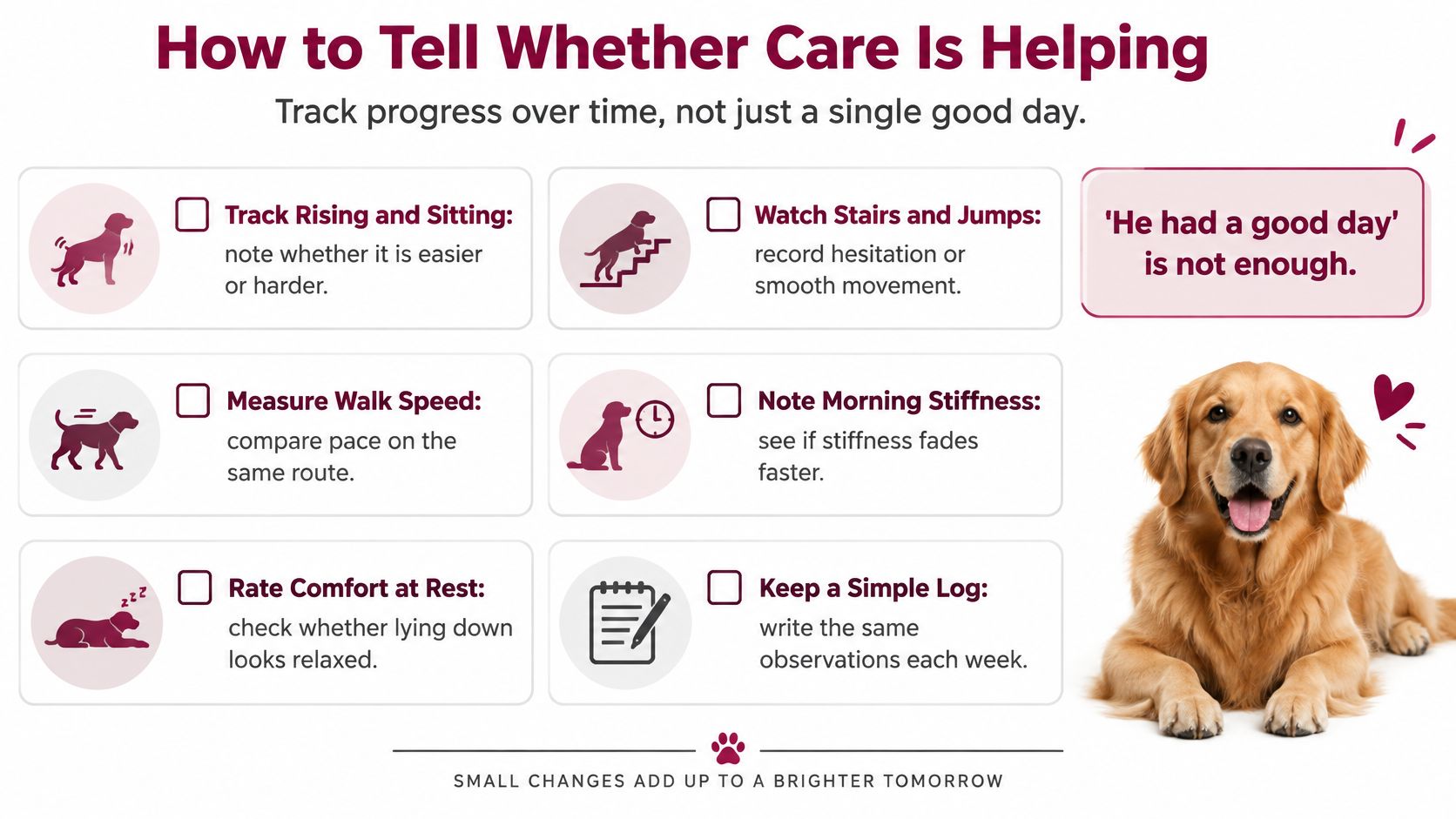
A “good day” can lift your hopes, but one cheerful afternoon is like one sunny reading on a thermometer: useful, not the trend. Look for change in the same ordinary tasks your dog does every week.
A 2025 sensory-testing study of dogs with hip or stifle osteoarthritis found worse lameness, mobility, overall osteoarthritis, and joint-pain scores than in healthy controls, but no significant differences on those measures between treated and untreated OA groups. Group averages can hide individual response, so your dog's own baseline matters more than a general promise.
Keep a two-week observation log
Pick three repeatable checks, then test under similar conditions: same floor, similar time of day, no forcing. This is an observation routine, not a reason to delay contacting the clinic about deterioration.
| What to record | How to keep it comparable |
|---|---|
| Rising from rest | Note time and effort after a similar rest period |
| Necessary stairs | Record hesitation or assistance without forcing attempts |
| Familiar walk | Note duration, pace, stopping, and willingness |
| Play | Describe interest and comfortable participation |
| Sleep | Note restlessness and repeated repositioning |
| Phone video | Use the same surface and viewing angle |
Ask your veterinarian whether a validated owner questionnaire would help. Bring the log and videos to the planned review, including difficult days rather than only the best examples.
Decide the next step with your veterinarian
A useful improvement is specific: getting out of bed more comfortably, completing a familiar walk willingly, or resting with less interruption.
Judge options in tiers: prescribed treatment with a target your veterinarian set, home changes you can measure, and products whose evidence is weaker or product-specific. Use the guide to joint-support supplements to prepare questions, not to select a replacement for treatment.
Contact the clinic if there is no improvement within the interval your veterinarian set, a suddenly worse limp, vomiting, or appetite loss. A partial response may warrant medication review, rehabilitation referral, or investigation of another pain source. Keep dose and frequency as prescribed unless the veterinarian directs otherwise.
Bandana Rx offers prescription pet medications and joint-support products for veterinarian-guided care. Once the plan and review date are set, keep product, strength, and refill details consistent, then report your dog's tracked results before changing anything.