

You find the fleas while checking a tiny kitten's coat, and suddenly every product label and online recommendation seems to say something different. For a kitten that's only four weeks old, don't start by choosing the strongest flea medicine. Start with two questions: How much does the kitten weigh, and what does the exact product label permit?
That distinction matters because a product's minimum age doesn't tell you whether this particular kitten meets its weight limit or is well enough for treatment. When a labeled chemical product isn't appropriate, flea combing and careful environmental control are practical ways to reduce the infestation while you get veterinary guidance.
Table of Contents
- Why a 4-Week-Old Kitten With Fleas Needs a Different Plan
- How FDA and EPA Labeling Decide What You Can Actually Use
- Common Flea Products and Why Most Exclude a 4-Week-Old
- Flea Combing and Bathing When Chemicals Are Off the Table
- Treating the Environment So Fleas Stop Coming Back
- Toxicity Warning Signs and When to Call the Veterinarian
- Follow-Up Care, Refills, and a Caretaker Checklist
Why a 4-Week-Old Kitten With Fleas Needs a Different Plan
A foster caretaker finds fleas on a four-week-old kitten and reaches for a bottle marked “for cats” or “kitten-safe.” That label alone isn't enough. Flea products have different minimum ages and weights, and a kitten's small size can make a product unsuitable even when the kitten has reached the age printed on the package.
Fleas also matter for more than itching. A heavy infestation can contribute to anemia, and fleas can transmit infectious agents and tapeworms. A very young kitten has limited blood volume, so the priority is to reduce fleas without exposing the kitten to a pesticide that the label doesn't allow or the kitten can't safely receive. Merck Veterinary Manual's overview of fleas in cats describes the health concerns associated with infestation and the need to manage fleas on the animal and in its environment.
Two questions set the safe path
First, weigh the kitten. Don't estimate by appearance. A kitten may be old enough for a product but still fall below its minimum weight, and that makes the product ineligible.
Second, read the exact product label. Confirm that it's for cats, that it specifically permits kittens of this age, and that the kitten meets the minimum weight. If any requirement isn't met, don't apply the product.
Practical rule: When no chemical product fits the kitten's age and weight, use a flea comb and address the environment while contacting a veterinarian for advice.
The approach is two-track: use mechanical flea removal and household cleaning when the kitten isn't eligible for a labeled product, and verify the label and measured weight before considering any pesticide. Pale gums, weakness, unusual sleepiness, poor feeding, or rapid breathing call for prompt veterinary assessment, not a stronger dose.
How FDA and EPA Labeling Decide What You Can Actually Use
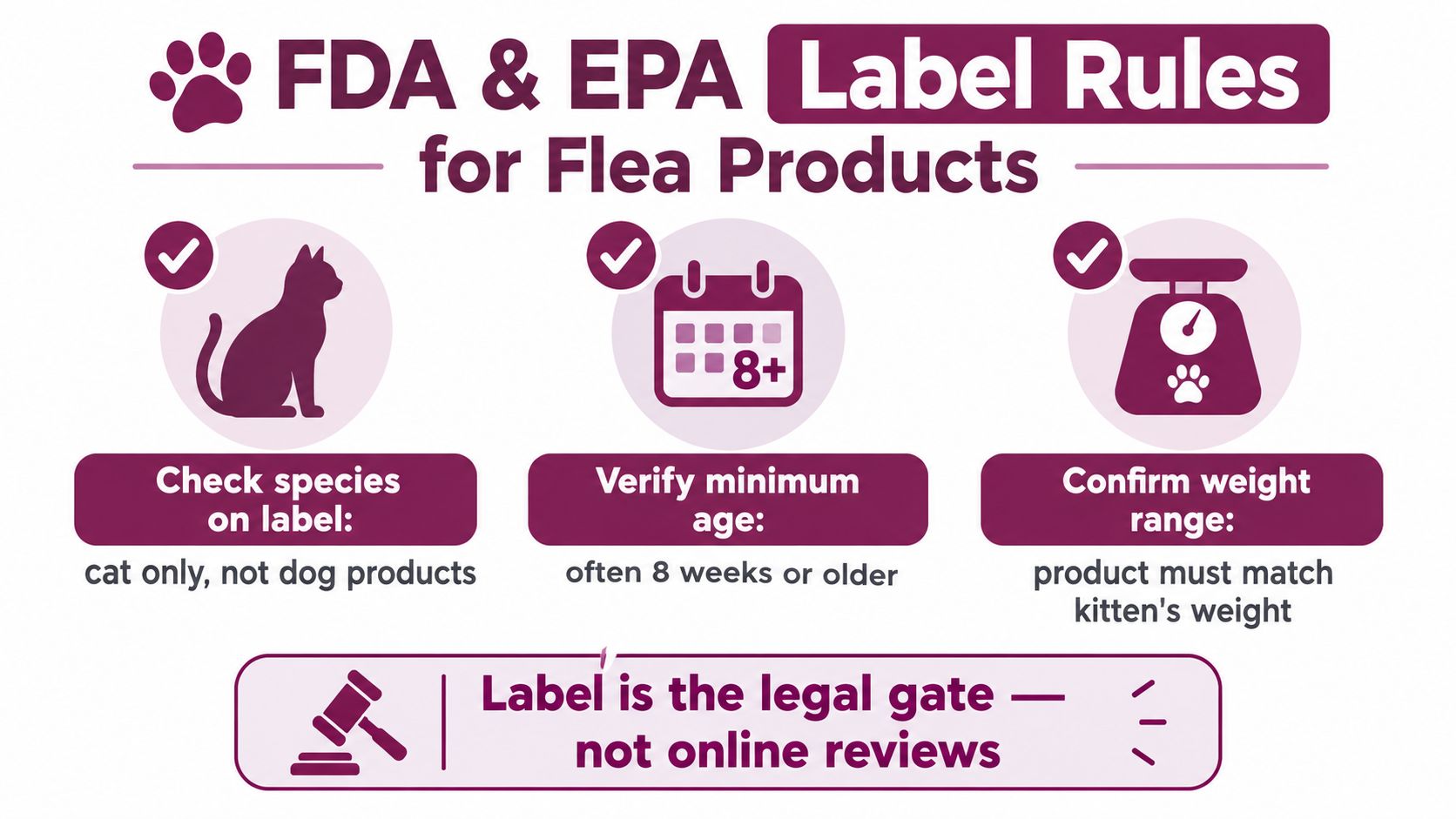
In the United States, the product label is the gatekeeper. The FDA's guidance on safely using flea and tick products says a product must match the pet's species, life stage, and minimum weight. The EPA's guidance on controlling fleas and ticks on pets also warns that younger animals can respond differently and says not to use a product unless its label specifically permits use in kittens.
That means an online recommendation, a product used on an adult cat, or a label that says “cats” without confirming kitten eligibility isn't enough. Check the package instructions for the kitten's species, age, weight range, application directions, and any relevant warnings. If the label doesn't clearly allow the kitten's age and weight, don't use it.
The narrow four-week exception
Nitenpyram, marketed as Capstar, is a notable product-specific exception. Its label permits use in cats and kittens starting at four weeks of age, but the kitten must weigh at least two pounds and receive the labeled dose. Many kittens at this age weigh less than that, so reaching four weeks doesn't automatically make the kitten eligible.
The FDA record describes a six-week laboratory safety study in 36 approximately four-week-old kittens. All survived to study completion, and no test-article-related adverse effects were reported. Increased Heinz bodies appeared in the group given three times the recommended dose, though values stayed within normal limits and weren't linked to clinical abnormalities. That study supports only a narrow label-based conclusion. It doesn't justify giving an underweight kitten the medication, using more than the labeled dose, or extrapolating to other products.
For a straightforward guide to checking directions and warnings, see how to read pet medication labels, dosage warnings, and storage information. If you're also cleaning the home, pet-safe cleaning tips from Sunny Day can help you think through household products around animals.
Common Flea Products and Why Most Exclude a 4-Week-Old
A four-week-old kitten won't qualify for many common feline flea products. The table shows why checking only the product name or active ingredient isn't enough. The label's age and weight limits both matter.
| Product | Minimum Age | Minimum Weight | Extra Label Notes |
|---|---|---|---|
| Nitenpyram (Capstar) | 4 weeks | 2 pounds | Label permits use in cats and kittens meeting both limits. |
| Comfortis | 14 weeks | 4.1 pounds | Not suitable for a four-week-old kitten. |
| Imidacloprid/moxidectin topical | 9 weeks | 2 pounds | Not for sick, debilitated, or underweight cats. |
| Bravecto topical | 12 weeks | 2.6 pounds | Labeled dose is 18.2 mg per pound every 12 weeks. |
The FDA's approved feline flea product labeling provides these product-specific thresholds. For imidacloprid/moxidectin, the kitten safety study involved healthy nine-week-old kittens, not four-week-olds. A study in older kittens doesn't establish safety in younger ones, and it doesn't make it appropriate to use an older-label product early.
Match the whole label, not one number
Before using a chemical product, verify all of the following:
- Species: The product must be labeled for cats. Never substitute a dog formulation.
- Age: The kitten must have reached the minimum age on that specific label.
- Weight: Weigh the kitten and confirm it meets the product's minimum.
- Health and directions: Follow the label's dosing and warnings. Ask a veterinarian if the kitten is unwell, underweight, or you're uncertain.
A four-week-old kitten that meets the nitenpyram label's age and weight requirements still needs the correct product and labeled directions. Don't convert an adult-cat dose, split a different product, combine treatments, or choose a product because it's described online as generally “kitten-safe.” For context on what product claims can and can't establish, read about the effectiveness of over-the-counter flea products.
Flea Combing and Bathing When Chemicals Are Off the Table
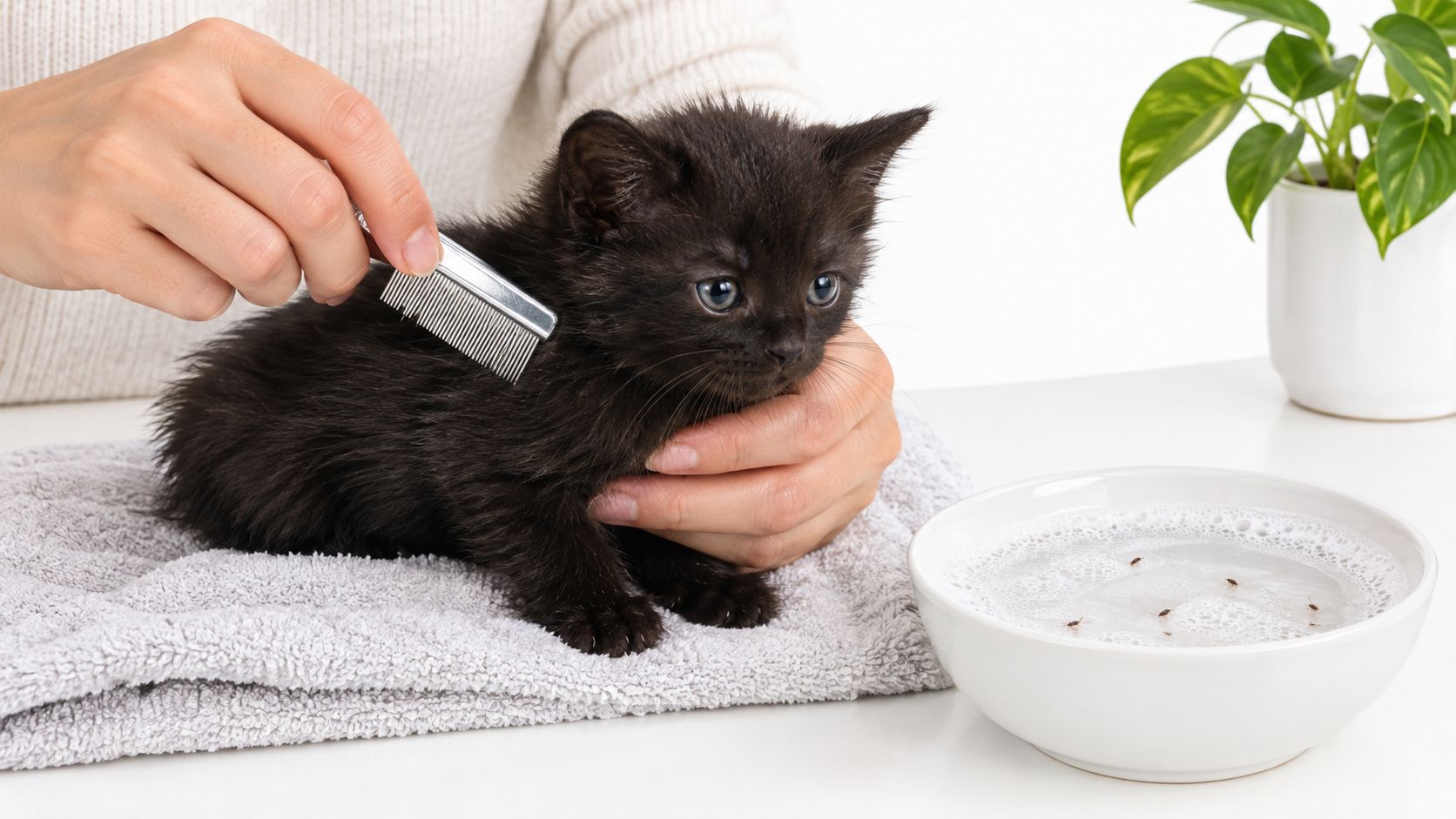
When the kitten is too young or too light for a labeled flea product, a flea comb gives you a way to remove fleas without applying an ineligible pesticide. The FDA recommends flea-combing puppies and kittens that are too young for an appropriately labeled product. During an active infestation, comb the kitten at least daily and check the queen and other household animals as well.
A gentle, repeatable routine
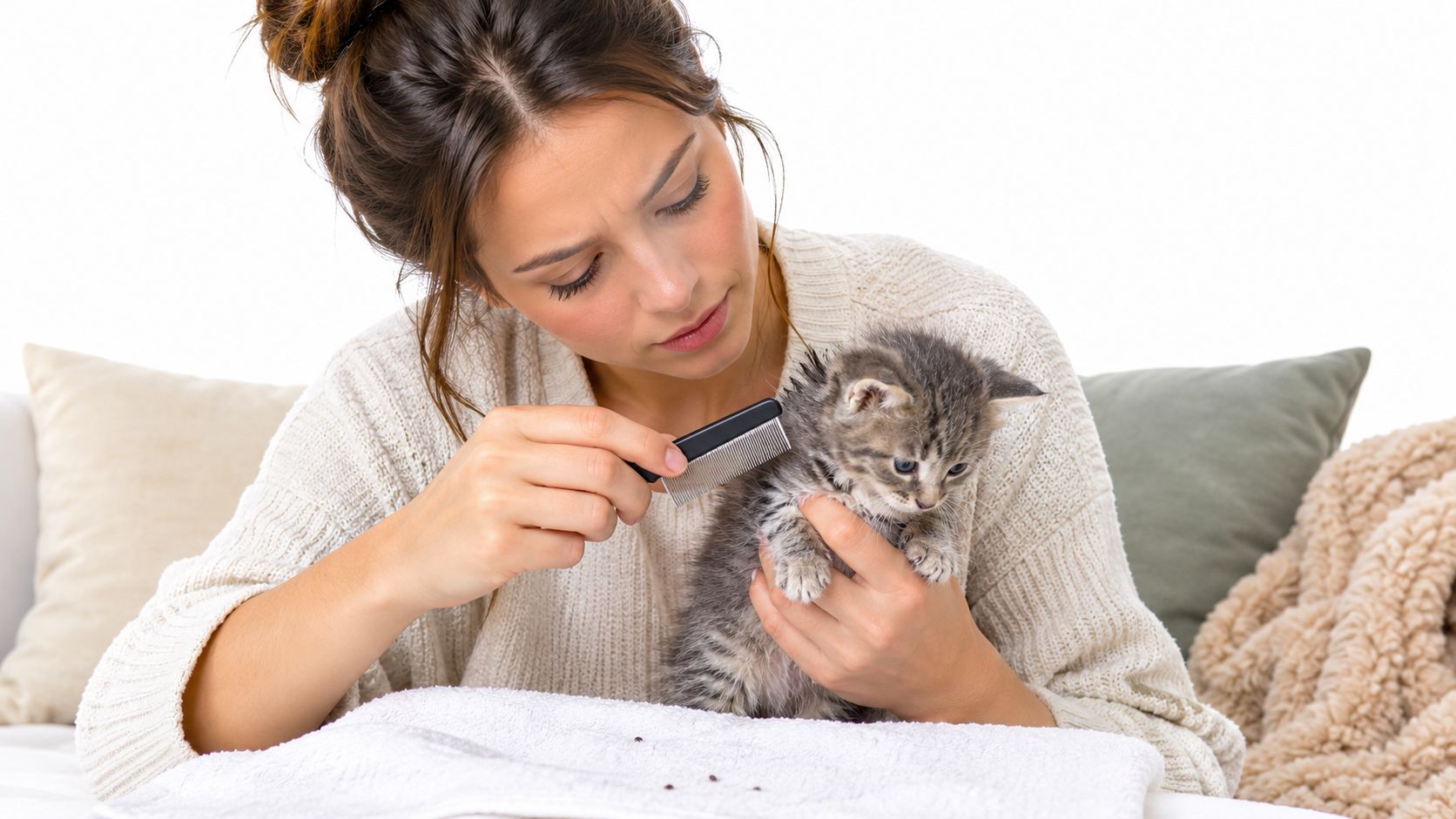
Set the kitten on a towel in a warm, calm space. Comb slowly through the coat, especially around the neck, belly, and tail base. After each pass, check the comb and dunk any captured fleas into hot, soapy water so they can't jump back onto the kitten.
Dark debris in the coat may be flea dirt. Place a few specks on a damp white surface. If the debris leaves a reddish-brown stain, that's consistent with digested blood and supports the suspicion of fleas.
If a bath is needed, use warm, not hot, water and a small amount of plain, mild soap formulated for kittens. Keep water and soap away from the eyes, ears, and mouth, rinse thoroughly, and towel-dry the kitten promptly. Young kittens can become chilled, so keep the bath brief and return the kitten to a warm, dry place. Don't bathe repeatedly as a substitute for veterinary advice, and don't use medicated flea shampoo unless a veterinarian confirms it's appropriate for this kitten.
Comb daily while fleas are present, and inspect the queen and every household pet. Removing adult fleas from the kitten won't prevent more from emerging in the home, so pair this routine with environmental cleaning. If the kitten seems weak, cold, unusually sleepy, or isn't nursing, stop home treatment and contact a veterinarian promptly.
Treating the Environment So Fleas Stop Coming Back
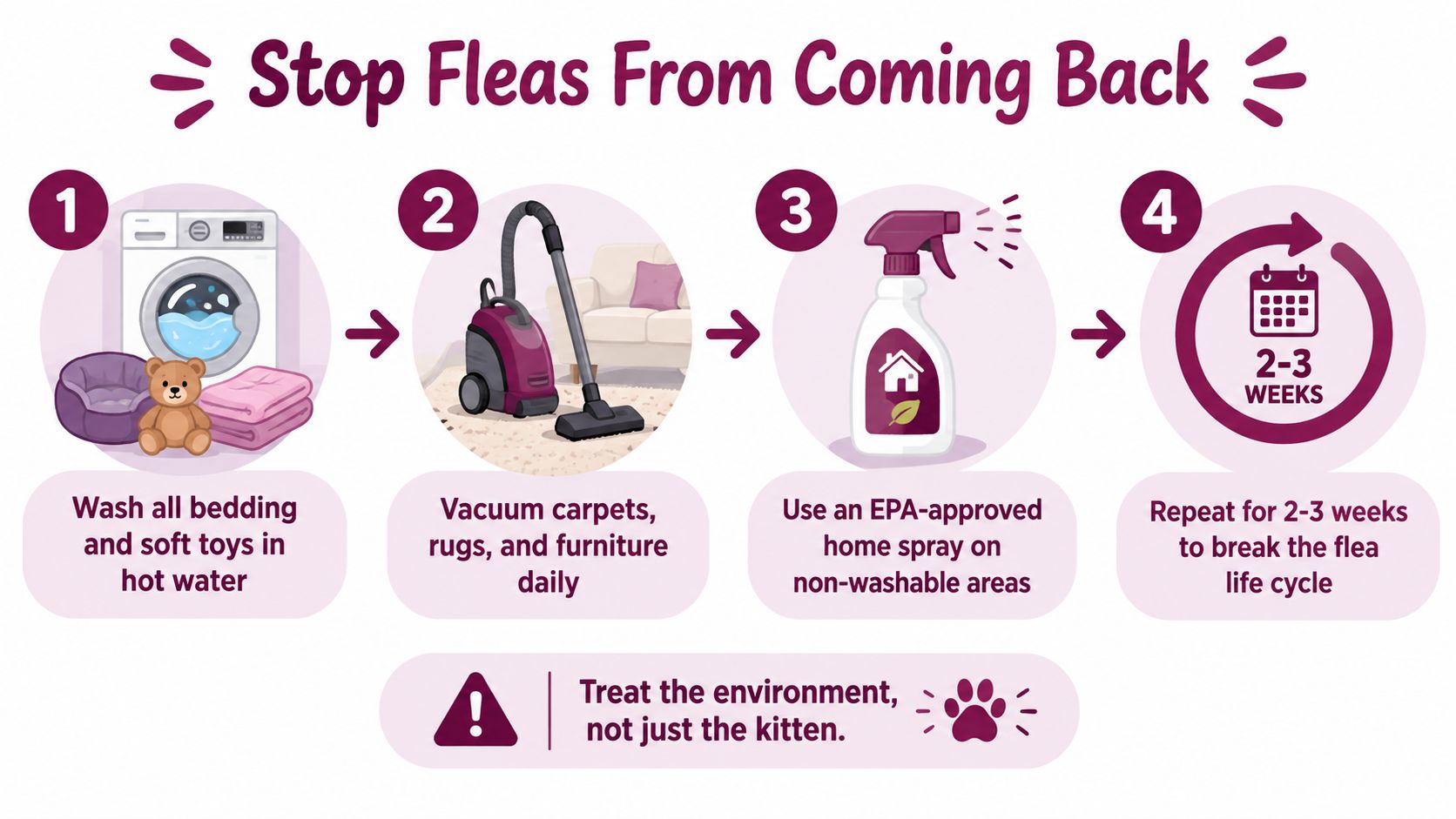
A flea comb or bath can remove fleas from the kitten, but it won't clear eggs and larvae hiding in the home. Merck identifies bedding, carpets, furniture crevices, closets, gaps in flooring, and spaces beneath furniture as important flea-development sites. Treating the kitten without cleaning those areas leaves room for reinfestation.
Clean where the kitten rests
Launder the kitten's bedding on the hottest fabric-safe cycle. Vacuum the areas where the kitten sleeps, along floor edges, under furniture, and in carpet and furniture crevices. Pay attention to closets and gaps in flooring, then empty the vacuum outside so fleas don't remain in the canister or bag indoors.
Check the queen and all household cats and dogs. Each animal needs a preventive that's appropriate for its species, age, weight, and health, chosen according to its own label and veterinary advice. Never use a dog product on a cat, and don't apply household sprays where animals can contact them unless the product label permits use in that setting and you follow its directions.
For severe infestations, Merck notes that a second environmental treatment may be needed 7–10 days later. That timing is not permission to apply a pesticide to the kitten or to repeat a product contrary to its label. If you're considering outdoor exposure as part of the problem, how to check your yard for fleas offers additional context on inspecting the yard.
Flea control takes attention to both the animal and the places it rests. For more general background on fleas and ticks, keep in mind that any treatment used around a kitten must still be checked against the product's own directions and the kitten's situation.
Toxicity Warning Signs and When to Call the Veterinarian
More flea product isn't safer. Don't give an extra dose, combine products, or use an adult-cat or dog formulation because fleas are still visible. The label sets the product's directions, and an older-kitten safety study can't establish that a different dose is safe for a four-week-old.
A heavy flea burden is medically important in a small kitten because blood loss can contribute to anemia. Merck Veterinary Manual's information on flea-associated disease discusses anemia assessment in severe cases and identifies links between fleas, transmission of Mycoplasma haemofelis, and the life cycle of Dipylidium caninum, a tapeworm. Fleas are not only a skin irritation problem.
Red flags need prompt veterinary care
Contact a veterinarian urgently if the kitten has pale gums, weakness, unusual sleepiness, poor feeding, rapid breathing, dehydration, or failure to gain weight. These signs can point to anemia or systemic illness. They aren't reasons to increase pesticide frequency.
If a product has already been applied and the kitten becomes unwell, contact a veterinarian and have the package available so the clinic can identify the product and its directions. Don't apply another product while waiting for advice.
Do not substitute or combine: Dog flea products aren't a workaround for a kitten's age or weight limits. Don't mix flea treatments or exceed a labeled dose.
A veterinarian can assess whether the kitten needs evaluation for anemia or other illness and help decide what flea-control steps are appropriate. Routine veterinary visits and medication guidance can support ongoing care, but urgent symptoms shouldn't wait for a routine appointment.
Follow-Up Care, Refills, and a Caretaker Checklist
Keep the routine simple and written down where everyone caring for the kitten can see it. That helps prevent missed checks, duplicate treatment, or a well-meaning caretaker applying a product that doesn't fit the kitten's age and weight.
The kitten flea-care checklist
- Weigh the kitten and record the result.
- Read the exact product label before considering any chemical treatment.
- Comb daily during an active infestation and remove fleas from the comb.
- Bathe only if needed, using warm water and mild kitten-formulated soap, then dry the kitten promptly.
- Clean bedding and resting areas and check the queen and other pets.
- Watch for red flags, including pale gums, weakness, poor feeding, or rapid breathing.
- Call a veterinarian promptly if the kitten is symptomatic, underweight, or you can't confirm product eligibility.
As the kitten grows, a veterinarian can help select a preventive that matches the kitten's age, weight, and health. Continue to follow the chosen product's label, and don't start, stop, or change a prescribed medication without veterinary direction. For related parasite-care context, see this guide to prescription cat dewormers.
Once a veterinarian has approved an appropriate product, scheduled delivery may be convenient for recurring prevention. AutoShip is useful only when it's available for the selected product and the treatment schedule has been confirmed with the veterinarian.
Bandana Rx offers prescription and over-the-counter pet medications and preventive products, with prescription orders processed after veterinary authorization. Visit Bandana Rx to review available feline flea and parasite care options when your kitten is old enough, and confirm product choice and dosing with the veterinarian.