

You give your dog the thyroid tablet as prescribed, then notice panting, a restless night, or an upset stomach. It's natural to wonder whether the medication is causing harm. Thyroid medication side effects in dogs can be confusing because the same signs may come from excessive thyroid hormone, the underlying illness, or an unrelated health problem.
Levothyroxine is a prescription thyroid-hormone replacement medicine used under veterinary supervision for canine hypothyroidism. The safest response to a new symptom isn't to stop the medication or change the dose independently. Instead, look at the pattern of signs, record what happened and when, and contact the prescribing veterinarian when the symptoms are persistent, severe, or occur together.
Table of Contents
- Understanding Thyroid Medication and Your Dog
- Reported Reactions Versus Proven Side Effects
- Recognizing the Signs of an Excessive Dose
- The Critical Role of Timed Blood Monitoring
- When to Contact Your Veterinarian Immediately
- Managing Refills and Safe Medication Storage
Understanding Thyroid Medication and Your Dog
Maya had been waiting for her dog, Cooper, to regain his usual energy. After starting levothyroxine for hypothyroidism, she noticed that he seemed brighter, but then he vomited after a meal. The timing made the medication an obvious suspect. Before calling the clinic, Maya also noticed that Cooper had been eating differently and had recently started another treatment, details that changed how the veterinarian interpreted the episode.
Levothyroxine replaces thyroid hormone that a dog with hypothyroidism doesn't produce adequately. Thyroid hormones influence metabolism, energy use, body temperature, heart rate, and other normal body functions. When treatment is correctly selected and monitored, the purpose is to help restore those functions, not to push them above normal.
That distinction matters because a symptom appearing after a dose isn't automatically a medication side effect. Vomiting, appetite changes, tiredness, skin problems, and changes in thirst can have several explanations. Some may reflect the original condition, a separate illness, another medicine, a food change, or a dose that needs professional review.
What owners should observe
Keep a simple record that includes:
- The medication: Write down the product name, prescribed strength, dosing schedule, and whether it was given with food.
- The timing: Note when the symptom began in relation to the dose and whether it repeats.
- The pattern: Record appetite, water intake, urination, breathing, energy, bowel movements, and body weight when your veterinarian recommends weighing.
- Other treatments: Include supplements, over-the-counter products, and recently started prescriptions.
A dog receiving a thyroid prescription still needs individualized care. Your veterinarian decides whether levothyroxine is appropriate, how the dose should be evaluated, and whether another condition is contributing to the change. You can review Thyro-Tabs Canine as an example of a canine levothyroxine product, but product information doesn't replace a prescription or veterinary assessment.
Practical rule: Treat a new symptom as information to share with the clinic, not as proof that the medicine must be discontinued.
Reported Reactions Versus Proven Side Effects
Medication labeling can feel alarming because it lists events observed while dogs were receiving treatment. An observed event means that the sign occurred during the study period. It doesn't prove that levothyroxine alone caused it, particularly when dogs may have underlying disease or other health factors.
A U.S. pre-approval field study followed 92 dogs for six months. The product information reported the following events during that experience, with the important qualification that these frequencies describe reported events rather than reactions proven to be caused solely by the medication. The figures are provided in the DailyMed consumer information for levothyroxine sodium.
Reported events in canine levothyroxine field study
| Observed symptom | Frequency in study |
|---|---|
| Anorexia, reduced appetite | 17% |
| Dermatitis | 15% |
| Vomiting | 15% |
| Otitis externa, outer-ear inflammation | 14% |
| Lethargy | 14% |
| Increased thirst | 13% |
| Diarrhea | 11% |
| Leukocytosis | 9% |
| Itching | 8% |
| Rapid breathing | 8% |
| Increased urination | 5% |
| Hyperactivity | 4% |
| Seborrhea | 1% |
These figures are useful context, but they're easy to misread. For example, lethargy may look inconsistent with excessive thyroid hormone, yet it was reported during the study. Dermatitis and ear disease can arise from allergies, infection, or other causes. Reduced appetite and vomiting can also occur with unrelated gastrointestinal illness.
Why the pattern matters more than one symptom
The product information reports that some events, including vomiting, diarrhea, excitation, rapid respiration, tachycardia, and bloody feces, occurred in all treatment groups, although some were more frequent among levothyroxine-treated dogs. That means a veterinarian must consider timing, severity, physical examination findings, concurrent treatments, and laboratory results rather than assigning blame from one symptom.
This is a useful way to think about medication safety: one isolated sign deserves attention, while a cluster of compatible signs deserves faster assessment. A dog that vomits once may need a call to the clinic. A dog that is also panting persistently, unable to settle, drinking much more, and losing weight needs a more urgent conversation about possible excessive thyroid-hormone exposure.
Owners who have read about adverse reactions in another medicine may find the same reasoning helpful in understanding heartworm medication side effects. Different medicines have different safety profiles, so never transfer conclusions from one product to another.
Recognizing the Signs of an Excessive Dose
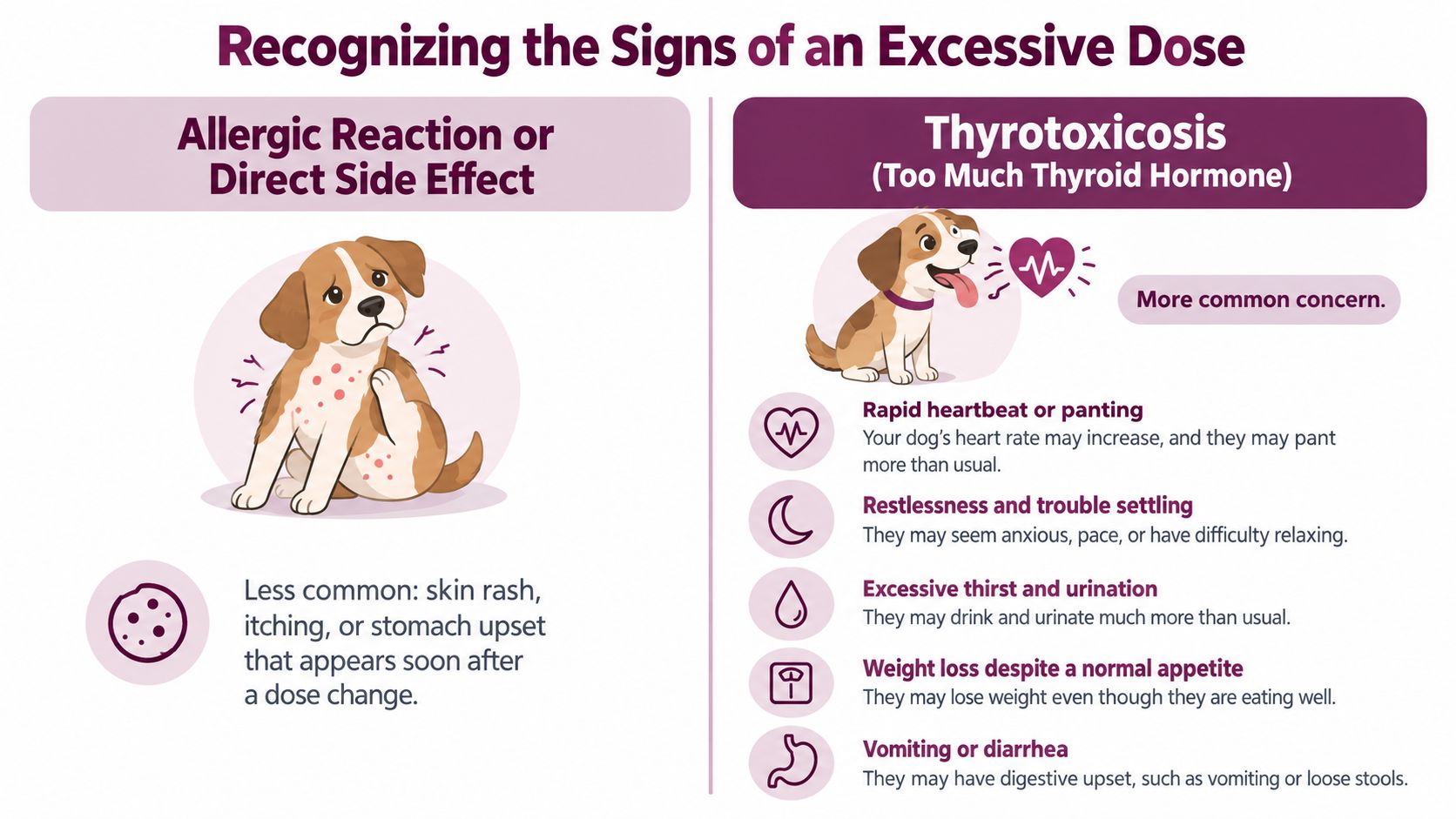
The most important dose-related concern is thyrotoxicosis, a state in which the body is exposed to excessive thyroid hormone. In dogs, this is considered rare, but an excessive prescribed dose or accidental excess exposure can produce a recognizable hypermetabolic pattern. The FDA's information for dog owners lists panting, nervousness, hyperactivity, rapid pulse, increased drinking and urination, vomiting, diarrhea, and weight loss despite increased appetite as possible signs.
Compare the overall patterns
An underactive thyroid and excessive replacement can pull your dog's behavior in opposite directions, but symptoms don't always fit neatly into one category.
| Pattern | What an owner may notice |
|---|---|
| Possible under-replacement or untreated hypothyroidism | Low energy, sluggish behavior, weight gain, or changes in the coat and skin |
| Possible excessive thyroid exposure | Panting, nervousness, restlessness, hyperactivity, rapid pulse, increased thirst and urination, vomiting, diarrhea, or weight loss despite increased appetite |
| Possible hypersensitivity | Itching, hives, erythematous dermatitis, or facial swelling |
These patterns are clues, not diagnoses. A dog can have a skin condition and hypothyroidism at the same time. A dog can become lethargic because of infection, pain, gastrointestinal illness, or another medication. Even when the pattern resembles thyrotoxicosis, confirmation requires veterinary examination and thyroid-hormone monitoring.
What to do when signs cluster
Contact the prescribing veterinarian promptly when several hypermetabolic signs appear together, especially a rapid pulse, persistent panting, marked restlessness, vomiting, diarrhea, or unexplained weight loss. Don't try to correct the problem by skipping tablets, doubling the next dose, or permanently reducing the prescription.
A veterinarian may review the medication history, examine your dog, assess cardiovascular findings, and arrange a timed serum total thyroxine test. Dose adjustments can be made safely when clinical signs and laboratory results are considered together. More information about treatment context is available in thyroid pills for dogs.
The goal isn't to guess whether a tablet is guilty. The goal is to identify whether your dog is receiving the right amount of hormone and whether another problem needs attention.
The Critical Role of Timed Blood Monitoring
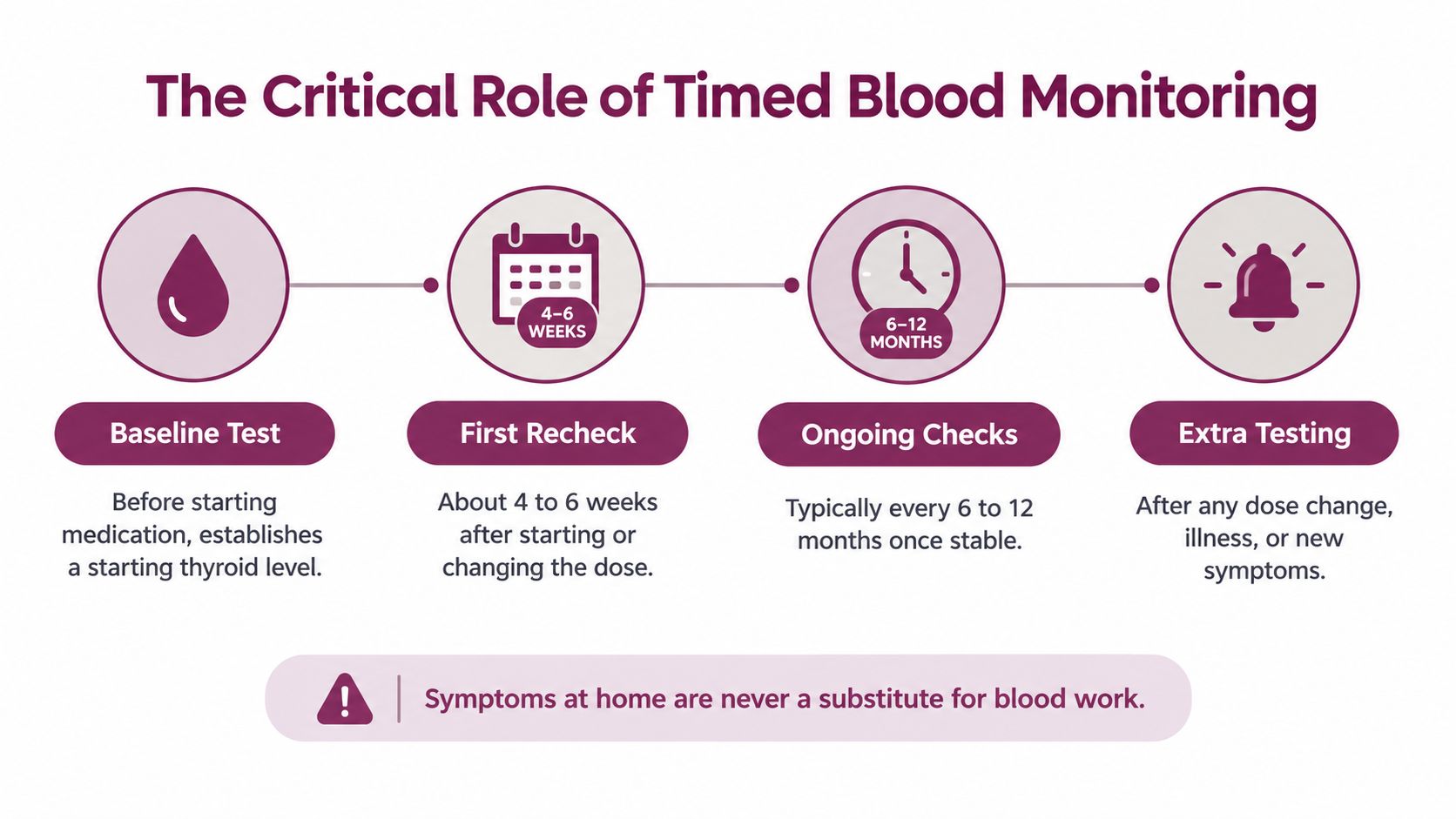
A dog can look comfortable while its thyroid replacement needs change, and a worried owner can also misread ordinary symptoms. Serum total thyroxine, or TT4, testing gives the veterinarian an objective measure, but the timing of the blood draw matters because the hormone level changes after the tablet is administered.
For once-daily levothyroxine, veterinary labeling generally recommends collecting the blood sample 4 to 6 hours after tablet administration. During dose establishment, reassessment is generally performed every 4 to 8 weeks, with the veterinarian interpreting TT4 alongside the dog's clinical response. The Merck Veterinary Manual guidance on hypothyroidism in animals notes that post-dose TT4 should be at the high end of, or slightly above, the laboratory reference interval when treatment is given every 24 hours.
Make each recheck useful
Before the appointment, ask the clinic exactly when to give the dose and when to arrive for the blood draw. Follow the same food and medication routine your veterinarian has instructed, and tell the team if a dose was late, missed, vomited, or given differently.
Once a dog's dose is stable, monitoring is commonly performed once or twice yearly, because the requirement can change with body condition, concurrent illness, absorption differences, or altered drug metabolism. Persistent signs of thyrotoxicosis shouldn't wait for a routine appointment. They justify an earlier call and possibly earlier testing.
Testing is part of long-term care
Rechecks aren't a sign that treatment has failed. They're how the veterinary team verifies that the replacement remains appropriate as your dog's circumstances change. If your family is also coping with a serious chronic illness, Heartstrings Pet Hospice on end-of-life care offers a separate resource for difficult quality-of-life conversations. For medication-specific education, see thyroid hormone therapy.
When to Contact Your Veterinarian Immediately
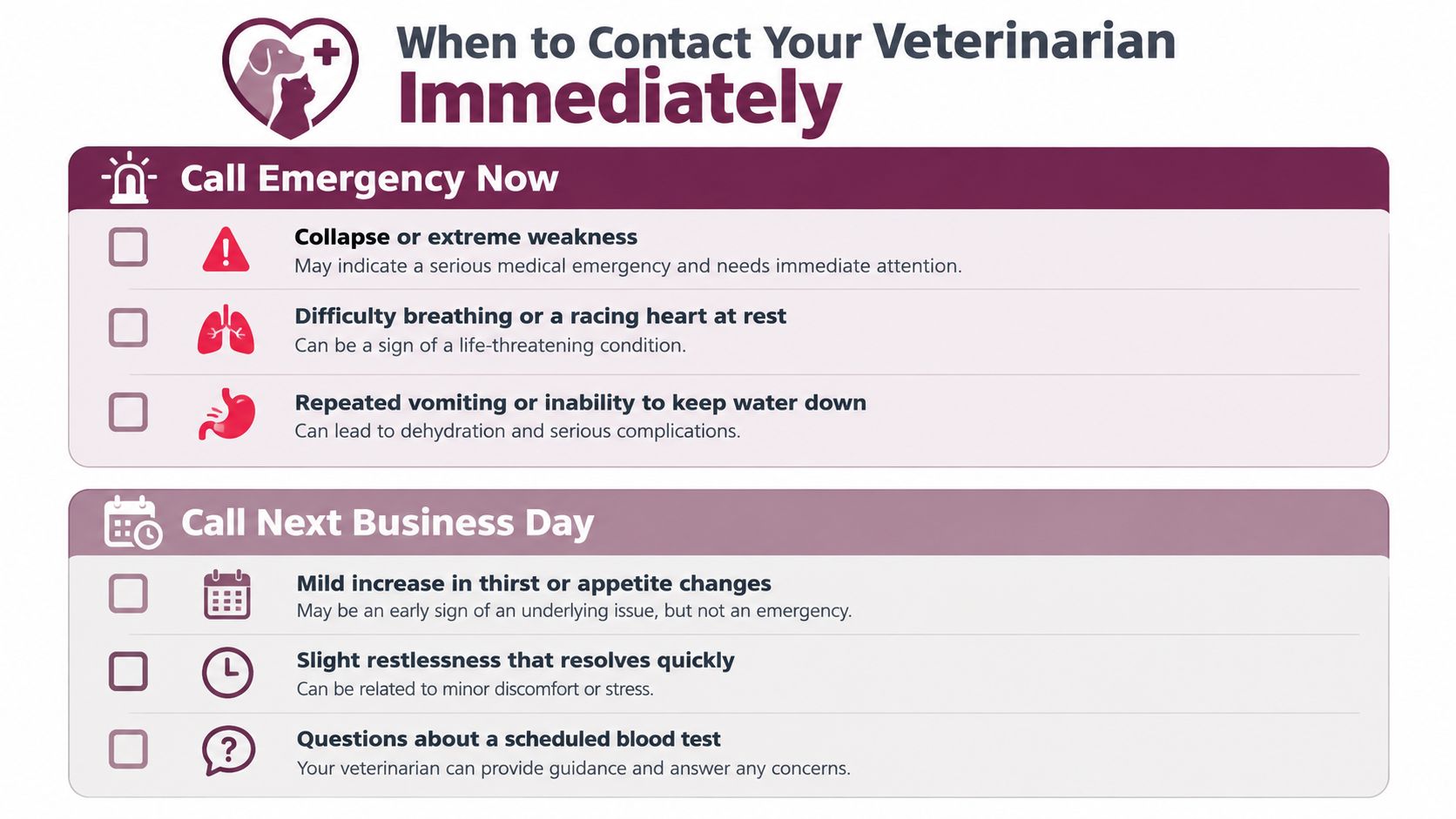
Owners often need a practical threshold, not another long list. The right response depends on severity, combination, and progression. Mild, isolated stomach upset may call for a prompt message to the clinic, while collapse, breathing difficulty, or a racing heart at rest requires emergency attention.
Use this triage framework
Seek emergency care now if your dog has:
- Collapse or extreme weakness: Keep your dog quiet and contact an emergency veterinary service.
- Difficulty breathing or a racing heart at rest: Don't wait to see whether the symptom disappears.
- Repeated vomiting or inability to keep water down: Call promptly because dehydration and the underlying cause both need assessment.
- Facial swelling or hives: These can indicate hypersensitivity and need urgent veterinary guidance, particularly if breathing changes.
Call the prescribing veterinarian promptly when multiple hypermetabolic signs appear, particularly rapid pulse, persistent panting, marked restlessness, vomiting, diarrhea, or unexplained weight loss. This safety point is also reflected in the DailyMed prescribing information for levothyroxine sodium.
What information to provide
When you call, have the medication container nearby. Tell the clinic the product and strength, the prescribed schedule, the last dose given, whether an accidental extra dose may have occurred, the time symptoms began, and every other medicine or supplement your dog receives.
Don't stop, skip, double, or permanently alter the prescription without veterinary direction. If an overdose may have happened, contact the veterinarian or an emergency service immediately for individualized instructions. Keep your dog away from additional tablets while you make that call.
A clear timeline often helps the veterinary team act faster than a general description such as “he seems off.”
Managing Refills and Safe Medication Storage
Consistent handling supports consistent treatment. Store levothyroxine tablets at room temperature, protected from light and moisture, and keep the container out of reach of children and pets. Follow the label and pharmacy instructions for the specific formulation, especially if your veterinarian changes the product or dosage form.
Give the medicine exactly as prescribed and keep the administration routine consistent. Food can affect absorption, so ask the veterinary team whether the dose should be given with food or separately, then use the same approach each time. If a dose is missed or your dog vomits after receiving it, don't guess about repeating it. Contact the prescribing clinic for instructions.
Build a refill routine
Check the remaining supply before it becomes urgent. A refill plan can include:
- Calendar reminders: Mark the expected refill date and allow time for prescription authorization and shipping.
- Medication reconciliation: Compare the label with the current veterinary instructions before ordering, particularly after a dose change.
- Storage checks: Replace medication only through the prescribed channel if the label is damaged, the tablets are exposed to moisture, or the product appears different.
- Delivery planning: Scheduled deliveries or AutoShip can be convenient for recurring prescriptions when the option is available and the prescription remains current.
For a plain-language review of labels, warnings, and storage instructions, read how to read pet medication labels. A licensed pharmacy can coordinate prescription verification, but your veterinarian remains responsible for diagnosis, dosing decisions, and monitoring.
Bandana Rx provides prescription and over-the-counter pet medications, including thyroid and endocrine therapies, with prescription orders processed after veterinary authorization. Visit Bandana Rx to review available pet-care options and organize refills that support your dog's ongoing treatment plan.