


You notice that your older dog is sleeping more, gaining weight despite eating normally, and developing a dry, thinning coat. The changes seem gradual, so it's easy to wonder whether they're just part of aging. Your veterinarian may instead find that the thyroid gland isn't producing enough hormone, a condition that can often be managed well with the right diagnosis, a prescribed thyroid pill, and reliable follow-up care.
Thyroid pills for dogs aren't casual supplements. They replace a hormone the body needs, and small changes in administration, food timing, formulation, or laboratory timing can affect how test results are interpreted. Understanding those daily details helps you support your dog without trying to manage the prescription alone.
Table of Contents
- Recognizing Canine Hypothyroidism and the Need for Treatment
- How Levothyroxine Works and the Importance of Daily Consistency
- The Critical Role of Timed Blood Monitoring
- Identifying Signs of Overtreatment and When to Call the Vet
- Managing Prescriptions and Refills Through Bandana Rx
- Handling Missed Doses and Formulation Changes Safely
Recognizing Canine Hypothyroidism and the Need for Treatment
Milo had become less interested in walks. His owner also noticed weight gain, a dull coat, and more time spent curled up on the bed. None of those changes proved thyroid disease, but together they justified a veterinary examination rather than an assumption that Milo was just slowing down.
Canine hypothyroidism occurs when the thyroid gland produces inadequate thyroid hormones. These hormones help regulate metabolism, so reduced production can affect energy, body weight, skin, coat quality, and other body systems. The condition is clinically important but not universal. Published estimates place prevalence at approximately 1.89% of dogs in the United States, 2.7% in Norway, 3.9% in Germany, and 7.2% in Sweden, with differences influenced by population, breed composition, diagnostic criteria, veterinary access, and study design, as summarized in this peer-reviewed overview of canine hypothyroidism.
Why one low result isn't enough
A blood test is an important part of the investigation, but a low total T4 result alone doesn't establish hypothyroidism. Other illnesses, sometimes called non-thyroidal illness, and certain medications can suppress thyroid hormone measurements even when the thyroid gland isn't the primary problem.
Your veterinarian interprets thyroid results alongside your dog's history, physical examination, clinical signs, and other laboratory information. Depending on the situation, the workup may include additional thyroid testing or evaluation for another illness that could explain the changes.
The safest starting point: Don't begin, stop, or adjust thyroid medication based only on a single laboratory number or a symptom you noticed at home.
Once hypothyroidism is confirmed, treatment is generally long term. The aim isn't to stimulate a failing gland with a nutritional product. It's to replace the missing hormone in a controlled way and then use follow-up examinations and blood testing to find the dose that suits your dog.
That long-term outlook can feel daunting, but it also gives owners a practical care plan. A consistent routine, accurate records, and communication with the prescribing veterinarian can help keep treatment on track. If Milo's diagnosis is correct and his response is monitored, his family can focus less on guessing what his symptoms mean and more on supporting his everyday comfort.
How Levothyroxine Works and the Importance of Daily Consistency
Levothyroxine is the standard oral replacement therapy for dogs with confirmed hypothyroidism. It's a manufactured form of thyroxine, or T4, and its role is to replace the hormone the body isn't producing adequately. It doesn't act like a general energy booster, and it doesn't repair the thyroid gland by stimulating it to work harder.
The FDA-approved canine regimen summarized by the Merck Veterinary Manual is 22 micrograms per kilogram by mouth every 24 hours, either as one daily dose or divided into two doses. The appropriate prescription still depends on your dog's body weight, clinical response, blood-test results, formulation, and administration schedule. Treatment is typically lifelong.
Build one repeatable routine
Food is one of the less obvious variables. Feeding can affect absorption, so the important principle is consistency. Give the tablet either with food every time or on an empty stomach every time, according to the veterinary instructions. Switching back and forth can make day-to-day hormone exposure less predictable.
A useful routine might look like this:
- Choose a dependable anchor. Pair the pill with a regular meal or another daily event that you can repeat.
- Record the choice. Note whether the medication is given with food or without food, especially if more than one person cares for your dog.
- Keep the pattern stable. A changed meal schedule can matter when laboratory results are later compared with earlier results.
- Tell the clinic about meaningful changes. Report repeated missed doses, vomiting, major diet changes, or a new medication source before assuming the dose is wrong.
The goal isn't perfection in a human household. It's a routine clear enough that your veterinarian can interpret the response. If administration changes, the change itself becomes part of the medical history.
For information about a prescription canine levothyroxine product, you can review Thyro-Tabs Canine. The product selected, strength prescribed, and instructions used for your dog must come from the veterinarian managing the condition.
A pill that looks simple can still require careful coordination. If your dog refuses it, vomits after receiving it, or receives it at an unexpectedly different time, don't automatically repeat the dose or change the schedule. Contact the prescribing team for advice based on what happened.
The Critical Role of Timed Blood Monitoring
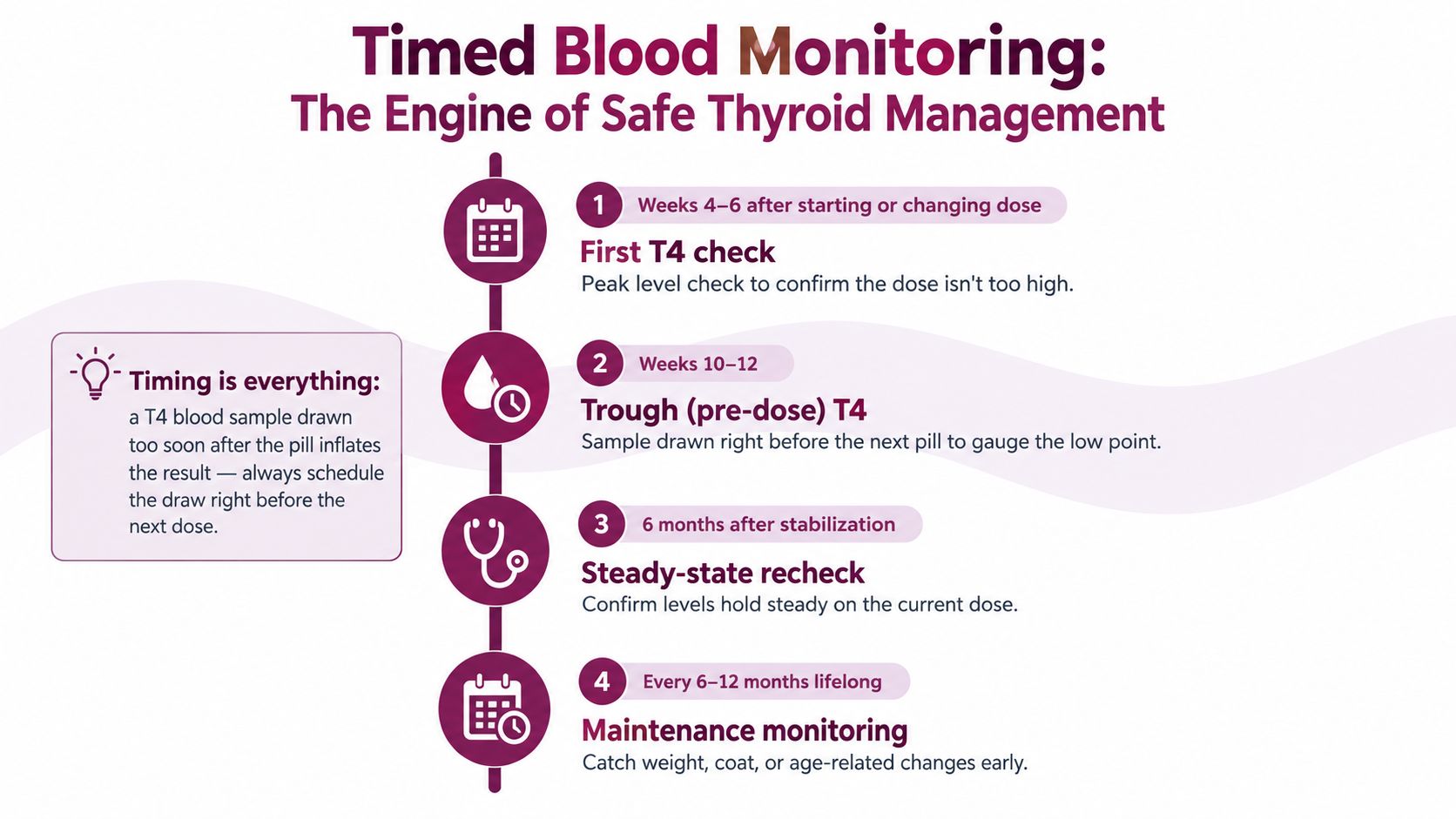
Blood monitoring tells the veterinarian whether the prescribed amount is producing an appropriate hormone level for your dog. It also helps distinguish several possibilities that can look similar at home: insufficient replacement, inconsistent administration, poor absorption, an incorrect diagnosis, or excessive replacement.
During dose stabilization, FDA labeling information recommends reassessing the dog every 4 to 8 weeks, using serum total thyroxine, or TT4, together with clinical response. For a once-daily regimen, the Merck Veterinary Manual's guidance on hypothyroidism notes that the post-dose TT4 peak generally occurs 4 to 6 hours after administration. That timing matters because a sample taken soon after the tablet may not be comparable with a sample taken at another point in the dosing cycle.
Coordinate the appointment with the pill
Ask the clinic exactly when it wants the dose given and when the blood sample should be collected. Don't change the morning routine just to make the appointment more convenient without telling the veterinary team. A result is easier to interpret when the clinician knows the time of the last dose, whether it was given with food, and whether any doses were missed.
A practical medication log can include:
| Record | What to note |
|---|---|
| Dose time | When the tablet was actually given |
| Food relationship | With food or on an empty stomach |
| Product details | Name, strength, and whether the dispensed product changed |
| Clinical observations | Energy, appetite, weight trend, coat changes, thirst, and urination |
| Appointment details | Time of blood draw and instructions from the clinic |
Once a maintenance dose is established, monitoring doesn't end. Requirements can change with body weight, gastrointestinal disease, interacting medications, or a new concurrent illness. Periodic reassessment remains part of responsible treatment, and the veterinarian may request additional testing when the clinical response is inadequate or signs of excessive hormone appear.
The FDA's March 2025 approval announcement for ThyroKare described a field effectiveness and safety study in previously untreated client-owned dogs diagnosed with hypothyroidism. By Day 84, 87 of 107 evaluable dogs, or 81.3%, met the study's treatment-success definition based on thyroid hormone concentrations. That measured outcome supports the value of appropriate replacement therapy, but it isn't a promise that every dog will respond identically. Diagnosis, adherence, absorption, timing, concurrent illness, and dose selection all influence an individual response, as explained in the FDA announcement about ThyroKare.
Identifying Signs of Overtreatment and When to Call the Vet
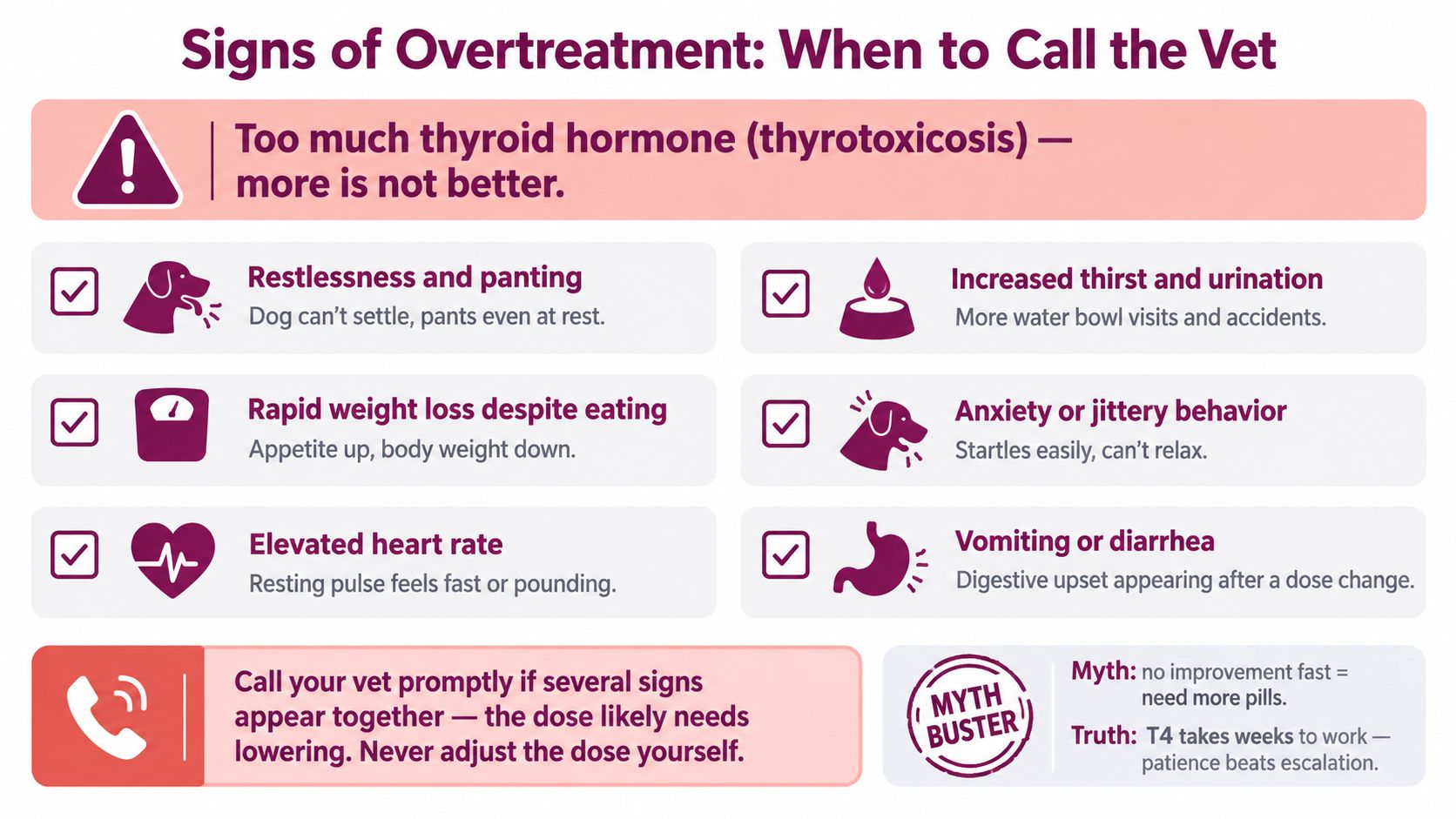
A dog that isn't improving quickly doesn't automatically need more thyroid hormone. Clinical improvement, especially increased activity and better skin or coat quality, can lag behind biochemical changes. Raising the dose without laboratory guidance can create a different problem, called thyrotoxicosis, in which the dog receives more thyroid hormone than is appropriate.
Watch for a pattern of new or worsening signs rather than treating one isolated behavior as proof. Possible warning signs include:
- Restlessness or unusual nervousness: Your dog can't settle, seems agitated, or behaves differently from normal.
- Panting without an obvious reason: Panting occurs at rest or is out of proportion to heat, exercise, or stress.
- Weight loss: Body weight falls unexpectedly, particularly if appetite remains strong.
- Increased thirst or urination: The water bowl needs filling more often, or accidents appear.
- Digestive upset: Vomiting, appetite loss, or other new gastrointestinal signs develop.
- Fast or abnormal breathing: Breathing changes appear alongside weakness, agitation, or other concerning signs.
These symptoms can have causes unrelated to thyroid medication, so they don't diagnose overtreatment by themselves. They do provide a reason to contact the veterinarian promptly, particularly when several signs begin after a dose, administration, or product change.
The FDA describes adverse reactions associated with the ThyroKare field study, including increased thirst or urination, abnormal or fast breathing, lethargy, appetite loss, vomiting, and tremors in its consumer guidance on hypothyroidism treatment in dogs. This information should support communication with your veterinary team, not encourage home dose changes.
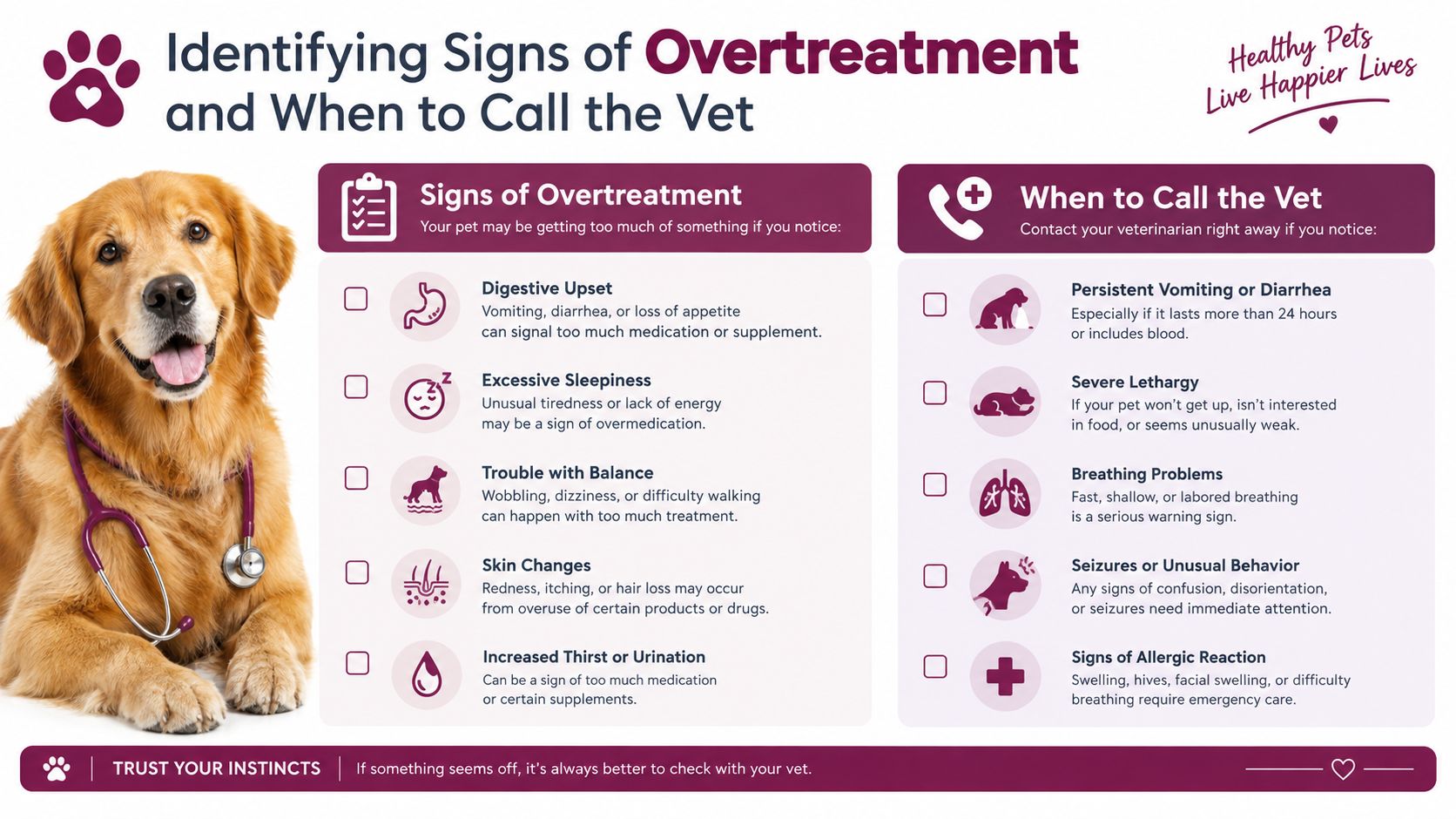
Don't use symptoms as a dosing calculator. Call the prescribing veterinarian, describe what you're seeing, and follow the clinic's directions about examination and blood testing.
Dogs with underlying heart disease may need especially close monitoring when thyroid replacement begins. Your veterinarian may also want to know about every medication and supplement your dog receives, because the full health picture affects how treatment is evaluated.
For practical guidance about recognizing when professional help is needed, Bandana Rx also publishes information about when to call the vet. In an urgent situation, contact your veterinarian or an emergency veterinary service rather than waiting for a routine refill conversation.
Managing Prescriptions and Refills Through Bandana Rx
Chronic treatment works best when the medical plan and the supply plan match. A dog may have a carefully selected dose, but a late refill can still disrupt the routine and make the next laboratory result harder to interpret. Keeping a current medication record and requesting refills before the supply runs out gives the veterinarian and pharmacy time to resolve authorization questions.
Prescription thyroid medication requires veterinary authorization. Bandana Rx can process prescription orders after verification with the prescribing veterinarian, rather than treating the medication as an over-the-counter product. That distinction protects against using thyroid pills for a dog whose symptoms haven't been properly evaluated or continuing an outdated prescription after the dog's needs have changed.
Make refills part of the care plan
A chronic medication schedule can be easier to manage when the household uses a repeatable refill process:
- Check the remaining supply regularly. Don't wait until the final doses to discover that authorization or shipping information needs attention.
- Keep prescription details current. Tell the pharmacy and veterinary clinic if your contact information, veterinarian, or medication instructions change.
- Compare each refill with the previous label. Look at the product name, strength, directions, and expiration information before giving the next tablet.
- Use scheduled delivery when appropriate. AutoShip can be convenient for a medication that needs regular reordering, but availability and suitability depend on the specific product and order.
- Plan around monitoring visits. A dose may be adjusted after blood testing, so confirm the active prescription before setting up future shipments.
Bandana Rx also lists an RxVault portal for prescribers, which supports prescription management and approval-history tracking. Those tools can help clinics and pharmacies coordinate, but they don't replace the veterinarian's clinical judgment or the owner's responsibility to report changes in the dog's health.
The pharmacy's guidance on routine veterinary visits and online pharmacy care reinforces an important boundary. Home delivery can simplify access to an authorized prescription, but it can't replace examinations, laboratory monitoring, or a conversation about whether the current treatment remains appropriate.
When a refill arrives, compare it with the veterinarian's instructions before administering it. If anything looks different, pause and ask the prescribing team or pharmacy to clarify the discrepancy. A short verification call is safer than guessing whether two products or strengths are interchangeable.
Handling Missed Doses and Formulation Changes Safely
Routine disruptions are common. A dog may spit out a tablet, vomit after taking it, receive a meal at an unusual time, or come home with tablets from a different manufacturer. The safest response is to preserve accurate information and ask the veterinary team what to do next.
When a dose is missed
If you realize a dose was missed, don't automatically double the next dose. The correct response can depend on when you noticed, how close it is to the next scheduled dose, and the instructions provided for your dog. Contact the prescribing veterinarian or pharmacy for specific guidance, especially if missed doses happen repeatedly.
Write down what occurred:
- Dose omitted: Record the planned time and when you noticed.
- Tablet spit out: Note whether you saw the whole tablet or only part of it.
- Vomiting: Record how soon it happened and whether the medication was visible.
- Routine change: Note altered meal timing, travel, or a new caregiver.
- Repeated disruption: Tell the clinic if the problem is becoming a pattern.
Vomiting shortly after administration creates uncertainty about how much medication was absorbed. Don't automatically give another tablet, because the original dose may have been partly absorbed. Call the veterinary team, explain the timing, and follow its direction.
When the product changes
A refill from another manufacturer, a switch between formulations, or a different dosage form can affect how the medication is absorbed. FDA labeling advises monitoring TT4 and clinical response after switching formulations because recommended starting doses and bioavailability may differ. Pill strength alone doesn't prove that two products will produce identical exposure in your dog.
Before giving a substituted product, compare its name, active ingredient, strength, dosage form, and directions with the existing prescription. The guide to reading pet medication labels, dosage warnings, and storage information can help you identify the details that deserve attention, but it can't authorize a substitution or determine whether a new product is appropriate.
Keep the label, the old container, and the new container. Those details help the veterinarian decide whether a follow-up test or administration change is needed.
A product change doesn't necessarily mean something is wrong. It does mean the veterinary team should know about it, particularly before interpreting a follow-up blood test. The same applies to changes in food timing, repeated vomiting, or a new medication that could affect your dog's health or absorption.
Thyroid pills for dogs are most reliable when diagnosis, prescription, administration, monitoring, and refills work as one system. You don't need to solve every disruption alone. Document what happened, avoid unsupervised dose changes, and contact the professionals responsible for your dog's care.
Bandana Rx offers prescription fulfillment for canine thyroid medications, with prescription verification and home-delivery options for eligible U.S. orders. Visit Bandana Rx to review available pet medications and coordinate an authorized refill with your veterinarian.