


What if the first clue is not a water bowl that never stays full, but a litter clump you toss without a second look, or a slimmer waist you credit to a diet that is finally working?
Signs of diabetes in cats often start as quiet household changes. Most affected cats have a form that resembles type 2 diabetes in people: insulin is present, but it does not move glucose into cells well enough. Extra sugar stays in the blood, spills into the urine, and pulls water with it. Cells still cannot use that fuel, so your cat can beg for food and lose weight at the same time. The shift is usually gradual over weeks to months, which is why it gets filed under aging. Those signs are a reason to call your veterinarian. They do not, on their own, prove diabetes.
Table of Contents
- The Classic Signs Cats Show First
- How Vets Confirm Diabetes in Cats
- Subtle Changes Owners Often Miss
- Conditions That Often Appear Alongside Diabetes
- Signs That Need an Emergency Vet Visit
- Treatment and Monitoring at Home
- Confirm Your Next Step With Your Vet
The Classic Signs Cats Show First
The four classic signs are more thirst, more urination, more appetite, and weight loss even while your cat eats well. Glucose builds in the blood and spills into the urine, pulling water out with it. Cells cannot use that sugar well, so hunger stays high while fat and muscle break down.
Picture a week at home. The bowl needs a refill before dinner, the clumps look larger, meals vanish, and the spine feels sharper under your hand. That set is what owners usually notice first, long before anyone says the word diabetes.
How often each sign is reported
In 2025, the iCatCare feline diabetes consensus guidelines, published in the Journal of Feline Medicine and Surgery, reported polydipsia in 85% and polyuria in 75% of cats with uncomplicated diabetes. The same guidelines' summary table reported polyphagia in 55% and weight loss in 60%. A small 2025 study of 13 diabetic cats in Veterinary Sciences found owner-observed polydipsia and polyuria in 92.31% of those cats, polyphagia in 61.54%, and weight loss in 76.92%. That sample is small, so read the owner column as a snapshot from 13 cats, not a rate for every cat.
| Sign | What Owners Notice | Share of Cats (iCatCare 2025) | Owner-Observed (13-Cat Study, 2025) |
|---|---|---|---|
| Increased thirst (polydipsia) | Water bowl empties faster; drinks from unusual places | 85% | 92.31% (thirst and urination combined) |
| Increased urination (polyuria) | Wetter litter, larger clumps, urination outside the box | 75% | 92.31% (thirst and urination combined) |
| Increased appetite (polyphagia) | Begs for food or steals it | 55% | 61.54% |
| Weight loss | Visibly thinner despite eating normally or more | 60% | 76.92% |
A log beats memory
These changes usually stretch across weeks to months, so one busy evening is a weak measure. Note water-bowl refills, clump size, appetite, and a weekly weight on the same scale. If two or more signs last beyond a few days, book a visit. Other illnesses cause thirst and weight loss, so the log starts the workup. It does not finish it.
Practical rule: Write the date next to each change. A short list from the last two weeks is more useful than a vague sense that your cat "seems thirstier."
How Vets Confirm Diabetes in Cats
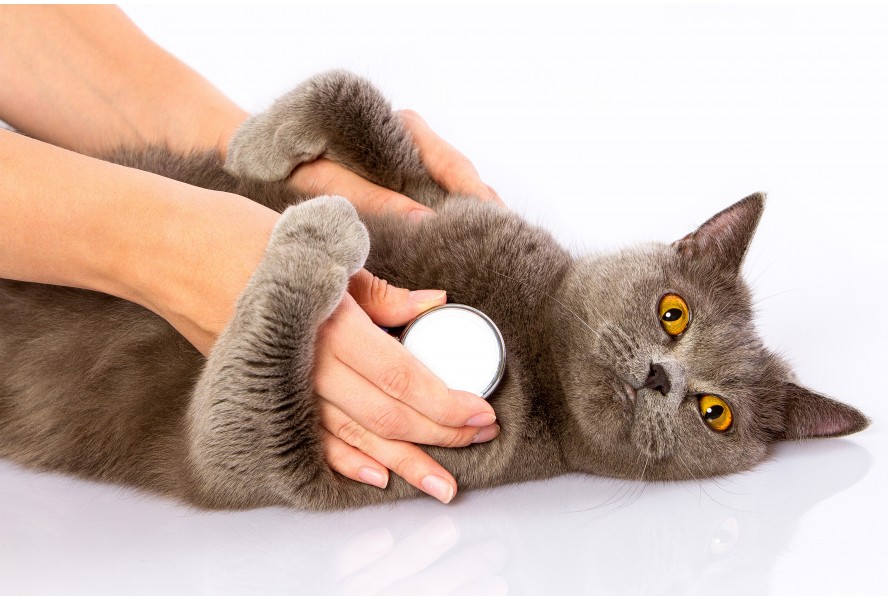
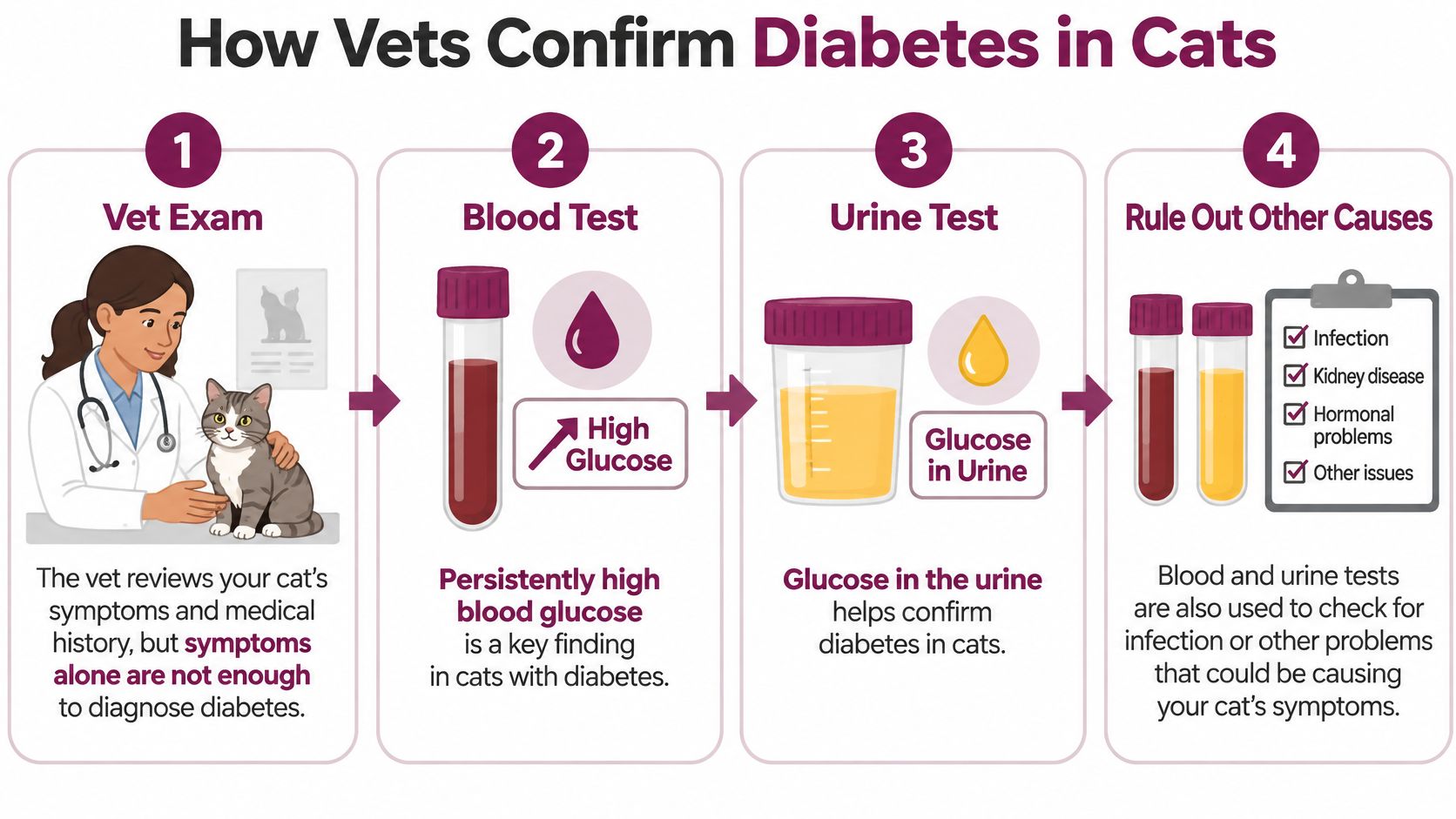
Symptoms start the conversation. They do not close it. Authoritative guidance in the Merck Veterinary Manual requires persistent hyperglycemia together with glucosuria. Urinalysis and blood testing also look for infection or another disease that can copy the same signs.
What happens at the visit
- History and weight. You share the log of water, litter, appetite, and weight. The exam looks for dehydration, a poor coat, and muscle loss.
- Urinalysis. The sample is checked for glucose, ketones, and signs of infection.
- Blood glucose. A single high reading can come from stress, so the vet often repeats it.
- Fructosamine or glycated hemoglobin. These tests are used when a stressful visit may have spiked the number, because they reflect glucose over recent weeks or months.
- A wider blood panel. This screen looks for kidney, liver, thyroid, and other problems that change the plan.
| Test | What It Measures | What It Helps the Vet Decide |
|---|---|---|
| Blood glucose | Glucose level at the time of sampling | Whether blood sugar is persistently high, read against the lab's reference range and repeated if stress is possible |
| Urinalysis | Glucose and ketones in urine, plus signs of infection | Whether glucose is spilling into urine alongside high blood glucose, and whether infection is present |
| Fructosamine | Average blood glucose over roughly the previous 2 to 3 weeks | Whether high readings reflect ongoing diabetes rather than a single stressful visit |
| Glycated hemoglobin | Average blood glucose over several weeks to a few months | A longer-term picture of glucose control, used by some vets when available |
Numeric cutoffs follow that laboratory's reference range. Do not compare a printout with a number you found online. Bring the symptom log, appetite notes, weight history, and a list of every medication and supplement, including any recent steroid.
Subtle Changes Owners Often Miss
The classic four signs are not the whole picture. Quiet shifts still belong on a vet visit list, and the American Association of Feline Practitioners diabetes diagnosis toolkit is a useful reminder that diagnosis rests on patterns, not one dramatic clue.
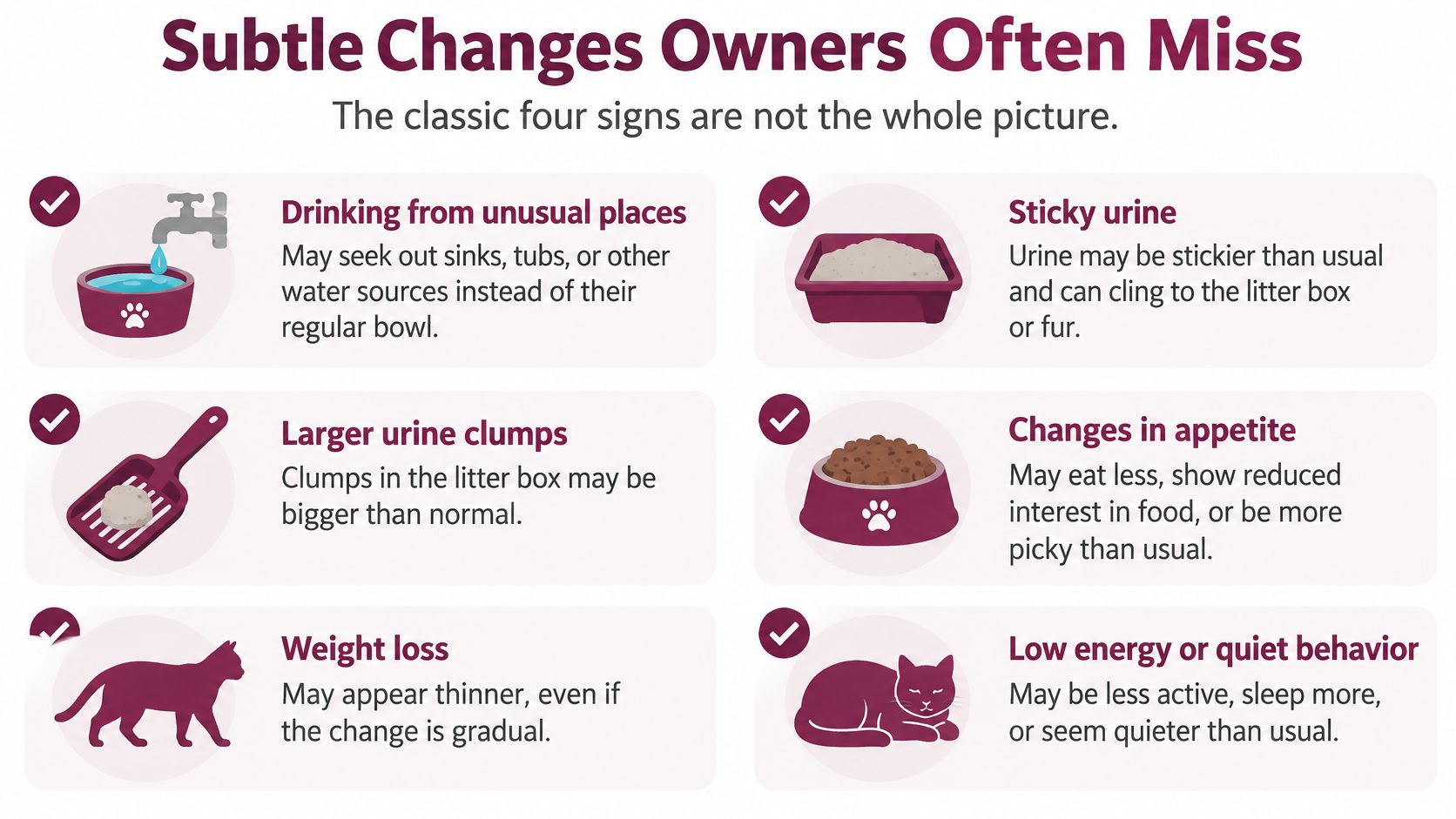
Some cats announce thirst by changing where they drink. A faucet, a glass, or a shower puddle can matter before the bowl looks empty. The litter box works like a rough measuring cup too. Sugar in urine can leave a tacky feel, and clumps grow because more water is leaving the body. A clean box that is suddenly ignored can be volume, discomfort, or both.
Coat and behavior changes are easier to wave away. A dull coat, skipped play sessions, and less interest in jumping are easy to call "getting older." The clearest example is heel-walking. A plantigrade stance, where the cat walks on the heels with the hocks dropped, can reflect diabetic nerve damage in the hind limbs. A hungry, still-active cat can show it, so appetite alone does not rule trouble out.
The diet that seems to be working
In an overweight cat, weight loss can look like success. That read can mislead when appetite is strong, because planned dieting and unplanned loss look similar from the outside. If the waist shrinks while meals increase, write it down.
A strong appetite plus weight loss can also fit thyroid disease, so your vet may need to separate that question from blood sugar. Our overview of thyroid hormone therapy for cats covers one path used when the thyroid, rather than glucose, is the problem.
Turn the clues into a small habit. Note any change that lasts more than a few days, add the date, and bring the list in. Stress hyperglycemia is common in cats, so signs still cannot confirm diabetes. If heel-walking or hind-limb weakness shows up suddenly, or your cat seems weak, ask for an urgent slot instead of waiting for a routine one.
Conditions That Often Appear Alongside Diabetes
Diabetes rarely sits alone, and a second problem can add a sign or hide one. The workup is built to look for that overlap, and a cat who already has a diagnosis still needs a checkup when something new appears.
- Urinary tract infection: Bacteria thrive when sugar is in the urine. Infection can worsen thirst and litter-box changes, which is one reason the urine test matters. Our guide to signs of a UTI in cats walks through straining, blood, and accidents that deserve a call.
- Pancreatitis: This can travel with feline diabetes. Vomiting, a dropped appetite, and a tense or uncomfortable belly are reasons to be seen, not to wait out a "sensitive stomach."
- Chronic kidney disease: Kidney disease also raises thirst and urine output, and it changes which treatments are safe. The Companion Project's overview of treatment options for feline kidney disease is a useful companion read while your vet interprets blood and urine results.
- Hyperthyroidism: More common in older cats, an overactive thyroid can drive hunger and weight loss and can resemble, or sit beside, diabetes.
- Risk that raises the odds: Obesity, inactivity, male sex, older age, and glucocorticoid exposure can all push blood glucose up. None of them diagnoses the disease by itself.
Tell your veterinarian about every medication, supplement, and recent steroid course. Do not start, stop, or change any of them on your own.
Signs That Need an Emergency Vet Visit
Diabetic ketoacidosis is an emergency, not a "watch until Monday" problem. A cat can stop eating, seem profoundly depressed, vomit, have diarrhea, grow weak or dehydrated, breathe with effort, collapse, or become unresponsive.
The Merck Animal Health clinical signs page for feline diabetes also describes diabetic neuropathy: hind-limb weakness and a plantigrade stance, with the hocks lowered toward the ground. Weakness has other causes too, and it can mark a serious metabolic problem, so it needs a prompt exam.
Call an emergency hospital now if
- Your cat stops eating or keeps vomiting. Repeated vomiting has its own list of causes, and our article on why a cat throws up food is background only. It is not a reason to delay care when diabetes is possible.
- Breathing is labored, fast, or unusual.
- Your cat collapses, will not respond, or is profoundly weak.
- The hind legs suddenly fail, or your cat starts walking on the heels.
Call the nearest emergency hospital, bring the log and the medication list, and say that diabetes is suspected or already diagnosed. Never give extra insulin or change a dose yourself. If a dose was missed or you are unsure what was given, call the prescribing clinic for instructions.
Low blood sugar also needs a same-moment call. Watch for trembling, unsteady walking, disorientation, unusual sleepiness, twitching, or seizures. If your cat is awake, phone your vet or an emergency hospital and follow their feeding instructions. Do not give more insulin.
Treatment and Monitoring at Home
Your veterinarian chooses and adjusts treatment. There is no single plan for every cat. Many diabetic cats need prescription insulin injections. The clinic selects the product, the dose, and the schedule, then changes them from monitoring, not from a home guess. Some owners later read about a specific insulin, such as our explainer on Lantus insulin for cats, so they can ask better questions. That article does not replace a prescription.
Diet is often part of the plan, commonly with weight management on a food your vet recommends. Some cats improve with steady control. Outcomes differ from cat to cat, and only your vet can say what is realistic for yours.
What to write down between visits
A rising water intake, a shrinking appetite, or new weight loss can show that control is slipping before the next recheck.
| Item to Track | How to Record It | How Often | Why It Matters |
|---|---|---|---|
| Water intake | Note how often and how much the water bowl is refilled | Daily | A rise can signal that blood sugar control is changing |
| Litter output | Count and size clumps, and note any urination outside the box | Daily | Larger or more frequent clumps can reflect higher urine output |
| Appetite | Note whether meals are finished and whether the cat begs for food | Daily | A sudden drop in appetite can signal illness and needs a call to the vet |
| Body weight | Weigh the cat on the same scale at the same time | Weekly, or as the vet directs | Weight trends show whether the plan is working |
| Glucose readings | Record any home readings exactly as the vet instructs | As the vet directs | Gives the vet data for adjusting the treatment plan |
Bring that log to every appointment. Keep insulin and other medication schedules exactly as prescribed. Call promptly about a missed dose or any sudden change. Do not rewrite the plan at the kitchen counter.
A missed meal plus a planned insulin dose is a phone call, not a decision you settle from memory.
Confirm Your Next Step With Your Vet
A log turns “something seems off” into details your vet can test. Bring dates, not impressions: when the water bowl started emptying faster, when clumps grew larger, when weight changed despite normal feeding.
Act in this order, and let the clinic set the pace.
- Book an exam if two or more signs last beyond a few days. Go sooner, the same day, if any emergency sign is present.
- Ask for urinalysis and blood testing aimed at diabetes and the conditions that travel with it.
- Bring the symptom log, appetite notes, weight history, and the full medication and supplement list.
- Ask your vet to explain the plan, the monitoring schedule, what to do about a missed dose, and the exact prescribed product and strength.
- Ask the clinic to send the prescription to the pharmacy you choose.
To provide appropriate care, we ask for your pet's medical conditions, weight, breed, and age. Prescription medications, including insulin, are dispensed only after we receive authorization from your veterinarian. We prefer that authorization to come straight from the clinic, and we tell you promptly if the office declines the request. At checkout, a prescription order needs the shipping address, your pet's details, and the veterinarian's details for each medication.
Routine rechecks are part of safe long-term care. Our article on routine vet visits and online pharmacies explains why the clinic visit and the refill belong together. Your vet decides the medication, dose, and schedule. Any change goes through that office.
Once a prescription is authorized, you can browse the Bandana Rx pet health categories to find the product your veterinarian prescribed and check its details before ordering. For medicines refilled on a regular schedule, subscription delivery can keep the timing steady.
Bandana Rx is a licensed pet pharmacy that fills veterinarian-authorized prescriptions for cats, including therapies used in diabetes care, and ships them to eligible U.S. states after your clinic approves the order. If your veterinarian has already chosen a product and strength, you can review that prescription option and its package details in one place. Visit Bandana Rx to see what is available for the treatment your vet prescribed.