
You've just picked up your cat's prescription, or a refill reminder has appeared, and one question keeps circling: what meloxicam for cats side effects should you watch for? Your cat may seem comfortable now, but medication safety depends on more than a calm face after a dose.
Meloxicam can help relieve pain and inflammation in selected veterinary situations. Cats, however, have a limited safety margin with this drug. The safest approach is to understand the U.S. warning, recognize early changes, and treat every refill as a reason to confirm the current plan with your veterinarian.
Table of Contents
- Why Cat Owners Are Hearing More About Meloxicam Risks
- What Meloxicam Is and Why Cats Handle It Differently
- Common Side Effects Owners May Notice at Home
- Serious Risks Owners Should Understand Even If They Cannot See Them
- Risk Factors That Make Some Cats More Vulnerable
- A Monitoring Plan Owners Can Discuss with Their Veterinarian
- Pain Management Alternatives for Cats
- When to Call the Veterinarian Right Away
Why Cat Owners Are Hearing More About Meloxicam Risks
A prescription doesn't automatically mean a medicine is risk-free. It means your veterinarian has weighed the expected benefit against the risks for your individual cat, including the product, dose, health history, and available alternatives.
The concern became especially clear in November 2024, when the U.S. Food and Drug Administration reiterated that repeated meloxicam use in cats had been associated with acute renal failure and death. The FDA states that additional injectable or oral meloxicam shouldn't be given to cats after an initial approved use. This warning reflects the narrow safety margin of repeated exposure, not a claim that every cat will be harmed by an appropriately selected veterinary dose. Read the FDA's meloxicam safety warning.
Practical rule: A refill request for a cat shouldn't be treated as an automatic continuation. It's a prompt to confirm that the veterinarian still wants the medication used.
Consider a cat who received meloxicam after a procedure. The owner notices that the cat eats less that evening and seems quieter the next morning. That change could relate to pain, stress, the procedure, or a medication reaction. Because those possibilities can look alike at home, guessing or adjusting the dose can delay the right care.
A routine veterinary relationship matters here. Regular examinations help the veterinarian reassess pain, hydration, kidney function, other medicines, and whether the original treatment plan still makes sense. Bandana Rx also provides educational guidance on the importance of routine vet visits, but an article or pharmacy refill process can't replace that clinical assessment.
This guide focuses on three practical questions:
- What might you notice? Observable signs include vomiting, diarrhea, reduced appetite, lethargy, and changes in urination.
- What might be hidden? Kidney injury, gastrointestinal bleeding, and laboratory abnormalities may develop before a cat looks severely ill.
- What should change your next step? New symptoms, a missed meal, a dosing mistake, dehydration, or a refill request may call for a veterinary conversation before another dose is given.
What Meloxicam Is and Why Cats Handle It Differently
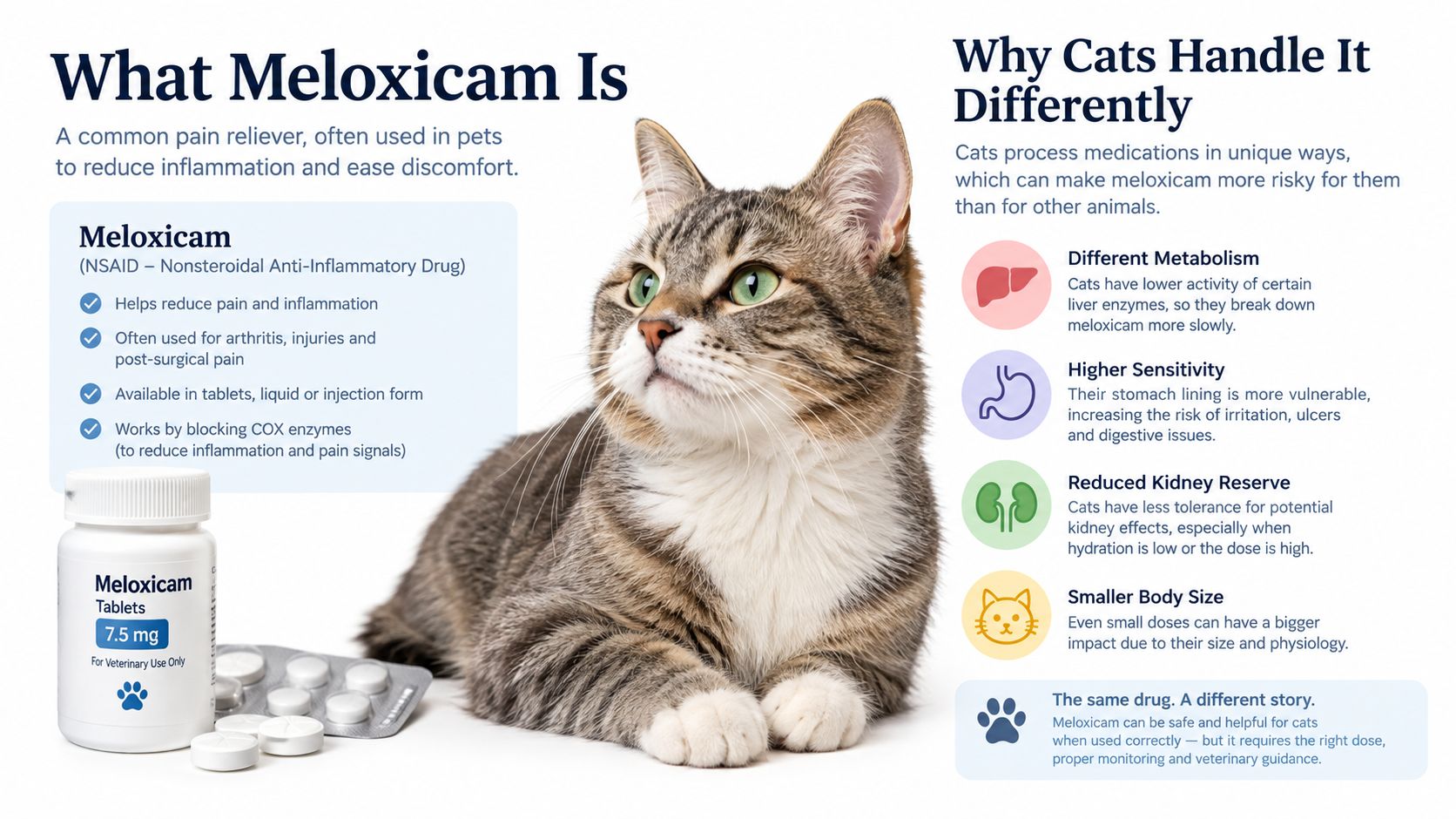
Meloxicam is a nonsteroidal anti-inflammatory drug, or NSAID. Veterinarians may use it to help manage pain and inflammation, but prescription decisions are species-specific. A product or dose intended for a dog isn't automatically suitable for a cat.
For cats in the United States, the key labeling point is strict: after an initial approved injectable use, the FDA says additional injectable or oral meloxicam shouldn't be administered. That's why online advice from another country, an old prescription, or a dog's medication label may not match the instructions that apply to your cat in the United States.
A different processing route
Merck Veterinary Manual explains that cats metabolize meloxicam through oxidation rather than glucuronidation, a pathway used by many other species. Approximately 80% of the drug is excreted in feces, according to Merck Veterinary Manual's analgesics guidance. That doesn't make meloxicam harmless. It shows why feline physiology has to be considered separately from human or canine experience.
A useful analogy is a household waste system. Two homes may receive the same delivery, but one home may process and remove it through a different route. If that system is slower, stressed, or already impaired, repeated deliveries can create a greater burden. In cats, hydration, kidney function, blood pressure, age, and concurrent medications can all affect how much risk a veterinarian is willing to accept.
Some non-U.S. labeling permits low oral maintenance regimens, and veterinary literature describes very-low-dose protocols in selected cats. Those facts don't override U.S. labeling or make home dosing safe. Your veterinarian must control the product, dose, duration, and monitoring plan.
If your household also includes a dog with joint discomfort, species-specific information matters there too. A resource on dog joint pain relief can help explain why canine treatment discussions shouldn't be transferred directly to a cat. For additional species-specific context, see Bandana Rx's information on meloxicam for dogs.
Common Side Effects Owners May Notice at Home
The most useful home observation is often a change from your cat's normal pattern. A cat who skips a favorite meal, hides more than usual, or stops visiting the water bowl may be showing a medication reaction, worsening illness, pain, or another problem that needs veterinary interpretation.
The FDA lists vomiting, diarrhea, eating less or not eating, and reduced activity among potential adverse effects associated with veterinary NSAIDs. Reported feline reactions to meloxicam also include lethargy, reduced appetite, transient pain after injection, and fecal occult blood, which means blood that may not be visible in the stool. The FDA's NSAID safety information explains why these signs deserve attention rather than automatic dismissal.
What changes can look like
- Vomiting: One episode may be difficult to interpret, especially after anesthesia or a stressful visit. Repeated vomiting, blood, weakness, or a cat who won't eat requires prompt veterinary contact.
- Diarrhea: Loose stool can contribute to dehydration, which matters because dehydration can increase kidney risk. Tell the clinic when diarrhea began and whether it continued after the dose.
- Reduced appetite: A cat who leaves dinner untouched may be giving you an early warning. Don't assume the issue is harmless because your cat still purrs or accepts attention.
- Lethargy or reduced activity: A quieter cat may be recovering from a procedure, experiencing pain, or reacting adversely. Compare behavior with your cat's usual routine and report a clear change.
- Injection-site discomfort: Temporary pain after an injection has been reported. Swelling, worsening discomfort, marked weakness, or any broader illness sign should be discussed with the veterinary team.
Observe without changing the prescription
Write down the medication name, the time it was given, appetite, vomiting or stool changes, activity, drinking, and urination. This record gives the veterinarian useful context without asking you to diagnose the cause.
Don't give another dose, alter the interval, or substitute a different pain reliever based only on what you observe. A symptom can reflect the underlying illness, a procedure, dehydration, or drug toxicity, and those possibilities require different decisions.
Serious Risks Owners Should Understand Even If They Cannot See Them
A cat may seem comfortable while changes are developing inside the body. Purring, walking, and sleeping normally cannot confirm that the kidneys or gastrointestinal tract are unaffected. Meloxicam safety must be judged with the cat's history, dosing record, clinical signs, and veterinary monitoring together.
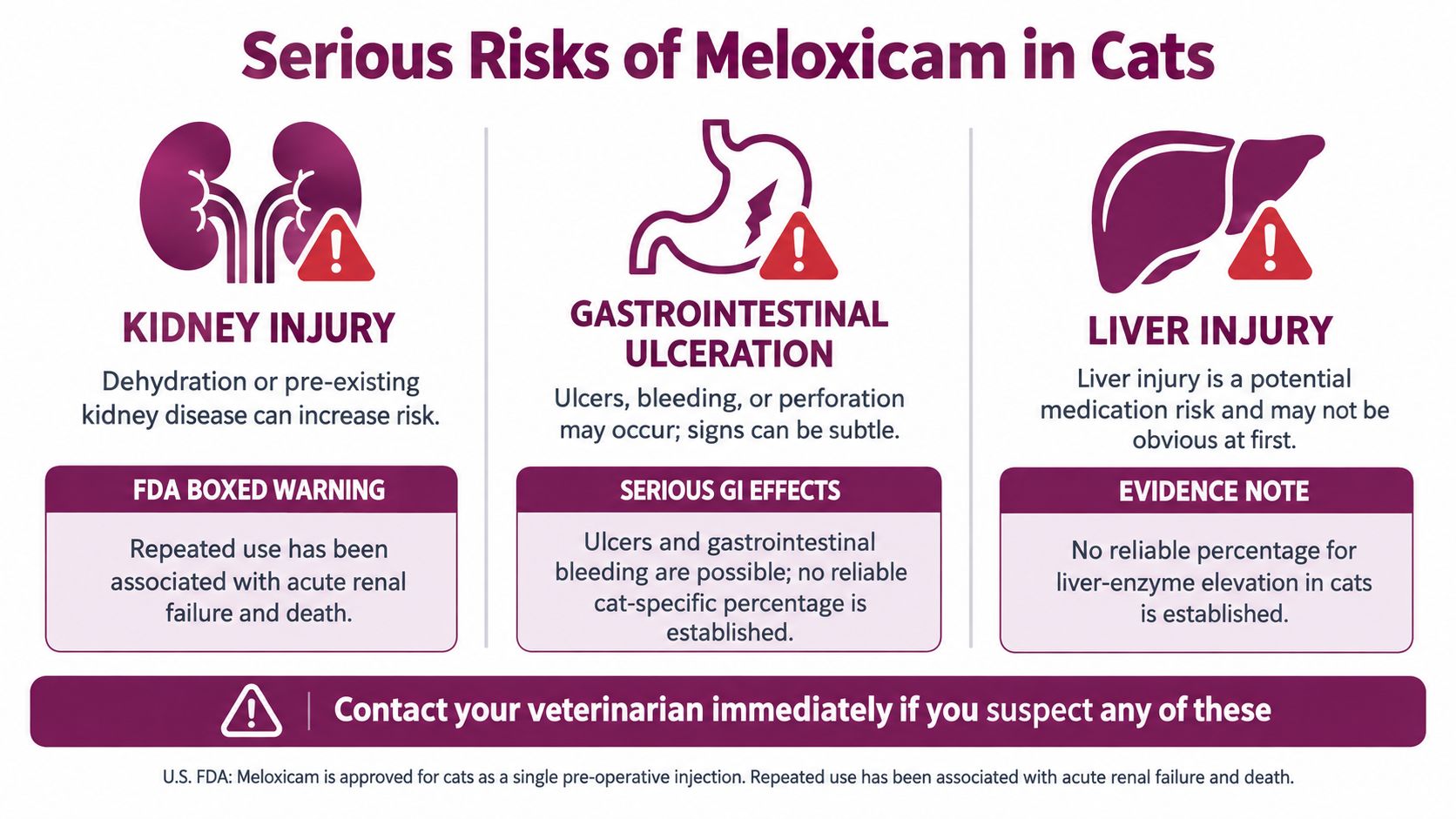
FDA materials identify serious NSAID complications, including gastrointestinal ulceration or perforation, kidney and liver problems, bleeding, and death. Post-approval reports in cats include azotemia, increased creatinine, increased phosphorus, renal failure, anemia, depression, and death. Bloodwork or urinalysis may be needed to detect or characterize these changes. The FDA-approved feline labeling lists reported adverse outcomes and explains why a normal-looking cat is not enough reassurance.
Kidney injury may start quietly
Kidneys regulate fluid balance and remove waste. Dehydration, reduced blood pressure, existing kidney disease, and some concurrent medicines can reduce the margin of safety for kidney blood flow. Early injury may not cause a dramatic or easily recognized change in urination.
That makes appetite, vomiting, diarrhea, unusual tiredness, thirst, and urination changes useful information to report, even when each sign has other possible explanations. Owners seeking background on kidney and urinary tract conditions can use that information for context, while leaving diagnosis and treatment decisions to the veterinarian.
Gastrointestinal damage may be hidden
Gastrointestinal bleeding can occur without obvious blood in the stool. In a three-day FDA-approved safety study, fecal occult blood was detected in 10 of 24 cats, including 2 control animals, according to the FDA study document. This is why visible stool changes do not provide a complete safety check.
A separate nine-day safety study involved cats receiving 0.3 or 0.6 mg/kg/day after an initial injection. By Day 9, one cat in each dose group had died. Another cat in the 0.3 mg/kg group was moribund, and pathology included pyloric or duodenal ulceration in cats receiving 0.6 mg/kg/day. These controlled product safety studies do not predict the outcome for every prescribed cat. They do show why repeated or excessive dosing requires prompt veterinary review.

The practical rule is straightforward: vomiting, diarrhea, appetite loss, lethargy, dark stool, or a dosing error warrants a prompt call to the veterinarian. Early contact allows the clinic to decide whether the cat needs examination, testing, treatment, or a change in the medication plan.
Risk Factors That Make Some Cats More Vulnerable
Veterinarians don't assess meloxicam risk from the prescription alone. They consider the cat's current condition, fluid status, kidney and liver function, blood pressure, gastrointestinal history, and every other medication or supplement being given.
The following table is a discussion framework, not a home screening tool:
Feline risk factors and why they matter
| Risk Factor | Body System Affected | Why It Raises Meloxicam Risk |
|---|---|---|
| Pre-existing kidney disease | Kidneys and fluid balance | Reduced kidney reserve may make injury harder to tolerate or detect early. |
| Dehydration | Circulation and kidneys | Lower fluid volume can compromise kidney perfusion and may worsen during vomiting or diarrhea. |
| Low blood pressure | Circulation and kidneys | Reduced pressure can limit blood flow to organs that already need careful protection. |
| Heart disease | Circulation and fluid balance | Changes in circulation and fluid management can complicate NSAID risk assessment. |
| Liver impairment | Drug processing and metabolism | The veterinarian may need to account for impaired handling of medicines and broader illness. |
| Advanced age | Multiple systems | Older cats may have hidden kidney disease, reduced reserves, or several concurrent conditions. |
| Concurrent medicines affecting renal perfusion | Kidneys and circulation | Drug combinations can increase concern about kidney blood flow or fluid balance. |
| Poor appetite or active gastrointestinal illness | Digestion and hydration | Reduced intake and fluid loss can make adverse effects harder to tolerate. |
A high-risk factor doesn't tell you what to do with a dose. It tells you what to discuss before treatment or renewal. A cat with chronic kidney disease may need a different pain strategy, while a dehydrated cat may need assessment and stabilization before a veterinarian considers any NSAID.
Bring the actual medication containers, a current list of prescriptions and supplements, and a note about appetite, drinking, urination, vomiting, and stool. That information helps the veterinarian decide whether testing, a different treatment, or no additional meloxicam is appropriate.
A Monitoring Plan Owners Can Discuss with Their Veterinarian
Monitoring works best as a shared process. You track daily changes at home, while the veterinary team checks findings owners cannot measure reliably, including kidney values, urine results, hydration, and blood pressure. The goal is to catch a problem early, before a refill turns into an unplanned treatment decision.
Before treatment or renewal
Ask whether your veterinarian recommends:
- Baseline bloodwork: Kidney and liver values create a reference for later comparison.
- Urinalysis: Urine findings can reveal information that bloodwork may not show.
- Hydration and circulation checks: An examination can identify dehydration, low blood pressure, or another concern.
- Medication reconciliation: Provide every prescription, over-the-counter product, supplement, and recent dose.
- Product and authorization confirmation: Check the exact medicine, form, intended use, and what the U.S. label permits.
For a cat receiving meloxicam under veterinary direction, follow-up may include chemistry testing, urinalysis, appetite checks, body weight, and hydration assessment. Timing depends on the cat's condition and the veterinarian's judgment. Ask how soon follow-up testing should occur after the initial dose or a treatment change, and whether a specific appetite or weight change should prompt an earlier visit.
A refill is a checkpoint, not an automatic continuation. Ask, “What has changed since the last dose, and does my cat need reassessment or testing before receiving more meloxicam?” Contact the veterinary team if your cat eats less, drinks or urinates differently, vomits, develops diarrhea, seems unusually quiet, or shows a change in comfort or mobility.
Keep a simple daily record of appetite, water intake, urination, stool, vomiting, activity, and the time of each dose. This turns scattered observations into a useful timeline and helps the veterinarian judge response and risk.
Owners can reduce preventable mistakes by checking the label for product identity, instructions, storage, and warnings. The Bandana Rx guide to pet medication labels, dosage warnings, and storage explains what to look for, but label reading does not replace veterinary directions for a cat.
Pain Management Alternatives for Cats
A meloxicam concern doesn't mean your cat has no pain-management options. It means the veterinarian may need to compare approaches based on the source of pain, kidney and liver status, appetite, mobility, other medicines, and the treatment goal.
Possible approaches may include:
- A feline-labeled NSAID: A veterinarian may consider another product when its indication, labeling, and risk profile fit the cat. It isn't a direct substitute that owners should make independently.
- Opioid pain relief: These medicines may be useful for some acute or procedural pain, with veterinary dosing and monitoring.
- Adjunctive therapies: Depending on the diagnosis, the veterinarian may consider non-NSAID medicines or supportive treatments.
- Environmental support: Warm, easy-to-reach resting areas, accessible food and water, and reduced jumping can support comfort while the clinical plan is assessed.
- Condition-specific care: Arthritis, dental pain, injury, and postoperative pain don't all require the same strategy.
For example, Onsior for cats is a feline pain medication that a veterinarian may evaluate in an appropriate situation. That link doesn't mean Onsior is right for every cat, and it shouldn't be combined with meloxicam or substituted without veterinary instructions.
The FDA notes that vomiting, diarrhea, reduced appetite, and decreased activity can occur with veterinary NSAIDs. It also warns that bleeding ulcers, kidney or liver problems, and death can occur in some cases, particularly when use doesn't follow label directions. Any alternative still requires correct species selection, dosing, contraindication review, and follow-up.
When to Call the Veterinarian Right Away
Call your veterinarian promptly if your cat vomits, develops diarrhea, eats less or refuses food, becomes unusually tired, drinks or urinates differently, or shows any new concerning change after meloxicam. Contact an emergency clinic for severe weakness, collapse, suspected bleeding, repeated vomiting, or a known extra or incorrect dose.
Don't repeat or adjust meloxicam, switch between oral and injectable products, or combine it with another pain medicine unless your veterinarian specifically directs you to do so. Keep the medication container available and record what was given and when.
A refill is routine only after the veterinarian confirms that the current plan remains appropriate. Asking before another dose is a careful step, not an overreaction.
Bandana Rx supplies prescription and over-the-counter medications and coordinates prescription fulfillment after veterinary authorization for eligible U.S. orders. Visit Bandana Rx to review pet medication services and connect your cat's prescription needs with a veterinarian-directed treatment plan.