
Your dog comes home squinting, rubbing one eye, or carrying a new red discharge in the corner. At the appointment, your veterinarian mentions tobramycin, and you may wonder why a medication with a human-style label is being prescribed for a dog.
That question is reasonable. Tobramycin in dogs is commonly used extra-label as an eye medication, which means the veterinary use may differ from the wording on the product label. Understanding its purpose, limitations, and safety risks can help you use it correctly and ask better questions before treatment begins.
Table of Contents
- Understanding Tobramycin for Canine Eye Care
- How Tobramycin Targets Bacterial Infections
- Common Uses and Formulations in Veterinary Practice
- Safety Profile and Potential Side Effects
- Tobramycin Versus Other Topical Antibiotics
- Practical Guidance for Pet Owners
Understanding Tobramycin for Canine Eye Care
A red, painful-looking eye can have many causes. Your dog might have a bacterial surface infection, a scratch, a corneal ulcer, dry eye, inflammation, or another problem that needs a different treatment. Tobramycin is useful only when the veterinarian believes susceptible bacteria are contributing to the condition.
Tobramycin is an aminoglycoside antibiotic. In ophthalmic treatment, it's directed at bacteria on the surface of the eye, especially when gram-negative coverage is important or another topical antibiotic hasn't worked well. It isn't an all-purpose red-eye treatment, and it won't address viral disease or noninfectious inflammation.
The drug's documented history in dogs goes back at least to a 1974 pharmacokinetic study in mongrel dogs. Investigators measured concentrations in serum, thoracic lymph, renal lymph, and urine after intravenous doses of 5, 10, and 20 mg/kg. At 20 mg/kg, tobramycin produced consistently higher renal lymph and urine concentrations than gentamicin. Even at 5 mg/kg, it exceeded gentamicin in renal lymph and urine concentrations during the first hour after dosing, supporting its early role as a clinically relevant aminoglycoside alternative in dogs (the original pharmacokinetic study).
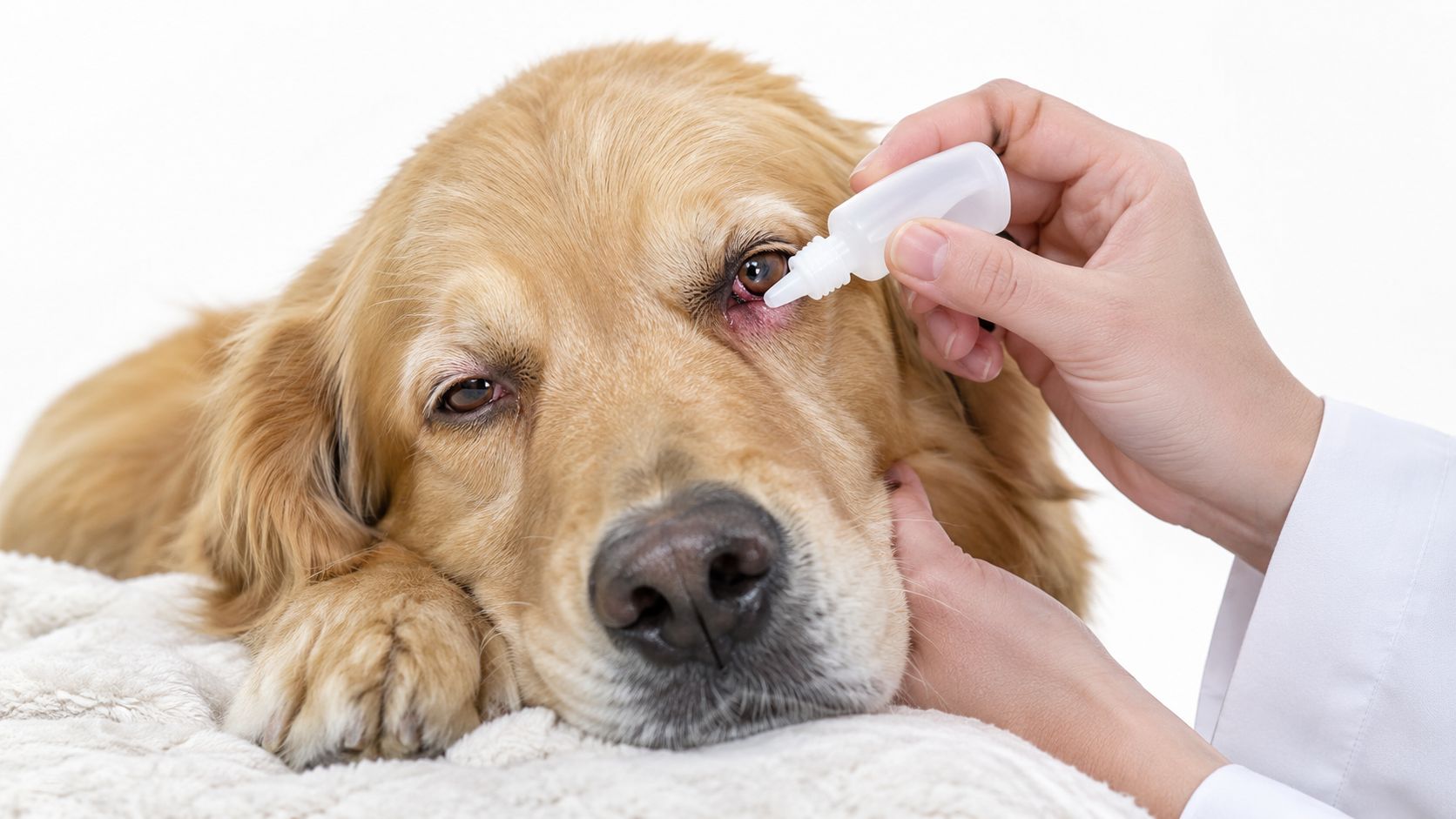
A practical distinction matters here. Topical ocular use is not the same as injectable systemic use. Eye drops or ointment are placed on the affected surface, while injectable aminoglycosides distribute through the body and require much closer attention to kidney and hearing-related toxicity.
For general background on evaluating discharge and other eye symptoms, you can also review this guide to safe treatments for dog eyes. If your household includes cats, the discussion of tobramycin eye drops for cats can help explain why species, diagnosis, and veterinary directions still matter even when the active ingredient is familiar.
How Tobramycin Targets Bacterial Infections
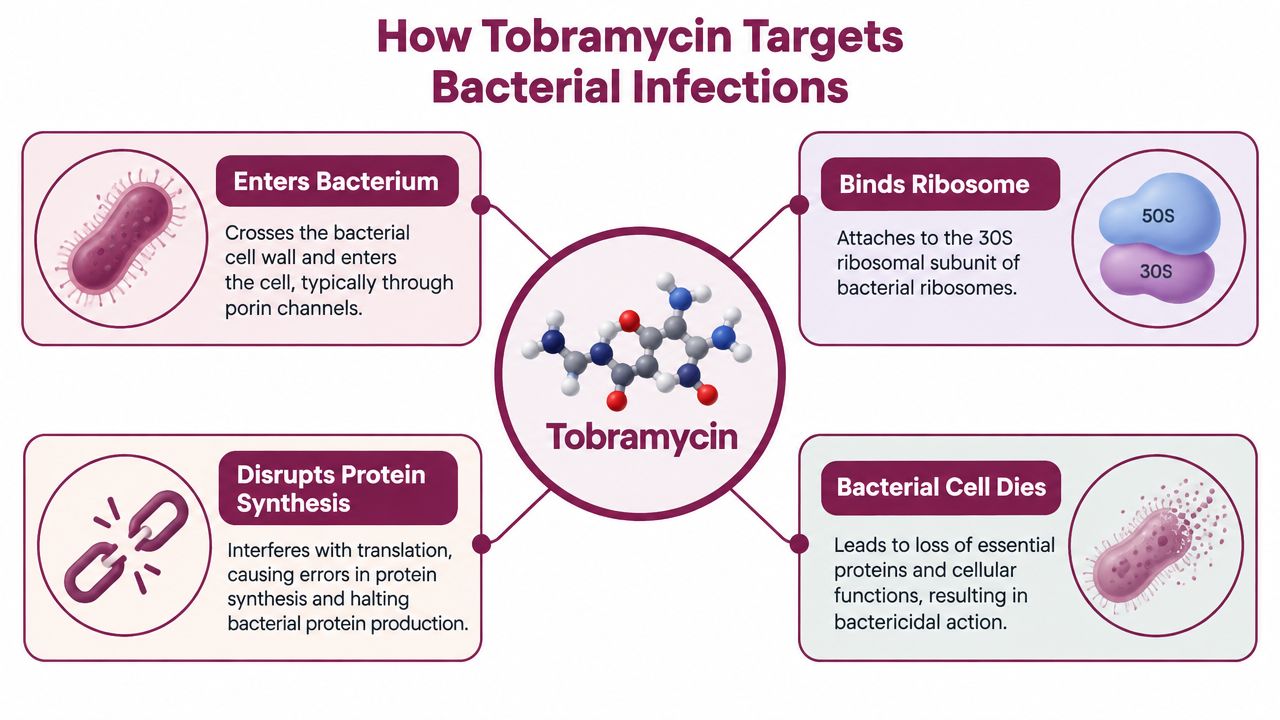
Tobramycin works by entering susceptible bacterial cells and binding to bacterial ribosomes. Ribosomes help bacteria make the proteins they need to grow and function. When tobramycin disrupts that process, the cell produces faulty proteins, loses normal function, and can die.
That mechanism makes the drug particularly relevant to gram-negative bacteria, which are common targets in certain ocular infections. The important point for owners is that antibiotic selection should follow the suspected organism and the examination findings, not just the color of the discharge or the degree of redness.
Why the choice of aminoglycoside matters
Tobramycin and gentamicin belong to the same antibiotic class, but comparative veterinary data show that their behavior in dogs isn't identical. In a controlled nephrotoxicity study, 40 female mongrel dogs received gentamicin or tobramycin at 45 mg/kg/day, either by continuous intravenous infusion or once-daily intravenous injection for 10 days (the comparative nephrotoxicity study).
Renal clearances fell by an average of 48% over the treatment period. Nephrotoxicity was much greater with continuous infusion, and tobramycin was less nephrotoxic than gentamicin at equivalent doses in those experimental conditions. On day 10, outer renal cortex concentrations averaged 994 μg/g for tobramycin and 1877 μg/g for gentamicin.
Those findings don't establish that tobramycin is risk-free, and they don't determine the correct treatment for an individual dog. They show why veterinary professionals consider route, dosing strategy, duration, kidney status, and the specific infection before selecting an aminoglycoside.
Practical rule: An antibiotic can be a logical choice for one bacterial eye infection and the wrong choice for another. The diagnosis comes before the bottle.
A veterinarian may recommend topical tobramycin when the clinical picture points toward a bacterial surface infection, particularly one involving gram-negative organisms or one that hasn't responded to a previous topical option. If the infection is deeper, recurrent, or unusual, additional testing or referral may be needed.
Common Uses and Formulations in Veterinary Practice
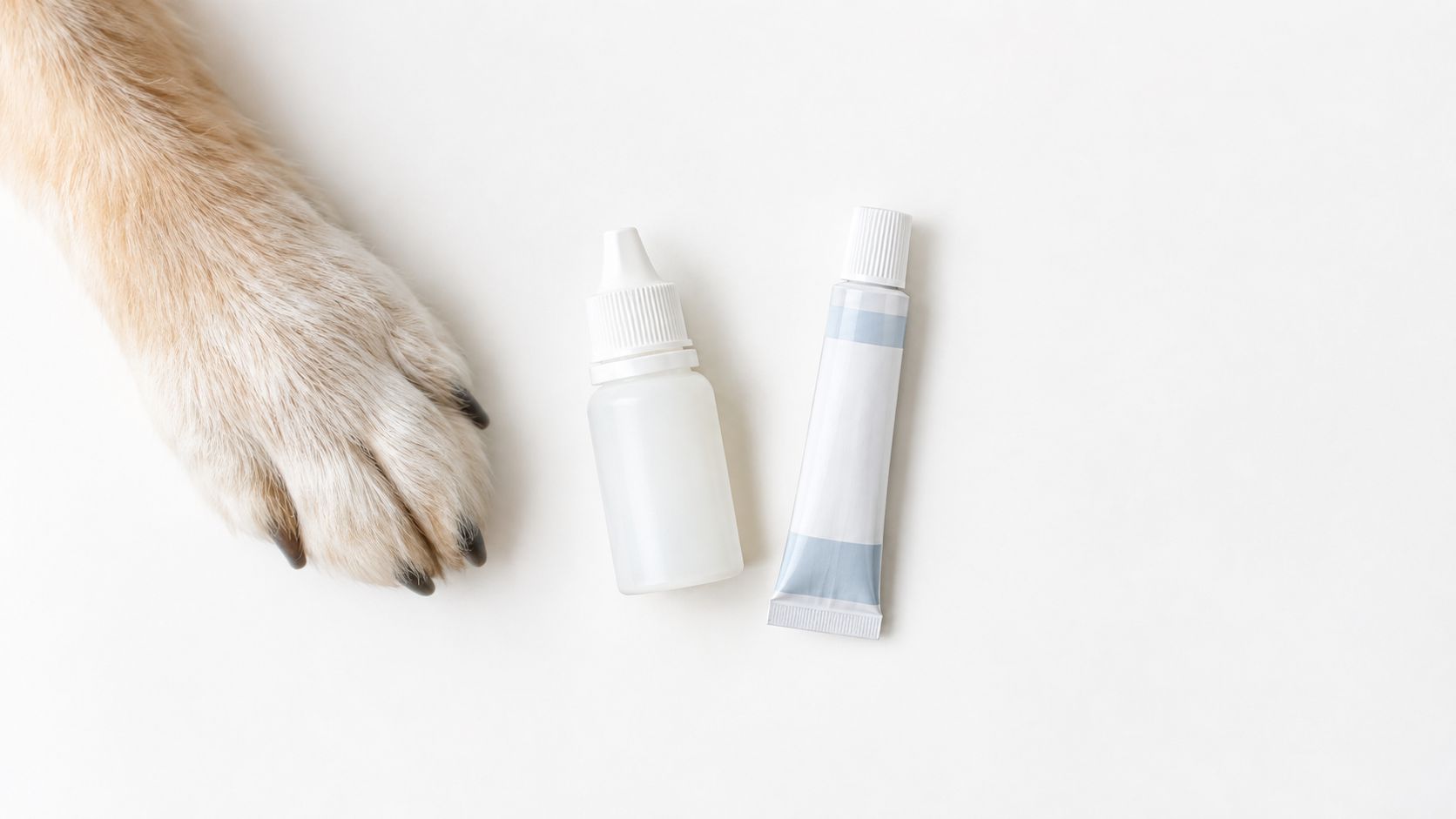
In dogs, tobramycin is used primarily as an ophthalmic antibiotic for bacterial surface eye infections. This is an extra-label use, rather than an FDA-approved veterinary ophthalmic product. Veterinarians may prescribe it as a 0.3% solution or ointment, depending on the eye condition, the product available, and the treatment plan (veterinary information on tobramycin ophthalmic use).
Drops spread quickly across the tear film and can be practical when the prescribed schedule is frequent. Ointment stays in contact with the eye longer, but it can temporarily blur vision or feel more noticeable. Your veterinarian's directions should determine which formulation to use and how often to apply it.
What topical treatment can and can't do
The ophthalmic route is aimed mainly at the conjunctiva and cornea, the accessible surface structures at the front of the eye. It isn't generally intended to treat deeper intraocular infection. That distinction explains why a dog can receive an eye antibiotic while still needing another evaluation or treatment if inflammation involves internal eye structures.
Tobramycin may be selected when:
- Bacterial disease is suspected: The veterinarian sees findings that fit a bacterial conjunctivitis or keratitis.
- Gram-negative coverage is useful: The suspected organisms may be more responsive to an aminoglycoside.
- A previous topical antibiotic was insufficient: The veterinarian may choose a different agent based on the examination and treatment history.
It isn't expected to treat viral disease, fungal disease, or noninfectious inflammation. A red eye can also result from an ulcer, trauma, dry eye, glaucoma, or other painful conditions, so using leftover medication without an examination can delay the right care.
Some veterinary eye products combine antibiotics or add anti-inflammatory ingredients. The discussion of Neo-Poly-Dex ophthalmic suspension is a useful reminder that the active ingredients in a combination product can change its risks and appropriate uses.
Safety Profile and Potential Side Effects
The safety conversation changes depending on whether tobramycin is applied to the eye or given systemically. Prolonged or systemic aminoglycoside exposure carries dose-related risks of nephrotoxicity and ototoxicity, meaning kidney injury and injury affecting hearing or balance. Tobramycin belongs to this class, so injectable or extended systemic treatment requires veterinary oversight.
Aminoglycosides can accumulate in renal tubular cells. That accumulation can injure the tubules, reduce glomerular filtration, and raise kidney biomarkers. Toxicology references associate toxicity most strongly with persistent serum peaks above about 10 to 15 micrograms/mL and troughs above about 2 to 4 micrograms/mL (veterinary toxicology information on aminoglycosides).
Why patient history matters
A dog with dehydration, known renal disease, or exposure to other nephrotoxic drugs may have less margin for error. The comparative dog study discussed earlier found that once-daily intravenous aminoglycoside dosing was less nephrotoxic than continuous infusion, and that tobramycin was less nephrotoxic than gentamicin at equivalent doses under those experimental conditions. That evidence supports avoiding unnecessary systemic aminoglycoside exposure, not treating the drugs as harmless.
Topical ophthalmic treatment generally limits systemic exposure compared with injection, but owners should still follow the prescribed directions. Watch for new or worsening discomfort, marked swelling, increased redness, or a change in discharge. A local reaction can resemble worsening infection, so the veterinarian should decide whether treatment should continue or change.
Call your veterinarian promptly if your dog becomes more painful, keeps the eye tightly closed, rubs at the eye, or develops worsening redness, swelling, cloudiness, or discharge.
Never place a different eye medication into the same eye just because the symptoms look similar to a previous episode. An anti-inflammatory ophthalmic product, such as diclofenac sodium ophthalmic solution, has a different purpose and should only be used when prescribed for the diagnosed condition.
Tobramycin Versus Other Topical Antibiotics
A dog with a red, painful eye may need an antibiotic, but the label alone cannot determine which one. Tobramycin is often considered when gram-negative bacteria are a concern. A veterinarian may select another topical antibiotic after weighing the examination, suspected organism, previous treatment, and resistance concerns. The choice is based on the diagnosis, not on which product sounds strongest.
Fluoroquinolones may provide broader bacterial coverage in selected cases. A bacitracin-neomycin-polymyxin combination may suit other situations, although each ingredient has its own antibacterial range and tolerability concerns. These options are not interchangeable merely because they are applied to the eye.
| Treatment question | Why it matters |
|---|---|
| Is this bacterial disease? | Antibiotics do not address every cause of redness, discharge, or squinting. |
| Where is the problem? | Surface disease differs from deeper inflammation inside the eye. |
| Could an ulcer be present? | An ulcer can change which eye products are appropriate. |
| Has treatment failed before? | The veterinarian may reassess the diagnosis, arrange testing, or choose another antibiotic. |
The steroid warning
An important safety difference appears when a product adds a corticosteroid such as dexamethasone. A steroid can change the risk-benefit calculation, particularly if a corneal ulcer has not been ruled out. The manufacturer use-and-care instructions for this product emphasize that tobramycin use in dogs is extra-label and warn that products containing dexamethasone can be harmful when a corneal ulcer is present (extra-label use and product safety information).
The Merck Veterinary Manual's antimicrobial eye guidance describes a combination containing 0.3% tobramycin plus 0.1% dexamethasone. Those ingredients do not have the same role as plain tobramycin. A human-grade label also does not automatically make a product unsuitable for a dog. Veterinarians may prescribe such products extra-label when the formulation and diagnosis fit, while assessing patient-specific safety.
Ask whether the prescribed product contains a steroid, whether an ulcer was checked for, and why it was selected. If gentamicin was prescribed, review the relevant gentamicin sulfate ophthalmic solution information, but do not substitute it without veterinary direction.
Practical Guidance for Pet Owners
Correct administration protects the eye and helps the medication reach the intended surface. Wash your hands, keep the bottle or tube tip away from the eye and surrounding fur, and use only the amount and schedule prescribed. If your dog resists, ask the veterinary team to demonstrate a safe technique rather than forcing the eye open.
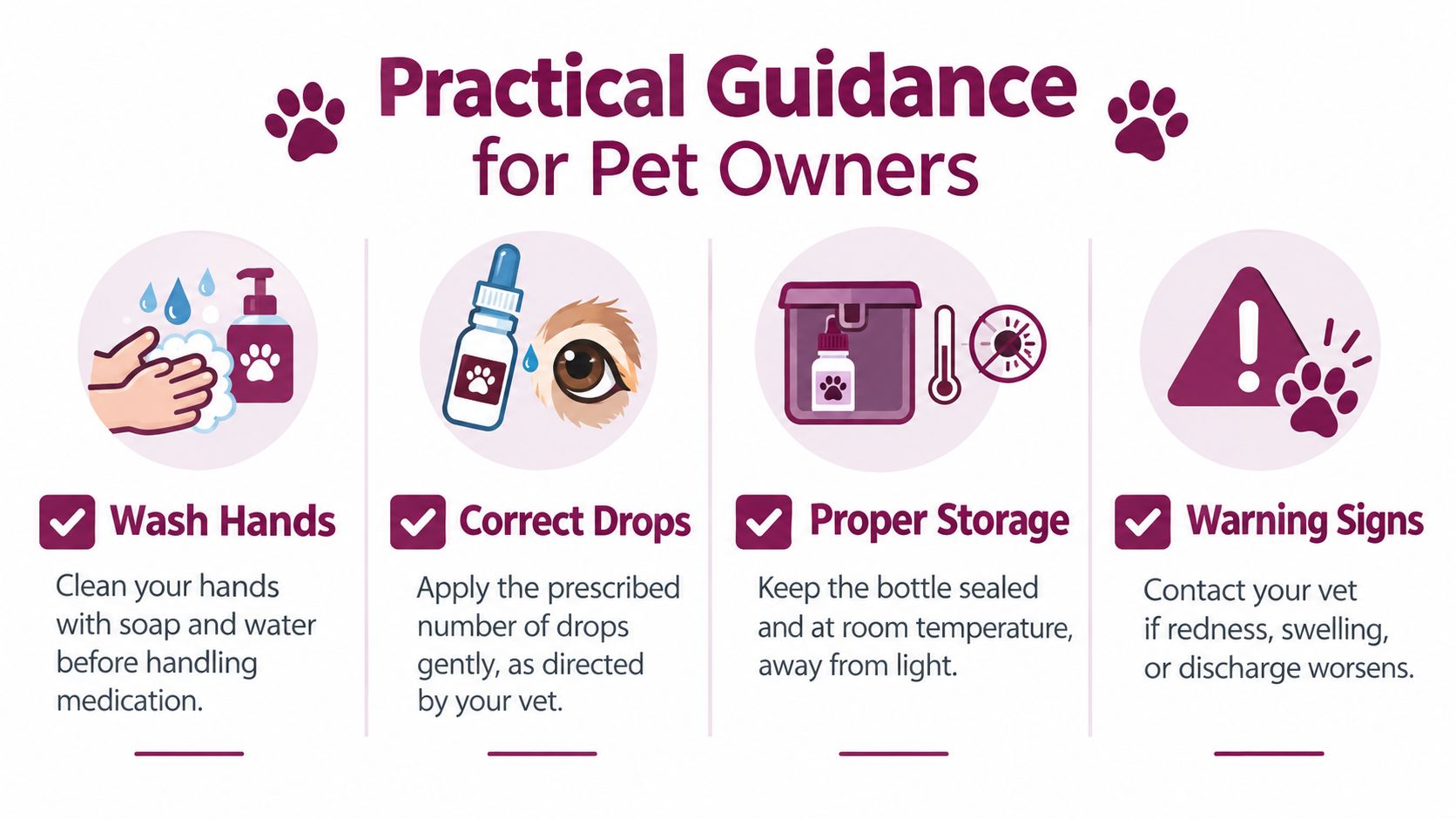
A simple routine
- Prepare first. Wash your hands and gently clear visible discharge only as your veterinarian recommends.
- Position your dog. Keep your dog's head steady. A second person can help if your pet is anxious or moves suddenly.
- Apply carefully. Place the prescribed number of drops or the directed amount of ointment without touching the applicator to the eye.
- Protect the schedule. Don't double a dose, change the frequency, or stop early because the eye looks better unless your veterinarian tells you to do so.
- Record concerns. Note worsening redness, swelling, discharge, squinting, cloudiness, or rubbing, then contact the clinic for guidance.
Storage instructions belong to the specific product label. Keep the container sealed and follow the stated temperature and light requirements. The guide to reading pet medication labels, dosage warnings, and storage can help you identify the active ingredient, formulation, directions, and warnings before administering a medicine.
Urgent veterinary attention is appropriate for sudden severe pain, a tightly closed eye, rapidly worsening cloudiness, a visible injury, or a dog that repeatedly paws at the eye. These signs can indicate a problem that an antibiotic alone won't resolve.
Combination products deserve extra caution. As noted above, some contain 0.3% tobramycin and 0.1% dexamethasone, so the steroid component makes veterinary supervision especially important (Merck Veterinary Manual guidance).
Prescription treatment should be coordinated with your veterinarian from start to finish. Bandana Rx provides prescription and over-the-counter pet medications, processes prescription orders after veterinary authorization, and offers pharmacy coordination and delivery services for eligible U.S. states. Visit Bandana Rx to review available pet-care options and coordinate a prescribed ophthalmic medication through a licensed online veterinary pharmacy.