



You give your dog a prescribed Temaril-P tablet for intense itching or a troublesome cough. Later, your dog seems sleepier, drinks more water, pants, or asks to go outside more often. Those changes can be unsettling, especially when you're trying to help rather than create a new problem.
Temaril-P has two active ingredients, so its reactions can come from two different drug classes. Knowing which ingredient commonly causes which effect can help you describe what you're seeing and recognize when a mild reaction has become a reason to call your veterinarian.
Table of Contents
- Understanding Temaril P and Your Dog's Reaction
- The Dual Action Formula and Common Side Effects
- Timelines and the Importance of Dosage Tapering
- Recognizing Serious Adverse Reactions and Red Flags
- Risk Factors and Dangerous Drug Interactions
- Monitoring Your Dog and When to Call the Vet
- Safely Managing Your Dog's Prescription Needs
Understanding Temaril P and Your Dog's Reaction
Temaril-P is a prescription veterinary tablet for dogs used for relief of itching and inflammation associated with certain canine skin disorders, as well as cough conditions such as kennel cough, tracheobronchitis, bronchitis, and nonspecific coughs. The product combines trimeprazine tartrate, an antihistamine with phenothiazine-related effects, and prednisolone, a corticosteroid. The FDA's animal-drug information identifies Temaril-P as an oral tablet for dogs. Read the FDA-listed product information for Temaril-P.
That combination explains why one dog may show both drowsiness and steroid-type changes, such as increased thirst or appetite. Trimeprazine can have a calming or sedating effect, while prednisolone changes immune and metabolic activity. Your dog might therefore sleep more after a dose but also visit the water bowl more frequently.
The important distinction: a predictable, mild change isn't the same as a serious adverse reaction. The pattern, intensity, and duration matter.
If your dog has just started treatment, write down the dose time and note changes in sleep, thirst, urination, appetite, panting, behavior, vomiting, or diarrhea. That record gives your veterinarian useful information without requiring you to guess which ingredient is responsible.
For dogs prescribed Temaril-P for coughing, the Temaril-P cough-relief product information can help you review the medication details, but it can't replace the prescribing veterinarian's instructions. A cough may have several possible causes, and suppressing a symptom doesn't establish the underlying diagnosis.
The Dual Action Formula and Common Side Effects
Temaril-P contains trimeprazine tartrate 5 mg and prednisolone 2 mg per tablet, according to the FDA-listed product information. Verify the active ingredients and tablet strengths in the FDA animal-drug listing.
The two ingredients act differently. Trimeprazine is a phenothiazine antihistamine, so sleepiness and sedation are usually associated with that component. Prednisolone is a glucocorticoid, so increased drinking, urination, appetite, and panting are typical steroid-driven observations described in veterinary guidance.
| Active Ingredient | Drug Class | Common Expected Side Effects |
|---|---|---|
| Trimeprazine tartrate | Phenothiazine antihistamine | Sleepiness, drowsiness, and sedation. Phenothiazine-related effects can also include protrusion of the third eyelid and stronger effects when combined with sedatives or anesthetics. |
| Prednisolone | Glucocorticoid corticosteroid | Increased thirst, urination, appetite, and panting. Restlessness and other steroid-related behavioral or metabolic changes may also occur. |
These reactions are generally described as dose-related, meaning the likelihood or intensity can rise as exposure increases. The official label states that adverse effects are usually minimal at the recommended dosage, but prolonged or repeated exposure creates a different safety concern from a short prescribed course. Review the official Temaril-P labeling and precautions.
A sleepy dog may still eat, drink, walk normally, and respond to you. That pattern can fit the trimeprazine component, but marked weakness, difficulty walking, tremors, or an unusual inability to rouse your dog should prompt veterinary advice. Likewise, increased thirst or urination can reflect prednisolone, but persistent or dramatic changes deserve a call rather than an assumption that they're harmless.
Prednisolone is also available as a veterinary prescription medication in its own right. Learn more about prednisolone for pets, but don't use another prednisolone product to replace Temaril-P or alter the prescribed plan without veterinary direction.
Timelines and the Importance of Dosage Tapering
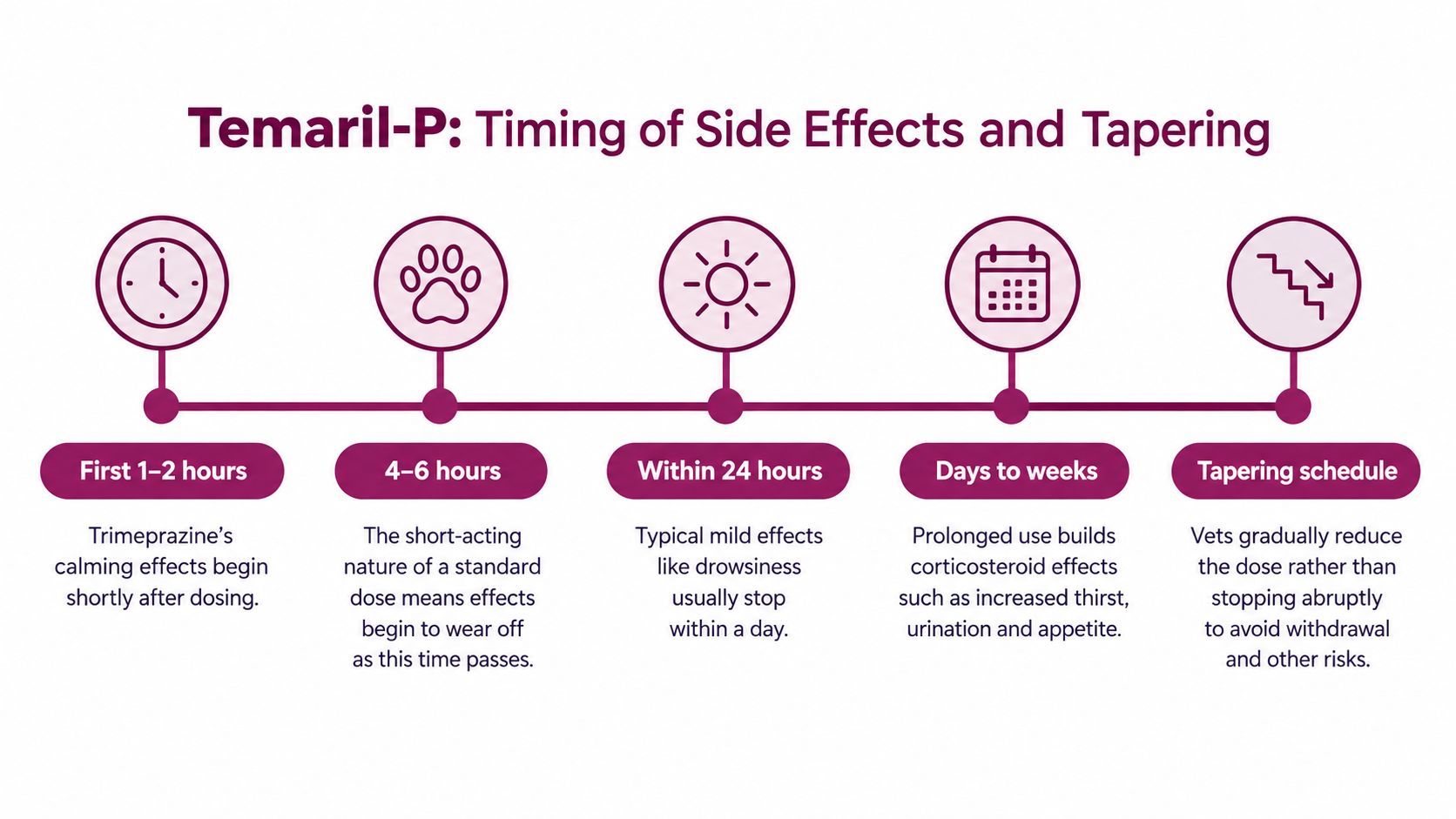
Temaril-P is described in veterinary guidance as short-acting. Standard effects should generally stop within 24 hours, although they can last longer in dogs with liver or kidney disease. That doesn't mean every effect disappears on a fixed schedule, especially after repeated dosing, so your dog's health history remains important. Review veterinary guidance on prednisolone duration and adverse effects.
The FDA-listed directions use a weight-based starting schedule:
| Dog's weight | Initial labeled amount |
|---|---|
| Up to 10 lb | 1/2 tablet twice daily |
| 11–20 lb | 1 tablet twice daily |
| 21–40 lb | 2 tablets twice daily |
| Over 40 lb | 3 tablets twice daily |
After 4 days, the label says to reduce the amount to one-half of the initial dose or to the smallest amount that maintains remission of symptoms. That reduction is not a casual adjustment. It limits unnecessary corticosteroid exposure while preserving the lowest amount that may continue controlling the prescribed symptoms. See the FDA-listed dosage directions and tapering information.
A practical way to follow the schedule
- At the start: Give the tablet exactly as prescribed and observe your dog's alertness, appetite, thirst, urination, and breathing or skin symptoms.
- During the initial course: Record changes rather than increasing, repeating, or shortening doses yourself. A response that seems incomplete may mean the underlying condition needs reassessment.
- After the labeled initial period: Confirm the veterinarian's tapering instructions before making any change. The label's reduction to one-half of the starting amount or the smallest effective amount is part of the medication plan.
- After a dose change: Continue tracking symptoms and side effects. Don't stop or restart the medicine based only on whether your dog appears better.
A written medication record can prevent confusion when tablets are split, doses are given by different family members, or symptoms fluctuate. Use this guide to review pet medication labels, dosage warnings, and storage details.
Recognizing Serious Adverse Reactions and Red Flags
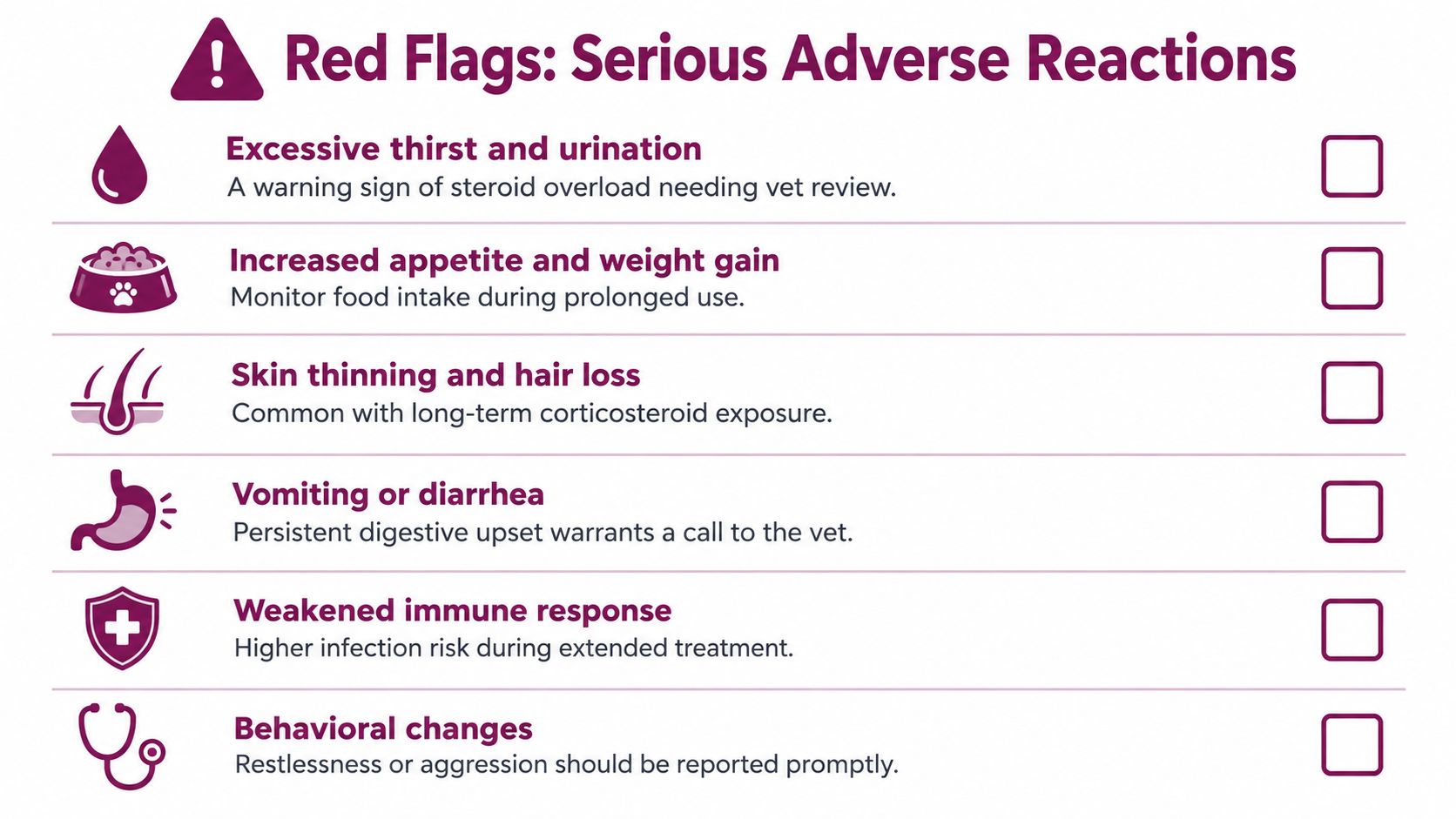
Not every Temaril-P reaction is mild. The prednisolone component can affect the body broadly, and the official label lists sodium retention, potassium loss, adrenal cortical suppression, delayed wound healing, osteoporosis, increased SGPT and SAP, and vomiting or diarrhea that may sometimes be bloody. The label also reports Cushing's syndrome in dogs after prolonged or repeated steroid therapy. Read the official DailyMed labeling on corticosteroid and phenothiazine effects.
The practical message is simple. A dog that is mildly sleepy after a dose needs observation, but a dog with bloody diarrhea, repeated vomiting, profound weakness, or signs of infection needs prompt veterinary assessment.
Signs that shouldn't wait for a routine appointment
Contact your veterinarian promptly if you notice:
- Vomiting or diarrhea: Persistent digestive upset can become more concerning when diarrhea contains blood or your dog becomes weak or unwilling to eat.
- Infection-related changes: Corticosteroids can suppress immune function. New discharge, worsening illness, fever-like behavior, or a wound that isn't healing should be reported.
- Potbellied appearance, weight gain, or hair loss: These can reflect longer-term steroid effects rather than a brief reaction after one dose.
- Aggression or marked behavior change: Restlessness, unusual irritability, or aggression needs veterinary review, particularly if it's new.
- Muscle tremors or stiffness: These signs can occur alongside medication reactions and shouldn't be dismissed if they persist or worsen.
- Third-eyelid protrusion or severe sedation: Phenothiazine-related effects can include exposure of the third eyelid and sedation. Severe or rapidly changing signs warrant immediate advice.
Do not wait for the next scheduled dose if your dog has severe vomiting, bloody diarrhea, collapse, trouble breathing, seizures, or cannot be roused normally. Contact an emergency veterinary service.
The risk of serious effects is especially relevant when treatment is prolonged or repeated. Never extend a course because the original itching or cough returns, and never assume a leftover tablet is suitable for a different dog.
For additional context about vomiting in dogs, including when it may need veterinary evaluation, review this guide to dogs throwing up white foam. It doesn't diagnose the cause of vomiting, so concerning signs still require a veterinarian.
Risk Factors and Dangerous Drug Interactions
Temaril-P isn't appropriate for every dog. Zoetis' professional product information states that it should not be used in animals with tuberculosis, peptic ulcer, or Cushing's syndrome. A dog with one of these conditions may face added risk from immune suppression, gastrointestinal effects, or additional corticosteroid exposure. Review the professional Temaril-P precautions.
Your veterinarian should also know if your dog has diabetes, heart disease, kidney or liver disease, an active infection, or a history of gastrointestinal problems. These conditions don't create a universal answer for every patient, but they can change whether the combination is suitable, how closely your dog should be monitored, and what alternatives deserve consideration.
Trimeprazine has phenothiazine-related effects. The official label warns that this component can potentiate anesthetics and other sedatives, meaning the combined effects may be stronger than expected. It also warns about potentiation of organophosphate toxicity. Tell the veterinarian about every prescription, over-the-counter product, supplement, and recent anesthetic exposure before treatment begins.
Information to provide before the first dose
Bring or communicate:
- Current medications: Include sedating medicines, anesthetics, and any products used for parasites or other conditions.
- Medical history: Mention Cushing's syndrome, ulcers, tuberculosis, diabetes, heart disease, kidney disease, liver disease, infections, and prior medication reactions.
- Recent procedures: A recent or planned anesthetic matters because sedation can be intensified.
- The exact product: Share the tablet label, strength, and prescribed directions rather than relying on memory.
Don't give a second dog the same prescription. Even dogs from the same household can have different diagnoses, weights, medical histories, and interaction risks. A veterinarian must decide whether Temaril-P is appropriate for that individual animal. For general information about another prescription used in dogs, see this educational resource on doxepin in dogs, but don't treat it as a substitute or combination recommendation.
Monitoring Your Dog and When to Call the Vet
A short daily record can turn vague worry into useful clinical information. Note when each dose was given, how alert your dog seems, how much they drink, how often they urinate, whether they're eating normally, and whether panting or restlessness changes.
Veterinary guidance identifies increased drinking, urination, appetite, panting, restlessness, and sleepiness as observable reactions. More serious signs include infection, vomiting, diarrhea, hair loss, a potbellied appearance, weight gain, and aggression. Review veterinary guidance on trimeprazine and prednisolone reactions.
A simple monitoring checklist
- Water and bathroom habits: Keep fresh water available and note unusual thirst or accidents.
- Food intake: Record increased appetite, reduced appetite, or refusal to eat.
- Energy and coordination: Mild sleepiness can occur, but severe weakness, tremors, or difficulty walking deserves a prompt call.
- Behavior: Watch for restlessness, aggression, confusion, or an abrupt change from your dog's normal temperament.
- Digestive signs: Report repeated vomiting, diarrhea, or any blood.
- Skin and body changes: Hair loss, delayed wound healing, a potbellied appearance, or weight gain should be discussed with the veterinarian.
Call the prescribing veterinarian for guidance if a side effect is persistent, intensifying, or difficult to distinguish from the original illness. If your dog has a severe reaction, contact an emergency veterinary service and take the medication container with you.
Don't independently skip, double, taper, restart, or stop doses. Prednisolone exposure is the reason the schedule may need a supervised reduction, and your veterinarian can balance symptom control with the risks of continued treatment.
Safely Managing Your Dog's Prescription Needs
Temaril-P works across two pharmacologic pathways, so safe use depends on more than watching for sleepiness. Your veterinarian needs to match the prescription to the dog's diagnosis, medical history, current medications, and response. That's particularly important when symptoms return, because recurrence may signal an unresolved skin, respiratory, infectious, or inflammatory problem rather than a need for indefinite refills.
Keep the original label, follow the prescribed schedule, and ask before making any change. A licensed online veterinary pharmacy can process a prescription after veterinary authorization, helping keep the product, strength, and directions connected to the prescriber's record.
Bandana Rx provides prescription fulfillment for eligible U.S. customers, prescription verification, order tracking, and scheduled-delivery options for medications that require regular refills. AutoShip can be convenient when a veterinarian has established an ongoing treatment plan, but it shouldn't encourage automatic continuation of Temaril-P without clinical review.
Bandana Rx offers prescription verification and online fulfillment for eligible pet medications, including Temaril-P when authorized by your veterinarian. Visit Bandana Rx to review available veterinary pharmacy services and coordinate your dog's prescription needs safely.