



A dog who was playing normally can suddenly become weak, wobbly, or unable to stand. A cat may hide, vomit, or strain in the litter box without producing urine. Then the veterinary team places monitoring leads on the chest and notices an abnormal heart rhythm. For a pet owner, the moment can feel frightening and confusing.
The team's first priorities are usually clear: confirm the potassium level, protect the heart when needed, and move excess potassium out of the bloodstream and temporarily into cells. Insulin and glucose for hyperkalemia can help create that short-term safety window. It doesn't remove potassium from the body or cure the condition that caused it, so emergency treatment and follow-up diagnostics both matter. If your pet is weak, collapsed, or having trouble urinating, contact an emergency veterinary hospital or review urgent veterinary care options rather than trying to manage the problem at home.
Table of Contents
- A Scary Moment in the Emergency Room
- What Hyperkalemia Actually Means for Your Pet
- How Insulin and Glucose Shift Potassium
- How a Veterinarian Decides the Dose
- Other Emergency Treatments a Vet May Use
- Watching for Hypoglycemia and Rebound
- Why Treating the Cause Matters as Much as the Number
- What to Do Next and Where BandanaRx Fits In
A Scary Moment in the Emergency Room
The veterinary nurse may ask when your dog or cat last urinated, whether there has been vomiting or diarrhea, and which medicines your pet has received. While blood is being collected, another team member may begin an electrocardiogram, often called an ECG, to watch the heart's electrical activity.
Hyperkalemia means that the blood contains too much potassium. Potassium is necessary for normal nerve, muscle, and heart function, but a significant increase can interfere with the electrical signals that coordinate each heartbeat. That's why the team may act before every diagnostic question has been answered.
What the first treatment is doing: Insulin and glucose shift potassium temporarily. They buy time while the veterinarian identifies and treats the source of the potassium increase.
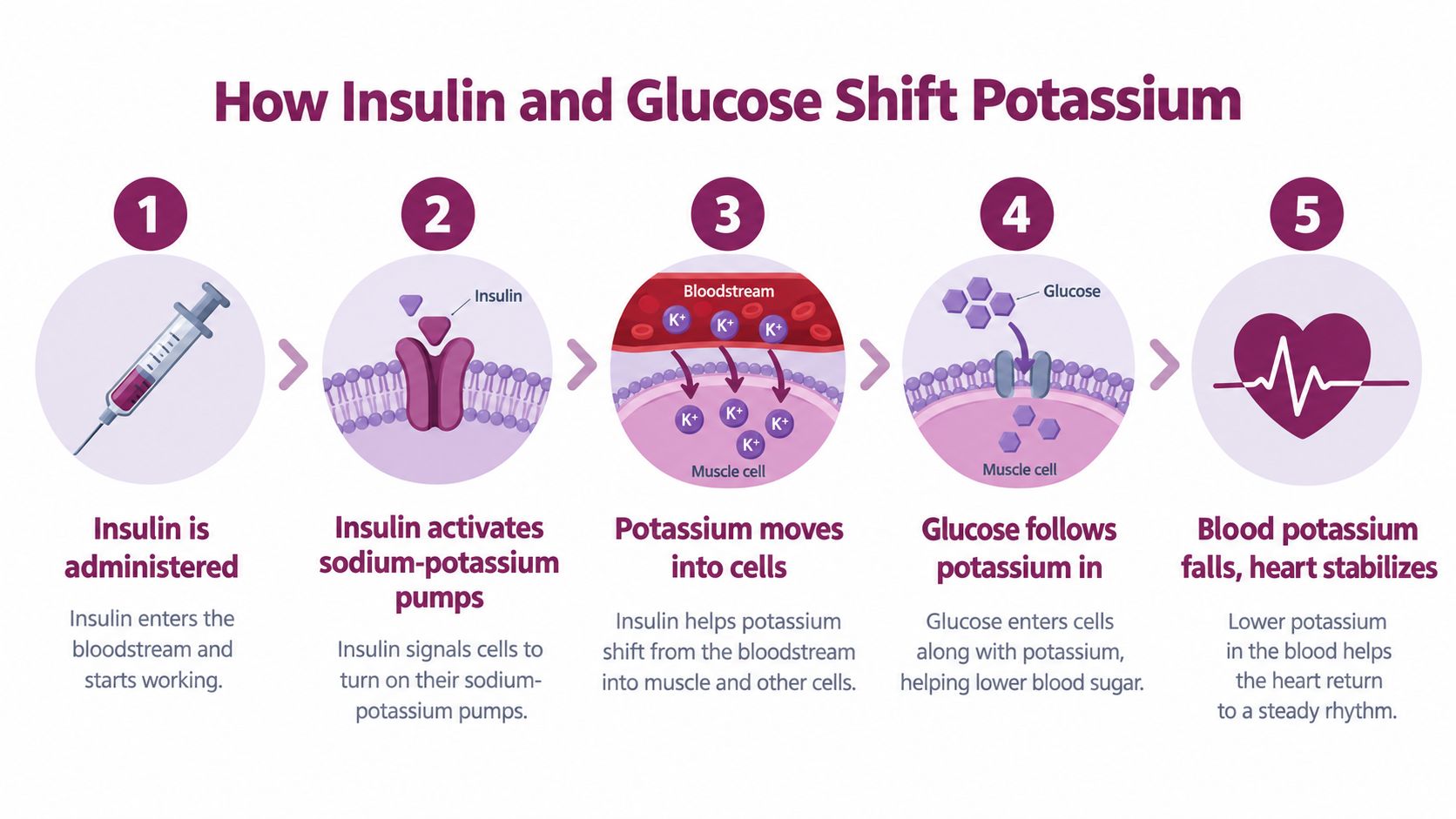
The insulin encourages potassium to move from the blood into cells. Glucose is given alongside it because insulin can lower blood sugar, including in a pet that isn't diabetic. Veterinary staff may also use a separate treatment to help protect the heart if the ECG is concerning, while they work on the underlying problem.
This distinction is important. A pet's potassium value may improve after the shift, yet the body may still be unable to excrete potassium. The emergency protocol is therefore a bridge, not a destination. The next steps may include urinary relief, fluid therapy, kidney support, endocrine testing, medication review, or another treatment selected by the veterinarian.
What Hyperkalemia Actually Means for Your Pet
Hyperkalemia is an abnormally high potassium concentration in the bloodstream. The increase may happen because the kidneys aren't removing potassium effectively, because damaged cells are releasing potassium, or because both processes are occurring at once.
Potassium helps heart and muscle cells generate electrical activity. As the level rises, those signals can become unreliable. A pet may show weakness, reduced movement, wobbliness, vomiting, collapse, or changes in heart rhythm. Mild elevations may cause few visible signs, which is one reason laboratory testing matters even when a pet doesn't look critically ill.
Common situations that can contribute include:
- Urinary obstruction: A blocked urethra, particularly in a male cat, can prevent urine and potassium from leaving the body.
- Kidney injury: Acute kidney injury can reduce potassium excretion.
- Addison's disease: Reduced adrenal hormone production can disrupt fluid and electrolyte regulation.
- Cell injury: Damaged tissue can release potassium into circulation.
- Medication exposure: Some drugs can affect kidney function, hormone balance, or potassium handling. Your veterinarian needs a complete medication and supplement history.
The usual potassium reference interval differs by laboratory, analyzer, species, and clinical context. There isn't one universal “normal” value that pet owners should use to interpret a result independently. Ask the veterinary team which result they're concerned about and how it relates to the ECG, kidney values, hydration status, and urine production.
A potassium result also needs context. A difficult blood draw or sample damage can sometimes affect laboratory interpretation, so the veterinarian may repeat testing if the result doesn't fit the pet's condition. Owners can learn more about potassium-related pet-care information through BandanaRx's potassium resources, but an online explanation can't replace examination and laboratory review.
How Insulin and Glucose Shift Potassium
Insulin changes where potassium is located. It activates the sodium-potassium pump, also called the Na+/K+-ATPase, in cell membranes. That pump helps move potassium from the bloodstream into cells, particularly muscle cells, so the measured serum potassium falls. This is a redistribution treatment, not a removal treatment.
Human emergency evidence describes a standard 10-unit regular insulin dose with 25 grams of dextrose as beginning to work in roughly 10 to 20 minutes, lowering potassium by approximately 0.65 to 1.5 mEq/L, with an effect lasting about 3 to 6 hours (clinical review). Those figures come from human medical literature and shouldn't be converted into a home dose for a dog or cat. Veterinary patients require species- and weight-specific decisions.
Glucose has a separate job. It supports blood sugar while insulin is driving glucose into cells. Without adequate glucose support, a pet can become hypoglycemic. The amount, concentration, and duration of glucose support depend on the pet's initial blood glucose, kidney function, nutritional status, insulin choice, and response to treatment.
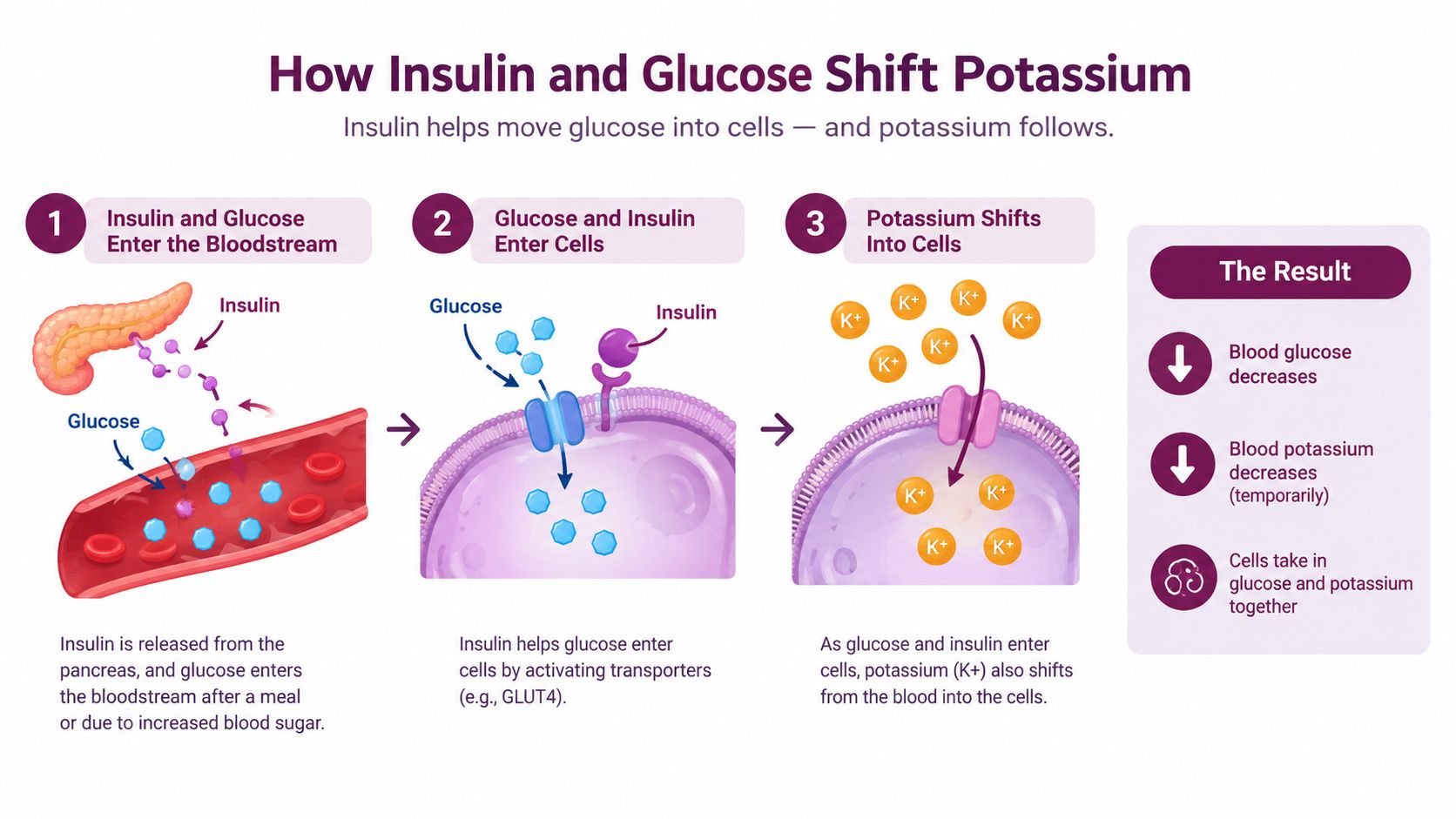
Because potassium has been moved rather than eliminated, it can return to the bloodstream as the insulin effect fades. The potassium may also remain high if the kidneys still can't excrete it or if a blockage remains. That's why potassium testing and blood-glucose monitoring are parts of the treatment itself, not optional extras. The insulin and glucose information page can provide general medication context, but your veterinarian must determine whether a particular insulin product is appropriate for your pet.
How a Veterinarian Decides the Dose
There isn't a safe universal home recipe for insulin and glucose in a pet with hyperkalemia. Before treatment, the veterinarian considers the potassium result, ECG findings, species, body weight, blood glucose, kidney function, hydration, urine production, and whether trained staff can continue monitoring.
A typical in-clinic plan may involve regular insulin given through a vein, with dextrose administered before or alongside it. Some patients need additional glucose support through an infusion. The team then repeats blood-glucose and potassium measurements and adjusts care according to the results.
The human literature commonly describes regular insulin with glucose as an acute potassium-shifting treatment, including 10 units with 25 to 50 grams of glucose in some reviews (NIH-indexed review). That information explains the mechanism and clinical history. It does not establish a dog or cat dose.
Typical in-clinic insulin and glucose protocol variables
| Variable | Dogs, typical approach | Cats, typical approach |
|---|---|---|
| Insulin amount | Weight- and response-based, selected by the veterinarian | Weight- and response-based, selected by the veterinarian |
| Glucose support | Matched to blood glucose and insulin plan | Matched to blood glucose and insulin plan |
| Administration | Often intravenous in an emergency setting | Often intravenous in an emergency setting |
| Rechecks | Serial glucose, potassium, ECG, and clinical assessments | Serial glucose, potassium, ECG, and clinical assessments |
| Adjustment | Based on laboratory response, kidney function, and ongoing losses | Based on laboratory response, obstruction status, kidney function, and ongoing losses |
Dextrose concentration is also individualized. A concentrated solution may require careful administration and dilution decisions, while a lower-concentration infusion may be better suited to continued support. The veterinary team chooses the formulation and rate, rather than copying a protocol from a human hospital or another animal.
Insulin syringes are not interchangeable with every insulin formulation or administration method. If your veterinarian sends insulin home for another condition, ask the clinic to demonstrate the prescribed syringe and measurement. BandanaRx's educational information about insulin syringes for dogs can supplement that conversation, but it shouldn't replace direct instruction from the prescribing team.
Other Emergency Treatments a Vet May Use
Insulin and glucose are one tool in a broader stabilization plan. The veterinarian may choose several treatments at once because each addresses a different part of the emergency.
Cardiac protection is the first category. Calcium gluconate can help protect the heart from the electrical effects of hyperkalemia, but it doesn't remove potassium from the blood. It serves a different purpose from insulin and glucose.
Intracellular shifting includes insulin with glucose and, in selected cases, a beta-2 agonist such as albuterol or terbutaline. Sodium bicarbonate may also be considered in particular acid-base situations. Its effect can vary, especially in cats, so the veterinarian weighs the likely benefit against the patient's overall chemistry and clinical condition.
Potassium removal addresses the source of the danger more directly. Depending on kidney function, urine production, hydration, and the underlying disease, a veterinarian may consider loop diuretics, cation-exchange resins, or dialysis. Diuretics require careful fluid planning, because increasing urine production isn't safe for every dehydrated or kidney-compromised patient. Dialysis may be discussed when hyperkalemia is severe and doesn't respond adequately to other care.
The team may therefore combine heart protection, potassium shifting, fluid therapy, and potassium removal. Insulin and glucose can create a temporary window while another intervention relieves an obstruction, improves circulation, supports the kidneys, or begins addressing an endocrine disorder. The appropriate combination depends on the pet's ECG, laboratory results, and response.
For general information about one medication category that may be considered in selected cases, see the diuretics information page. Don't give a diuretic or any other prescription medicine without veterinary authorization.
Watching for Hypoglycemia and Rebound
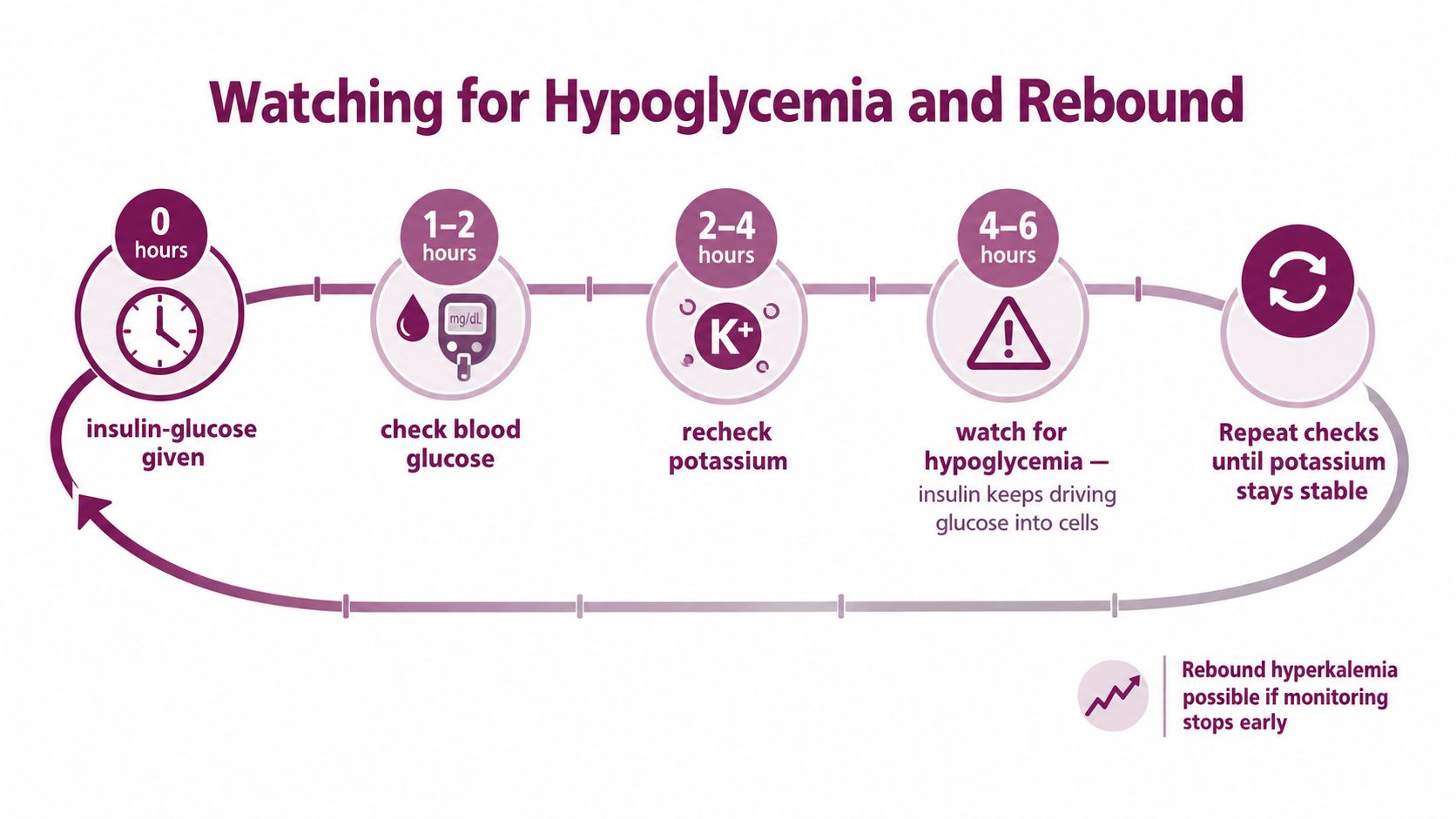
The potassium value may improve before the insulin effect has ended. That timing creates the central monitoring problem: the number that looks better is not the only number that matters.
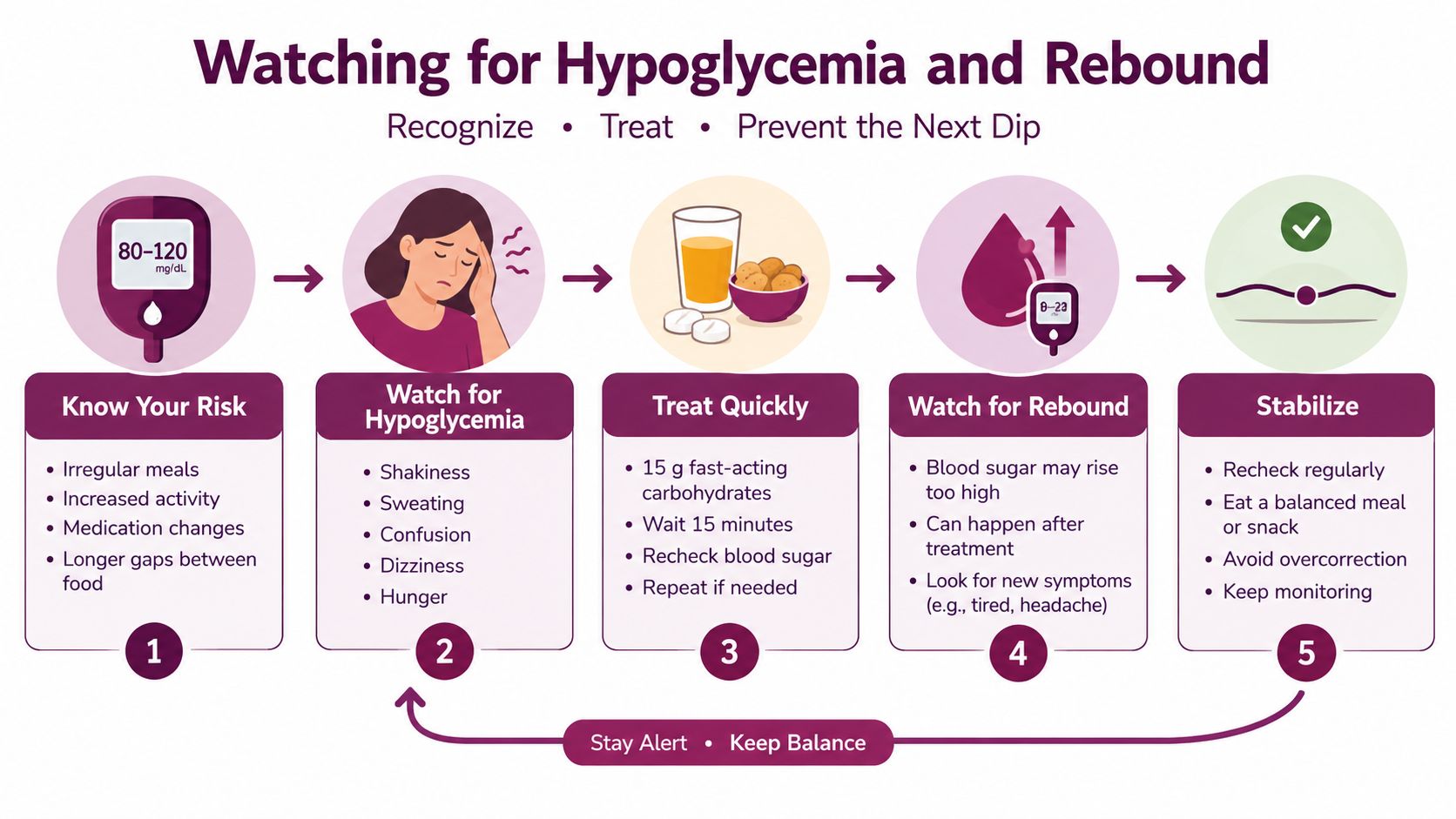
Insulin continues moving glucose into cells after the initial potassium shift. Human guidance describes blood-glucose checks for several hours, and delayed hypoglycemia has been reported as late as 6 hours after treatment, particularly in patients with impaired kidney function (patient-safety guidance). Veterinary teams may use a longer observation period when a pet has kidney disease, low initial blood glucose, poor appetite, or an uncertain response.
Signs of low blood sugar can be subtle. Watch for:
- Weakness or unusual tiredness: A pet may seem quieter than expected after the emergency.
- Stumbling or poor coordination: The pet may walk unsteadily or struggle to rise.
- Behavior changes: Restlessness, confusion, or reduced responsiveness can require immediate attention.
- Seizures or collapse: These are emergencies and require urgent veterinary care.
A dextrose infusion may continue until the pet's blood glucose is stable and the pet is eating reliably. Never assume that offering food at home is an adequate substitute for the monitoring plan given by the hospital.
Rebound hyperkalemia is the other side of the loop. As insulin's effect fades, potassium can move back out of cells. If a urinary obstruction, kidney problem, adrenal disorder, or other cause remains active, the blood potassium may rise again. Serial potassium tests tell the veterinarian whether the improvement is holding or whether additional treatment is needed.
Before discharge, ask for a written schedule covering glucose checks, potassium rechecks, feeding, medications, and warning signs. If your pet becomes weak, wobbly, unusually sleepy, or unable to urinate, contact the hospital immediately.
Why Treating the Cause Matters as Much as the Number
A normal potassium result after insulin and glucose can feel like the crisis is over. It may only mean that potassium has temporarily moved inside cells.
The lasting solution depends on why potassium rose. In a male cat, the veterinarian may need to relieve a urinary blockage and support urine production. With acute kidney injury, the team may focus on hydration, kidney perfusion, urine output, and removal of substances the kidneys can't clear. Addison's disease requires a different diagnostic and treatment pathway. Severe dehydration, tissue injury, and medication effects each call for their own evaluation.
The diagnostic workup may include:
- Bloodwork: Kidney markers, electrolytes, blood glucose, acid-base information, and other values help define the pattern.
- Urinalysis: Urine concentration and composition can provide clues about kidney function and urinary disease.
- Imaging: Radiographs or ultrasound may help identify obstruction, bladder changes, stones, or other structural problems.
- Endocrine testing: If Addison's disease is suspected, the veterinarian may recommend appropriate adrenal testing.
The purpose is not just to chase the potassium number. It is to find the process that keeps adding potassium to the blood or prevents the body from removing it. A pet may leave the hospital with improved laboratory results while still needing close follow-up for the underlying condition.
The practical question to ask: “What caused the potassium to rise, and what will prevent it from rising again?”
Bring a complete medication list, including supplements and recently stopped medicines. Tell the veterinarian about changes in drinking, appetite, urination, vomiting, stool, energy, and mobility. Those details can help connect the laboratory result to the disease affecting your pet.
What to Do Next and Where BandanaRx Fits In
If your pet is currently weak, collapsing, having an abnormal heartbeat, or not urinating, go to the nearest veterinary hospital. Call ahead if possible so the team can prepare for a possible electrolyte emergency.
Once your pet is receiving care, use this checklist:
- Share the timeline: Explain when the weakness, vomiting, straining, collapse, or appetite change began.
- Bring records: Provide medication names, supplement details, prior laboratory results, and discharge paperwork.
- Ask about the cause: Find out whether the team is investigating obstruction, kidney injury, Addison's disease, dehydration, or a medication-related problem.
- Confirm monitoring: Ask when blood glucose and potassium will be checked again, and what symptoms require an immediate return.
- Plan the handoff: If your regular veterinarian will continue care, ask the emergency hospital to send laboratory values, ECG findings, treatments, and follow-up recommendations.
Travel can complicate recovery, especially when a pet needs medication, temperature control, or medical supervision. Families arranging transport can review Ferried health transport rules alongside direct advice from the treating veterinarian.
BandanaRx can support the pharmacy portion of recovery by coordinating authorized prescriptions, refill requests, and medication questions for eligible U.S. customers. A pharmacist can help clarify prescription information, but the prescribing veterinarian remains responsible for the drug choice, dose, timing, and monitoring plan. Don't change insulin, glucose, diuretics, or another prescription because a laboratory value looks better or worse without speaking with the veterinary team.
Hyperkalemia is serious, but it's treatable when the clinic can respond promptly and continue looking for the cause. Your questions, accurate records, and careful observation at home give the hospital and pharmacy a stronger partnership around your pet's recovery.
For prescription coordination and ongoing pet medication support, visit Bandana Rx. Keep your veterinarian's instructions and monitoring schedule close at hand, and contact the pharmacy when you need help managing an authorized refill or prescription question.