


You're probably here because life with your dog has become a balancing act. Your dog is itchy, licking paws, getting ear trouble, or smelling “yeasty,” and someone in the house may also be sneezing, congested, or relying on allergy meds more than they want to. You love the dog. You want a real plan. Not vague advice to “reduce exposure.”
That's the right mindset, because how to reduce dog allergies is rarely about one heroic fix. It's about stacking the boring things that work, then sticking with them long enough to matter. Bedroom control. Bathing on a schedule. Skin support. Vet-guided treatment when the home routine isn't enough. If you only do one of those, results are usually partial. If you combine them, families often get to a manageable place.
Table of Contents
- What Dog Allergies Actually Are and Why Layered Care Matters
- Cut Allergen Load Where the Family Sleeps and Breathes
- Build a Bathing and Grooming Routine That Actually Reduces Allergens
- Support the Skin From the Inside With Diet and Supplements
- Work With Your Vet on Medication and Immunotherapy
- Build a Monitoring and Treatment Plan You Can Stick To
- Real-World Scenarios and When to Make Hard Choices
What Dog Allergies Actually Are and Why Layered Care Matters
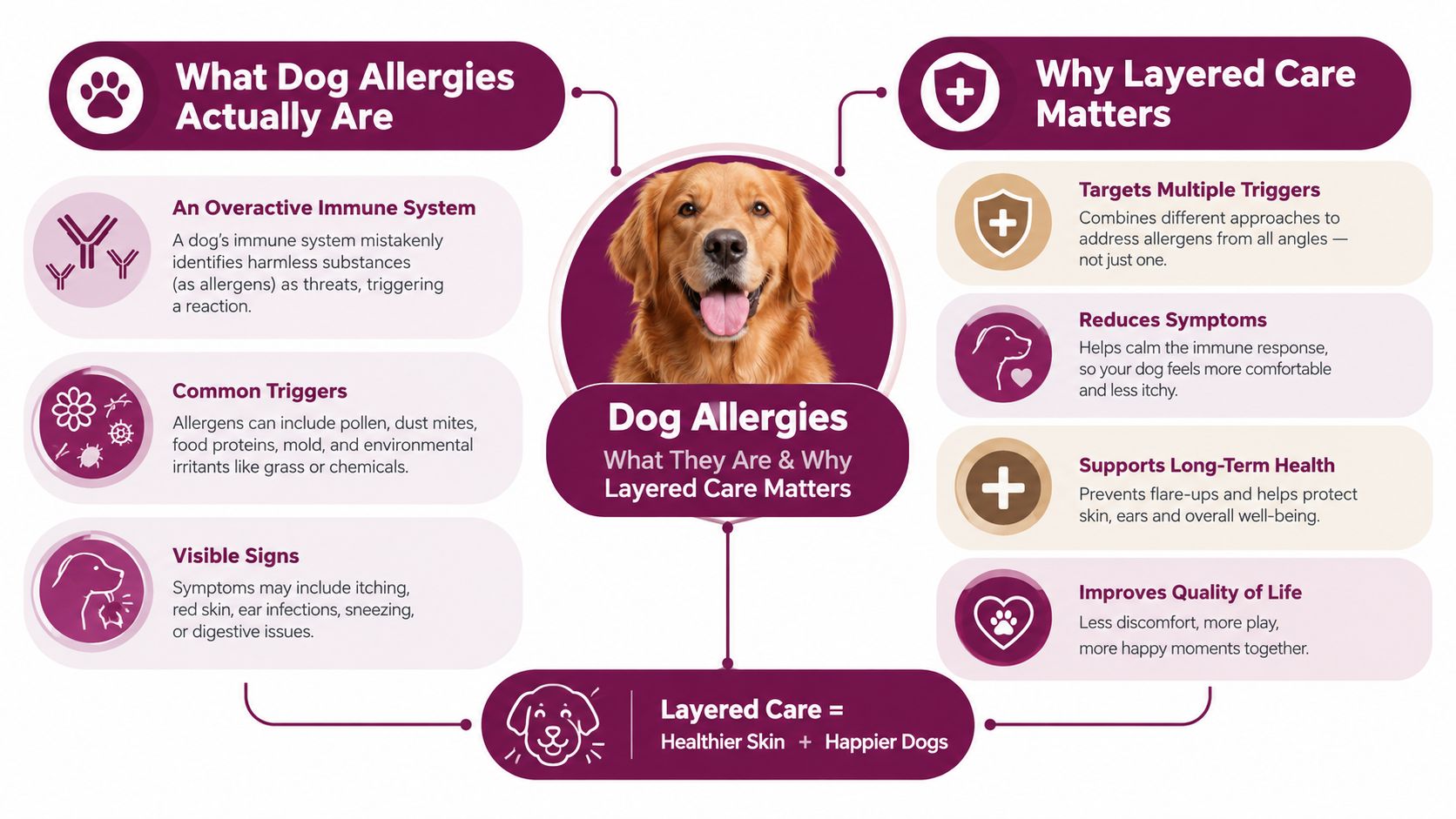
Dog allergies are not one single problem. In practice, I think about three big buckets: flea allergy dermatitis, food allergy, and environmental atopic dermatitis. Environmental triggers commonly include things like dust mites, mold, pollen, and storage mite proteins. The dog's immune system treats those proteins like a threat and overreacts.
That overreaction shows up in familiar ways. Dogs itch. They lick feet. They rub faces. They get recurrent ear infections, skin irritation, hot spots, and secondary skin infections because damaged skin is easier for bacteria and yeast to invade.
The problem affects more than the dog
If a person in the home is sensitive to dog allergens, the issue doubles. Now you're not only trying to calm the dog's skin. You're also trying to lower what the family breathes and sleeps around. That's why a one-step answer usually falls short.
A lot of owners assume visible fur is the main issue. It isn't that simple. Allergens ride on dander, saliva, skin debris, and what the coat carries through the house. That's why the most useful plans target both the dog and the environment.
Bottom line: Allergic disease is usually chronic. The goal is control, not a miracle reset.
What a practical plan looks like
For most households, the smart sequence is:
- Control the sleeping space so the allergic person has one low-exposure room.
- Reduce what sits on the coat with a repeatable bathing and grooming routine.
- Support the skin barrier with sensible nutrition, not hype.
- Use veterinary treatment when itching, infections, or flares keep breaking through.
- Track results so you know what helped.
If your dog's signs sound familiar, Bandana Rx has a helpful collection of articles on dog allergy topics for pet owners.
Cut Allergen Load Where the Family Sleeps and Breathes
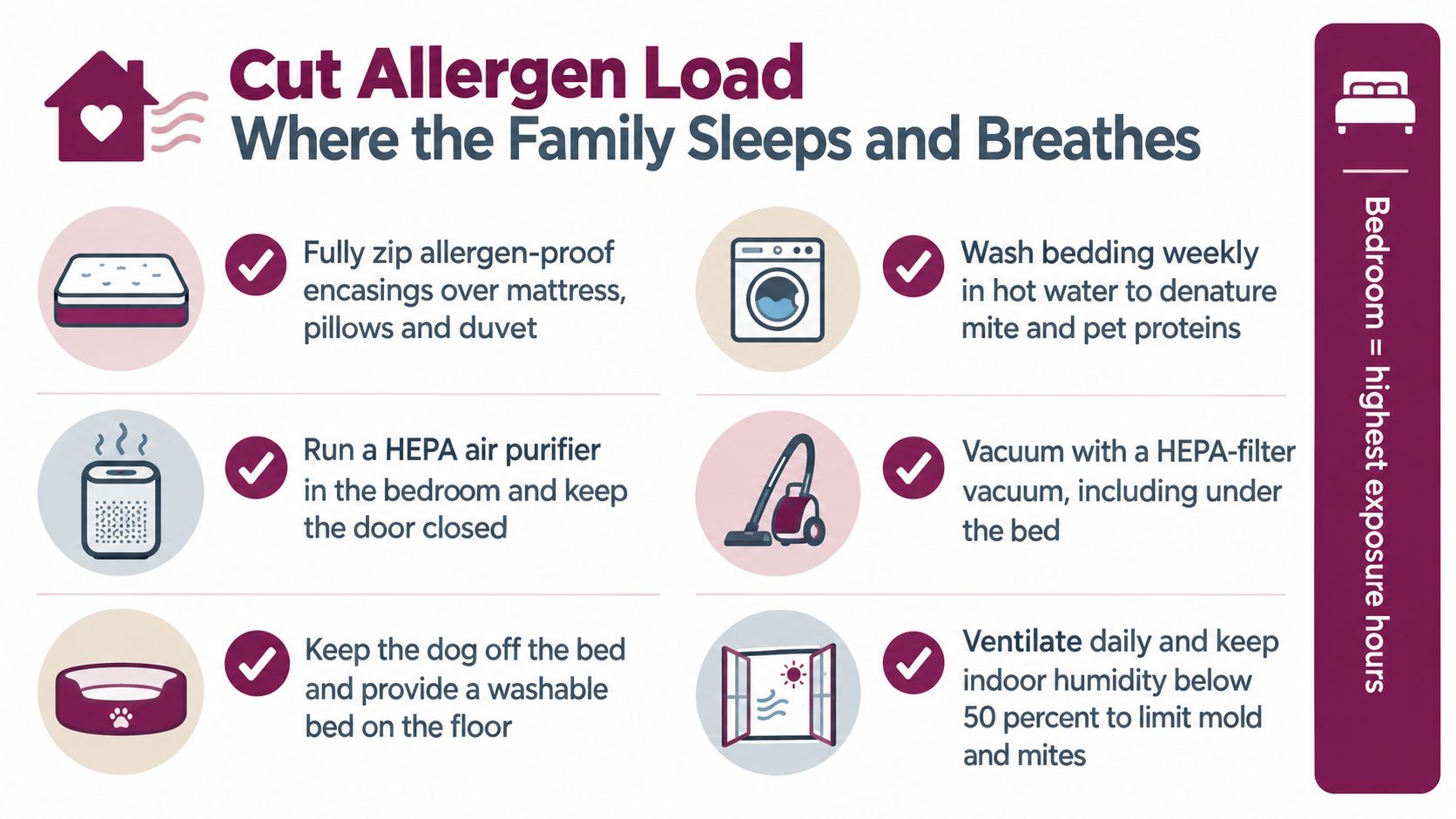
If there's one room to get serious about, it's the bedroom. The National Institute of Environmental Health Sciences guidance on pet allergens makes this clear: people spend roughly one-third to one-half of their time in sleeping areas, and that makes the bedroom a major exposure zone. The same guidance recommends keeping dogs out of the allergic person's bedroom, using allergen-proof covers for mattresses and pillows, and placing a HEPA-filter air cleaner in that room.
Make the bedroom a true low-exposure zone
Don't half-do this. “The dog only comes up on the bed sometimes” is not bedroom exclusion.
Use a real setup:
- Zip encasings fully over the mattress, pillows, and duvet.
- Run a sealed HEPA purifier continuously with the bedroom door closed as much as possible.
- Keep the dog off the bed and out of the room, every day, not just at night.
- Wash human bedding and the dog's nearby soft items regularly so allergens don't keep recycling.
Clean the surfaces that trap allergens
Soft furnishings hold onto allergen load. Carpets, rugs, throw blankets, upholstered chairs, and fabric headboards are repeat offenders. If you can change the room over time, hard flooring is easier to keep clean than wall-to-wall carpet.
Use a routine you can maintain:
- Vacuum weekly with a HEPA-filter vacuum on carpets, rugs, and upholstered furniture.
- Dust with a damp cloth instead of dry dusting, which just redistributes debris.
- Wash pet bedding and washable throws in hot water on a regular schedule.
- Trim fabric clutter if the room is packed with decorative pillows, heavy drapes, and plush textiles.
For owners who want a practical housekeeping checklist, Aquastar Cleaning Services advice is a useful companion resource because it translates dander control into actual cleaning habits.
A cleaner bedroom won't fix an allergic dog. It can still make the household much easier to live in.
One more point that gets missed. If your dog has flea allergy dermatitis, even a few bites can trigger major itching, so home allergen work won't be enough unless parasite control is solid too. This overview of whether flea and tick collars work can help you think through that layer.
Build a Bathing and Grooming Routine That Actually Reduces Allergens
Most owners bathe too infrequently to make an allergy difference. Monthly baths may help a dog smell better, but they don't keep allergen load down in a meaningful way.
The best hard data here comes from a classic Can f 1 study. Washing dogs reduced recoverable allergen from hair by 84% and from dander by 86%, and airborne dog allergen in homes dropped by about 41% in the first 1 to 4 days and about 61% in days 5 to 7 after washing, according to the Journal of Allergy and Clinical Immunology study on dog washing and Can f 1 reduction. The catch is important: the effect didn't last, and dogs needed to be washed at least twice weekly to maintain lower coat allergen levels.
What that means in real life
If your goal is reducing allergens, twice weekly is the benchmark that makes sense. That doesn't mean every dog tolerates the same shampoo or schedule equally well, so talk with your veterinarian if your dog has fragile skin, active infections, or a history of becoming drier after bathing.
Here's the practical sequence I prefer:
- Brush first to remove loose coat and surface debris.
- Wet the coat completely so shampoo can spread evenly.
- Use a mild, vet-approved shampoo and lather thoroughly.
- Leave it in contact briefly so you're not just rinsing soap over the top.
- Rinse extremely well because residue can worsen irritation.
- Dry the coat fully, especially in skin folds and dense areas.
Add small grooming habits that pay off
Bathing matters most, but the little habits count.
- Wipe paws and the belly after outdoor time if your dog tracks in grass, dust, or moldy debris.
- Keep the rear clean on dogs that get messy after bowel movements.
- Use sanitary trims when needed if your dog develops moisture-related skin trouble around the groin, feet, or rear.
- Brush in a controlled area so loose dander doesn't spread all over the house.
Table: Bathing Frequency and Expected Allergen Reduction
| Bathing Frequency | Coat Allergen Reduction | Airborne Allergen Reduction |
|---|---|---|
| Less often than twice weekly | Short-lived reduction only | Short-lived reduction only |
| Twice weekly | 84% from hair and 86% from dander based on the washing study linked above | About 41% in days 1 to 4 and 61% in days 5 to 7 after washing in the same study |
If your dog's skin is reactive, it helps to choose the product carefully. This Bandana Rx guide to shampoo for dogs with skin allergies is a sensible place to compare shampoo types before you start bathing more often.
Support the Skin From the Inside With Diet and Supplements
Nutrition is a support layer, not the star of the show. I'm in favor of using diet and supplements when they fit the case, but I don't oversell them. A better skin barrier can help your dog handle allergic disease more comfortably. It usually won't replace medical care in a highly atopic dog.
What can help
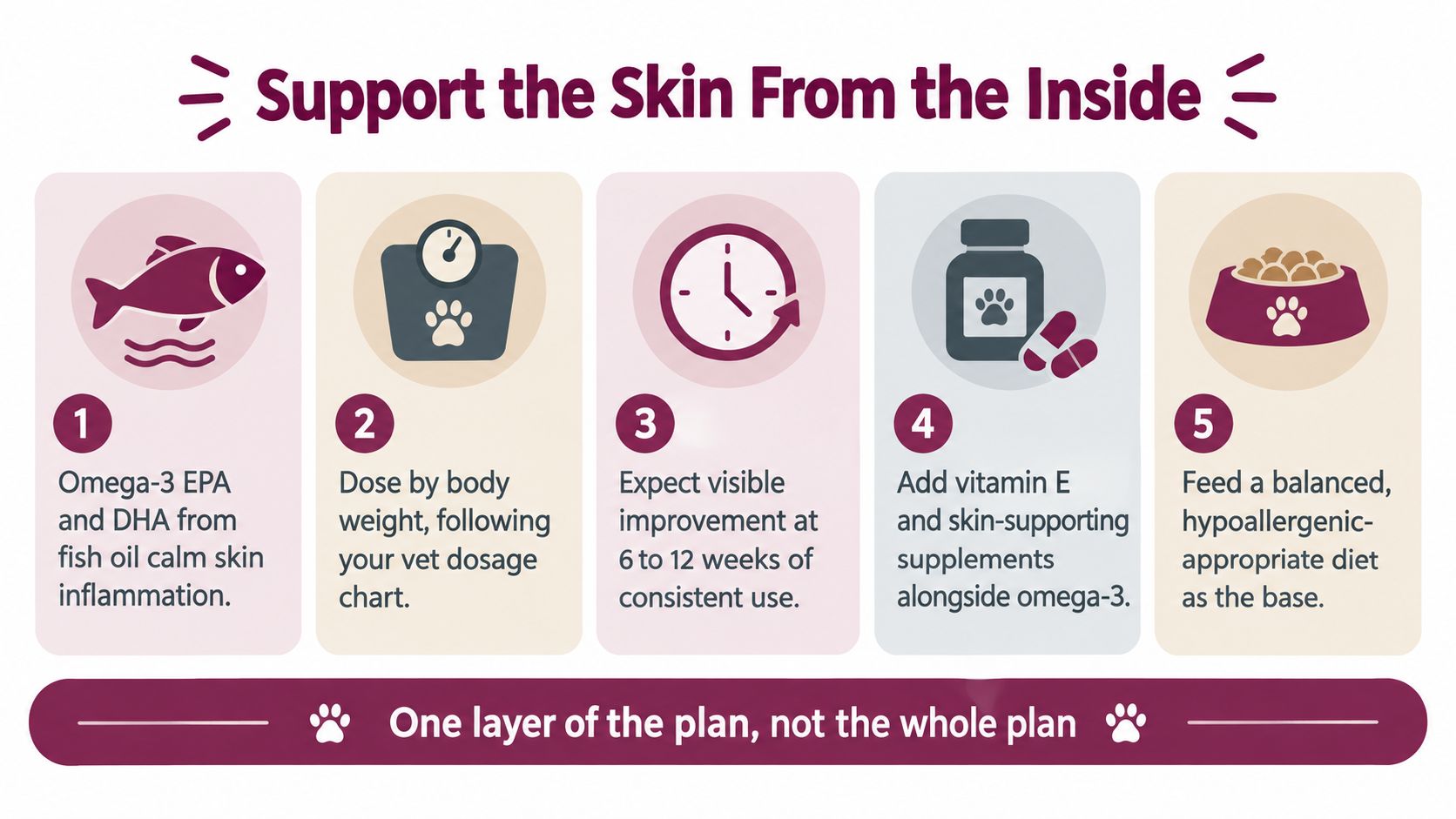
Omega-3 fatty acids are the first supplement category I consider for itchy skin support. They're commonly used to support the skin barrier and coat quality, and they fit well in a long-term management plan. Your veterinarian should guide dosing based on your dog's weight and the product you're using.
Some dogs also benefit from a diet chosen for skin health or, when food reaction is suspected, a novel-protein or hydrolyzed diet selected by your veterinarian. The key word is strict. If you're testing diet as a trigger, random treats and table scraps can derail the whole effort.
Practical rule: Diet changes help most when the household treats them like a protocol, not a suggestion.
What owners often get wrong
The most common mistake is expecting food changes to solve environmental atopic dermatitis on their own. They usually don't. A stronger skin barrier is useful, but it doesn't erase dust mites, mold, or pollen.
The second mistake is buying a pile of “skin supplements” because the label sounds convincing. Supplement marketing often runs ahead of evidence. Keep it simple and choose products your veterinarian can justify.
If you're looking at fish oil support, Welactin Omega-3 Skin & Coat Liquid Supplement for Dogs is one example of an over-the-counter option pet owners may discuss with their veterinarian as part of a broader skin-care plan.
Work With Your Vet on Medication and Immunotherapy
Home care matters, but some dogs need more than baths and bedroom rules. If your dog has recurring itch, recurrent ear disease, or repeated skin infections, I'd rather see you move to a veterinary plan early than spend months trying random add-ons.
The most evidence-based long-term tool is allergen-specific immunotherapy, often called allergy shots or ASIT. In a 117-dog study, 18 dogs had an excellent response with remission on immunotherapy alone, 57 had a good response defined as more than 50% reduction in medication plus improved clinical signs, 24 had a moderate response, and 18 had a poor response, according to the PubMed summary of the canine atopic dermatitis immunotherapy study and review. That same source notes that approximately two-thirds of atopic patients eventually benefit enough to count as treatment success, while only about 1 in 5 reach complete remission on immunotherapy alone.
A larger retrospective study of 664 atopic dogs found that 59.9% achieved a good or excellent response after at least 9 months, with response much stronger in dogs treated for at least 12 months than in those treated for less time, as summarized in the retrospective ASIT response review for dogs. That's the honest takeaway. Immunotherapy works for many dogs, but it demands patience and consistency.
Medications can control itch while the long game unfolds
Prescription medications often fill the gap while you're building long-term control. Two common names owners hear are Apoquel and Cytopoint.
Table: Common Prescription Options for Canine Atopic Dermatitis
| Treatment | How It Works | Onset of Relief | Best Use Case |
|---|---|---|---|
| Apoquel | Prescription oral medication used to control itch and inflammation associated with allergic skin disease in dogs | Often chosen when daily oral control is practical | Dogs needing flexible oral itch control under veterinary supervision |
| Cytopoint | Prescription injectable monoclonal antibody used to help manage signs of atopic dermatitis in dogs | Often used when owners prefer injections through the veterinary team | Dogs needing a non-pill option or dogs where regular injections fit the plan |
| Corticosteroids | Prescription anti-inflammatory drugs that can suppress severe allergic flare inflammation | Often rapid | Short-term rescue use when your veterinarian decides the benefits outweigh the risks |
I'm deliberately not giving dose advice here because that belongs with your veterinarian. These are prescription decisions, and the right choice depends on age, health history, infection status, and how often flares happen.
My opinion on steroids
Steroids are useful. They are not harmless. For short rescue periods, they can be very effective. For chronic disease, I prefer steroid-sparing strategies when possible, especially if a dog needs ongoing control year after year.
If your dog is on more complicated itch or behavior-related medication plans, it's worth reviewing safety carefully. This Bandana Rx article on doxepin use in dogs is a reminder that any prescription approach deserves a veterinary discussion rather than casual substitution.
Build a Monitoring and Treatment Plan You Can Stick To
The best allergy plan is the one your family will still be doing in three months. Not the one that looks perfect on paper and collapses after ten days.
Write it down like it matters
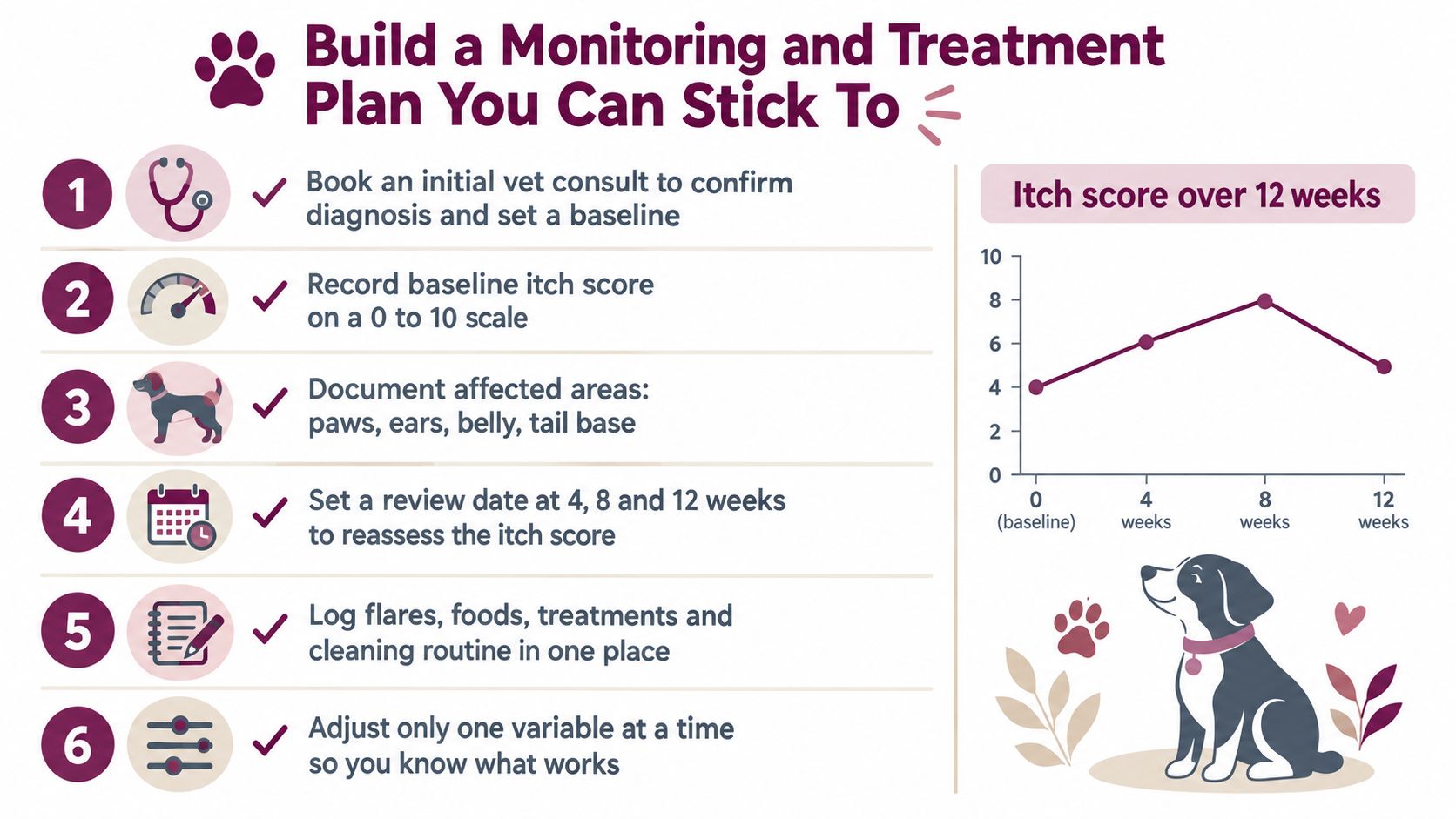
Start with a short written plan after your veterinary visit. I like owners to track an itch score from 0 to 10, note the body regions involved, and keep weekly photos of the same problem spots from the same angle. You don't need a fancy spreadsheet. A notes app works fine if you use it.
Keep the log practical:
- Record flare days when scratching, chewing, or ear shaking clearly worsens.
- List baths and grooming so you know whether consistency changed.
- Track food changes and treats if diet is part of the plan.
- Note medication timing exactly as prescribed.
- Add skin or ear setbacks such as odor, redness, crusting, or discharge.
Review on a schedule, not by memory
Memory is unreliable when you're tired and your dog has been scratching at 2 a.m. Set checkpoints with your veterinarian. A recheck at 4 weeks, then 12 weeks, then 6 months is a practical rhythm for many chronic allergy cases.
Call sooner if you see:
- Open skin or hot spots
- A sudden jump in itch
- New odor or discharge from the ears
- Behavior changes, especially restlessness, hiding, or irritability
- Signs the routine isn't realistic and the household is already slipping
Change one variable at a time when you can. If you start a new shampoo, a new diet, and a new medication in the same week, you won't know what actually helped.
Adherence beats intensity. A moderate routine done every week usually outperforms an ambitious routine abandoned in frustration.
Real-World Scenarios and When to Make Hard Choices
Some households can manage this well with layering. Others can't. Being honest about which situation you're in is kinder to both the people and the dog.
Scenario one with a workable maintenance routine
The dog is itchy but otherwise healthy. The family keeps up with bathing, the bedroom stays dog-free, the skin barrier is better supported, and the veterinarian has an effective treatment plan for flares. This is the most common “success” version of allergy care. Not cure. Control.
In these homes, the winning move isn't perfection. It's routine. A family that can sustain the work usually does better than one chasing constant upgrades.
Scenario two with a dog-allergic person in the home
Sometimes the dog is the dominant trigger for one adult or child. In that case, I'd get strict fast. Bedroom exclusion becomes mandatory. The HEPA purifier belongs in the allergic person's room. Grooming and coat cleaning need to happen on schedule, not “when things seem bad.”
A recent review makes the hard point clearly: removing the pet from the home remains the most effective long-term way to reduce pet allergen exposure, even though owners often need layered mitigation because removal is unrealistic, according to the review on pet allergen exposure control and the limits of partial mitigation. If you're trying to keep the dog, you need to understand that partial mitigation may help but may not fully solve the human medical problem.
Scenario three with medically significant failure of control
This is the situation nobody wants to discuss. Some dogs have severe, refractory atopic disease. Some households have a person whose allergy or asthma remains medically significant despite serious effort. In those cases, rehoming may be the medically honest answer.
That decision should never be framed as a moral failure. It's a health decision. If the dog's disease stays uncontrolled despite appropriate veterinary care, or the person in the home cannot function safely without escalating medication and repeated symptoms, then the family has reached a different decision point.
Sometimes the kindest answer is the one people hoped they wouldn't need.
The right question isn't “How long can we avoid the hard choice?” It's “Are the dog and the family doing well enough with the plan we can sustain?”
Bandana Rx offers prescription and over-the-counter pet medications, skin-care products, supplements, and educational resources that can support a vet-guided allergy plan for your dog. If you're building a long-term routine for itching, skin support, or refill management, visit Bandana Rx to explore available options and information for ongoing care.