



A dog who keeps shaking his head after a bath, scratches one ear against the carpet, or suddenly recoils when you touch the side of his face may be dealing with more than ordinary itchiness. You may notice redness, a strong odor, wax, or discharge, while the ear canal itself looks difficult to inspect. The right response isn't to reach for the first bottle in the cabinet. Dog ear drops work best when the medication matches the cause, the eardrum is safe, and the ear has been prepared properly.
Ear problems are common in dogs, and otitis externa, inflammation of the outer ear canal, is reported in approximately 5% to 20% of dogs. One veterinary study recorded 320 diagnoses among 2,012 dogs examined over six years, with 24% of affected dogs experiencing one or more recurrences after initial topical treatment. (Review of canine otitis externa) Those figures help explain why an apparently simple ear problem can become a recurring part of pet care.
Table of Contents
- Recognizing When Your Dog Needs Ear Drops
- Understanding the Main Types of Dog Ear Drops
- How to Safely Apply Ear Drops to Your Dog
- Choosing Between OTC Cleaners and Prescription Drops
- Dosing, Storage, and Safety Guidelines for Ear Drops
- When to Seek Veterinary Care for Ear Problems
Recognizing When Your Dog Needs Ear Drops
Suppose your dog starts shaking his head during dinner. At first, you assume water or a stray bit of grass is bothering him. By the next day, he's scratching one ear, rubbing that side of his face on the sofa, and turning away when you try to look inside. The ear flap may appear red, and you may notice a sour or musty odor.
Those signs suggest discomfort, but they don't identify the cause. Bacteria, yeast, allergies, trapped debris, inflammation, parasites, and deeper ear disease can produce similar symptoms. A veterinarian may need to examine the canal and evaluate ear material before deciding whether your dog needs an antibacterial, antifungal, anti-inflammatory, cleaning, or combination product.
Signs that deserve attention
Watch for a pattern rather than relying on one isolated behavior:
- Persistent head shaking: Repeated shaking usually means the ear feels painful, itchy, blocked, or irritated.
- Scratching or rubbing: Dogs may scratch the ear directly or rub the affected side against furniture and flooring.
- Redness and swelling: Inflamed tissue can narrow the canal and make medication or cleaning harder.
- Odor or discharge: Brown, yellow, waxy, or moist material can accompany infection or inflammation.
- Sensitivity to touch: Pulling away, yelping, or becoming unusually defensive signals that handling may hurt.
- Head tilt or imbalance: These signs can indicate deeper ear involvement and shouldn't be managed with routine home care alone.
A normal-looking ear flap doesn't rule out a problem. Disease may sit farther down the canal, where owners can't safely see it. If your dog is showing several of these signs, arrange a veterinary assessment rather than choosing drops based only on odor or discharge. The dog ear infection care resources can help you prepare questions for that conversation, but they can't replace an examination.
The main practical distinction is simple: ear drops are a treatment, not a diagnosis. A cleaner may remove surface debris, but it won't address every infection. A leftover prescription may temporarily reduce odor while leaving the underlying problem unresolved, especially when allergies, narrowed canals, or recurrent inflammation are involved.
Understanding the Main Types of Dog Ear Drops
The useful question isn't, “Which dog ear drops are strongest?” It's, “What does the ear contain, and what does the medication need to do?” A formula aimed at bacteria may not address yeast. A product that reduces swelling may make an inflamed ear more comfortable without treating the organism causing the discharge. Combination products can be appropriate, but only when their ingredients fit the diagnosis and the ear is safe to treat.
Veterinarians commonly consider four broad categories.
| Drop Type | Targets | Common Ingredient Classes | Typical Use Case |
|---|---|---|---|
| Antibacterial | Bacterial overgrowth or infection | Veterinary antibiotics | A diagnosed bacterial component, selected with the overall ear findings in mind |
| Antifungal | Yeast or fungal overgrowth | Antifungal agents | Yeast-associated inflammation, including cases where Malassezia is present |
| Anti-inflammatory | Swelling, redness, itching, and discomfort | Corticosteroids | An inflamed canal where reducing tissue reaction is part of the treatment plan |
| Combination | More than one confirmed or suspected component | Antibiotic, antifungal, and corticosteroid combinations | Otitis externa involving infection plus significant inflammation, under veterinary direction |
Antibacterial and antifungal choices
Antibacterial drops are intended for bacterial disease, while antifungal drops address fungal or yeast involvement. The distinction matters because the same visible discharge can occur with different organisms. Veterinary examination and, when indicated, cytology help determine whether bacteria, yeast, inflammatory cells, or another problem is present.
A combination product may be selected when bacterial or yeast involvement occurs alongside swelling and pain. That doesn't make combination therapy automatically preferable. More ingredients can mean broader coverage, but they also make accurate diagnosis, label compliance, and follow-up more important. Veterinary treatment for otitis externa often includes removing exudate and selecting antimicrobial therapy according to the suspected cause and, in difficult cases, susceptibility information.
Where anti-inflammatory ingredients fit
Corticosteroids can reduce swelling and discomfort, which may open a narrowed canal and improve contact between the medication and the ear lining. They don't replace treatment for an identified infection. If the ear keeps flaring after the initial inflammation settles, the veterinarian may need to investigate allergies, anatomy, chronic irritation, or another primary cause.
Products such as Synotic Otic Solution information should be reviewed as prescription medication information, not as a reason to self-select treatment. The appropriate product, dose, and duration depend on the individual dog and the veterinarian's findings.
Practical rule: Match the active ingredients to the ear problem. Don't match them to the color, smell, or appearance of the discharge alone.
How to Safely Apply Ear Drops to Your Dog
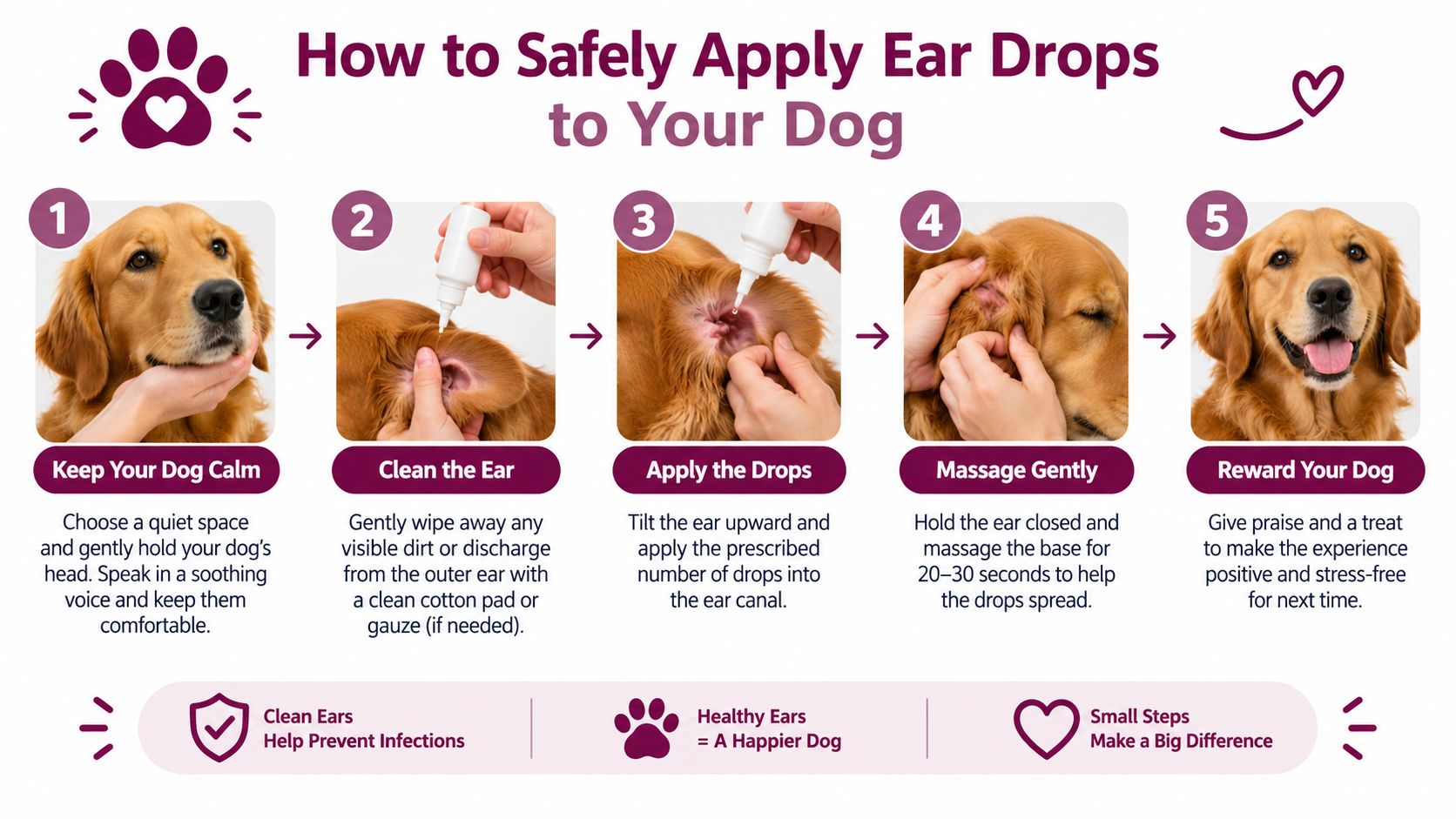
A dog may tolerate ear drops well one day and resist them the next. Pain, swelling, trapped debris, or a narrowed canal can make even gentle handling difficult. Good application starts with checking whether home treatment is safe, preparing the ear properly, and using only the product and schedule recommended for your dog.
Wax, discharge, and moisture can prevent medication from reaching the canal lining. Veterinary guidance recommends using an approved ear cleaner when appropriate, loosening material with massage, wiping away what reaches the opening, and letting the canal dry before applying prescribed drops. (FDA veterinary otic treatment information)
Check the ear before cleaning
Choose a calm location and place the bottle, veterinarian-approved cleaner, cotton balls, and a towel within reach. Read the label, confirm that the product is intended for dogs, and follow any separate cleaning instructions from your veterinary team.
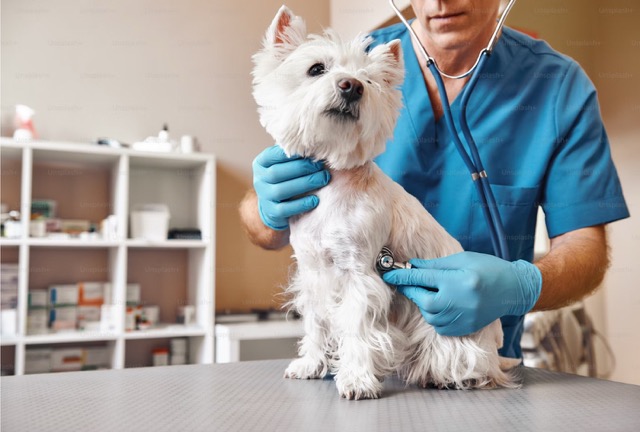
Inspect only the outer ear. Do not force the flap open or probe the canal. Stop and call the veterinary practice if the ear is extremely painful, swollen shut, bleeding, or producing heavy discharge. A dog in pain may bite despite normally gentle behavior, and a veterinarian may need sedation to examine or clean the canal safely.
Do not put cleaner or medication into an ear if a perforated eardrum is possible unless a veterinarian has examined the ear and confirmed that the product is safe. Some ingredients can cause harm when they reach deeper structures.
Clean without driving debris inward
- Lift the ear flap gently. Hold it only as far as your dog accepts, without pulling on the canal.
- Apply the approved cleaner. Use the amount and method provided by your veterinarian. Household liquids and human ear products are unsuitable substitutes.
- Massage the ear base. Place your fingers where the ear meets the head and massage until you hear a soft squishing sound. This helps loosen material through the canal.
- Let your dog shake. Shaking moves loosened debris toward the opening. Use a towel to protect nearby furniture.
- Wipe the outer canal. Use a cotton ball to remove material that is visible at the opening. Never push a cotton swab into the canal.
The goal is to remove accessible debris, not to scrape the ear clean. Cotton swabs can pack material deeper and injure delicate tissue, while forceful or frequent cleaning can increase irritation.
Apply the medication accurately
Wait for the interval stated by your veterinarian or the product label after cleaning, especially if the ear remains wet. Hold the bottle opening close to the ear without touching the skin, place the prescribed number of drops into the canal, and keep the bottle steady. If your dog moves, do not guess or automatically repeat the dose. Ask the prescribing veterinarian what to do.
Massage the ear base again unless your veterinarian has advised against it. This distributes medication along the canal. Wipe excess liquid from the flap, reward calm behavior, and keep the ear dry afterward.
Contact the veterinary team if your dog cries, becomes more painful, develops worsening redness, or resists more strongly with each application. At-home treatment has reached its limit when pain prevents safe handling, signs worsen, or improvement does not follow the prescribed plan. The guide to treating a dog ear infection may help with preparation, but it should not be used to change the product, dose, or treatment duration.
Choosing Between OTC Cleaners and Prescription Drops
An over-the-counter ear cleaner and a prescription ear drop serve different purposes. A cleaner helps remove wax, debris, and moisture when your veterinarian has determined that routine cleaning is suitable. Prescription drops contain targeted medication for a diagnosed condition, such as bacterial or yeast involvement, inflammation, or a combination of these problems.
The difficult part is that owners often see the same outward signs in very different diseases. A red ear may reflect allergy-driven inflammation, bacterial infection, yeast, a foreign object, or trauma from scratching. A strong odor may accompany infection, but odor alone doesn't tell you which ingredient is appropriate. Self-diagnosis can lead to repeated use of a product that masks symptoms without addressing the cause.
When a cleaner may fit
A veterinarian may recommend a cleaner for routine maintenance, after water exposure, or as part of a treatment plan. The product still needs to be appropriate for your dog's ear, and frequent cleaning isn't automatically better. Over-cleaning can irritate an already sensitive canal, while inadequate drying leaves moisture behind.
Use the dog ear cleanser collection to review available care products, but confirm with your veterinary team which type is suitable before using one in an inflamed or painful ear.
When prescription treatment deserves priority
Prescription drops become more likely when your dog has persistent discharge, marked odor, swelling, pain, recurring episodes, or symptoms that don't settle with the cleaning plan. A veterinarian may inspect the eardrum, examine material under a microscope, and decide whether treatment should target bacteria, yeast, inflammation, or more than one component.
Some dogs aren't good candidates for prolonged daily drops. Recent evidence suggests that certain chronic or recurrent cases may be managed with veterinarian-administered protocols involving one or two doses, rather than daily owner-applied treatment, when the case and product are appropriate. (Veterinary Evidence review of canine otitis externa treatment) That approach doesn't mean every dog should receive an in-clinic protocol. It highlights an important trade-off: the most effective plan must account for diagnosis, safety, treatment adherence, and recurrence risk.
A cleaner removes material. A prescription treats a diagnosed disease. They may appear together in one plan, but they aren't interchangeable.
Dosing, Storage, and Safety Guidelines for Ear Drops
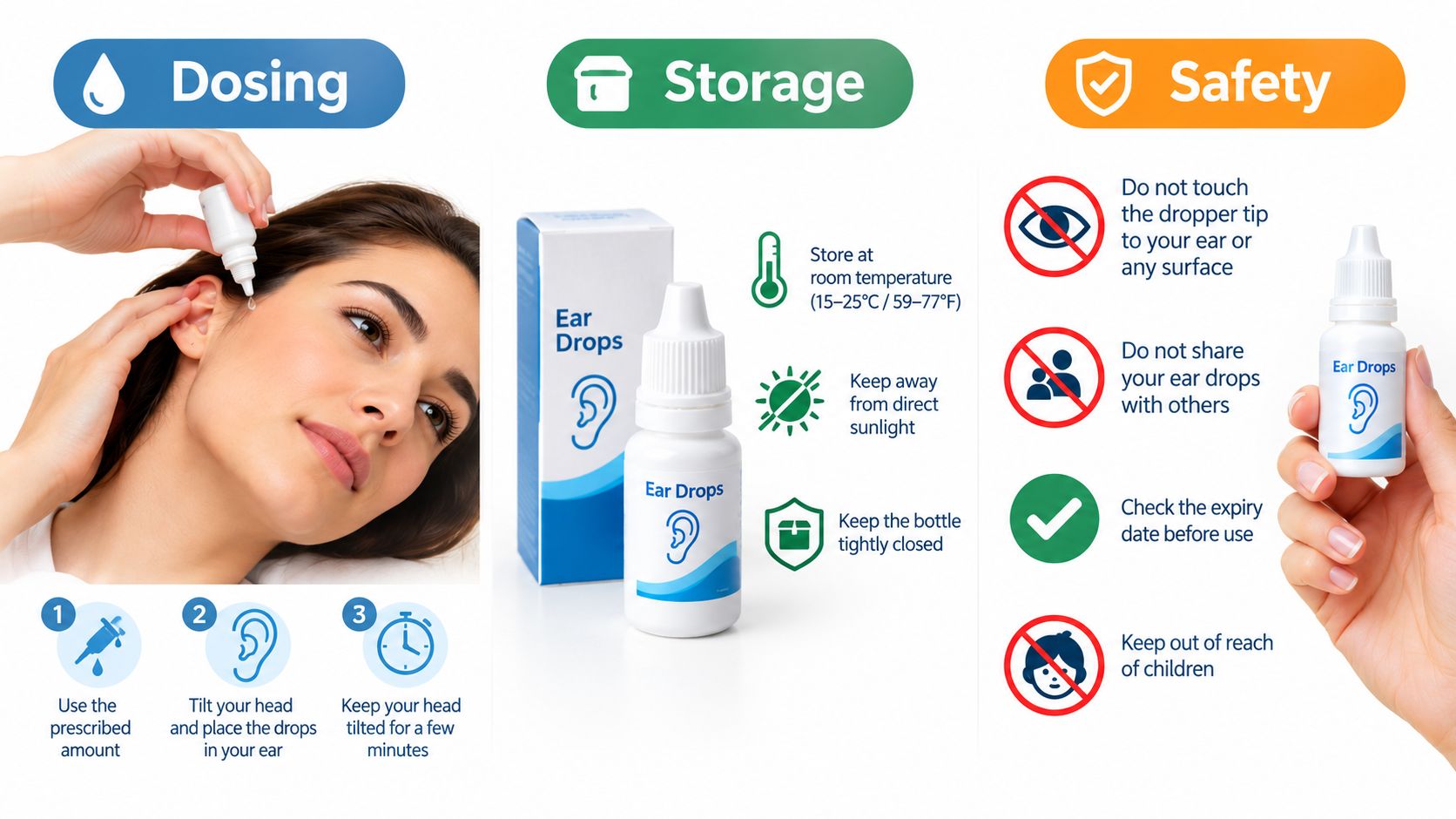
A label is part of the treatment plan, not packaging to skim after opening the bottle. Veterinary ear drops differ in active ingredients, concentration, species approval, dosing frequency, duration, storage, and contraindications. A dog with similar symptoms may still need a different product and schedule.
Weight can change the labeled dose. For example, FDA labeling for Otomax specifies 4 drops per ear for dogs under 30 pounds and 8 drops per ear for dogs weighing 30 pounds or more, twice daily for 7 days. That applies to that product only. It is not a general rule for every ear medication.
Safety checks before the first dose
Some ear drops should not be used if the eardrum is perforated, and some products are not approved for every animal species. A veterinarian needs to decide whether the eardrum can be assessed and whether the chosen medication fits the ear problem. That matters most when the canal is swollen, packed with debris, or too painful to examine fully.
Do not use leftover medication from a previous episode, share a product between pets, or keep treating because the odor improved. Product labeling warns that inappropriate or repeated antimicrobial use can contribute to resistance, and clinical improvement does not always mean every organism is gone. If signs persist or return, your dog may need another exam rather than another round of the same drops.
Practical handling habits
- Follow the prescribed schedule: Do not change the number of drops, frequency, or duration without veterinary approval.
- Finish the directed course: Early improvement does not mean treatment is complete.
- Store as labeled: Keep the container under the conditions on the label, with the cap closed and the tip clean.
- Watch the response: Contact the veterinary practice about worsening pain, marked redness, swelling, bleeding, or a new balance problem.
- Keep records: Note the date, dose, ear treated, and any reaction. That helps when a dog has recurrent disease.
Use the pet medication label guide to read dosing, warnings, and storage directions more accurately. Prescription medication should be dispensed and used only with veterinary authorization.
When to Seek Veterinary Care for Ear Problems
Some ear problems can start at home, but only within a veterinary plan and only when your dog can tolerate treatment safely. Severe pain, bleeding, a canal that looks swollen shut, a head tilt, stumbling, circling, or other balance changes call for prompt veterinary attention. Those signs can point to deeper disease or to an ear that should not be managed blindly at home.
Lack of improvement matters too. If your dog stays painful, keeps shaking his head, develops ongoing discharge, or gets worse while using drops, do not add another product or increase the dose on your own. Call the prescribing clinic and ask whether the ear needs an exam, cytology, cleaning, or a different medication.
Recurrence changes the question
When an ear problem keeps coming back, the issue is usually bigger than one course of drops. Allergies, chronic inflammation, ear anatomy, trapped debris, or organisms that need more targeted treatment can all keep the cycle going. Repeating the same empiric medication may calm things briefly, then the flare returns because the underlying cause is still there.
That is why improvement alone does not equal resolution. Topical therapy can make a dog look better quickly, but the ear may still need follow-up before it is fully controlled. One FDA approval document reported significant improvement by day 4, and a multicenter field study recorded cure rates of 84.3% by day 21 in one treatment arm and 73.8% in a comparator arm. (FDA otic product approval document) Those findings support reassessment when signs linger, return, or change.
Some recurrent cases may be managed with a veterinarian-administered one or two-dose protocol, but that is a case-by-case decision. Here, the main question is not which shortcut sounds easiest. It is whether the ear can be examined safely, whether the eardrum is intact, and whether the chosen treatment matches the cause.
Bandana Rx provides prescription and over-the-counter pet medications and ear-care products, with prescription orders processed after veterinary authorization. Visit Bandana Rx to review dog ear-care options and coordinate an appropriate order with your veterinarian.