




Clorazepate for dogs is mainly used as a prescription benzodiazepine for pulse or rescue treatment of cluster seizures, rather than as a universal daily maintenance drug. Veterinary references describe canine dosing in ranges such as 0.5–1 mg/kg by mouth three times daily or 1–2 mg/kg every 8–12 hours, but your veterinarian must set the dose for your dog.
Could a medication with a long history in canine seizure care be useful without being the right choice for everyday, indefinite treatment? That distinction is central to understanding clorazepate. It may help suppress a pattern of repeated seizures or support a carefully designed seizure protocol, but it also can cause sedation, coordination problems, tolerance, physical dependence, and withdrawal seizures if it's stopped suddenly.
This guide explains what clorazepate does in dogs, why veterinarians may choose pulse therapy, how dosing is individualized, and what owners should monitor. It's educational information, not a diagnosis or a substitute for your veterinarian's treatment plan.
Table of Contents
- What Is Clorazepate for Dogs and When Is It Used
- How Clorazepate Works in Dogs
- Primary Uses and Clinical Applications
- Typical Dosing Ranges and Administration
- Side Effects and Safety Considerations
- Drug Interactions and Contraindications
- Prescription Process and Safe Purchasing Guidance
- Key Takeaways for Responsible Dog Owners
What Is Clorazepate for Dogs and When Is It Used
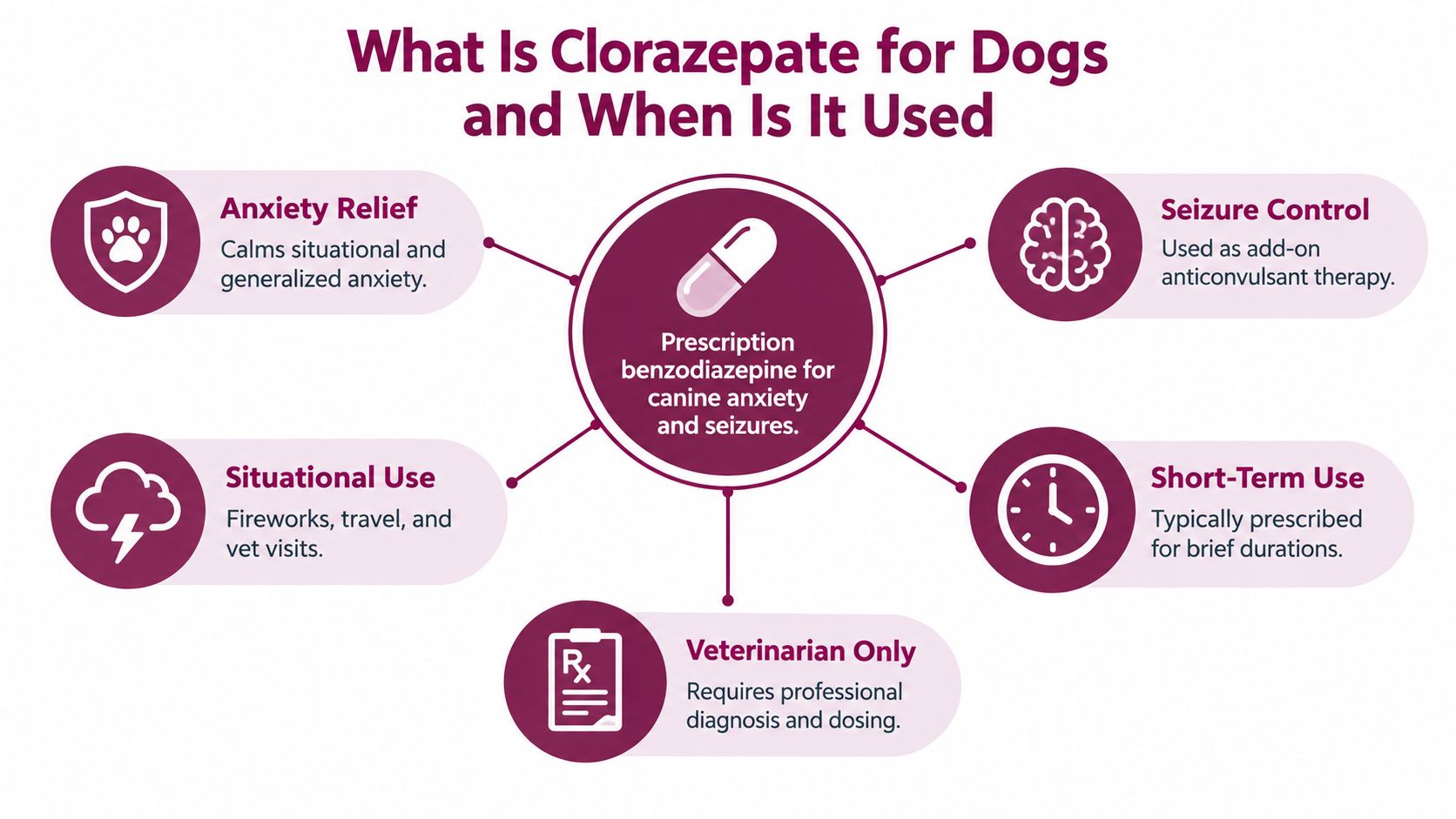
A worried owner may ask, “Is clorazepate a daily seizure medicine, an anxiety medicine, or an emergency drug?” The most accurate answer is that its role depends on the dog's condition and the protocol prescribed. In current veterinary neurology, it's commonly considered a targeted benzodiazepine option for cluster-seizure control and adjunctive seizure management, rather than a universal long-term medication.
Clorazepate dipotassium is a prescription benzodiazepine. Unlike an over-the-counter calming supplement, it has a defined pharmacologic effect, requires veterinary dosing, and can interact with other medications. Its use in dogs has a substantial veterinary history. A 1990 canine pharmacokinetic study gave 2 mg/kg orally every 12 hours for 21 days to 8 healthy dogs and measured nordiazepam, its main active metabolite, after the first and final doses.
Why the indication matters
The same drug can be used differently depending on whether a dog has isolated seizures, repeated seizures close together, or a broader epilepsy plan. Veterinary references describe clorazepate as an option for cluster seizures, refractory epilepsy protocols, and other carefully selected situations. A 2024 ACVIM consensus statement also describes longer-acting benzodiazepines such as clorazepate as oral pulse treatment given every 8–12 hours in dogs and cats.
That doesn't mean every dog with seizures should receive it. A veterinarian must consider the seizure pattern, underlying cause, other anticonvulsants, liver health, sedation risk, and whether the intended use is brief or ongoing. Never start, stop, or change clorazepate without veterinary instructions.
How Clorazepate Works in Dogs
Think of clorazepate as a prodrug, meaning the medication your dog swallows is converted into the substance that produces most of the clinical effect. In dogs, clorazepate is converted to nordiazepam, also called desmethyldiazepam. The metabolite provides most of the anticonvulsant benzodiazepine activity.
That conversion explains why the parent drug isn't the whole story. The published canine data found measurable serum metabolite exposure after repeated oral administration of 2 mg/kg every 12 hours for 21 days. The practical meaning is that the dosing schedule helps maintain the active benzodiazepine effect. Your veterinarian isn't choosing a frequency based only on how quickly the tablet is swallowed.
A simple pharmacology analogy
Imagine clorazepate as a sealed delivery package. The package contains the starting compound, while the body opens and processes it into nordiazepam, the active delivery. Because the metabolite drives much of the effect, clorazepate may fit a planned pulse schedule better than a medication intended for rapid, minute-by-minute adjustment.
Veterinary reference material reports a canine half-life of 5–6 hours and a therapeutic level of 20–75 mcg/L in the same Merck table that describes the drug as approximately 15 times less potent than clonazepam. A clinical neurology review notes peak plasma concentrations in 1–2 hours. These details help explain why a veterinarian may use clorazepate during a seizure cluster, while choosing a different strategy for long-term baseline control.
Not every dog responds the same way. Sedation may be acceptable in one short protocol but too disruptive in another dog, and tolerance can reduce usefulness during repeated treatment. Fluoxetine, for example, is a different prescription medication used in selected canine anxiety plans, as described in this veterinary medication resource. It isn't a substitute for clorazepate, and the two shouldn't be compared as interchangeable treatments.
Primary Uses and Clinical Applications
Clorazepate is most clearly understood through the seizure pattern it's intended to address. A dog with one isolated seizure may need diagnostic evaluation and observation, while a dog experiencing repeated seizures close together may need a veterinarian-directed pulse plan. Cluster seizures are repeated seizure events occurring within a short period, and they can require urgent veterinary attention.
The Merck Veterinary Manual's antiepileptic drug table lists clorazepate for cluster seizure control and identifies sedation, withdrawal seizures, and increased phenobarbital concentrations as important considerations. A clinical neurology review lists a common canine range of 1–2 mg/kg by mouth every 8–12 hours and reports peak plasma concentrations in 1–2 hours. That timing can be relevant when a veterinarian wants scheduled benzodiazepine support during a cluster period.
Pulse therapy versus maintenance therapy
Pulse therapy means the veterinarian prescribes medication around a predictable or emerging seizure pattern, rather than assuming the dog will take the same benzodiazepine dose indefinitely. It may be used as an adjunct to an existing anticonvulsant plan or for refractory epilepsy when baseline control isn't sufficient. Clorazepate's role is therefore often episodic and protocol-based, not automatically a replacement for a long-term maintenance medicine.
A randomized study registry describes a 2026 trial involving 30 idiopathic epileptic dogs receiving pulse therapy with clorazepate or levetiracetam for in-home management of cluster seizures. Because this is a registry description of future-dated trial activity, it shows continuing clinical interest, not proof that one treatment is superior for every dog.
Practical distinction: A rescue or pulse plan addresses a seizure pattern. A maintenance plan addresses ongoing prevention. Your veterinarian may use different medications, schedules, or monitoring requirements for each purpose.
Owners should also know when an event needs emergency care. A seizure lasting longer than five minutes, repeated cluster seizures, failure to regain consciousness, breathing difficulty, or abnormal recovery warrants immediate veterinary contact. Oral clorazepate should never be treated as permission to delay emergency care or improvise a dose. Doxepin, discussed in this educational article about doxepin in dogs, serves different clinical purposes and isn't a general alternative for seizure clusters.
Typical Dosing Ranges and Administration
Published veterinary references give more than one canine clorazepate range because the appropriate schedule depends on the indication and treatment plan. One veterinary reference lists 0.5–1 mg/kg by mouth three times daily, while a clinical neurology review lists 1–2 mg/kg by mouth every 8–12 hours for dogs. These are reference ranges, not instructions for self-dosing.
Your veterinarian selects the exact amount and interval after considering your dog's weight, seizure pattern, response to previous medications, concurrent anticonvulsants, sedation level, and overall health. The presence of another drug can change the risk profile or the amount of monitoring needed. A prescription label may also specify a formulation or administration detail that isn't captured by a general reference range.
Safe administration habits
Give each dose exactly as prescribed. If the medication is intended for pulse therapy, follow the written start and stop instructions rather than extending the course because your dog seems better or shortening it because seizures have temporarily stopped.
Keep a simple record of:
- Dose timing: Write down when each dose was given.
- Seizure activity: Record the date, duration, appearance, and recovery period.
- Behavior changes: Note sleepiness, stumbling, unusual excitement, appetite shifts, or other changes.
- Missed doses: Contact the prescribing veterinary team for specific instructions instead of doubling the next dose.
Don't crush, split, substitute, or change the schedule unless the veterinarian or pharmacist confirms that doing so is appropriate for the prescribed product. Because clorazepate is converted to an active metabolite and can produce dependence with repeated use, consistency matters. A schedule that looks simple on paper may be serving a specific pharmacokinetic purpose.
Side Effects and Safety Considerations
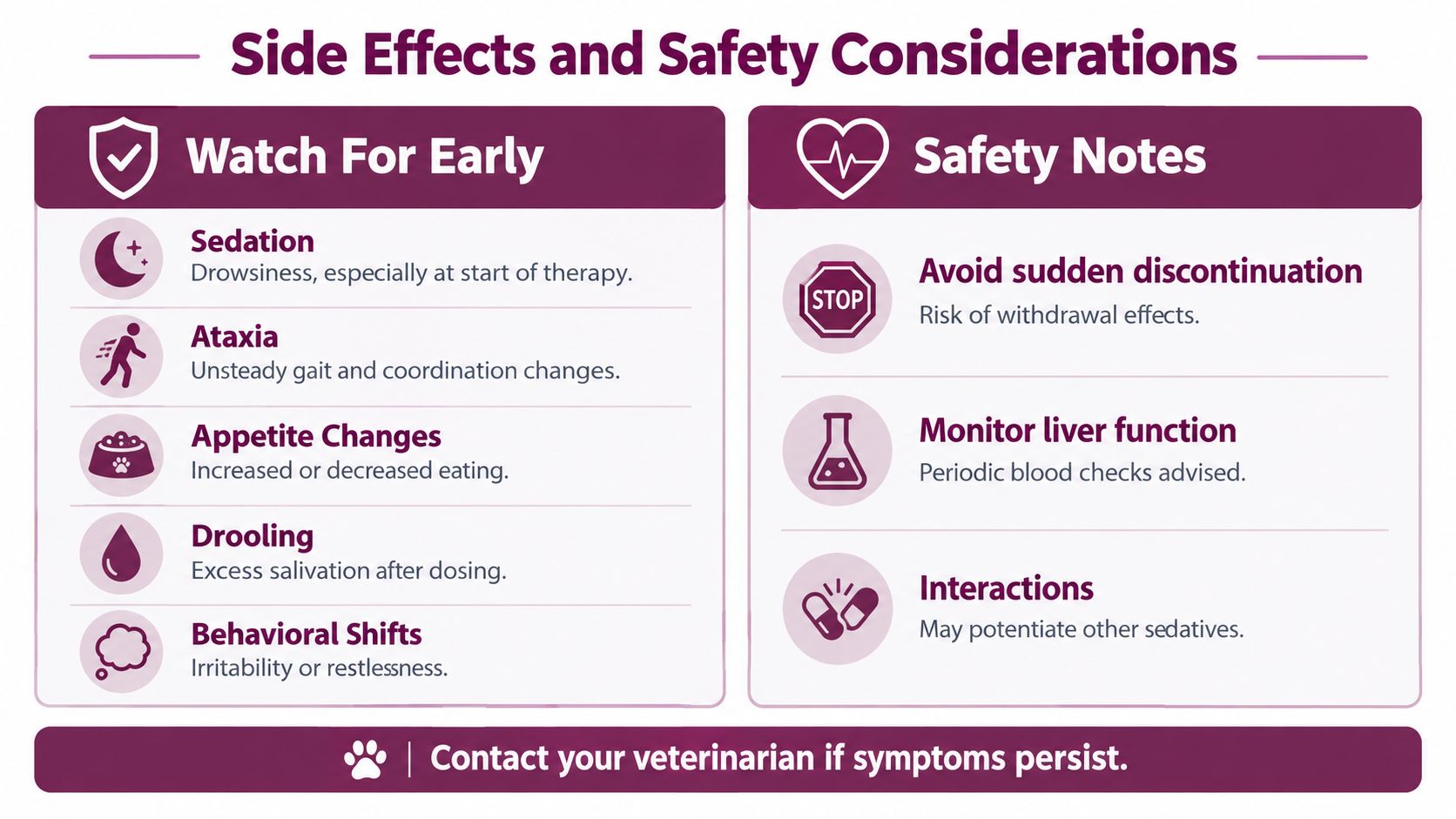
Could your dog's first dose affect balance, alertness, or behavior? The most common problems involve the central nervous system. Veterinary references report sedation, lethargy, and ataxia, which means an unsteady or poorly coordinated gait. Increased appetite, drooling, unusual behavior, and slower learning have also been reported. A few dogs show paradoxical excitation or increased friendliness instead of sleepiness.
A canine study summarized in a veterinary review found transient sedation and ataxia in 1 of 8 healthy adult dogs after a single 2 mg/kg dose. This result cannot predict your dog's response, so watch closely after the first dose and after any increase. Keep a newly treated dog away from stairs, slippery floors, swimming areas, and other situations where stumbling could cause injury.
For context on monitoring another sedating prescription, review this veterinary resource on gabapentin safety. Record changes in walking, alertness, appetite, breathing, and behavior, and tell the veterinary team what you observe.
The longer-term safety picture
Clorazepate is often most useful as short-term or pulse therapy, rather than an indefinite daily solution. Repeated benzodiazepine treatment over weeks can produce tolerance, so the same dose may work less well, and physical dependence can develop. A canine study found seizure-threshold elevation during the first 2 weeks, tolerance in some dogs later in treatment, and a drop below the control seizure threshold 36 hours after withdrawal. These findings make veterinary oversight of treatment length and tapering important.
Liver safety also deserves discussion. An FDA label describes a 22-month study in 24 dogs receiving up to 75 mg/kg, with changes including cholestasis and minimal hepatocellular damage. The high exposure does not establish the risk of every prescribed canine protocol, but it supports reviewing liver history, concurrent medicines, and appropriate laboratory monitoring with the veterinarian.
Sudden discontinuation can trigger withdrawal effects and seizures. If your dog has received clorazepate on an ongoing schedule, do not stop it abruptly unless an emergency veterinarian specifically instructs you to do so.
Drug Interactions and Contraindications
Clorazepate is often part of a broader seizure plan, so the full medication list matters. Merck Veterinary Manual specifically warns that clorazepate may increase phenobarbital concentrations, in addition to causing sedation and withdrawal seizures. Other sedating medicines may also make drowsiness or impaired coordination more pronounced, but the veterinarian must assess the actual combination rather than relying on a general rule.
Give the prescribing team a complete list of:
- Prescription medicines: Include anticonvulsants, anxiety medicines, pain medicines, and any recently discontinued drugs.
- Nonprescription products: Tell the veterinarian about antihistamines, calming products, and other pharmacy purchases.
- Supplements: Herbal products and nutritional supplements can still matter when a dog takes a prescription benzodiazepine.
- Health conditions: Report liver disease, breathing concerns, prior medication reactions, and unusual sensitivity to sedatives.
When another approach may fit better
Clorazepate may make sense when the immediate goal is pulse suppression during cluster seizures or adjunctive support in refractory epilepsy. It may be less suitable when the goal is uncomplicated, indefinite maintenance and the dog develops heavy sedation, poor coordination, tolerance, or other concerning effects. That comparison isn't a decision owners can make safely from a medication label alone.
There is no universal contraindication list that replaces an examination and medication review. The veterinarian may decide that another anticonvulsant, a different rescue strategy, additional testing, or closer monitoring is more appropriate. Don't combine clorazepate with another sedating product or substitute another seizure medicine without explicit veterinary approval.
Prescription Process and Safe Purchasing Guidance
A safe clorazepate order begins with a veterinarian who has diagnosed the problem and selected the treatment protocol. The veterinarian provides the prescription, including the medication, formulation, strength, instructions, and authorized refills. A licensed pharmacy then verifies the prescription before dispensing and shipping where permitted.
Owners can reduce errors by checking the label against the veterinarian's instructions as soon as the package arrives. Confirm the dog's name, medication name, strength, directions, quantity, expiration information, and storage instructions. This guide to reading pet medication labels can help you identify the details that deserve a second look.
A practical ordering sequence
- Ask the clinic to authorize the prescription. The pharmacy can't responsibly dispense a prescription medication without veterinary approval.
- Review the directions. Clarify whether the prescription is for a pulse course, adjunctive use, or another defined purpose.
- Check the filled order. Compare the received product with the prescription before giving the first dose.
- Plan refills early. If your veterinarian intends ongoing access, allow time for prescription verification and shipping.
- Use support channels for discrepancies. Contact the pharmacy and veterinary team if the label, tablets, packaging, or instructions don't match expectations.
Some veterinary pharmacies offer scheduled delivery or refill tools for medications that require regular reordering. Don't enroll in recurring deliveries for a pulse medication unless the veterinarian has confirmed that ongoing access is appropriate. Convenience should support the treatment plan, not extend it without approval.
Key Takeaways for Responsible Dog Owners
Clorazepate can be useful when a veterinarian has a clear reason for choosing it, especially as pulse therapy for cluster seizures or as an adjunct in a difficult seizure protocol. Its established canine pharmacokinetic history doesn't make it suitable for every dog, and it shouldn't be treated like a routine supplement or an all-purpose calming product.
Keep these points with your dog's medication records:
- Use the prescribed purpose: Pulse therapy and daily maintenance are different treatment strategies.
- Follow the exact schedule: Veterinary references report ranges from 0.5–1 mg/kg three times daily to 1–2 mg/kg every 8–12 hours, but only your veterinarian can select the appropriate regimen.
- Watch the first doses: Sedation, lethargy, ataxia, appetite changes, drooling, and behavioral shifts deserve tracking.
- Ask about monitoring: Liver history, concurrent medications, treatment duration, and clinical response may affect follow-up plans.
- Never stop suddenly: Repeated use can lead to tolerance and physical dependence, and abrupt withdrawal can worsen seizure risk.
- Know the emergency signs: Prolonged or repeated seizures, breathing problems, or failure to recover normally require urgent veterinary care.
A seizure log and honest notes about daily behavior give the veterinary team better information than memory alone. Schedule follow-up care when advised, and use this guide to routine veterinary visits to support ongoing communication about your dog's health.
Bandana Rx is a licensed online veterinary pharmacy that helps pet owners access prescription and over-the-counter medications after veterinary authorization, with prescription coordination, home delivery, and order support for eligible U.S. states. If your veterinarian has prescribed clorazepate or another pet medication, visit Bandana Rx to review available pharmacy services and begin the prescription fulfillment process.